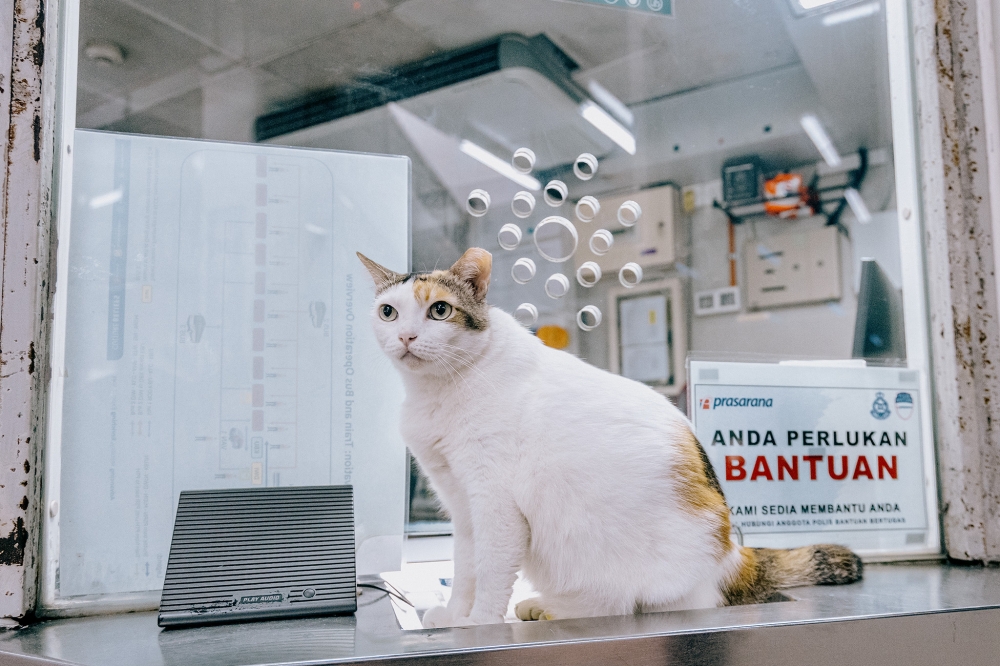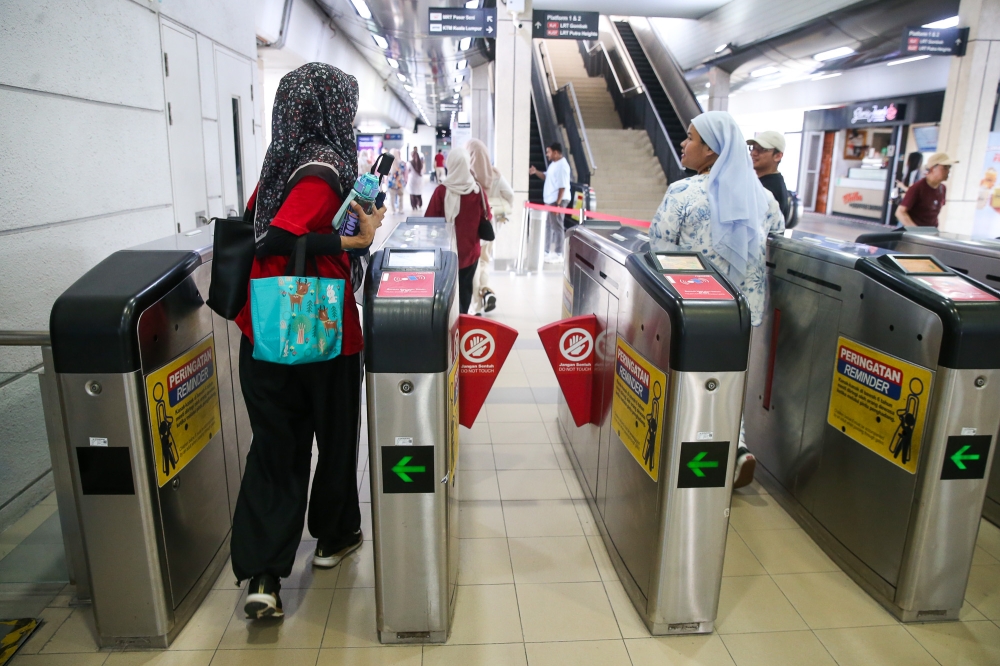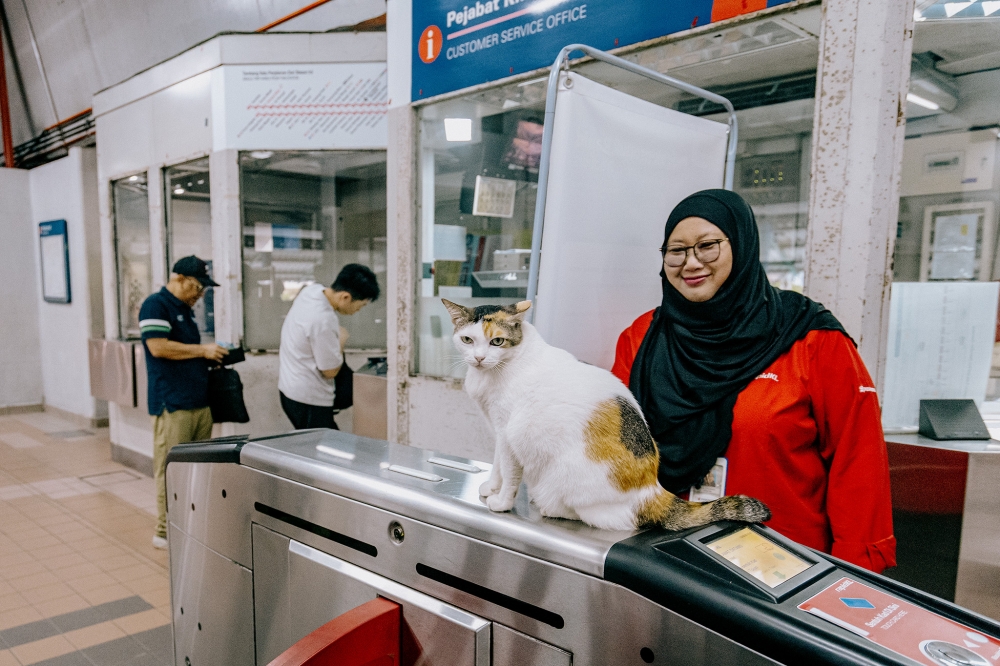
Cantik of Wangsa Maju station at her usual hangout spot near the automated fare collection barrier gates as LRT Wangsa Maju station manager Noor Zahbrina Jaafar looks on. — Picture by Firdaus Latif (New users only) It's tax relief season! Get up to RM300 when you save with Versa! Plus, enjoy an additional FREE RM10 when you sign up using code VERSAMM10 with a min. cash-in of RM100 today. T&Cs apply. By Kenneth Tee Sunday, 24 May 2026 7:00 AM MYT KUALA LUMPUR, May 24 — At the intersection of concrete platforms and the grind of city life, an unlikely antidote to commuter stress has emerged: the station cat.At several Rapid KL rail stops, once-stray felines have become real-life maneki-neko, the Japanese “beckoning cat” believed to bring good fortune.For regular commuters and station employees alike, they are more than just strays; they are colleagues, companions, and a cherished part of the station’s identity.At LRT Ampang, the duo Kenit and Adik may not boost revenue for the rail line, but their impact is felt in more human ways.“Indirectly there are noticeable changes, like when exhausted passengers returning from work would often stop to play with the cats and help soften the stress of the daily commute,” LRT Ampang station manager Hamisah Aziz said in an interview with Malay Mail.Having managed the station for over 15 years, Hamisah said she finds personal meaning in these quiet moments.“Seeing such an act of kindness is especially touching for a cat lover like myself.” Kenit is seen here being held by LRT Ampang station manager Hamisah Aziz. — Picture by Firdaus Latif A few stops away at LRT Datuk Keramat, a bicolour cat named Lembu has become a local celebrity. Station manager Khairul Azhar Kamaruddin said Lembu is now an attraction in his own right.“Since Lembu became a ‘resident’, parents would sometimes make the trip to the station and bring their children who enjoy cats to see him,” he explained.“They’ll take photographs with Lembu before boarding the train, which creates positive goodwill for Rapid KL.”Lembu’s fame is so established that commuters bring him food and ask for him by name.“[He’s] the only one who stays, unlike other strays that wander off,” Khairul Azhar joked. “It’s as if he has signed a contract here.” Lembu of Datuk Keramat station is seen here resting on the automated fare collection barrier gates. — Picture by Firdaus Latif Perhaps the most famous of all is Cantik of LRT Wangsa Maju, often regarded as the “OG” of Rapid KL’s informal station cat community.“She just livens up the station,” said station manager Noor Zahbrina Jaafar.“There has definitely been a noticeable increase in foot traffic from university students since Cantik’s arrival in 2019.”In her 26 years on the job, she proudly stated she has never received a single complaint about Cantik. Lembu of Datuk Keramat station is seen here resting on the automated fare collection barrier gates. — Picture by Firdaus Latif This phenomenon is not unique to Kuala Lumpur. It mirrors the story of Tama, the calico cat appointed station master of Kishi Station in Japan in 2007.Originally a stray cared for by station staff, Tama became the face of a struggling rural railway line after the railway company’s president saw her as a real-life maneki-neko and agreed to staff requests to allow the cat to remain at Kishi Station.She later drew visitors from across Japan and abroad. Local officials later credited her popularity with reviving public interest and bringing economic activity back to the surrounding area as her appointment led to increased ridership.Given a tiny stationmaster’s hat and formally adopted into the railway’s identity, Tama’s success inspired the appointment of other station cats across Japan’s rail network, cementing her legacy even after she passed away in 2015.But with this deep affection comes the quiet acknowledgment of an inevitable goodbye.The station managers admit the eventual passing of these beloved animals will leave a profound void. A commuter taking a photo of Kenit during off-peak hours at the LRT Ampang station. — Picture by Firdaus Latif “If they are gone, the atmosphere will definitely change,” said Hamisah, noting how Kenit and Adik wait for commuters by the turnstiles every day.Khairul Azhar described how Lembu waits patiently for staff at 6am and lingers until the station closes. His absence would mean “the feeling that something is missing.”Noor Zahbrina echoed the sentiment, noting that Cantik has become synonymous with the station itself.“When we say Cantik, people automatically remember Wangsa Maju station,” she said.“It’s just unbelievable that Cantik commands that kind of aura where people think so highly of her...not that she’s a superstar but she does bring a smile to everyone who meets her.” A commuter reacts as Cantik lazes around at her usual hangout spot near the automated fare collection barrier gates at LRT Wangsa Maju station. — Picture by Firdaus Latif
Rapid KL station cats: How Kenit, Adik, Lembu, and Cantik became local ‘maneki-neko’
KUALA LUMPUR, May 24 — At the intersection of concrete platforms and the grind of city life, an unlikely antidote to commuter stress has emerged: the station cat.At several Rapid...
809 words~4 min read