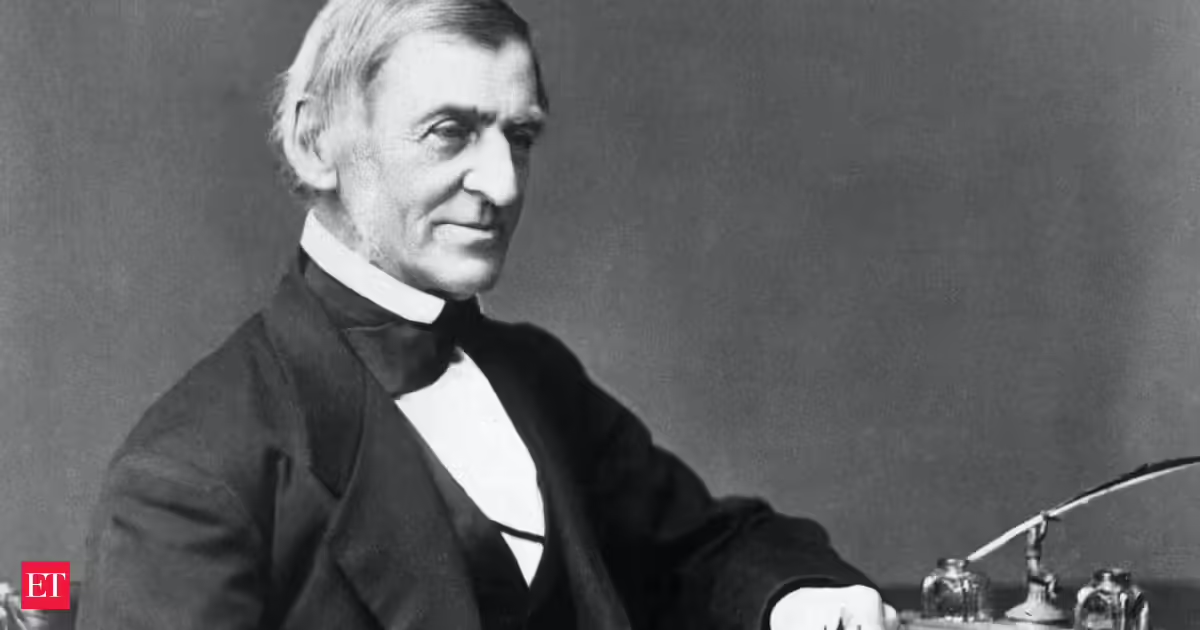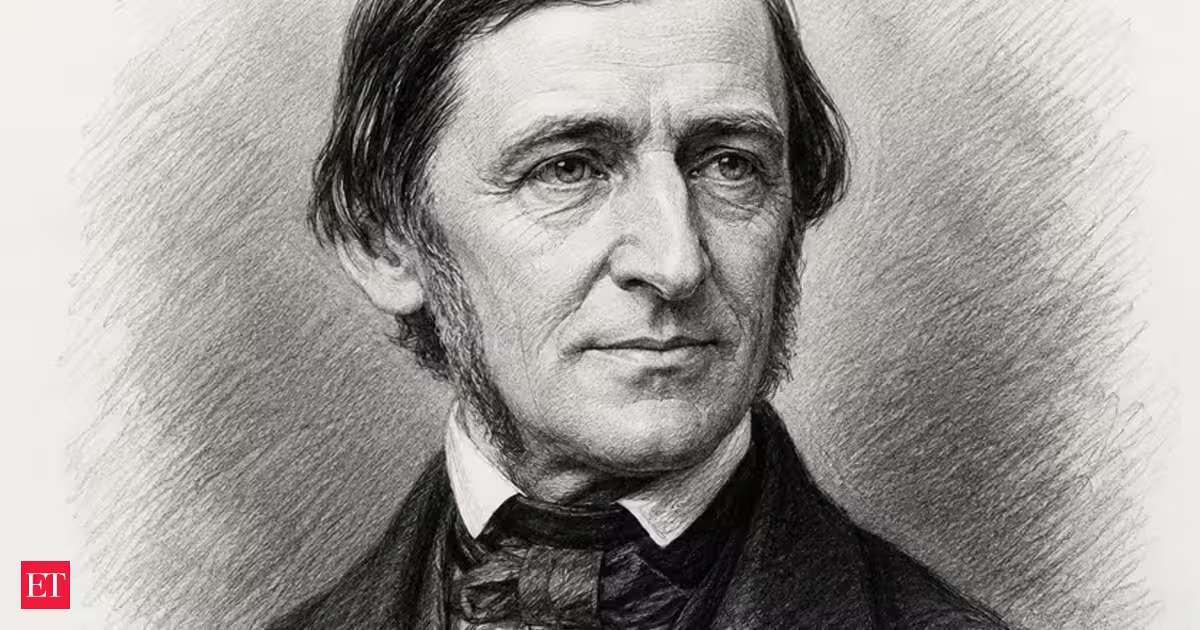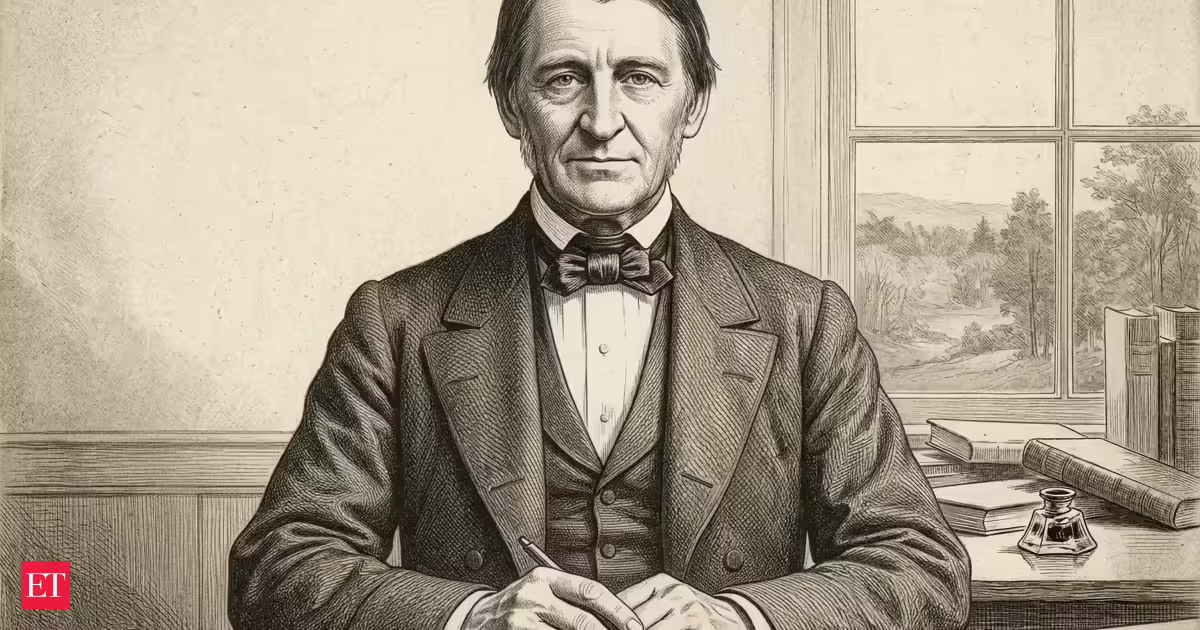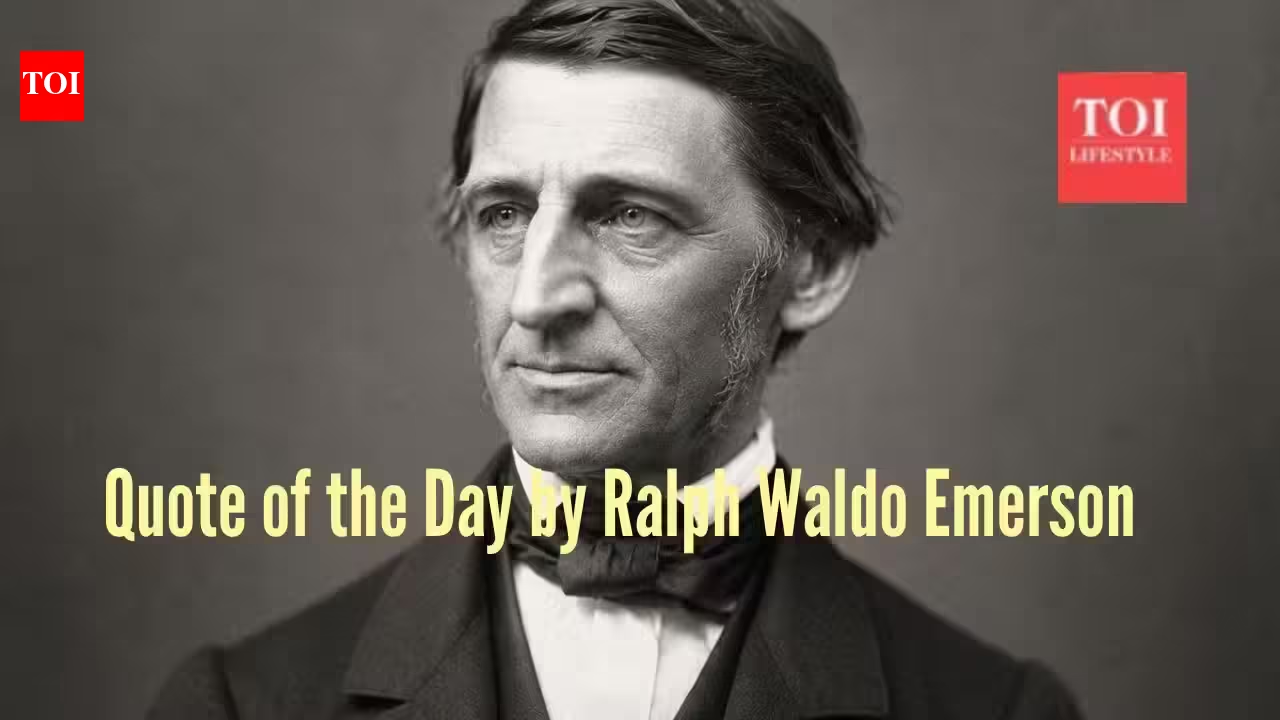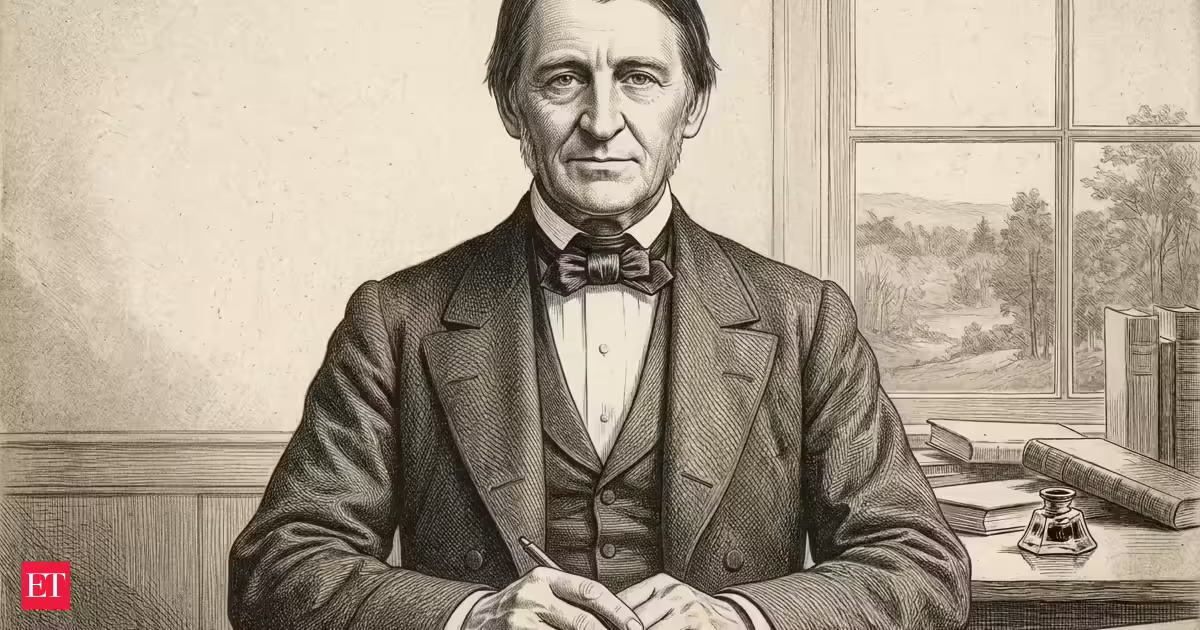
Quote of the day by Ralph Waldo Emerson continues to inspire people through its focus on purpose, human behavior, compassion, and self-awareness. Emerson’s line, “It is not length of life, but depth of life,” explains that a meaningful life is measured through actions, relationships, learning, and contribution rather than age. Ralph Waldo Emerson was an American lecturer, poet, essayist, and philosopher linked with the Transcendentalist movement in the United States. His works on self-reliance, spirituality, morality, and intuition shaped intellectual discussions in America during the nineteenth century. His writings still influence readers searching for guidance about life lessons, personal growth, and emotional understanding.The quote is, “It is not length of life, but depth of life.” Quote by Ralph Waldo Emerson and its meaningRalph Waldo Emerson’s quote, “It is not length of life, but depth of life,” speaks about the importance of quality over quantity in human existence. The statement suggests that a person’s impact, values, and actions matter more than how long they live. The quote encourages people to focus on relationships, compassion, honesty, learning, and contribution to society. Emerson believed people should search for truth within themselves instead of depending only on institutions or traditions.The quote also connects with Emerson’s ideas about self-reliance. He believed individuals should trust their inner voice and moral understanding. According to Emerson, a meaningful life comes from awareness, purpose, and connection with humanity. In modern times, the quote remains relevant because many people measure success through material achievements or long-term goals. Emerson’s words shift attention toward emotional growth, human connection, and moral action.You Might Also Like:Life lessons from the quoteThe quote offers several lessons connected to daily life and human behavior.Value meaningful experiencesThe quote teaches that experiences matter more than duration. A person can create influence and positive memories within a short period through kindness, wisdom, and support for others.Focus on compassion and loveEmerson’s philosophy often connected spirituality with humanity. The quote reminds readers that love, compassion, and empathy are important parts of life. Human relationships create emotional depth and personal understanding.You Might Also Like:Live with purposeThe statement also encourages purposeful living. Emerson believed people should seek truth, knowledge, and moral growth. A life without direction may feel empty despite success or longevity.Build self-awarenessEmerson stressed self-reliance and intuition. The quote pushes people to understand themselves deeply. Self-awareness can help individuals make choices based on values rather than social pressure.Create positive influenceThe quote suggests that human impact matters more than years lived. Helping others, sharing knowledge, and contributing to society create lasting influence.You Might Also Like:Ralph Waldo Emerson’s early life and educationRalph Waldo Emerson was born on May 25, 1803, in Boston, Massachusetts, United States. He was the son of Reverend William Emerson, a Unitarian clergyman. Emerson’s family had a long religious background connected to Puritan traditions. After the death of his father in 1811, Emerson’s intellectual growth was strongly influenced by his aunt, Mary Moody Emerson. She encouraged his reading habits and literary interests.Emerson attended the Boston Public Latin School. His literary skills and writing talent became visible during his school years. In 1817, he entered Harvard College, later known as Harvard University. During his college years, he started maintaining journals that reflected his ideas and intellectual development. He graduated in 1821 and later studied at Harvard Divinity School while teaching. Emerson was licensed to preach in the Unitarian community in 1826. However, illness slowed the beginning of his religious career.Emerson’s religious doubts and personal strugglesIn 1829, Emerson became ordained at the Second Church in Boston. During the same year, he married Ellen Louisa Tucker. After the death of his wife from tuberculosis in 1831, Emerson began questioning traditional Christian beliefs and religious institutions. He had already started doubting doctrines connected with miracles and organized religion.His sermons increasingly focused on spirituality, morality, and intuition rather than traditional theology. Emerson believed truth could come through personal understanding and direct spiritual experience. In 1832, Emerson resigned from the ministry. This decision marked a major turning point in his life and philosophical journey.Emerson’s journey to Europe and intellectual transformationAfter leaving the church, Emerson traveled to Europe. During this journey, he met major thinkers and writers, including Samuel Taylor Coleridge, William Wordsworth, and Thomas Carlyle. In Paris, Emerson studied natural science collections arranged in developmental order. These observations strengthened his belief in the spiritual relationship between humans and nature.After returning to America in 1833, Emerson began writing Nature, one of his major philosophical works. He settled in Concord, Massachusetts, where he continued writing and lecturing.Emerson and the Transcendentalist movementEmerson became one of the leading figures of New England Transcendentalism during the 1830s. The movement focused on spirituality, intuition, morality, and the connection between humanity and nature. His book Nature, published in 1836, presented his central ideas. Emerson argued that individuals could transcend materialism and discover truth through intuition and inner awareness.He believed that every person carried a part of the divine spirit, which he described as the “oversoul.” According to Emerson, people could access moral truth by looking inward. Emerson’s philosophy challenged traditional religious authority and encouraged independent thought. His lectures and essays inspired many intellectuals and writers in the United States.Major works and literary influenceRalph Waldo Emerson wrote essays, poems, lectures, and books that became influential in American literature and philosophy.Some of his notable works include:NatureSelf-RelianceThe American ScholarEssaysRepresentative MenThe Conduct of LifeEnglish TraitsPoemsHis lecture “The American Scholar,” delivered in 1837, urged intellectual independence and criticized imitation and traditionalism. In 1838, his “Address at Divinity College” challenged religious institutions and questioned accepted Christian doctrines. The speech created controversy and distanced him from Harvard for several years. Emerson also helped launch The Dial magazine in 1840 along with Margaret Fuller. The publication became an important platform for Transcendalist ideas.Emerson’s later years and legacyBy the 1860s, Emerson had become one of the most recognized intellectual figures in America. His lectures continued across the country, and his writings influenced readers during the American Renaissance period. Although his intellectual energy declined after 1860, Emerson’s reputation remained strong. He continued writing and speaking until his later years.Ralph Waldo Emerson died on April 27, 1882, in Concord, Massachusetts, at the age of 78. Today, Emerson remains remembered for his ideas on self-reliance, human freedom, spirituality, morality, and personal growth. His quote about the “depth of life” continues to appear in discussions about emotional intelligence, mental well-being, relationships, and life purpose.You Might Also Like:
Quote of the day by Ralph Waldo Emerson: 'It is not length of life, but...' Life lessons on love, human behavior and compassion by American lecturer, poet and essayist
Quote of the day by Ralph Waldo Emerson focuses on the meaning of life and human values through the line, “It is not length of life, but depth of life.” The quote explains why purpose, compassion, love, and meaningful actions matter more than the number of years lived. Ralph Waldo Emersons philosophy, writings, and role in Transcendentalism continue to influence discussions on human behavior, morality, and self-reliance across the world.
1,059 words~5 min read