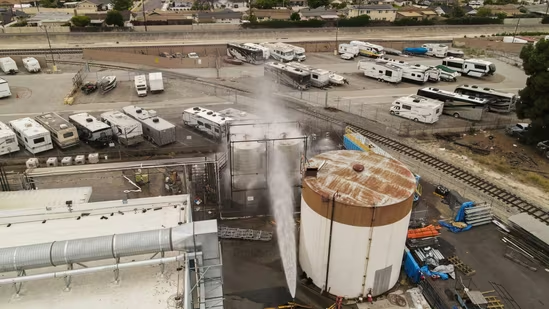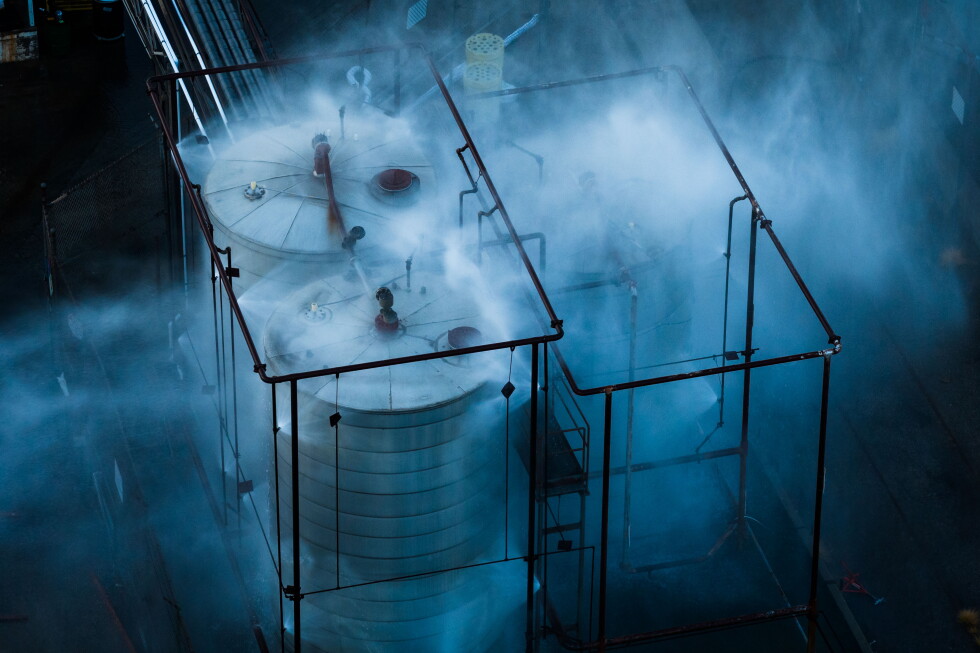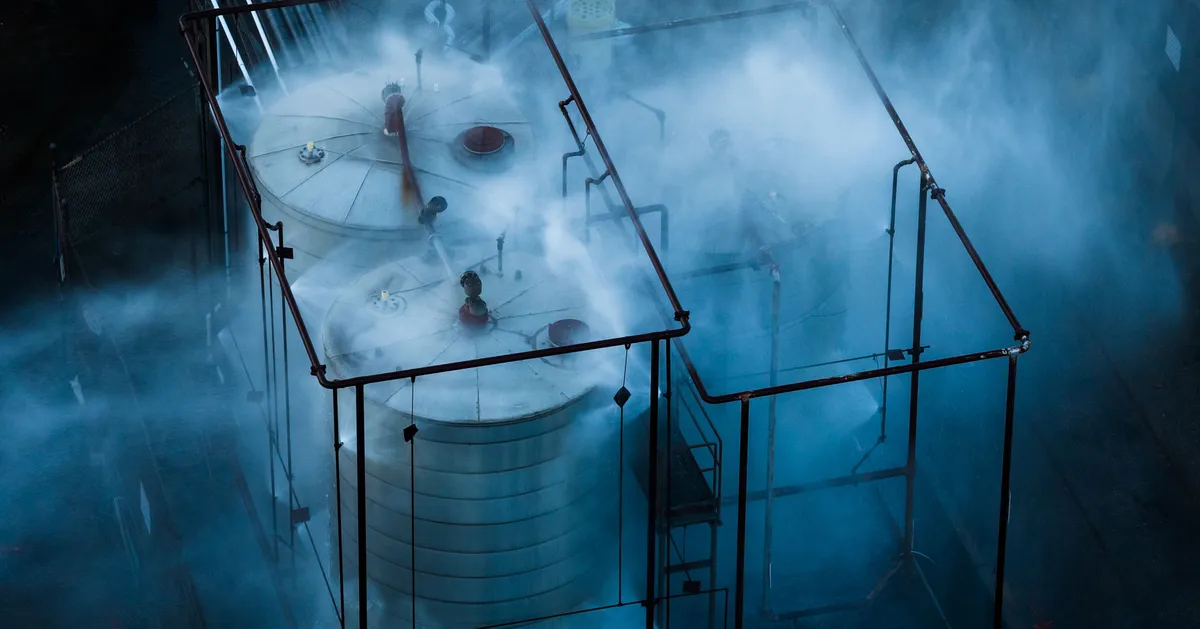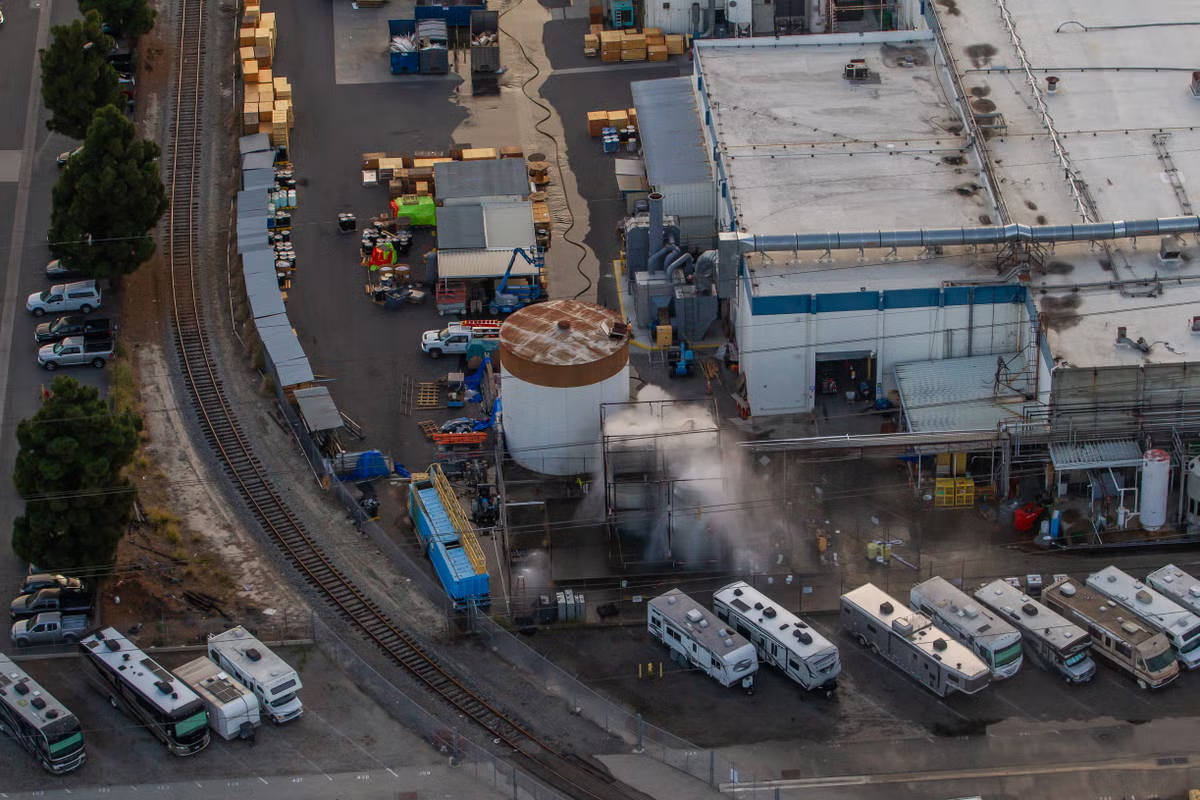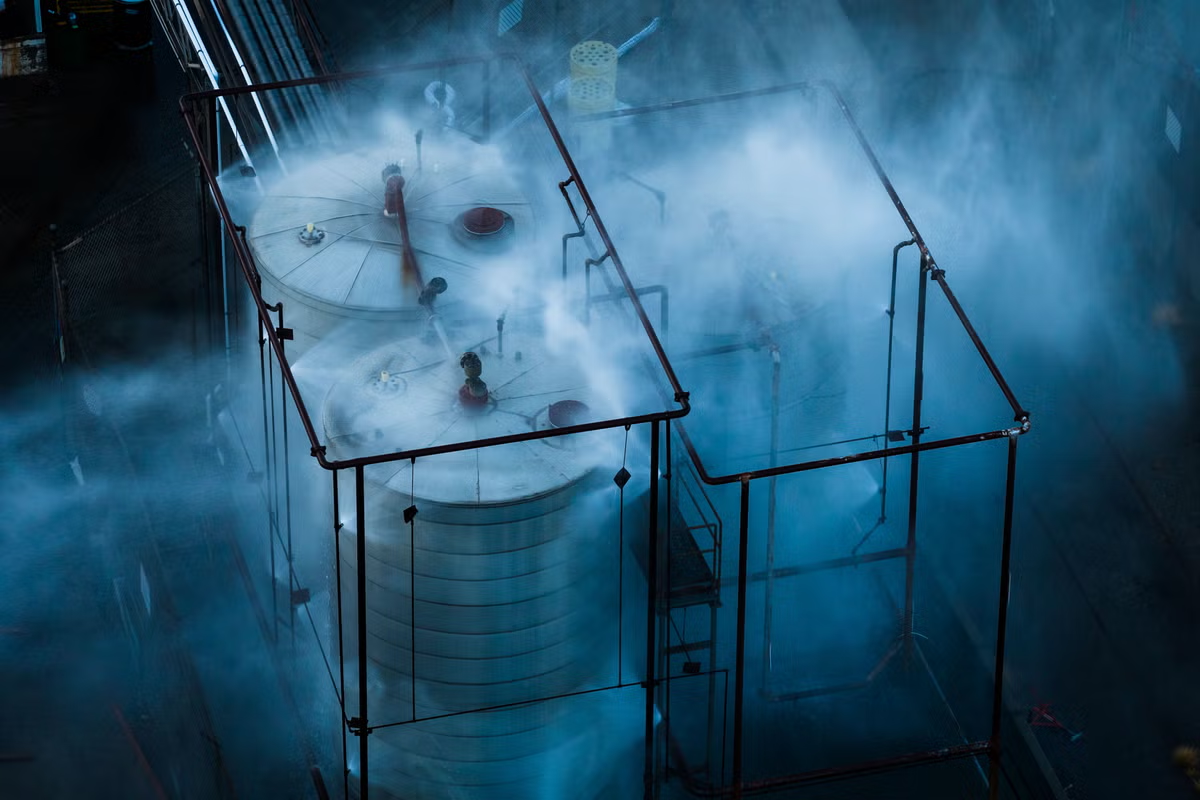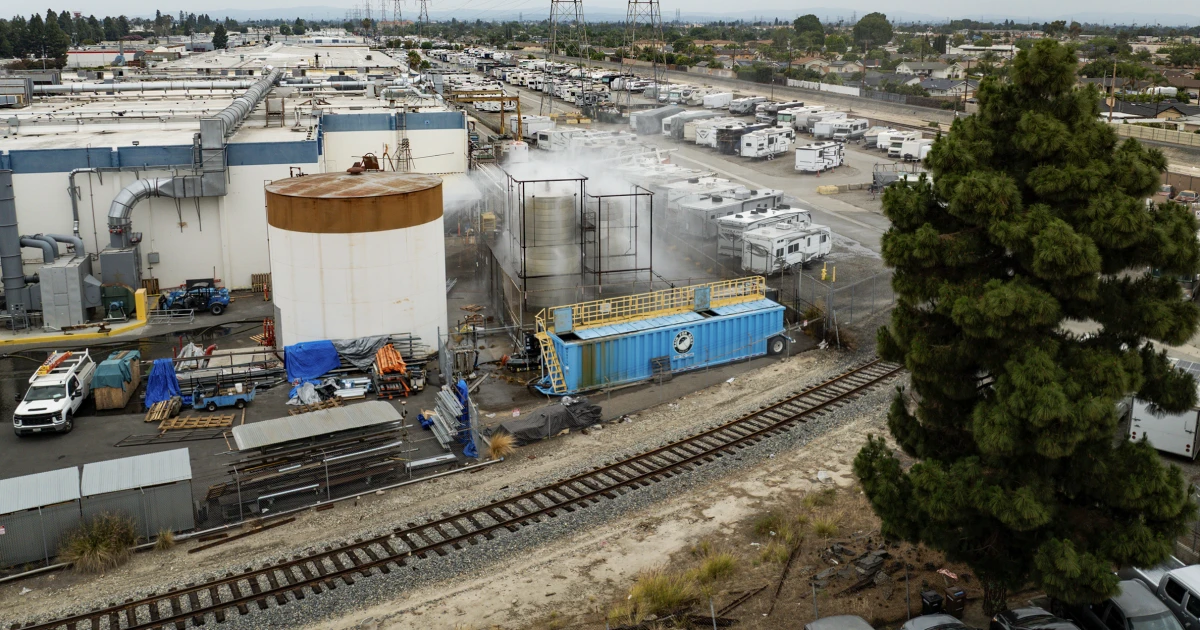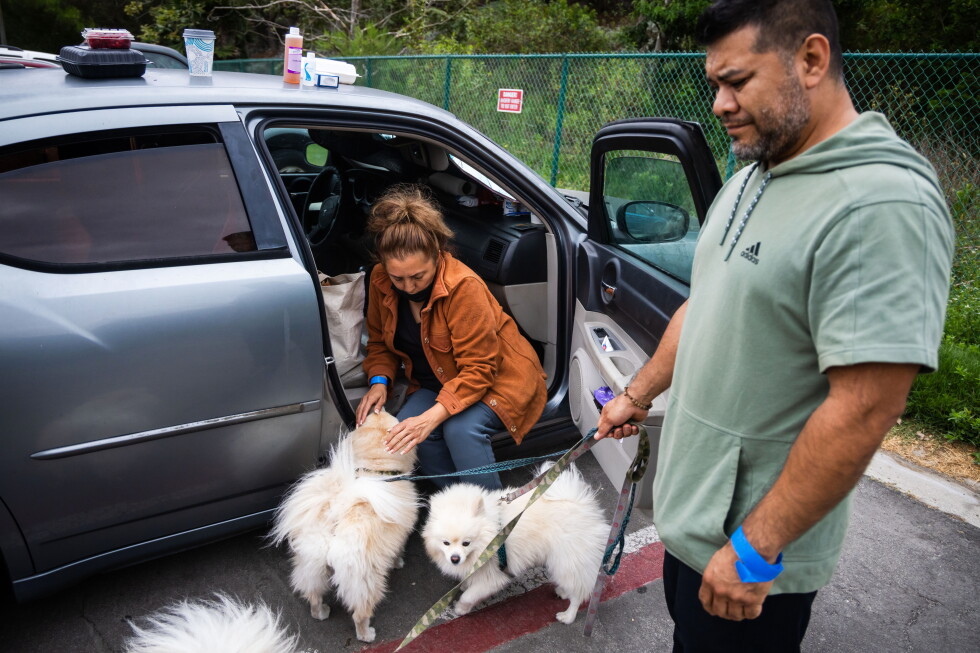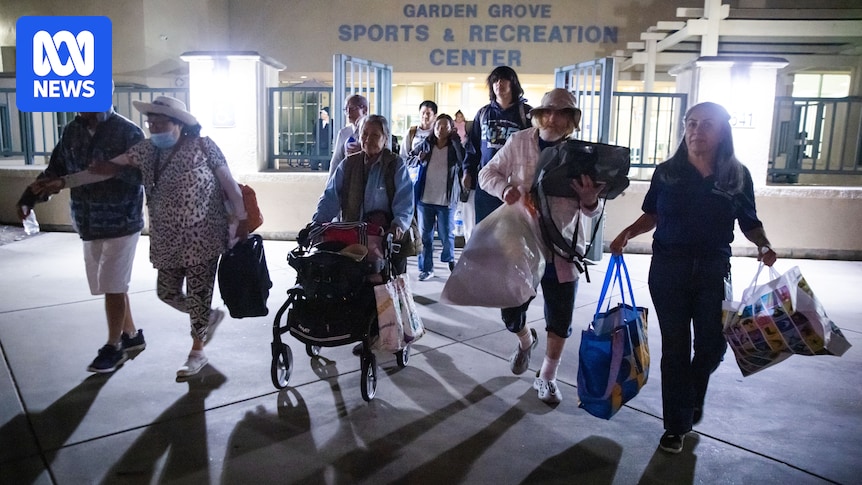
A damaged chemical storage tank that authorities fear is at risk of exploding in California is gradually getting warmer despite efforts to reduce its internal temperature. Evacuation orders remained in place for an area covering tens of thousands of people in the Garden Grove suburb of Los Angeles — about a 10-minute drive from Disneyland.California Governor Gavin Newsom declared a state of emergency for Orange County and his office pleaded for residents to follow evacuation orders.Craig Covey, division chief of the Orange County Fire Authority, said crews had gone back into the danger zone in Garden Grove overnight after drone readings on Friday suggested water sprayed on the tanks was helping stabilise the situation.But those drone readings measured the outside of the vessel, not the chemical inside, Mr Covey said. The tank is located in Garden Grove, a city of 172,000 people about 50 kilometres south of Los Angeles. (AP: Ethan Swope)When crews reached the tank's gauge, they found the internal temperature was 32 degrees Celsius, up from 25 degrees when responders had pulled back.The temperature was increasing by about one degree an hour, he said. "That's the bad news," Mr Covey said.Tank continues to heat upOfficials have warned since Friday that the tank, which contains methyl methacrylate, a flammable chemical used in plastics and manufacturing, could rupture and spill up to 26,500 litres of toxic material.On Saturday, Mr Covey said firefighters were exploring whether a heavy flow of cooling water might slow the curing process inside the tank enough to reduce pressure and prevent an explosion."Letting this thing just fail and blow up is unacceptable to us," Mr Covey said. "Our goal is to find something and not allow that to happen."Officials have opened evacuation shelters in Garden Grove and the nearby cities of Anaheim and Cypress. The incident began on Thursday at the GKN Aerospace facility in Garden Grove, a city of 172,000 people about 50 kilometres south of Los Angeles. The site specialises in the manufacturing and testing of windows and canopies for commercial and military aircraft, according to its website.GKN said it was working with "all relevant experts" to solve the problem."We sincerely apologize for the significant disruption to the many local residents and businesses who have had to be evacuated," a GKN spokesperson said in a statement on Saturday.Some residents refuse to leave, officials sayEvacuation orders were issued for 40,000 people, and several shelters remained open on Saturday, local time, including at three high schoolsAbout 15 per cent of people in the zone covered by the evacuation order are refusing to leave, Garden Grove Police Chief Amir El-Farra said, according to the Orange County Register.Health officials have said they were concerned that vapour from the chemical could cause severe respiratory problems. (Reuters: Ed Ou)Mr Covey said crews shifted from a "defensive" stance to an "offensive" operation overnight with help from chemists from the manufacturer's emergency response team. The goal was to neutralise a nearby 56,000 litre tank and reduce its explosive potential if the smaller tank failed."We did put people in harm's way last night," Mr Covey said.Officials have opened evacuation shelters in Garden Grove and the nearby cities of Anaheim and Cypress.Mr Covey said crews were also preparing for a possible spill by looking for ways to dike, dam and divert the liquid into a holding area. (Reuters: David Swanson)Health officials said they were concerned vapour from the chemical could cause severe respiratory problems with prolonged exposure. Air quality monitors had not detected vapour as of the latest health update cited by officials."You are safe as long as you are out of the zone that was determined to be an evacuation zone," Regina Chinsio-Kwong of the Orange County Health Care Agency said on Friday.Mr Covey said crews were also preparing for a possible spill by looking for ways to dike, dam and divert the liquid into a holding area at the commercial site, rather than allow it to reach storm drains, river channels or the ocean."We are not giving up," Mr Covey said.Reuters/AP
LA suburb evacuated over fears chemical tank could explode
Evacuation orders are in place for an area covering tens of thousands of people in a suburb of Los Angeles.
669 words~3 min read