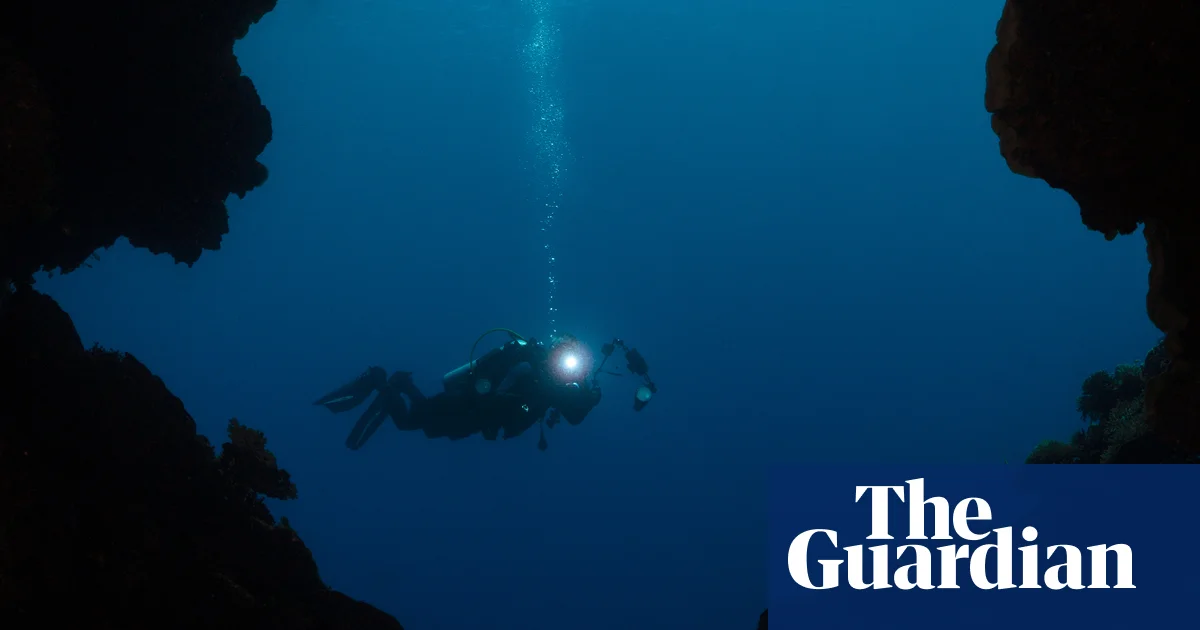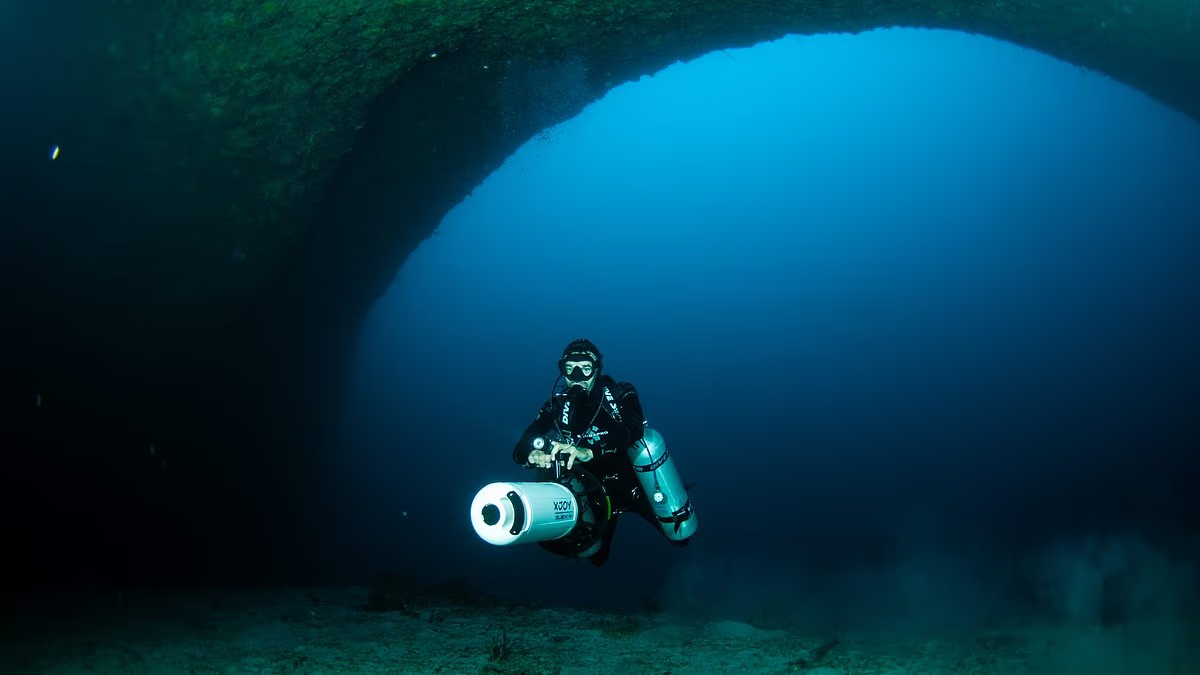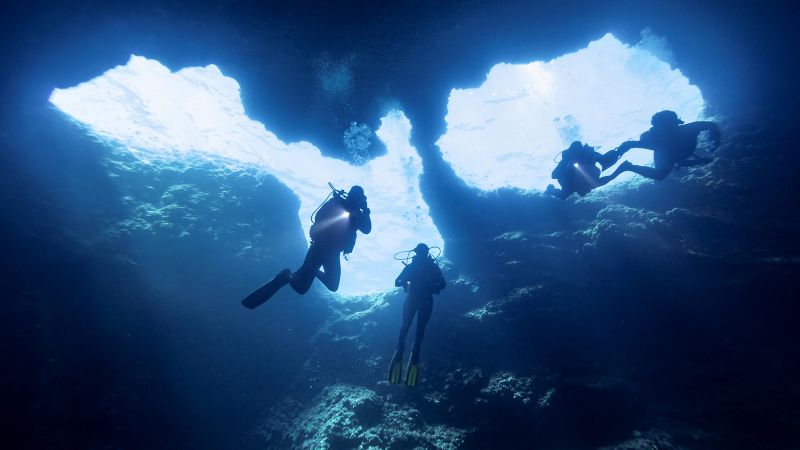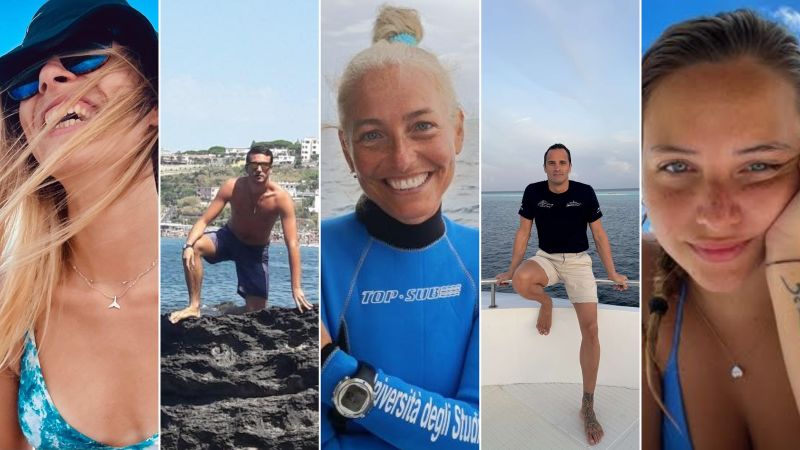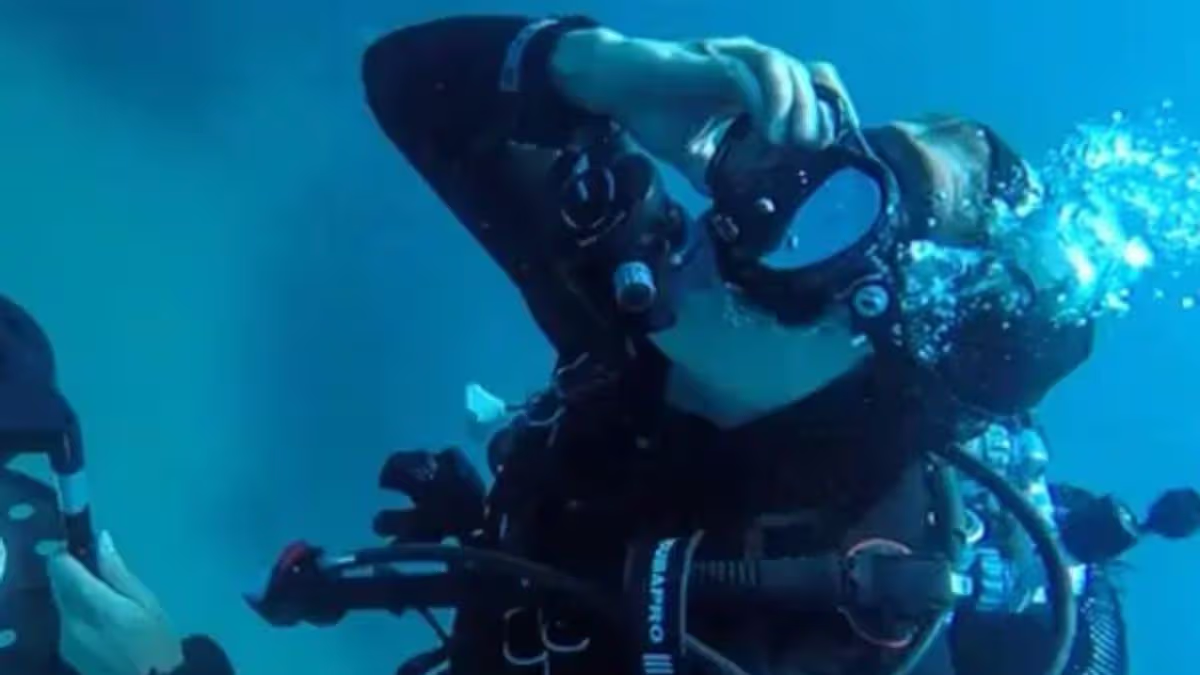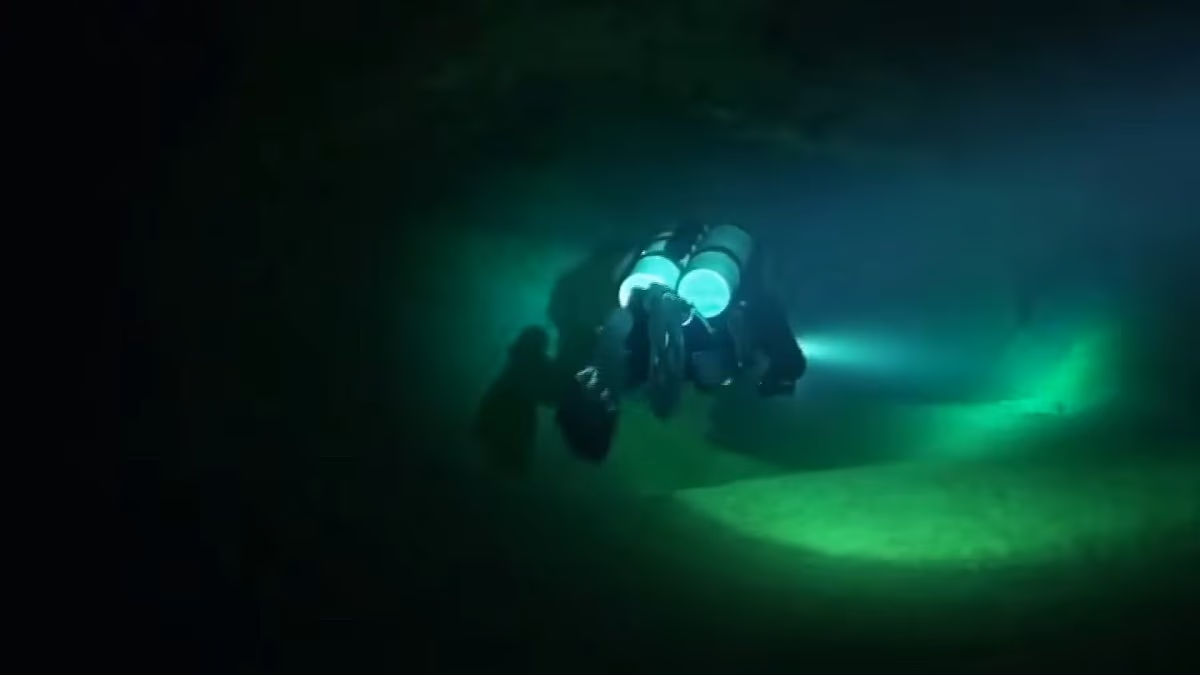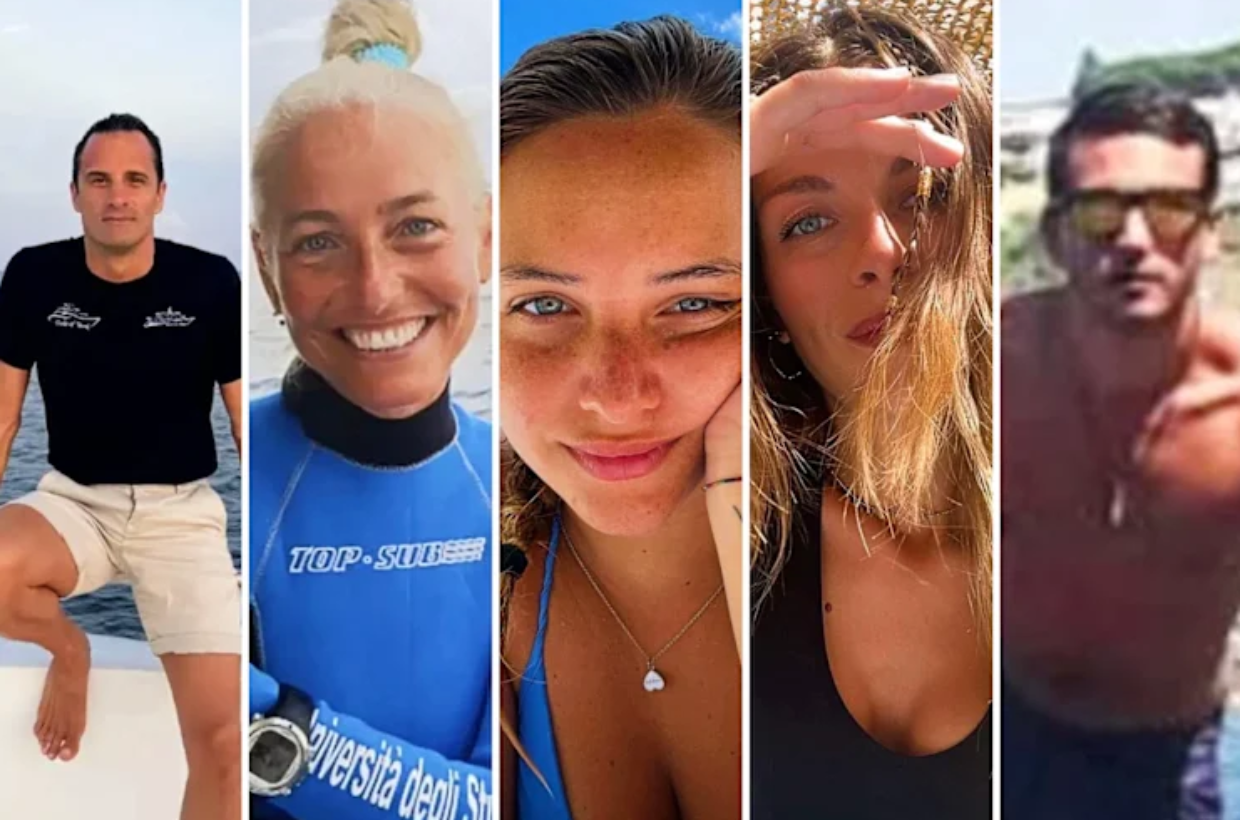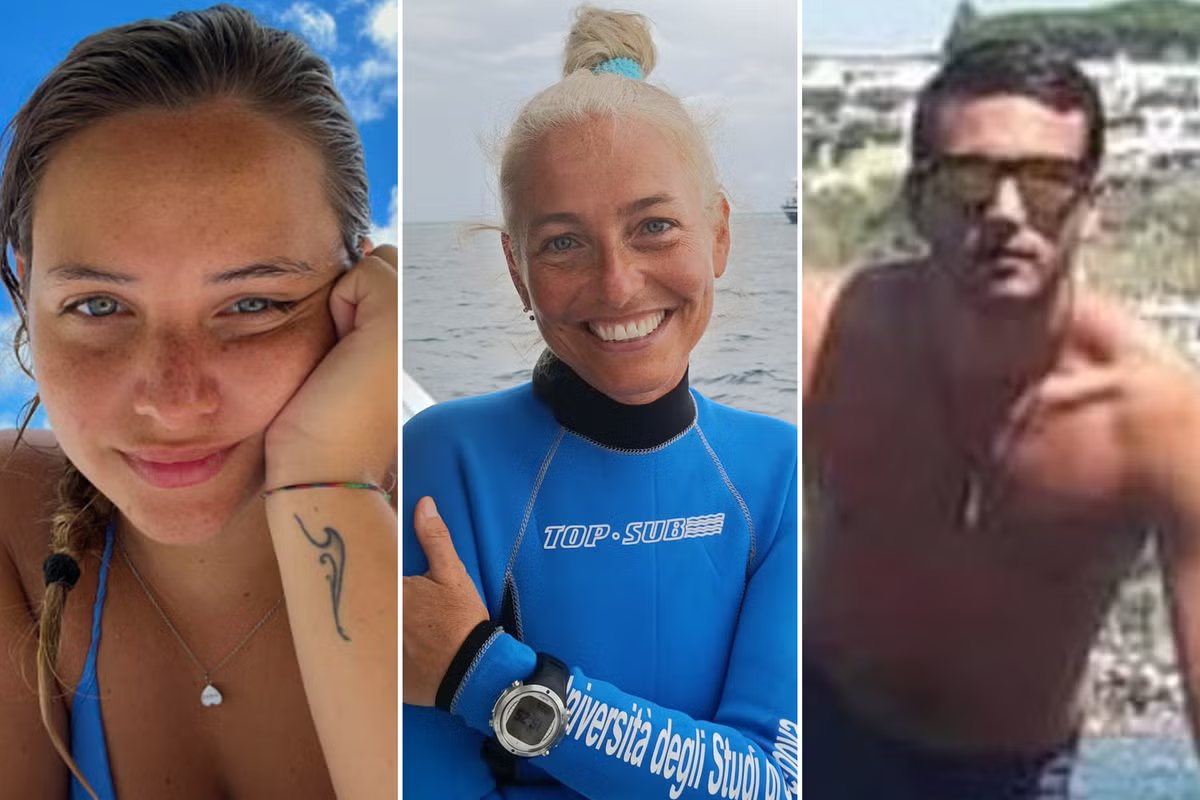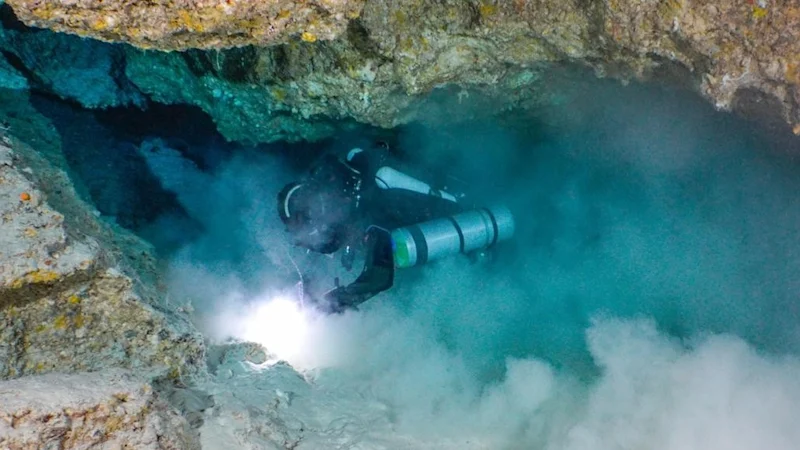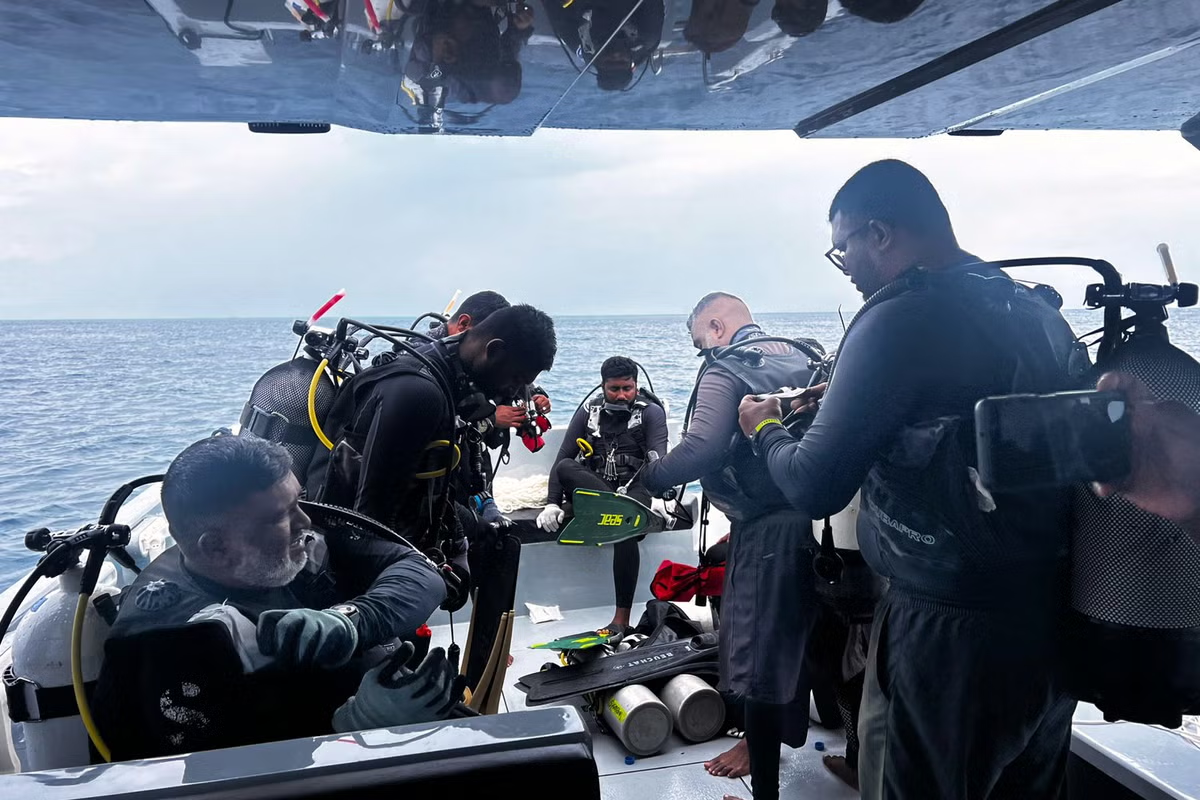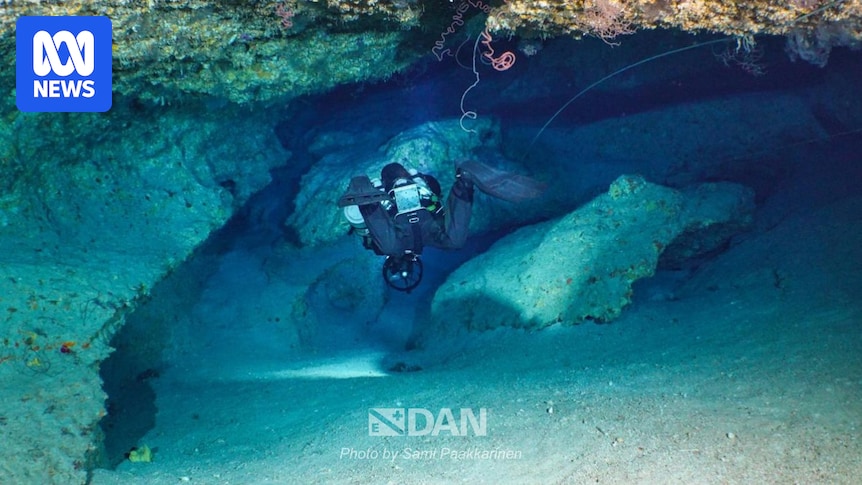
Cave diving, even when conducted by experienced professionals, is a dangerous pursuit.Considered an extreme sport when done recreationally, the practice of exploring underwater caverns requires specialised equipment, training and careful planning.A scuba diver with a single tank of regular compressed air can generally expect to be able to dive to a maximum depth of 40 metres below the surface — though many will start to experience the intoxicating effects of nitrogen narcosis well before then.Beyond that depth, a dive becomes a "technical dive", otherwise known as deep-sea diving.For technical diving, not only is a second gas tank (or a smaller stage bottle) all but necessary, but the tanks should be filled with a mixed gas such as Trimix, to reduce the amount of nitrogen entering the body.A Finnish deep-sea rescue diver takes part in last week's search mission. (DAN Europe: Sami Paakkarinen)Attempting to go beyond that limit on a single tank of regular air is highly dangerous.Add in the heightened risks of what divers refer to as an "overhead environment" — any space where there is a physical barrier preventing you from swimming directly upward to the surface — and cave diving becomes a risky undertaking even in the best of circumstances.Confined spaces, labyrinthine cave systems and lowered visibility can induce panic, causing a diver to ignore their training and begin struggling for air.Mystery surrounds Maldives deathsAll of the above is well known to anyone who has done a modicum of research into deep-sea diving, let alone those who carry out the practice for a living.Which is why the death of five experienced Italian divers in the Maldives last Thursday has puzzled not just local authorities, but experts around the world.The bodies of Monica Montefalcone, Muriel Oddenino, Giorgia Sommacal and Federico Gualtieri were found deep inside an underwater cave last Monday, four days after they failed to return from a dive during a week-long scientific mission on the live-aboard yacht, MV Duke of York.An illustration produced by a German diving site shows the underwater terrain around the cave. (Supplied: Taucher.net)The cave's entrance, part of the Devana Kandu cave system in Vaavu Atoll, sits 55 to 58 metres below the ocean's surface, well past the safe limit for divers using compressed air and almost double the 30-metre recreational diving limit imposed by the Maldives government.Montefalcone, a 51-year-old professor of marine ecology at the University of Genoa, and Oddenino, a research assistant, were in the Maldives to study the effects of climate change on tropical biodiversity, a practice that involves collecting samples of coral from the reef at standard diving depths.Sommacal, Montefalcone's 23-year-old daughter, and Gualtieri, a recent marine ecology master's graduate, were not part of the official mission, but had joined the group of about 20 people on board the Duke to go recreational diving.The body of Gianluca Benedetti, a dive instructor serving as the boat's operations manager, had been found and recovered by the crew of a safari boat the previous Thursday evening, the same day the group of five went missing.While the other four divers were found together at the rear of the cave, about 200 metres along in a dead end off the second chamber, Benedetti was found near the cave's entrance, adding an extra layer of mystery to what exactly happened.Finding and recovering the bodies of the four other Italians proved difficult in the first few days of the Maldivian search mission, with divers only able to access the first two chambers of the cave in question.It also proved dangerous, with a member of the Maldivian Coast Guard's search team, Sergeant Major Mohamed Mahudhee, dying after suffering decompression sickness while coming to the surface on the Saturday.Three expert deep-sea rescue divers arrived from Finland the following day, bringing with them specialist equipment such as rebreathers (a closed-circuit breathing system that chemically scrubs carbon dioxide from a user's breath, allowing it to be recycled) and robotic cameras.They took less than three hours to find the four remaining bodies on Monday morning.Speculation without evidenceThe question of why experienced divers, including a professional instructor and a marine ecology professor with thousands of dives under her belt, would descend to depths of more than 50 metres using recreational gear and single tanks — let alone enter a cave while doing so — has baffled members of the relatively close-knit deep-sea diving community.Most of those who have been approached by the media are reluctant to speculate as to why the group went as low as it did, or how they ultimately died."My personal opinion is that an unexpected incident may have occurred underwater," Riccardo Gambacorta, a former diving instructor to Muriel Oddenino, told news agency Reuters.Muriel Oddenino was one of the five divers who perished in the underwater cave. (Supplied: Facebook)Medical experts have been less reticent, offering a range of possible theories and providing dramatic commentary.Pulmonologist Claudio Micheletto told Italian news site Adnkronos that oxygen toxicity, or hyperoxia, may have played a factor in the divers' deaths, theorising it likely occurred due to something going "wrong with the tanks".Hyperoxia occurs when divers breathe oxygen at an elevated rate due to higher partial pressure, potentially leading to seizures (which, in turn, can lead them to spit out their breathing tubes, causing drowning)."[It] is one of the most dramatic deaths that can occur during a dive — a horrible end," Micheletto says.However, a number of experienced deep-sea divers, including Gambacorta and YouTuber Gus Gonzalez, doubt hyperoxia could have caused the deaths, pointing out it occurs at drastically different rates in different people, and would be unlikely to happen at that depth if the divers were using regular compressed air.Gas tanks are prepared for rescue divers during the operation. (Supplied via AP: Maldives President)Carbon dioxide poisoning due to increased physical exertion, possibly due to an inability to escape the cave, and carbon monoxide poisoning caused by a tainted air supply, are also possibilities that have been canvassed by some health commentators.A more readily accepted hypothesis among some in the dive community is also the simplest one.Operating without guide lines, and likely experiencing a degree of nitrogen narcosis — impairment that comes from nitrogen acting like an anaesthetic under pressure, almost a certainty at that depth if the group was using regular air — the group may simply have lost their way, and been unable to surface before their oxygen ran out.Sand and other sediment stirred up by diver activity can reduce visibility and disorient divers. (DAN Europe: Sami Paakkarinen)Photos released on Friday by Divers Alert Network (DAN) Europe — the diving association that arranged for the three Finnish rescuers to aid the search — lend some weight to this theory, showing a large sandbank in the second chamber.DAN Europe CEO Laura Marroni says the rescuers reported the sandbank could cause an "optical illusion" when inside the chamber, hiding the passage that allows for a return to the entrance.The four divers who were found together in a dead-end tunnel off the second chamber could simply have mistaken it for the exit, and been unable to rectify their mistake in time, she said.An inexplicable decisionThe problem with all of the above theories is that none of them explain why this group of experienced divers descended to that depth or entered the cave in the first place.Montefalcone's husband, Carlo Sommacal, has told Italian media his wife would never have knowingly put her daughter or others at risk, describing her as "always conscientious" and "never reckless".The dive site is known to experience strong currents and a weather warning was in place that day for rough seas and strong winds.Alfonso Bolognini, president of the Italian Society of Underwater and Hyperbaric Medicine, posited that the divers may have been pulled into the cave by the Venturi effect, a current-like suction created by water being forced through a narrow passage.But those who have dived in the area point out the currents are constant and predictable, making it next to impossible that all five divers ended up in the cave accidentally.Sami Paakkarinen, one of the three Finnish rescue divers who recovered four of the bodies, told Italian newspaper Corriere Della Sera that, while he could only comment based on his own experience, he believed the far more likely scenario was that the divers deliberately entered the cave.A key task of the dual investigations being carried out — one by Maldivian authorities, and one by prosecutors in Rome, who are exploring possible charges of culpable homicide, though they have not yet named a target — will be to determine how the dive site was selected, and why experienced divers ended up in such a fraught situation with such inadequate equipment.Maldivian authorities are running a parallel investigation to Rome's criminal probe. (Supplied via AP: Maldives President)The bodies of the five divers have been repatriated to Italy, where they will undergo detailed autopsies.In the meantime, Italian authorities have seized the group's dive computers, gas tanks and a number of GoPro cameras — the latter of which could provide some direct answers as to what happened in their final moments.For now, the person with the most knowledge of the divers' initial plans appears to be one of the other passengers on the Duke of York, a young woman who ultimately chose not to take part in the ill-fated dive.She reportedly made the decision at the very last moment, bailing out once the other five were already in the water.Authorities say she is assisting them with their inquiries.
Maldives cave dive deaths leave us with many theories and one big question
The question of why experienced divers would descend to depths of more than 50 metres using recreational gear — let alone enter a cave while doing so — baffles members of the relatively close-knit deep-sea diving community.
1,570 words~7 min read