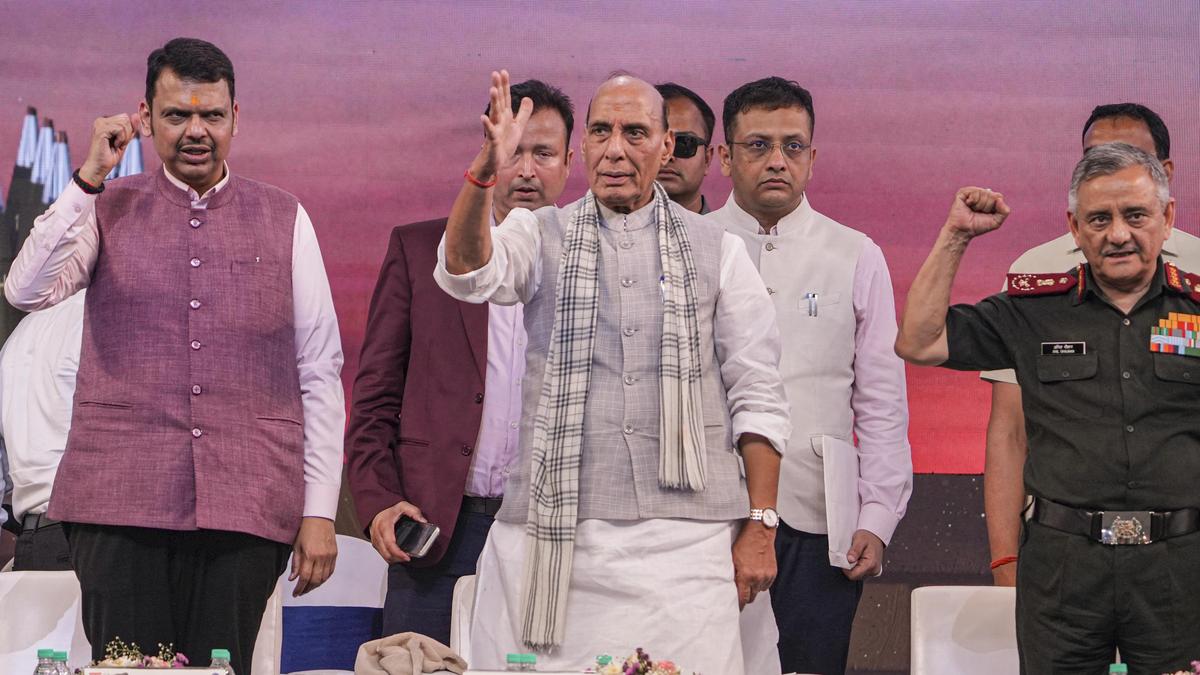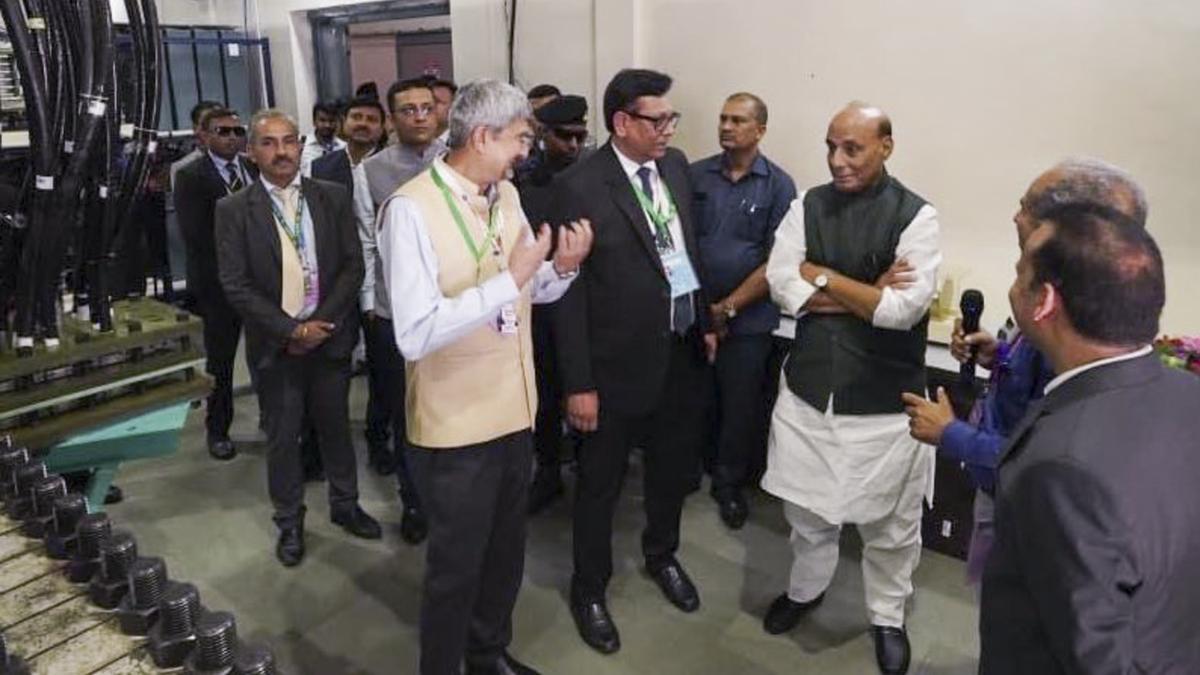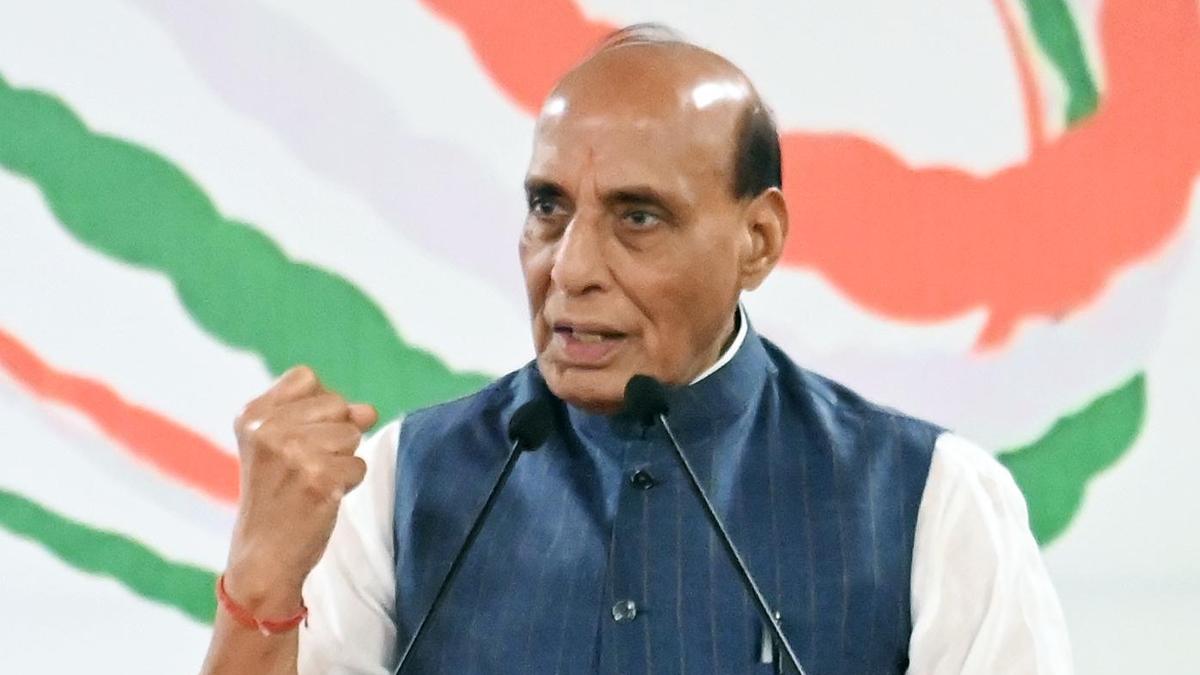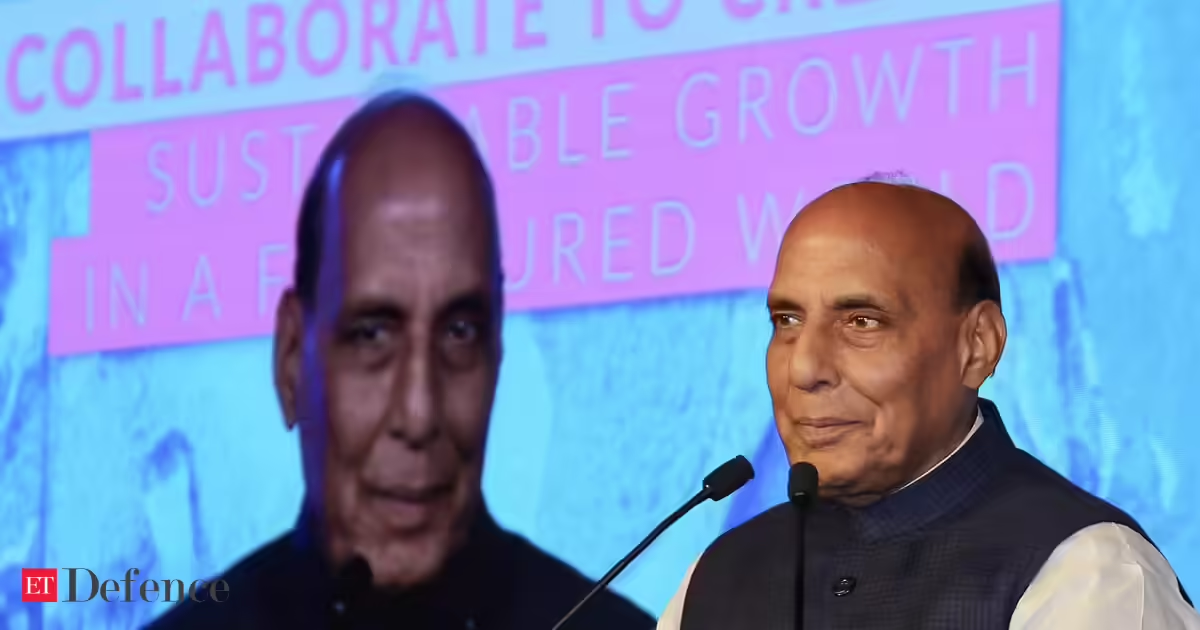
Shirdi: Defence minister Rajnath Singh on Saturday said the private sector should eventually account for at least half of India's defence manufacturing capacity, up from about 30% currently, as the government pushes to expand domestic military production.Speaking at the inauguration of a new defence manufacturing complex in Shirdi, Singh said private industry brings efficiency, research capabilities and a greater willingness to take risks.The facility, set up by Pune-based Nibe Defence, is expected to manufacture more than 500,000 155-mm artillery shells annually besides explosives, rockets and loitering munitions.Read more: India won't tolerate any form of nuclear blackmail: Rajnath Singh in Seoul"This plant will undoubtedly, while meeting the operational needs of our armed forces, also represent a major step towards strengthening India's defence industry," Singh said.It will use powerful explosive compound RDX and modern propulsion technology to make advanced explosives, he said.The ammunition park signals Nibe's entry into manufacturing long range attack systems, small arms, earth observation satellites and precision attack drones.The minister also flagged off Nibe's first Suryastra long-range multi-barrel rocket launcher system being delivered to the Indian Army. The system, made in India with technology transfer from an Israeli partner, can strike targets at a range of 150-300 km.Read more: No power can stop India from being biggest exporter of weapons in 25-30 years: Rajnath Singh"We will be delivering the entire system this year," said Balakrishnan Swamy, chief technology officer at Nibe Defence.The army's order for Suryastra, placed using emergency procurement powers invoked after Operation Sindoor, is valued at under ₹300 crore, he said. "We are looking for a larger order of 7-9 regiments of the Suryastra that is likely to be valued at more than ₹6,000 crore," Swamy said.Nibe also plans to produce a range of loitering munitions, starting from a smaller size that will hit targets at 100 km, to a larger weapon that can go up to a distance of 1000 km. A new joint venture to assemble and launch earth observation satellites was also announced during the event.
Govt wants private sector share in defence production to rise to 50%: Rajnath Singh
Defence Minister Rajnath Singh inaugurated a new defence manufacturing complex in Shirdi. He announced plans for the private sector to lead India's defence production, aiming for over 50% capacity. The facility will produce artillery shells, explosives, rockets, and drones.
332 words~2 min read