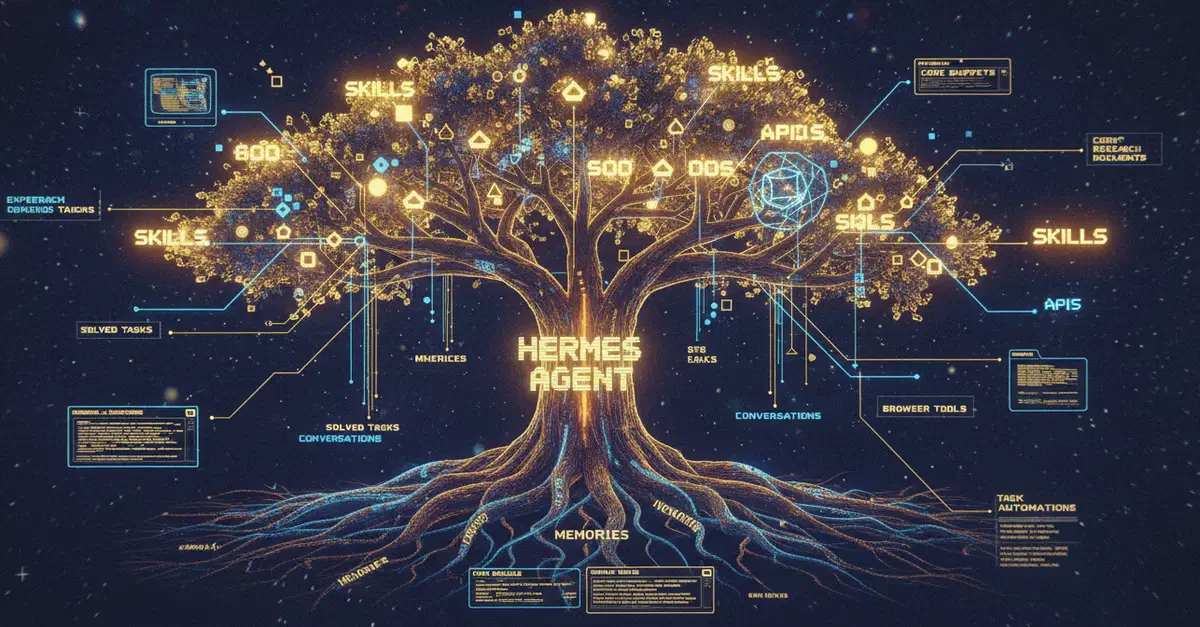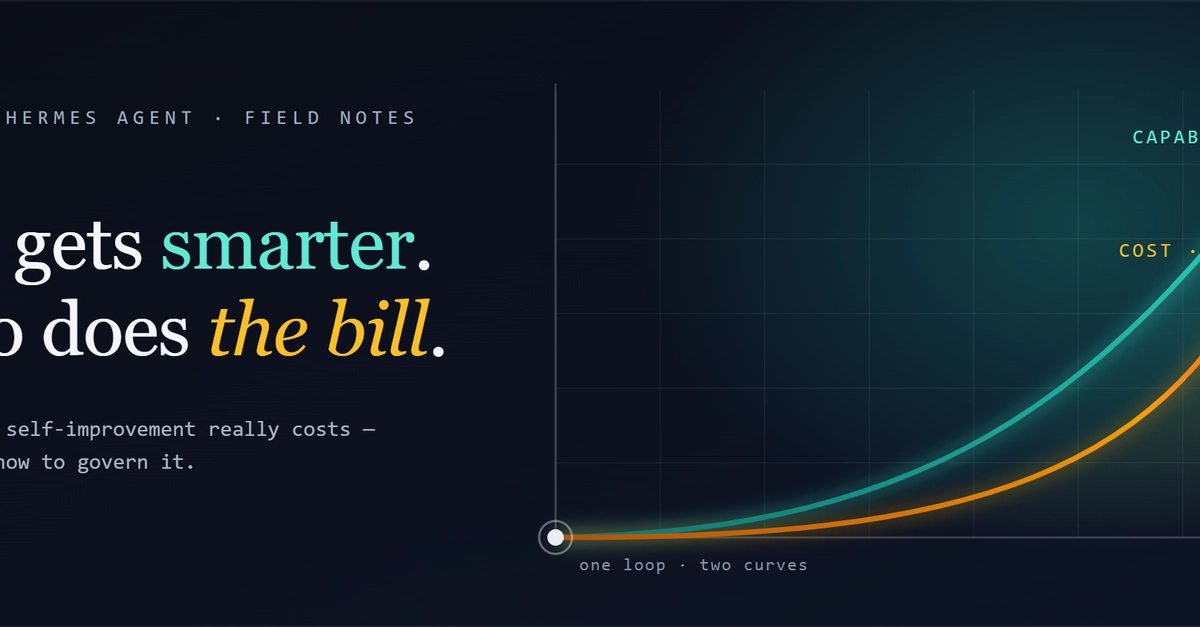
This is a submission for the Hermes Agent Challenge: Write About Hermes Agent
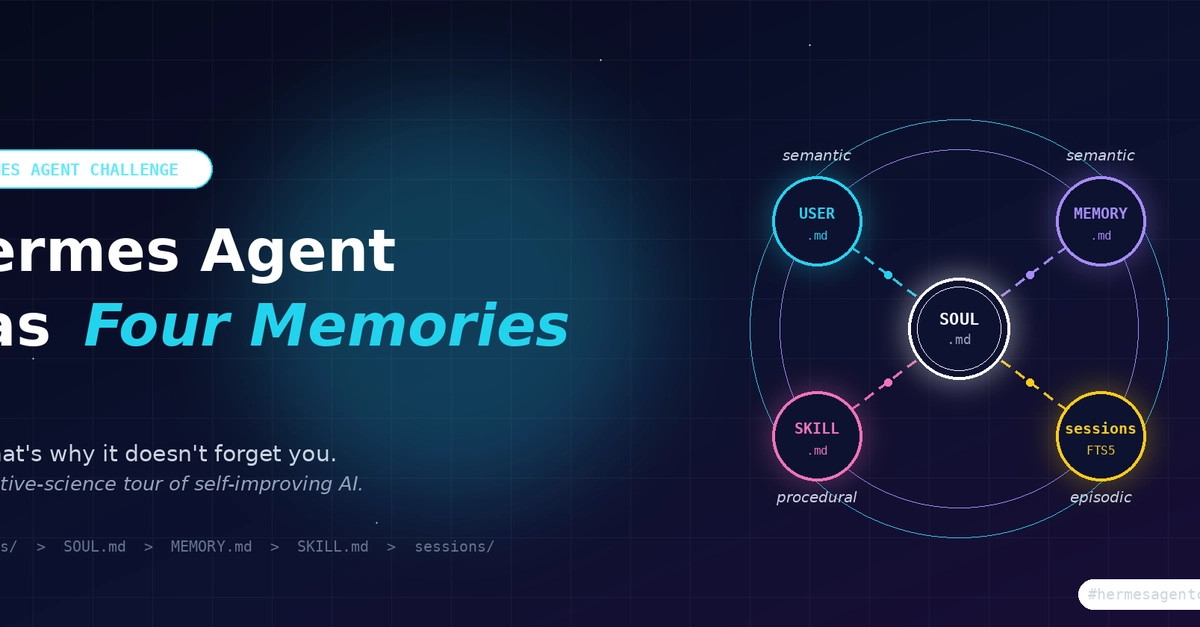
A cognitive-science tour of the only open-source agent that gets smarter the longer you run it. We map Hermes' file layout onto the four classical memory systems of the human brain — and find an architecture that quietly solves the problem every other agent fakes.
I want to argue something that sounds like marketing but isn't.
Hermes Agent isn't impressive because it's "self-improving." That phrase has been on a thousand landing pages. It's impressive because — possibly by accident, possibly on purpose — the architecture matches how a human brain stores memory. Once you see the mapping, the whole project stops looking like a clever Python wrapper and starts looking like a thesis: if you want an agent that compounds, you have to give it the same memory systems we use.
I'm an ML engineer who builds recommendation and intent systems for a living, and I spend a lot of time thinking about the gap between an agent that's interesting and an agent that holds up after week three. Almost few article write-up of Hermes I've read covers the surface — "it remembers things, it has skills, it has crons." All true. None of them ask the more useful question: