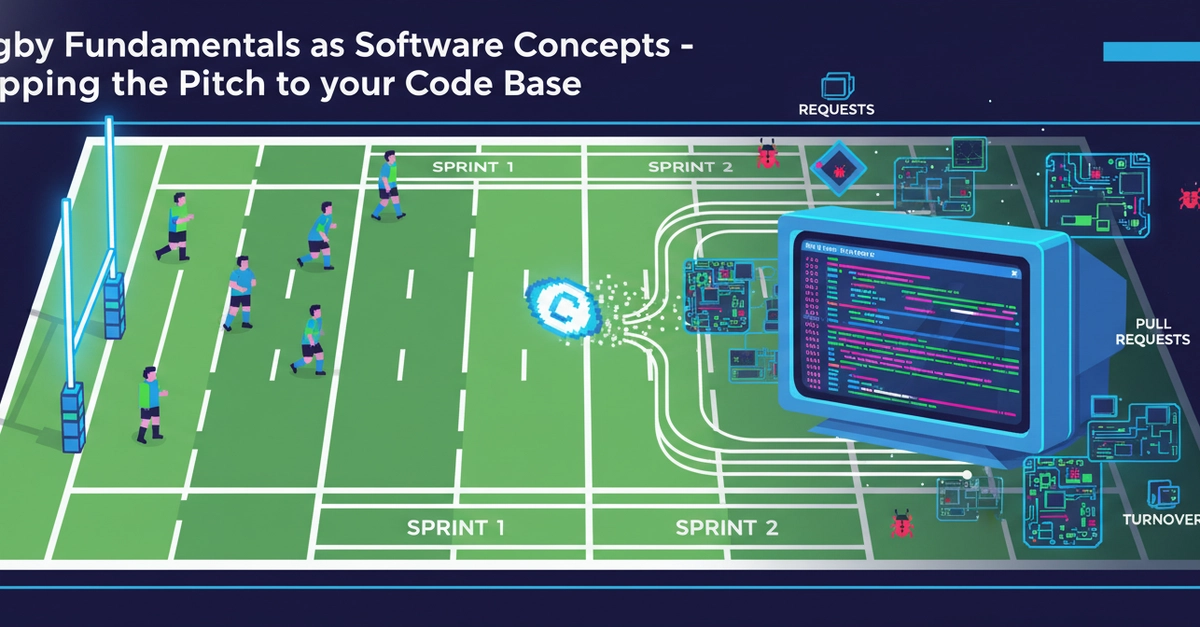
Welcome back to the series and as stated earlier, I am a developer who lives and breathes both clean codes and muddy rucks. In the last post, we established that rugby and software engineering share deep structural similarities and today we're diving straight into the fundamentals.
This post is all about taking rugby's core mechanics and mapping them directly onto software architecture, team dynamics and development workflows. Think of it as translating rugby playbook into system design patterns.
1. The Scrum: Self-Organizing Teams and Architecture
In rugby, the scrum is where eight forwards from each team bind together in a highly structured yet dynamic formation to compete for the ball. It's an organized chaos that everyone has a role, but success depends on collective power, timing and adaptation.
Software parallel: Agile Scrum + Micro services Architecture