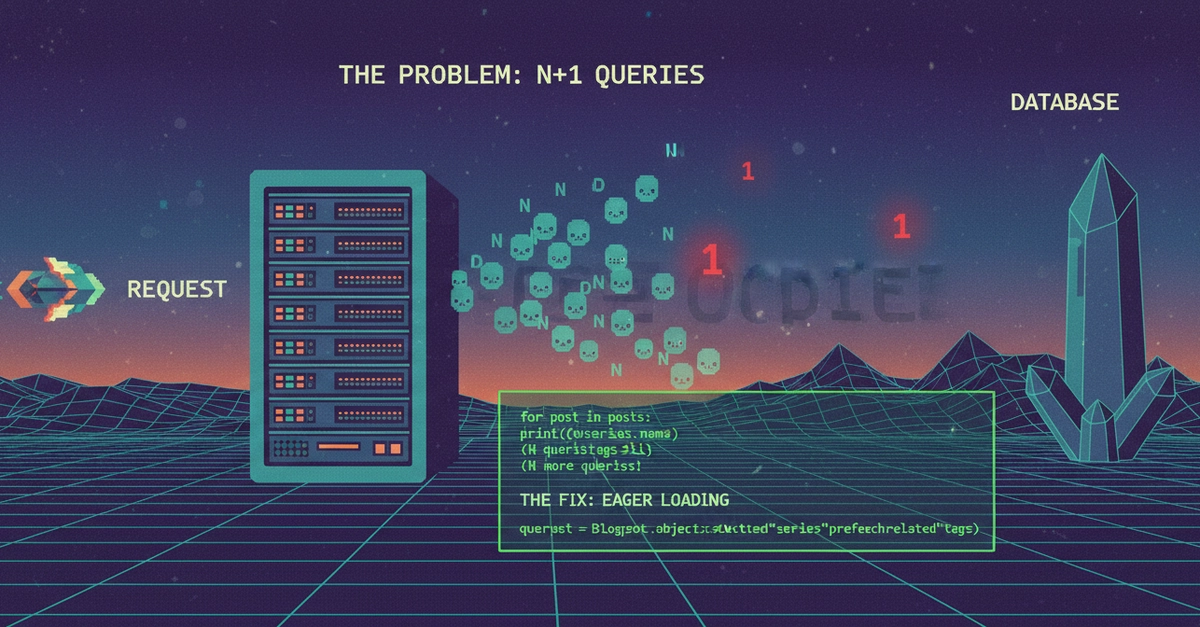
Every performant API eventually runs into the same silent killer: the N+1 query problem. It doesn't crash your app. It doesn't throw errors. It just quietly makes every list endpoint slower as your data grows — and it's almost invisible until Sentry flags it in production.
Today, Sentry caught one on my /api/blog-posts/ endpoint. Here's exactly what happened and how I fixed it in three lines of code.
What Is an N+1 Query?
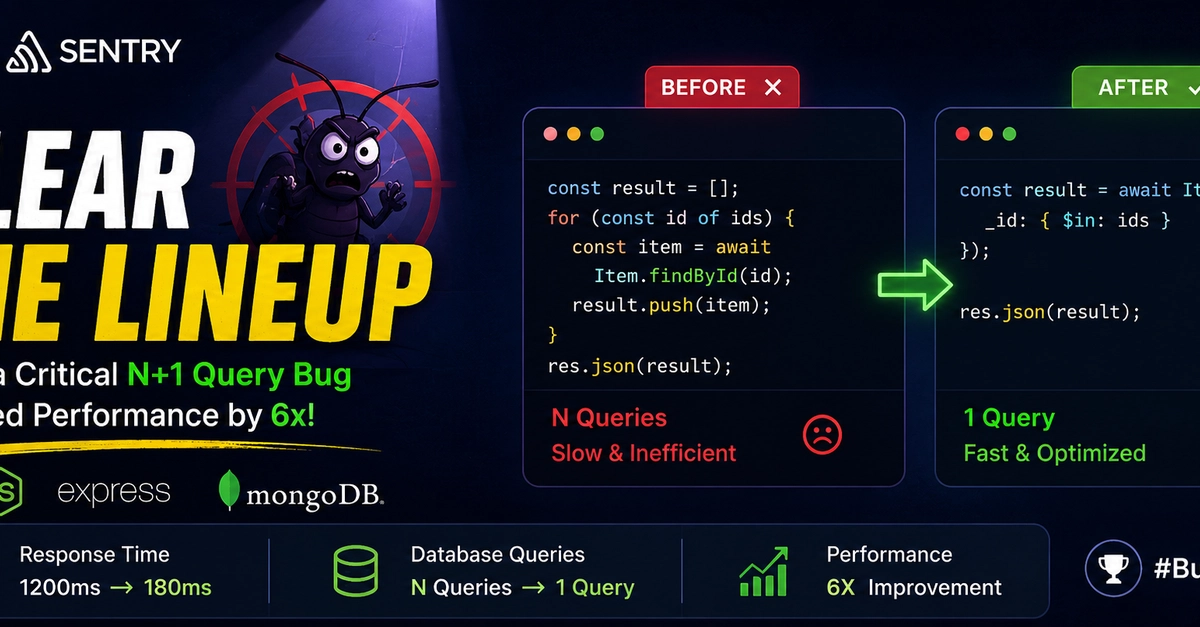
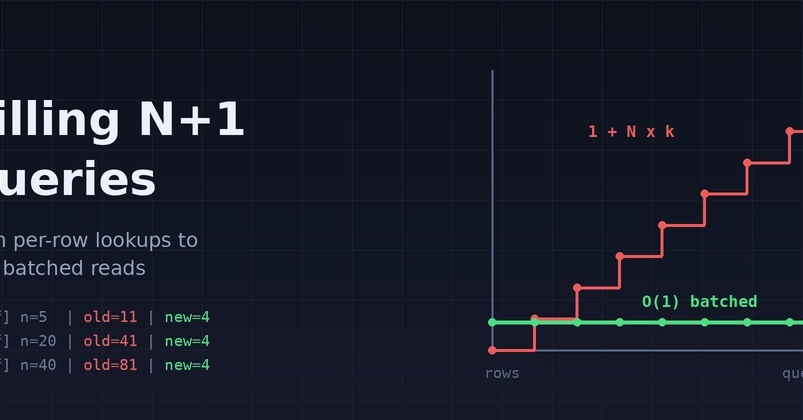
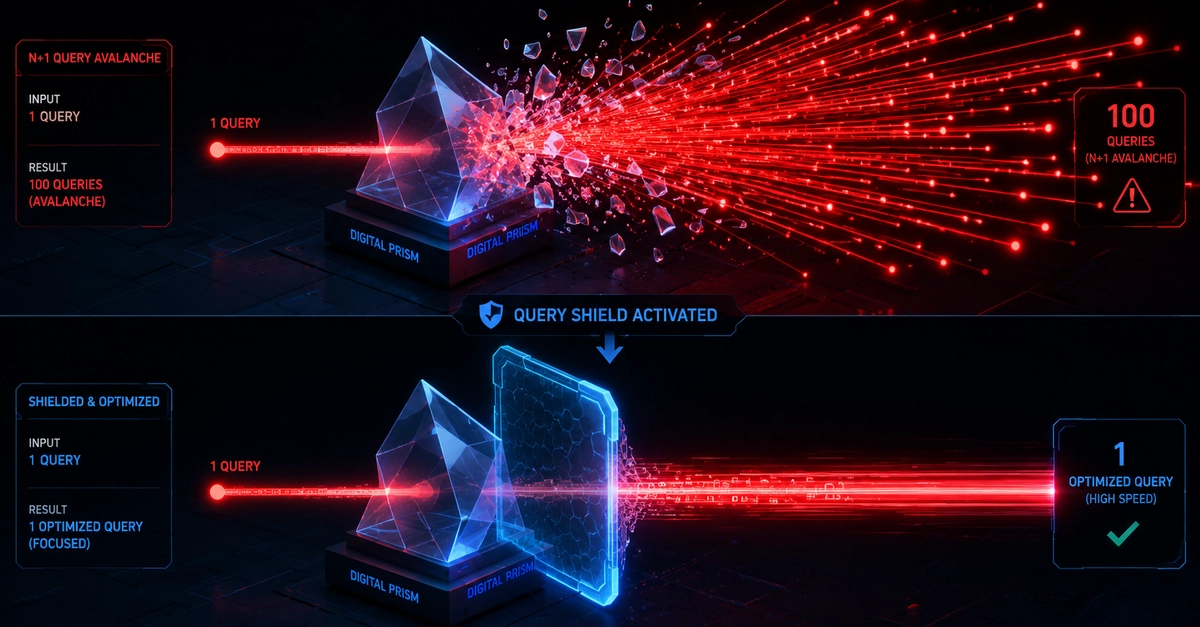
An N+1 query happens when your code fetches a list of N records, then fires an additional query per record to fetch related data — totalling 1 + N database hits instead of a flat 2 or 3.
In Django, this usually happens silently because the ORM is lazy by default. Accessing a related object on a model instance that wasn't eagerly loaded triggers a fresh SELECT on the spot. With 30 blog posts, that's 30 silent queries you never wrote.