chanakon laorob / Getty Images
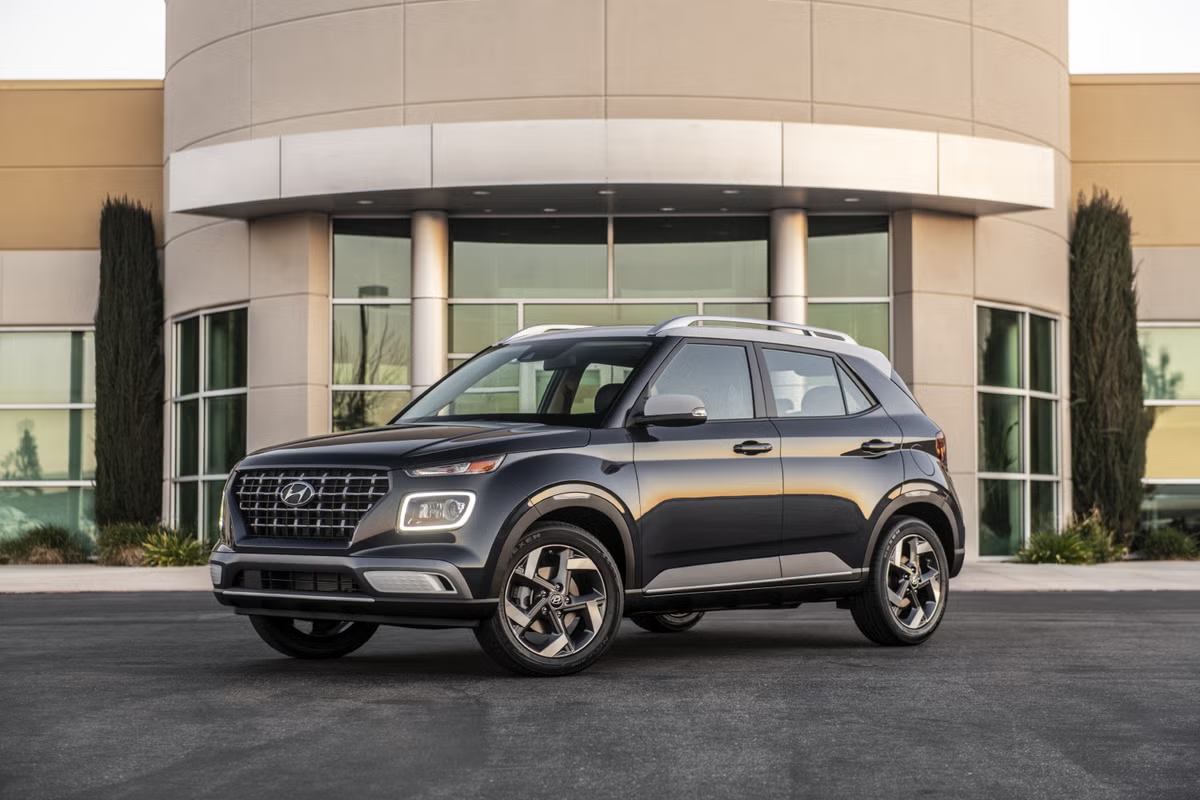
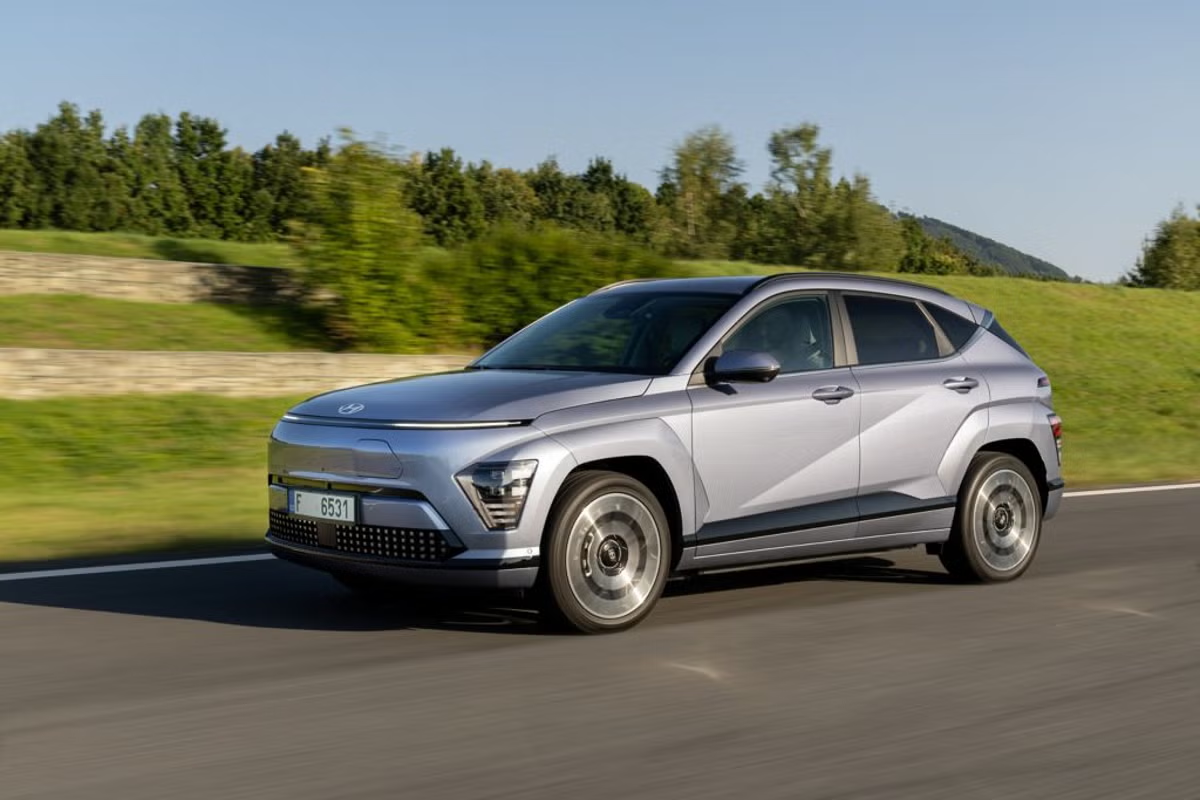
Most used cars on the market today are serviceable. The average quality floor across the automotive industry has risen substantially over the past two decades, driven by consumer expectations, safety regulations, and intensifying competition that punishes manufacturers who ship vehicles with serious deficiencies. A buyer shopping for a used compact SUV or a used sedan in the $20,000–$35,000 range will find no shortage of capable options. Many of them are genuinely good. The challenge is that a few are not. In the used-car market, where buyers often lack the recourse available with a certified new vehicle, landing on a bad one carries real financial consequences that can persist for years.
Used cars add a layer of complexity to the bad-car problem that new cars do not. A vehicle that was merely mediocre when new can become a liability after 50,000 miles of use, especially if its initial flaws — underpowered engine, poor ride quality, substandard materials — have compounded with wear. Buyers who choose a new car with a poor review score can at least return it to the dealer if the problems become serious enough. Used-car buyers take on a vehicle’s history alongside its current shortcomings, and a car that finished last in its class rankings when it was new offers no particular reason to believe it has improved in the intervening years.