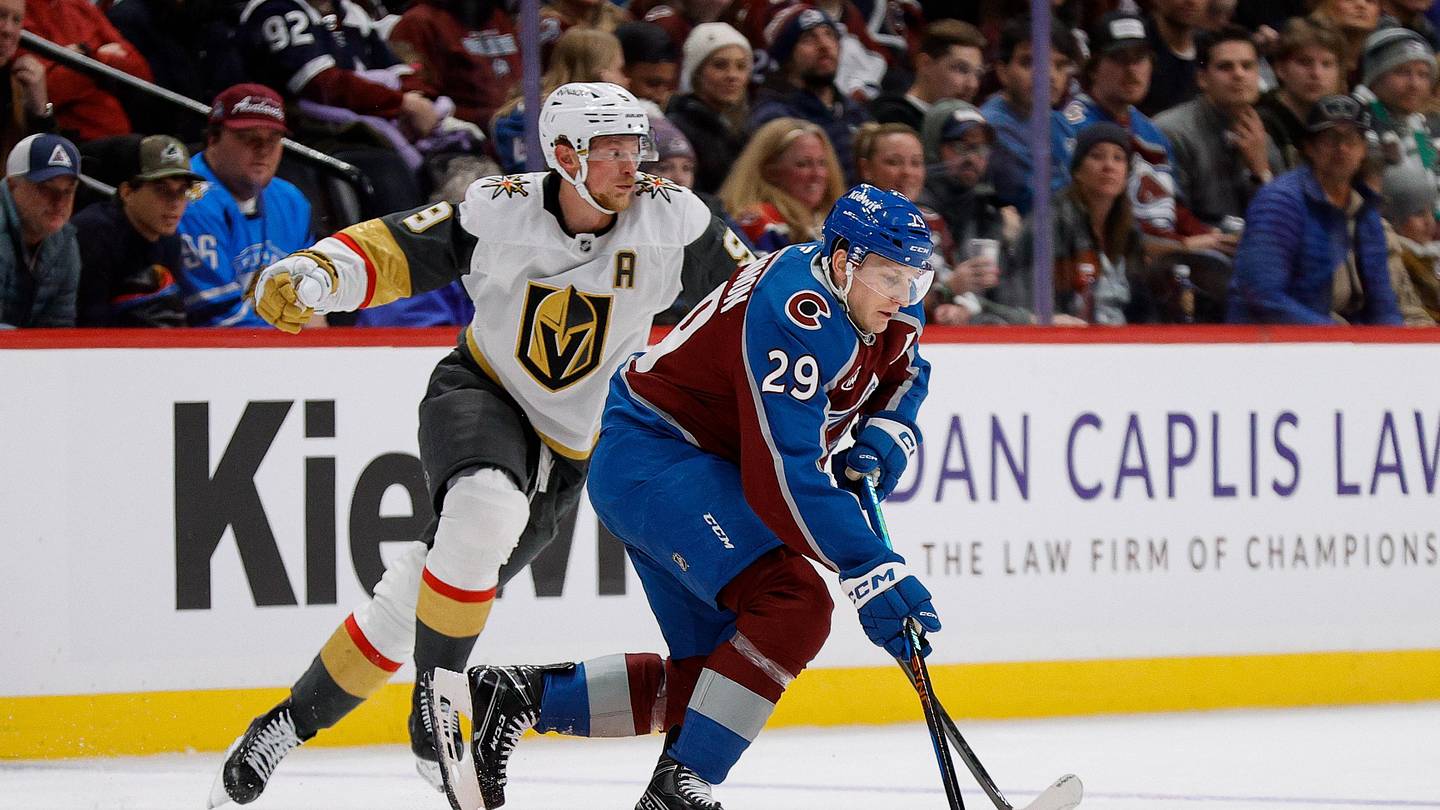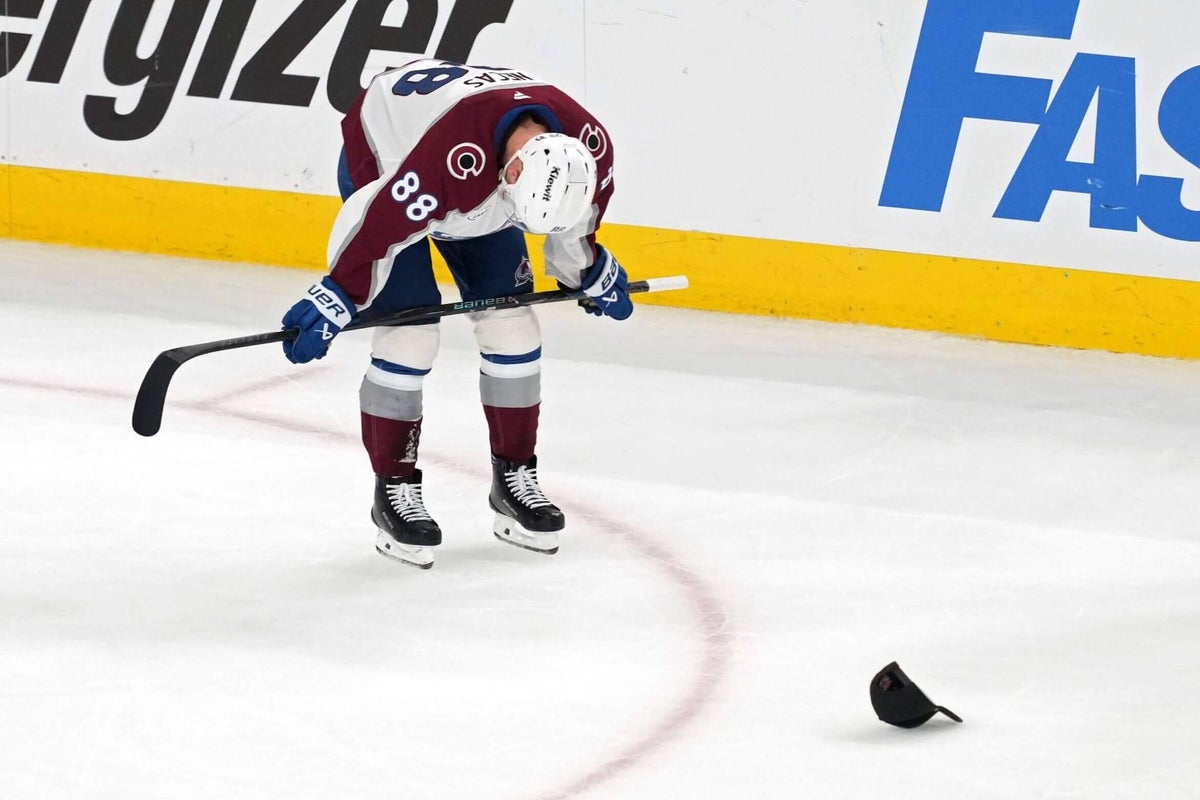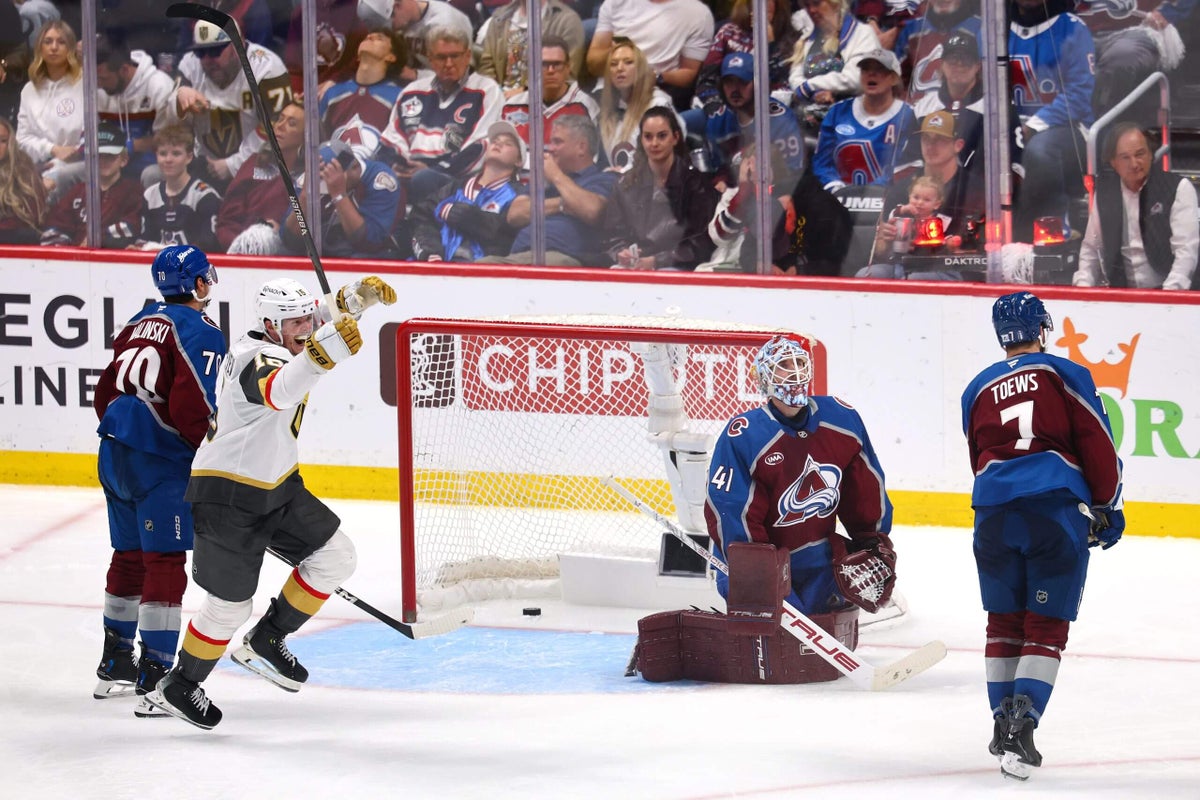
DENVER — Cale Makar is a magician on the ice, a breathtaking skater with unparalleled vision and skill for a defenseman. He can be a one-man breakout. He can transport the puck through the neutral zone quickly and cleanly with a perfect pass or some fleet footwork. He can direct traffic in the offensive zone and generate offense for himself or his teammates. He can thread an improbable pass, pick an impossible corner. He can do almost anything.But he can’t fix this. Certainly not by himself. Certainly not at less than 100 percent.The Colorado Avalanche — the big, bad Colorado Avalanche who lost just two of their first 40 games in regulation, who led the NHL wire to wire, who steamrolled their way into the Western Conference final in just nine games — find themselves in a stunning 2-0 hole to a Vegas Golden Knights team that at times this season looked as if it might miss the playoffs entirely. Friday night’s 3-1 loss in Game 2 was the first time all season that the Avalanche lost a game in which they led after two periods, falling to a mind-boggling 45-1. Vegas has the lead, the belief, the momentum. Colorado has lost the one thing it’s had all season: control.And it’s easy to point to Makar’s absence as the reason why. Makar, after all, is one of the very best hockey players on the planet, a player so good and so dynamic that every time he touches the ice for a morning skate to test out his apparent upper-body injury, an entire state holds its breath.But Makar can’t make the Avalanche harder on the puck. Can’t make them win more board battles. Can’t make them get more physical on the forecheck. Can’t make them create more traffic in front of Carter Hart. Can’t get Marty Nečas to snap out of whatever funk he’s in. Can’t get Brock Nelson going. Can’t get Nathan MacKinnon to hit the net on a clean look. Can’t get Devon Toews to hit the net from the slot. Can’t get Valeri Nichushkin to hit the net on the rush.Yes, Makar can make a stagnant power play more dangerous; it’s hard to imagine Colorado going four full minutes without a shot on goal with Makar up top. Yes, he has a unique symbiosis with MacKinnon after so many years together. Yes, the Avalanche want and desperately need Makar back.“There’s urgency to get him back, like since he got hurt,” Avalanche coach Jared Bednar said with a wry chuckle. “But it’s going to be Cale’s decision when he’s coming back. He’s doing all the work he can possibly do to get back as fast as he can. If he can play, that’s great. I don’t make that decision for him.”But Colorado’s problems run deeper than just Makar.Game 2 certainly was better than Game 1. The Avs didn’t spend the first period running around their own end like they did in Game 1. But then they lost the plot in the third period, giving up goals to Jack Eichel and Ivan Barbashev barely two minutes apart to turn a 1-0 lead into a 2-1 deficit. They got on the board first, which forced Vegas to get a little looser and riskier defensively to create some offense, opening up more shooting lanes and more opportunities in transition. But then the Avalanche repeatedly missed the net, constantly trying to pick a corner instead of peppering and testing Hart. They gave up a little less defensively. But they did a lot less offensively, managing just six high-danger scoring chances after posting 16 in Game 1.They were soft — on the puck, on their opponents. They were sloppy — with their passes, with their shot selection.Makar can help. But he’s not a panacea for all that ails the Avs.After all, Vegas is missing its captain and one of its best and most important two-way players in Mark Stone. Just as with Makar, every day is a will-he-or-won’t-he with Stone. Every day he steps on the ice to test out his body, every day the hockey world waits with bated breath to see if he’ll be back, and every day the answer is no. But Vegas manages. Vegas adjusts. John Tortorella called Eichel the best 200-foot player in the game, and while his equalizer in Game 2 was his first goal since the first round, he still always makes an impact defensively and on the penalty kill, which has been lights-out for the Golden Knights. Mitch Marner has been outstanding in both games, Pavel Dorofeyev is a threat every time he’s on the ice, Barbashev stepped up with the go-ahead goal and an empty-netter to ice it.Vegas is making do. Colorado is just making a mess.Perhaps just as concerning is how unconcerned Colorado sounds about its game.“There’s a lot of that game that I really liked,” Bednar said.“I liked our game a lot,” captain Gabriel Landeskog said.The message was the same after Game 1. Keep playing this way, and everything will be fine over the course of a seven-game series. But Vegas is too good for this to be good enough.Fourth-liner Logan O’Connor, who has been Colorado’s most dangerous forward in this series — let’s face it, not ideal — was a little more honest with his assessment. He said the Avs haven’t made life difficult enough on Hart, didn’t manage the puck well and got “impatient” when they couldn’t extend the one-goal lead.“It’s frustrating, but we did it to ourselves,” he said. “So we can’t feel sorry for ourselves. It’s on us now. We made it difficult.”Of course, there’s a mental factor to Makar’s absence, too. On top of all the things he does for the Avalanche, the sense of security he gives them matters, too. There’s a confidence that comes with knowing he’s back there — back there to bail you out in a pinch, back there to push things offensively in a bind. Asked after the morning skate if Makar’s absence had a mental effect on the team, Bednar said no.But he had to think about it first.“I’m gonna say no,” he said. “I’m gonna say it shouldn’t.”Defenseman Josh Manson said the same thing. It shouldn’t.“I don’t think when you’re playing you can think about it,” he said. “I think that’s a hindrance. Going into it, obviously, you hope he’s playing. I don’t think anybody can ever stand up here and say, ‘Oh, I hope he’s not playing.’ I mean, he’s a generational player. I don’t think you want to think about it.”But players are only human. And when asked to fill the skates of a player who skates like that, when asked to shoulder the minutes of a player who plays so many important minutes, when asked to do all the things it so often seems only one player can do, it’s only natural to think about it. To sweat it.Maybe that can at least partially explain why Colorado has had a little less hop in its step, a little less oomph in its game. But it’s not a good enough excuse. Not on a team this talented, a team this deep, a team with so many other Stanley Cup winners to lean on.The Avalanche — the mighty Avalanche — can’t be led offensively by O’Connor and Ross Colton. They need to be led by their stars, the way Vegas has been in this series. MacKinnon needs to be the menace he so often is. Nečas needs to be the 100-point player who made it easier to forget Mikko Rantanen. Nelson needs to be the two-way force he was all season. Artturi Lehkonen needs to find his game in a hurry. Nazem Kadri needs to generate more. The Avalanche need to be more, well, Avalanche-like. Indomitable and unflappable.But after Eichel’s equalizer, the Avalanche seemed to sulk and soften, just long enough for Barbashev to score the game winner. Suddenly trailing, they looked stunned, flat-footed, bewildered.Beatable.The Knights believe now. They have proof of concept that their stingy defense and opportunistic offense can win the day. And the Avalanche, for the first time in eight months during this remarkable season, must have a little doubt.Makar might not be walking through that door. And if he does, it almost surely won’t be at full strength. The Avs can’t sit around and wait for him to come rescue them. They have to rescue themselves, or another prime chance to win the Stanley Cup will pass them by.“It’s a seven-game series for a reason,” O’Connor said. “But we’ve got to start with one in Vegas.”With or without the best defenseman in the world.
Avalanche’s problems in Western Conference final run deeper than Cale Makar
The Avs find themselves in a stunning hole. Makar can’t fix this. Certainly not by himself, and not at less than 100 percent.
1,438 words~7 min read