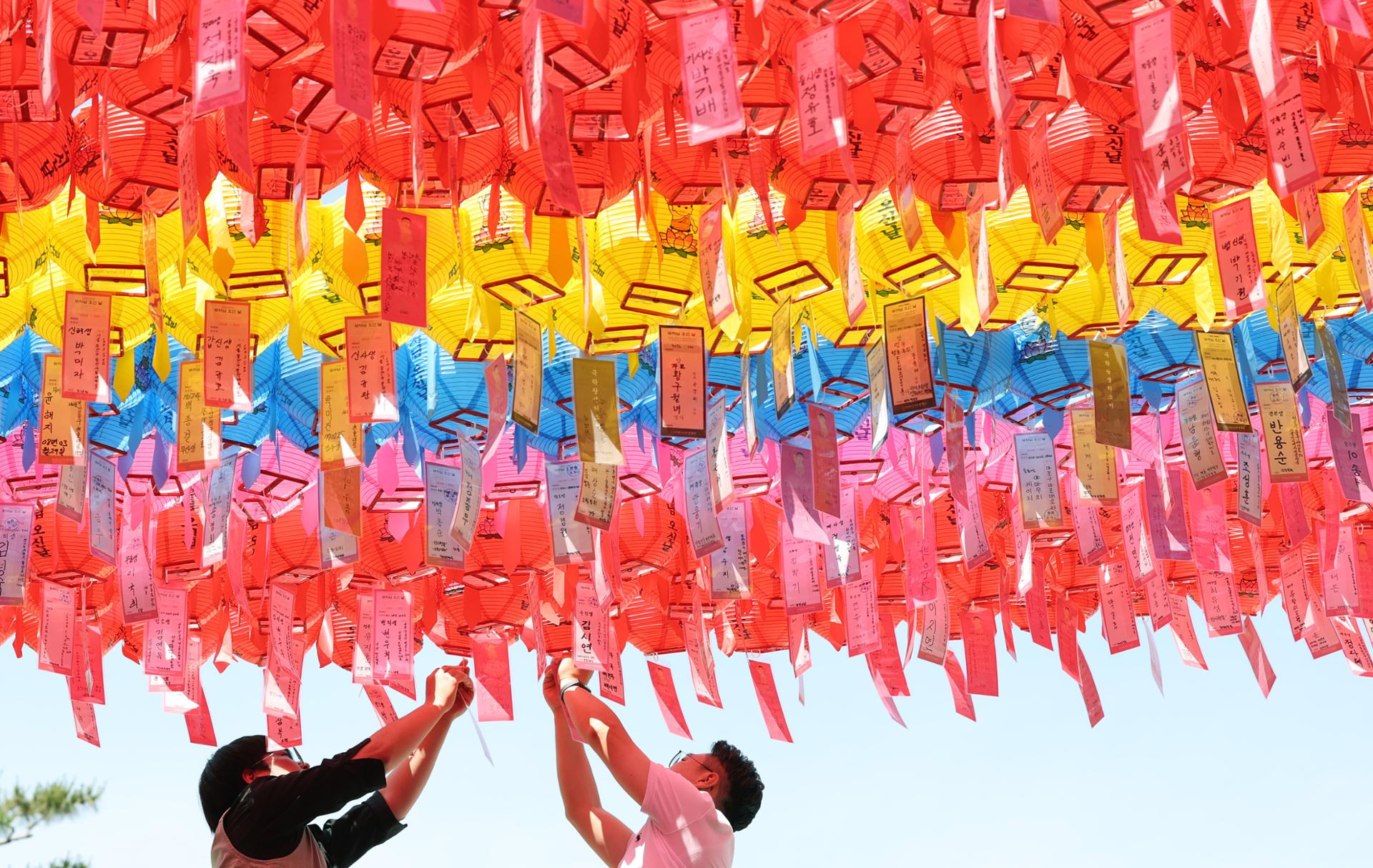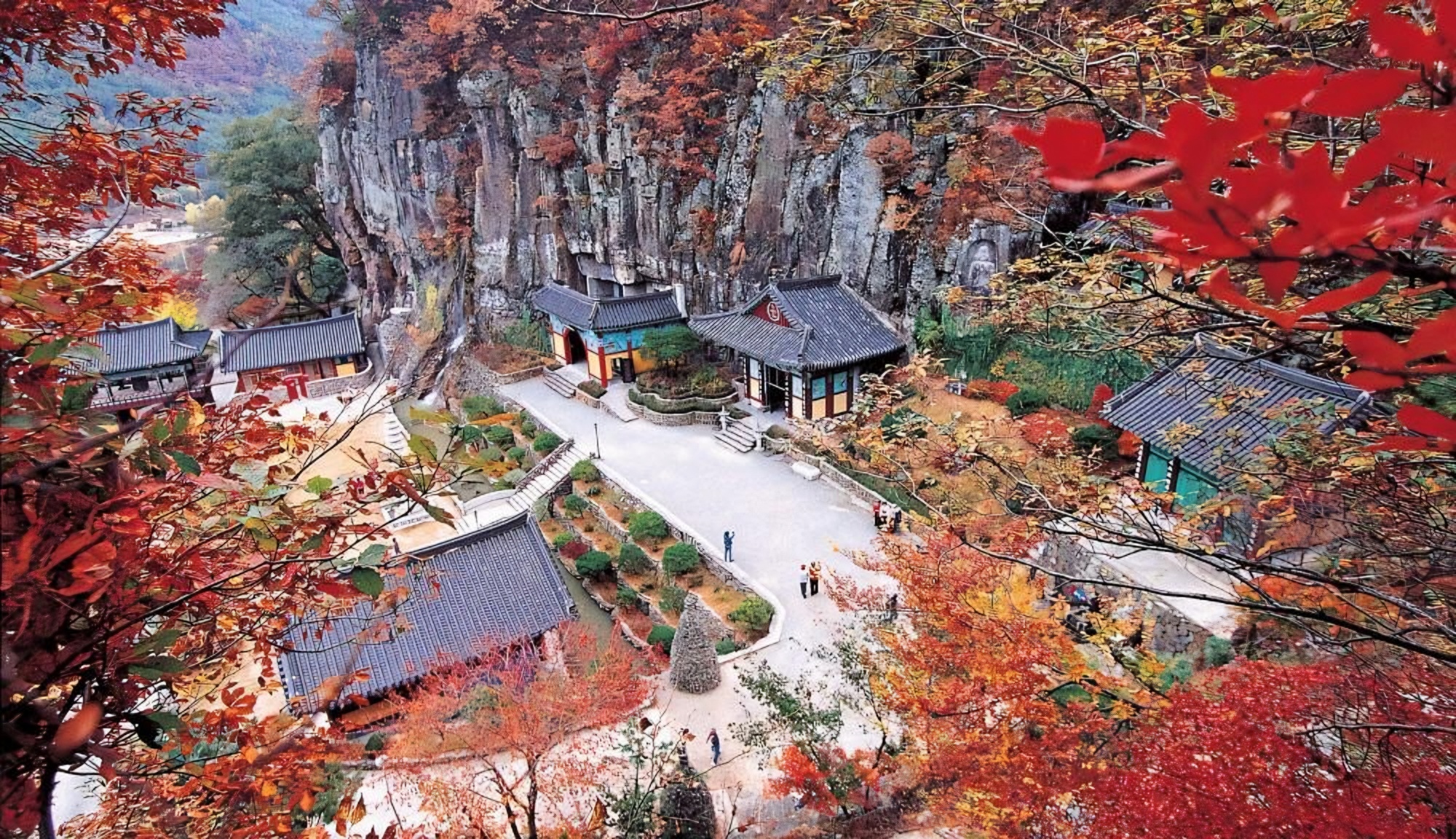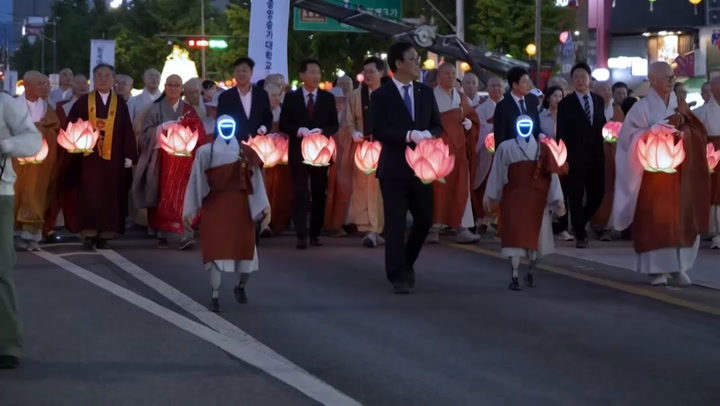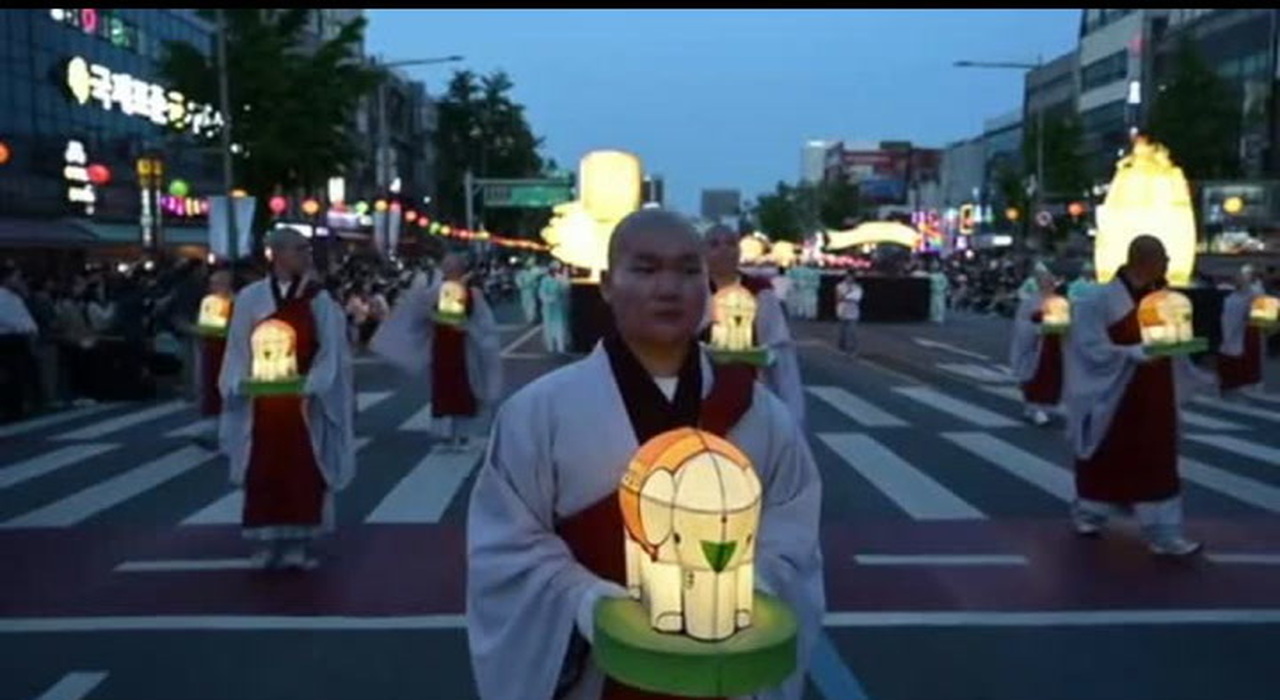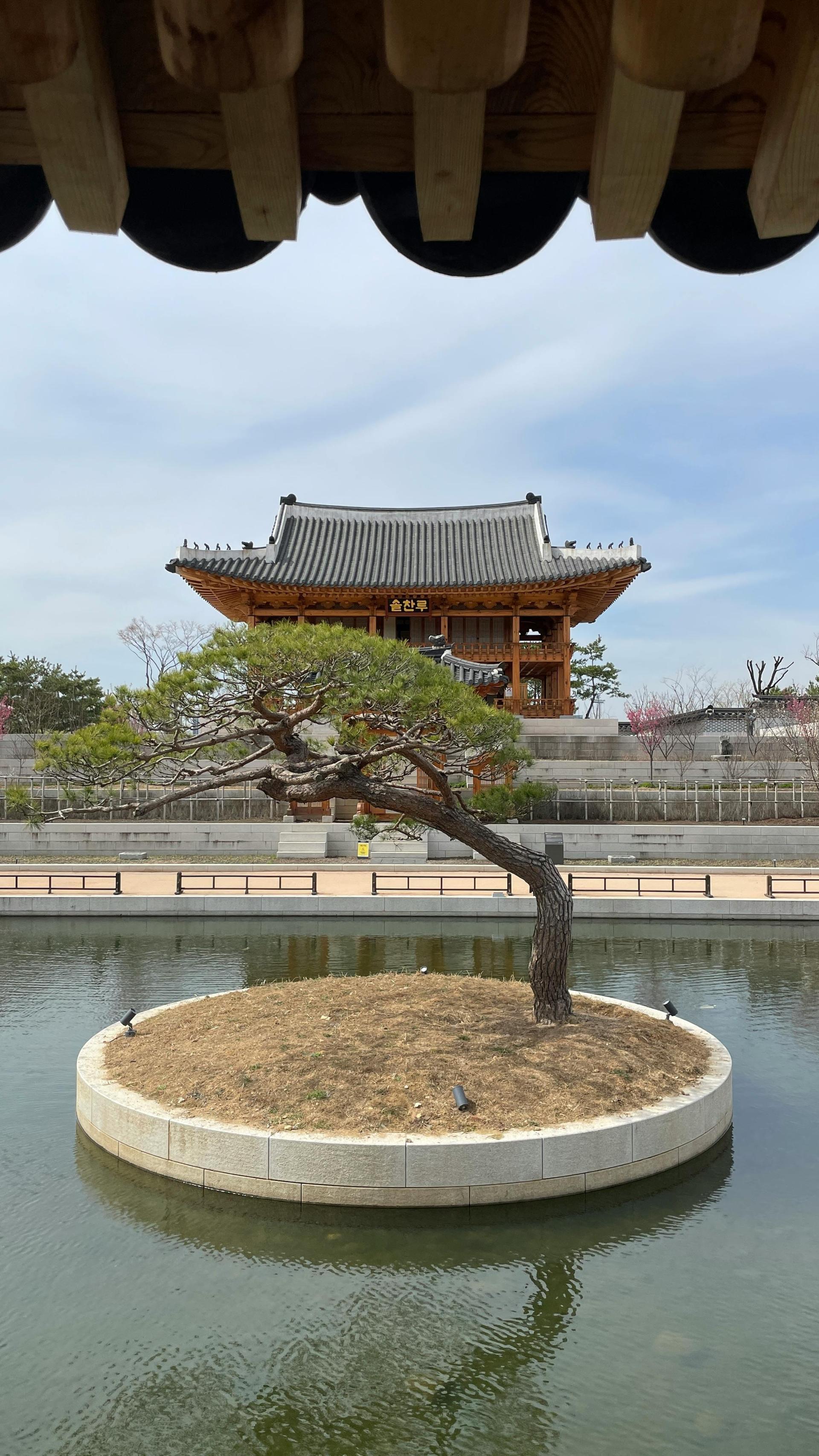
Courtesy of Byung Chul MinOn Monday, the people of Korea get a national holiday. No work. No school. No rush hour traffic and packed subways as people scramble to their offices. Just a nice long weekend as the weather turns beautiful. Sun. Mountains. And iced-coffee. And it’s all for Buddha’s Birthday – or more literally “Bucheonim osin nal” meaning "the day when the Buddha came."During my time here I’ve come to understand how Buddhism, Confucianism, and Taoism differ from the monotheisms back home. With things like Christianity and Islam, there’s a god. And you believe in that god. People of course have varying degrees of belief and this waxes and wanes during their life. But ultimately, someone’s association with the religion is defined by their belief. It creates a dichotomy. You either believe or you don’t. You can’t really be a Christian and a Muslim because that would be to believe in two different stories and your belief in one would go some way to discredit your belief in the other (generally, of course).But East Asian worldviews are more like a philosophy than a religion. They function as a path – a course of action rather than a series of commandments to be adhered to. They are social, earthly, and pragmatic rather than transcendental and divine. They help you get through the life you are living right now rather than promise angels and virgins in the next.So when you see Korean people at Buddhist temples, it doesn’t mean they are all devout believers of Buddhism. Many just go there because it looks nice. Because it’s a public holiday. Because you can take nice photos. Reflect on the past. Slow down. Forget capitalism and politics for a few hours. Spend time with your kids. It’s the same way that people go to art museums and exhibitions. The people there are generally not devout Monet-ists or Van Gogh-ians. They just want to try something aesthetic and cultural that day because they think it will be good for them. That’s how Buddhism works here. It’s a tool you use to navigate daily life. Another way it differs from monotheisms is that it doesn’t really suggest that there are celestial and eternal beings coming to give us guidance. Buddhism’s teachings do not come from the sky, from a burning bush, or from a prophet who had the good fortune to one day be visited by the most powerful being in the universe. Buddhist teachings come from us: they come from people like you and me. The PeopleSiddhartha Gautama, most commonly referred to as the Buddha, was a prince. Shielded from the outside world by his father, he spent his youth surrounded by privilege, unaware of human suffering. Confronted by the realities of aging, sickness, and death at age 29, he abandoned his royal life to find an escape from suffering. After years of extreme asceticism failed, he discovered the "Middle Way" and achieved Nirvana (enlightenment) beneath a Bodhi tree, becoming the Buddha. His name means the “awakened one” – he is a human who through deep reflection and meditation learned how to best navigate this existence. According to early Buddhist texts, when people met him after his enlightenment, they were often struck by his peace and would ask him, "Are you a god? A wizard? An angel?"He simply replied: "No. I am awake."The Buddha did not claim to be a god, a prophet, or a savior. He viewed himself as a physician for the mind, offering a practical framework for individuals to wake up to reality and find peace through their own effort.That was a huge revelation to me. From the outside Buddhism seemed so spiritual. So full of temples and incense. The idea of ghosts and genies, of magic, and all other orientalist tropes filled my mind with mystery. And then I realized none of that really existed in Buddhism. It was all about me, my mind, and dealing with mental health. I mean that’s pretty damn modern. It is probably why so many young people are drawn to it these days. Not only does it not proselytize, it seeks to help them with the thing they are struggling with most. Buddhism also tells us that things are not yet complete. We still have suffering in the world. People still experience great pain and devastation. And, if we’re being honest, some of the world is reeling from the bombs of war as two monotheistic belief systems lay claim to land. We are waiting for new teachings. And, again, it won’t come from god or the sky. It will be one of us. One of us humans here on Earth will have to wake up and see what’s really going on. The next Buddha might be you. The CircleBut how does one become a Buddha? Obviously that’s very difficult. But there is a practice. In Korea, this will sometimes revolve around a hwadu (a question given to people designed to promote mental strength and, hopefully, enlightenment). Take the famous hwadu of the goose in the bottle.The premise is simple, like a riddle designed by a surrealist. A man puts a tiny goose inside a glass bottle. He feeds it and cares for it every day. The goose grows and grows until it completely fills the inside of the vessel. It can no longer get out. Now, the challenge: how do you get the goose out of the bottle without killing the goose, and without breaking the glass?When you first hear this, your modern, rational brain immediately thinks about physics, lubricants, or maybe some bizarre lateral-thinking puzzle trick. My initial response was to use water! Then you look for a loophole in the rules. But a hwadu isn’t a logic puzzle. It’s a cognitive trap. Specifically designed to run your intellect into a brick wall until it collapses from exhaustion. And then you can hopefully see what’s really going on. I once heard a teacher say, “How do we know we’re not already in heaven and making a mess of it?” That blew my mind. Because I knew all the ideas of utopias, of everlasting happiness, and of the faraway lands replete in literature and film that talk of promise. But here was the idea that we are there right now. We just can’t see it. Maybe the story of the tigers and the strawberry will help you. A man is walking across a field when he suddenly spots a tiger running toward him. He races to the edge of a steep cliff and grabs hold of a vine and swings himself over the edge. He looks up. The tiger is at the top of the cliff. The man looks down to see if he can drop to safety. At the bottom, a second tiger waits. He is trapped.Then, he hears a faint scratching sound. Two mice (one white, one black) are slowly chewing through the very vine he is hanging from. His strength is giving out. The vine is fraying. Death is absolute, certain, and immediate.Then he notices a tiny wild strawberry growing out of a crevice just a few inches from his face. It’s ripe, red, and glistening with morning dew. He takes the strawberry, and puts it into his mouth. How sweet it tasted.Now this story isn’t about a guy on a cliff. It’s a diagnostic map of your daily life. Most of us spend our entire lives on that vine. We look up in panic at what we’ve done, or we look down in terror at what might happen next. We let the hyper-capitalist hustle, the political dread, and the sheer weight of existence paralyze us. We are so busy worrying about the tigers that we completely ignore the strawberry right in front of us.Buddhism doesn’t promise to shoot the tigers for you. It doesn't magically repair the vine. The human condition is inherently fragile, and the tigers aren't going anywhere.What the story suggests, however, is a radical shift in attention. It tells us that the past is gone, the future is an abyss, and the only thing that actually exists, the only thing that is real, is this exact, fleeting second. Kung Fu Panda was right!The strawberry is that sip of iced coffee on a sunny Monday morning. It’s the sound of your kids laughing. It’s the aesthetic beauty of a painting or a quiet walk in the mountains. Even in a world filled with structural chaos, suffering, and a fraying vine, you still have the agency to reach out, notice the present moment, and realize how sweet it tastes.That’s what we do together this Monday.
Searching for the Korean Buddha - The Korea Times
On Monday, the people of Korea get a national holiday. No work. No school. No rush hour traffic and packed subways as people scramble to their offi...
1,436 words~7 min read