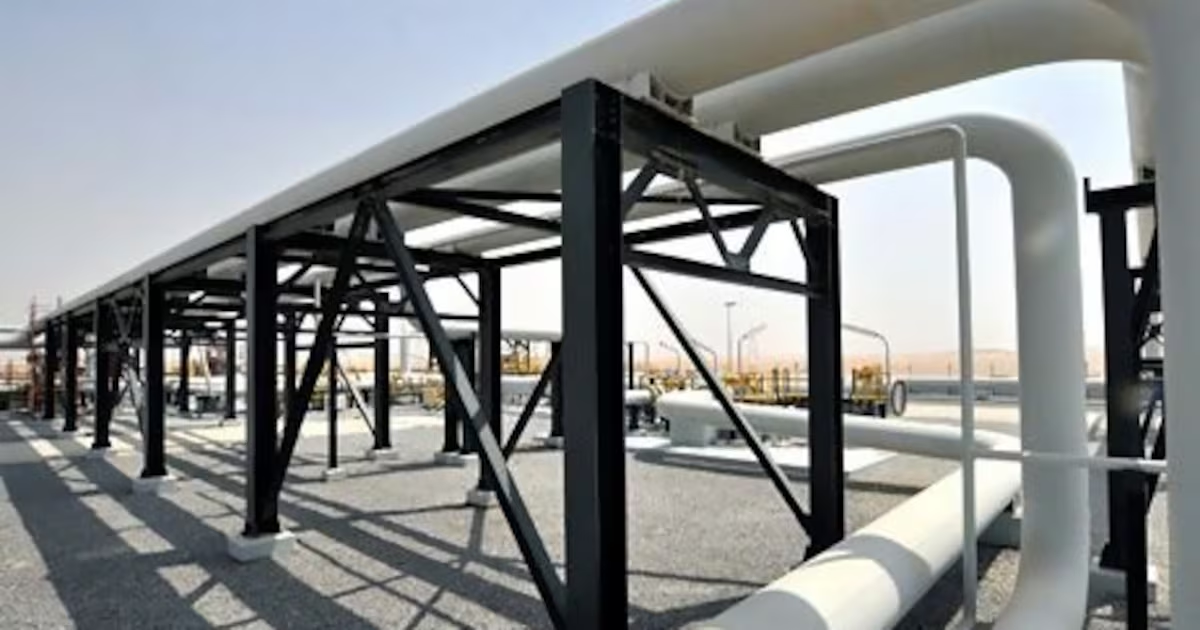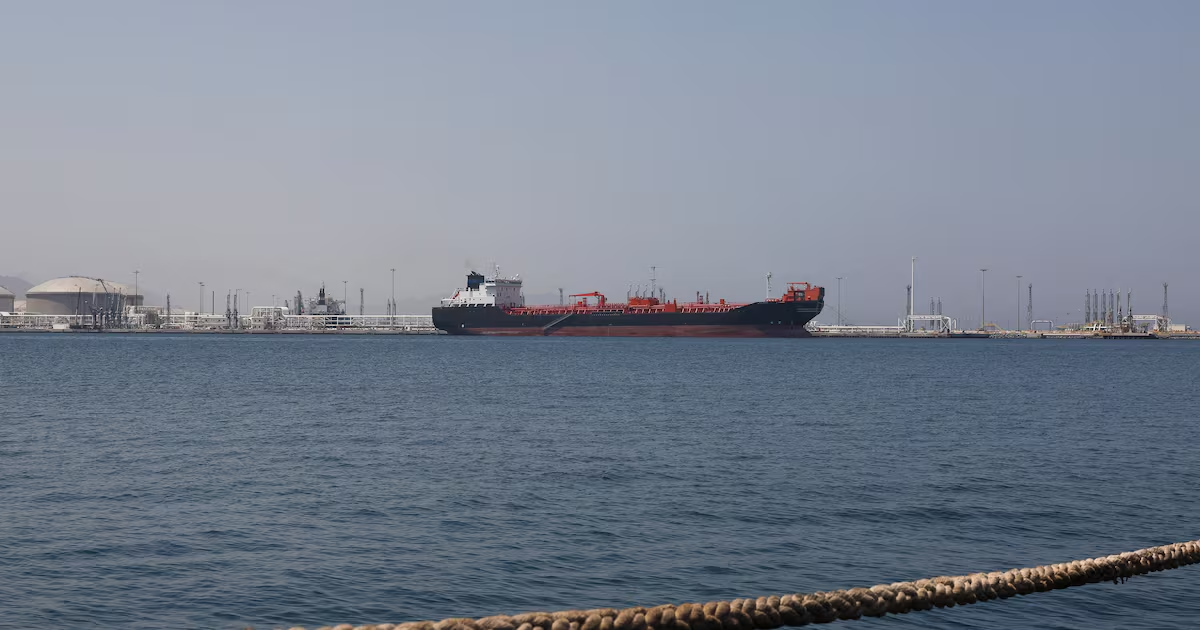
Five Gulf countries have maintained their credit ratings and stable outlooks amid the US-Iran war, largely due to their sufficient fiscal buffers that have acted as a cushion against economic shocks.The UAE retained a long-term issuer default rating of AA-, as oil export revenue is expected to remain strong during the conflict and to offset immediate negative impacts, Fitch Ratings said on Friday.An AA- rating is among the three high-grade rankings and is the fourth-best on Fitch's rating scale. Investment grade makes it easier to access capital markets and raise funding when the need to borrow arises.The Emirates, the Arab world's second-largest economy, also enjoys abundant fiscal and external buffers, and is being anchored by Abu Dhabi's sovereign net foreign assets, which are estimated at about 164 per cent of UAE gross domestic product in 2025 – among the highest of Fitch-rated sovereigns, the firm said.The capital's export revenue is projected to be higher than prewar forecasts despite the disruption, as higher oil prices – so far averaging $86 a barrel in 2026 – and pipeline exports to Fujairah offset lower volumes through the hotly disputed Strait of Hormuz, according to Fitch, which maintained its AA rating for Abu Dhabi earlier this month."We consider Abu Dhabi's oil export infrastructure less vulnerable to long-term damage than more concentrated and bespoke downstream oil or liquefied natural gas plants," analysts at Fitch wrote.Play24:14UAE ministers pledge to take energy, trade and defence to the next levelThe UAE's real GDP is expected to decline by 4.8 per cent this year, with a 3.2 per cent contraction drop in non-oil GDP, while Dubai's is seen to shrink close to 7 per cent, the report showed.And in the aftermath of the UAE's exit from the Opec and Opec+ groups, hydrocarbon GDP is seen to slide by about 10 per cent in 2026, but strongly bounce back in 2027 with oil production no longer constrained by quotas, Fitch said. The Washington-based Insititute of International Finance stated a similar scenario in a report this week."The damage from the war on non-oil growth and economic diversification is unclear; the longer and more structural the deterioration in the regional security environment, the greater the adverse impact would be, which could challenge the [UAE'S] sovereign balance sheet," the Fitch analysts said.Saudi Arabia, Qatar, Kuwait and BahrainSaudi Arabia's long-term local and foreign currency issuer and senior unsecured ratings, on the other hand, remain at Aa3, as the economy is supported by a still-healthy oil sector, Moody's Ratings said. An Aa3 rating is the fourth-highest on Moody's scale.The kingdom, the Arab world's biggest economy, also benefits from low energy production costs and a highly competitive position in global markets, the company said.Analysts at Moody's also expect Saudi Arabia's real GDP to drop by 1.7 per cent in 2026, but would have a "sharp rebound" of about 8 per cent in 2027, as trade flows through the Strait of Hormuz normalises and oil prices gradually decline from current elevated levels."Our central scenario assumes a prolonged and significant disruption of trade flows through the strait, without further major damage to Saudi Arabia's critical energy infrastructure," the Moody's analysts wrote."The decision to maintain a stable outlook reflects our expectation that Saudi Arabia's credit profile will remain resilient thanks to its ability to divert most of its oil exports through the Red Sea and its financial assets."In Qatar, Moody's maintained its Aa2 rating – third-best on its scale – as the government's balance sheet, underpinned by substantial financial assets, is expected to remain "very robust", analysts at Moody's wrote.The financial position of the country, a top producer and exporter of liquefied natural gas, "significantly outweigh[s] its moderate debt burden [and] provide[s] a large and effective buffer to absorb shocks", they said.Play00:55Gulf oil flows may not recover until mid-2027, says Sultan Al JaberMoody's cautioned, however, that Doha's credit profile may be compromised by a "significantly more protracted disruption of maritime traffic through the Strait of Hormuz or material damage to key energy assets". Iran had targeted Qatar's key energy assets, most notably LNG giant QatarEnergy, which was forced to declare force majeure early on in the war.Kuwait, on the other hand, retained an A1 rating from Moody's, which is the top upper-medium grade rank, as government assets that are estimated to be up to five times the size of GDP provide a "very large buffer against" economic shocks.Still, Kuwait may be constrained by its high dependence on hydrocarbons, which may expose its economy and public finances to oil market downturns and carbon transition risks, analysts at Moody's said.The affirmation, however, is supported by Kuwait's "very high per capita income, which supports economic resilience, and vast, low-cost hydrocarbon reserves that underpin the country's highly competitive position in the global oil market", they wrote.Meanwhile, S&P Global maintained its B/B long- and short-term foreign and local currency sovereign credit ratings – six levels below investment grade – on Bahrain, but keeping a stable outlook in place over the uncertainty of the conflict.The firm's analysts said that the war, which has caused disruptions to the kingdom's shipping flows and infrastructure, is expected to drag on growth this year – although assistance from its fellow Gulf neighbours will ease the pressure."Our base-case scenario assumes supply disruptions in the Strait of Hormuz will ease in the second half of the year, albeit with the potential for periodic volatility," S&P analysts wrote."Even after the strait reopens, shipping and energy flows will likely take months to approach previous levels and could remain below prewar levels through the end of 2026.Last month, Moody's changed its Bahrain outlook to negative over the war fallout.
Gulf countries maintain credit ratings and stable outlooks amid Iran war uncertainties | The National
The UAE kept a top AA- rating as oil revenues are expected to remain strong
935 words~4 min read