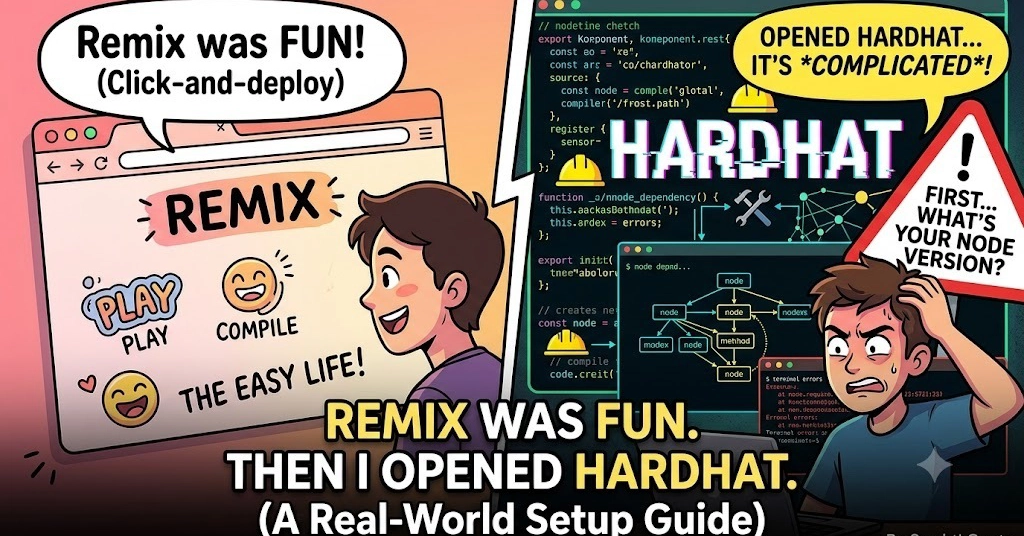
When you first start writing smart contracts on the EVM chains, your journey usually begins in Remix. It is a powerful, open-source web and desktop application for writing, compiling, testing, and deploying code, making it a fantastic tool for quick iterations and local simulations. But eventually, you outgrow it. Even with its robust features, a localized environment does not perfectly replicate how your contract will interact with live mainnet state.
To truly test a protocol, you move to a public testnet. This is where the engineering friction begins.
You suddenly need to set up an Alchemy or Infura account just to get an RPC URL. Then comes the faucet fatigue. You scour Discord or click traffic lights on web pages just to beg for a fraction of Sepolia ETH. Many faucets now require a minimum mainnet balance to prevent spam. This is a massive roadblock if you are following basic security practices.
To protect your real-world funds, you should never paste your primary wallet's private key into a local .env file where an accidental GitHub push or a malicious package could expose it. Instead, you use fresh, $0-balance "dummy" accounts. But when a faucet requires a mainnet balance, it breaks this safety measure, forcing you to either risk your real wallet or fund a dummy account with real money just to get testnet tokens. Others force you to connect your personal social media and tweet just to get a single drop.