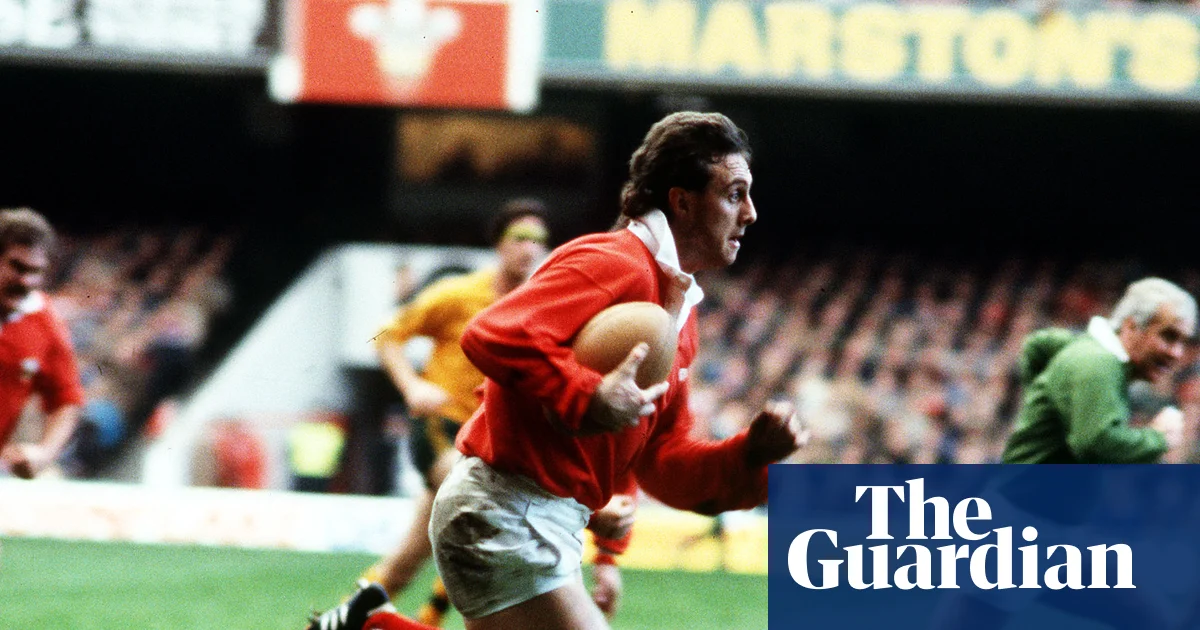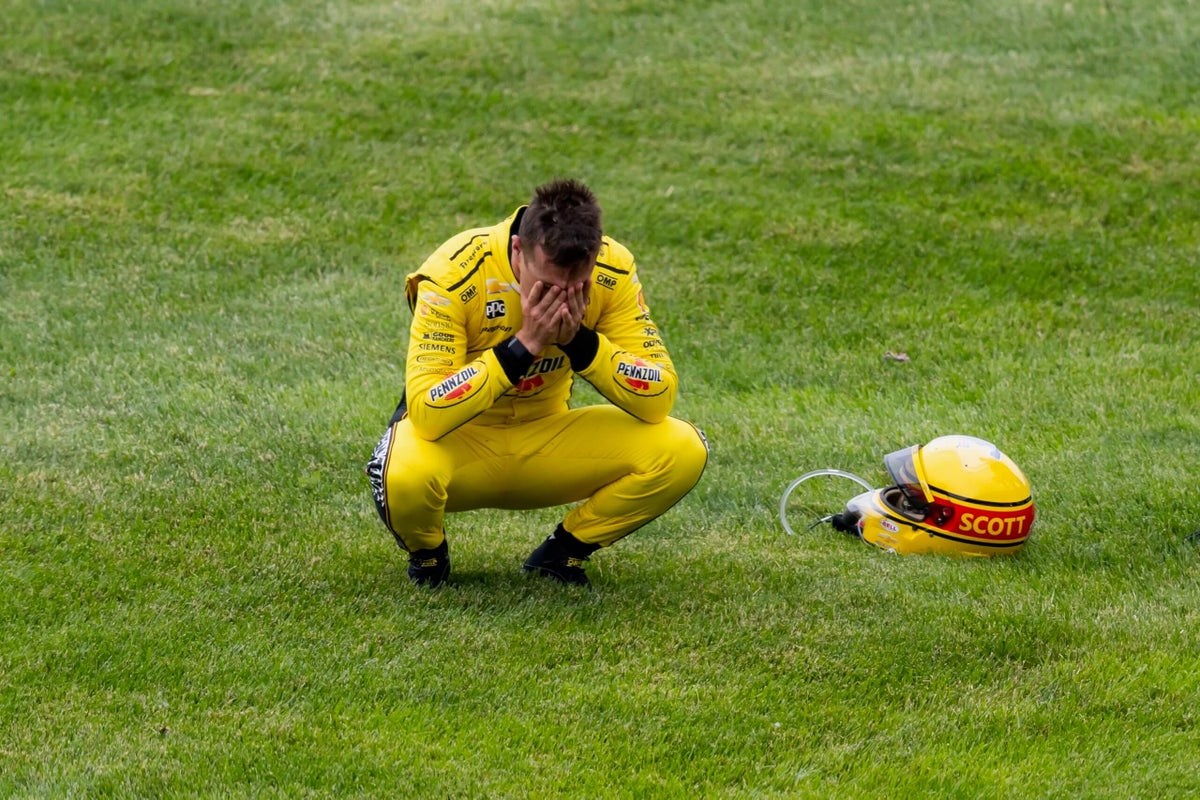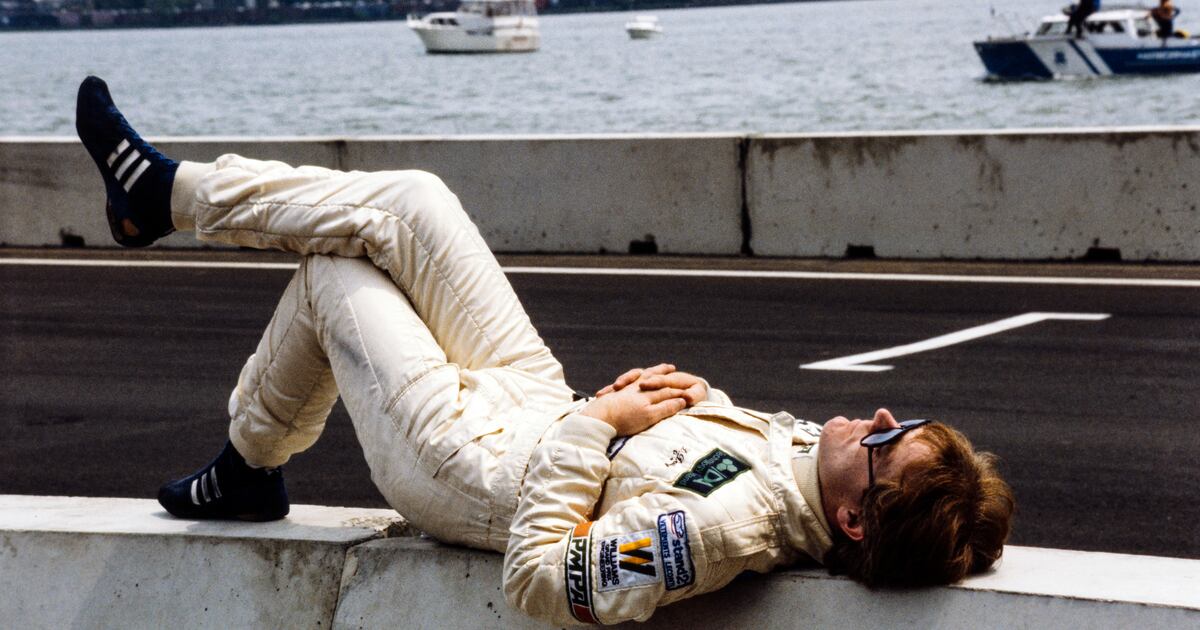
For as long as Derek Daly can remember his life has been captured in reels by his own photographic memory. Which is a good thing, because no Irish racing driver has seen and experienced more triumph and disaster. From Formula One to IndyCar and every other speedway in between. But not every moment is remembered with perfect clarity – there are a series of blackouts from the multiple times he cheated death. None of which Daly would even want to remember. One 349km/h (217mph) crash into a concrete wall during an IndyCar race in Detroit in 1984 should unquestionably have killed him, and in some ways he never recovered. “I do have an uncanny ability to recall in HD video quality all the moments that made me,” he says. “And can remember every millisecond of some incidents as if they happened in slow motion just weeks ago. Other times, when I did pass out or blacked out, there’s nothing. But I’m also hardwired to focus forward, no matter what happens – from the early days, the wins, the bad crashes, three divorces – to keep moving on.”That Daly is sitting in front of me, at 73, with no visible scars, is living proof of all that. After years of being told he needed to capture his life in a book, he has just published the aptly titled Serial Survivor. It’s also brought him back to Dublin for a week, from his home in the United States, and it’s clear he’s survived more than just shattered bones.Such as his addiction to painkillers, then getting hepatitis C from an infected blood transfusion which required HIV testing for several years after. There’s a sense of serendipity throughout his book, which features cameos from the likes of Paul Newman, Sylvester Stallone, Muhammad Ali and near the beginning of his career, Eddie Jordan, from whom Daly bought his first racing car.“This is all real, this isn’t fiction, this is exactly how it happened. And that’s the underlying message of the book. That you can survive anything, depending on the mindset you approach it with. There are always richer things down the road, but you have to persevere, to get to the other end.”Derek Daly raced for Tyrell Ford in Formula One. Photograph: INPHO/Allsport With 28 chapters, 368 pages, hundreds of photographs and no ghostwriter, Serial Survivor is by turns uplifting and harrowing. During his five seasons in F1, from 1978 to 1982, Daly moved from Dundrum to Monaco and made 49 starts, racing with varyingly successful teams including Hesketh, Ensign, Theodore, and later, Williams. That was before his hard-nosed driving style and a series of cruel setbacks took him to the US, where his racing instincts later morphed into an equally successful broadcasting career. He was two years into his switch to IndyCars when on a grey September day in 1984, at the Michigan International Speedway, his life was forever altered. And not just by the catastrophic injuries that required 19 subsequent surgeries. They included a double break of the left leg, two mangled ankles, a broken hip, a severed toe, a broken pelvis, broken ribs, third degree burns and a lacerated liver.“From the beginning of IndyCar racing, I was intrigued. A Formula One car, zero to 100mph, is faster than an IndyCar. From 100mph to 200mph, an IndyCar is much faster. And much more dangerous,” he says.“I’d just done a lap at 219mph, average, because that’s taking in four corners. And it started to rain. There’s a bump, just enough to take my grip away, and I lost control, just smashed straight head on into the wall.“On the first impact I went unconscious. So I have no memory of all those photographs you see in the book, until about two seconds before the car stopped rolling down the banking. I could see my legs dangling along the ground. And I sat in a stunned silence.Derek Daly crash 1 Derek Daly crash 2 Derek Daly crash 3 Derek Daly crash 4 Derek Daly crash 5 Derek Daly crash 6 “Although my legs were out on the ground, it never dawned on me the front was gone off the car. I was in shock. The impact of that 217mph crash had killed every other driver [who had been in a similar crash]. I survived the hardest crash impact a driver had ever survived. And I mean, that changed my life right there. Changed every day of the rest of my life.” What ultimately saved him from certain death was the chance intervention of the car racing up behind him, driven by John Paul Jr. He was trying to avoid the crash, so veered as high up the banking as possible, still hitting Daly, and sending him spinning back down to the inside track, away from a second fatal impact.This is what Enzo Ferrari meant when he said racing cars were “our deadly passion, our terrible joy”, although Daly grew up a world away from Modena and the other racing aristocrats straight from Almanach de Gotha. Starting out from the then small village of Dundrum, in south Dublin – his mother Nellie, at 97, still lives in the family home – Daly became the first Irish driver to make a mark in F1, just 13 months after racing in Formula Ford. It remains a record rise from the lowest tier to the top.“It all started for me at age 12, walking up to Wyckham Park, on the way home from school. It’s 1965, and there’s this truck parked in our road, with Sidney Taylor Racing written on it. I go to my dad, who had the local grocery shop, and he tells me the lady who lives there, it’s her brother, and you can see the racing car at seven o’clock.“So I go back at seven, they open the doors, and there’s this white Brabham BT8, green stripe down the side. Then my dad tells me we can see it racing tomorrow, up in Dunboyne. And that day changed my life. I just told my dad, ‘I’m going to do that’. It’s completely accidental as that. Pure happenstance.”His father Jim promised moral support, but financially Daly would have to go it alone. In 1975, at 20, along with his Dundrum neighbour David Kennedy, he went to Australia for six months, working in the iron ore mines to earn the chunk of money they needed to get started in Formula Ford. Kennedy would also race F1, for one season, in 1980.Tyrrell driver Derek Daly in action during the British Formula One Grand Prix held at Brands Hatch, in Kent, 1980. Photograph: Steve Powell/Getty Images Still, there was no master plan. “We just reacted immediately to what we had to do. I was also working at Larry Byrne’s garage, in Dundrum. And he became a mentor to me at the critical time of my teenage years. He knew I was a dreamer, trying to chase something. And he was totally supportive.“Certainly for me, Formula One drivers were superstars on a different level. Unattainable for most people. So I couldn’t tell you that I said, ‘oh, I’m going to be an F1 driver’. What I did promise myself was, I’ll do everything in my power to give myself the best chance to go as far as I can. “I still hadn’t won any big races yet when I go to the Austrian Grand Prix F3 race, in 1977. I qualify on pole, beside Nelson Piquet. And I’m sitting in the car, strapped in, and this old guy shuffles across the front of the car, goes over to Derek McMahon, my other mentor, and he says something to him.“Then Derek says to me, ‘that fella there said, if you win this race, he’ll put you in a Formula One car by the end of the year’. And that some fella was Sidney Taylor. Can you imagine how that circle connected again? I have an unbelievable set of circumstances like that.”Tony Kanaan, driver of the Lotus Dallara Honda, with Derek Daly at the IndyCar Series Milwaukee 225 in 2011. Photo: Robert Laberge/Getty Images His first brush with death came at the 1980 Dutch Grand Prix at Zandvoort, when his Candy-sponsored Tyrrell 010 suffered a terrifying failure that sent his car flying off the seaside circuit. It was also the first time his life flashed before his eyes, and he saw his mother sitting at home by the fire, as the phone rang, with news of his death.[ This Champions Cup final is a day like no other in Leinster’s historyOpens in new window ]By the start of the 1982 season, his life away from racing was also starting to unravel. “I don’t want to say it was out of control, but life was moving so fast, maybe too fast. And I probably got to Formula One too fast. I wasn’t trained or coached. I was just dropped in. So you live on your wits for a certain length of time, but eventually it catches up with you. As it did with me. “Even when I was at Williams in ’82, when they won the world championship, I was the number two driver, but I never got the support I needed. Monaco in 1982 was still probably the high point, when I came within one lap of winning. Would that have been a life changer? Yeah, probably. “But I’d enough questions about myself, and you begin to doubt yourself. Then you drive harder, you get in more trouble, and you doubt yourself more. “I brought that home with me, and my personal life began to spiral out of control. I got divorced, lost my job at Williams. Look, it is a colourful, glamorous lifestyle. But there’s a serious side of it that says you have to perform or you get kicked out. And that was when I said, ‘I have to go to America’. I wanted a complete new, fresh start.”Derek Daly working with Fox and the Speed Channel during the Toyota Grand Prix of Long Beach, in 2002, California. Photograph: Darrell Ingham/Getty Images There was also the financial draw, given Daly never saw any riches from F1 either. “Most of my money for 1982 was paid to Theodore, to buy me out of my existing contract. But back in those days, Keke Rosberg, when he won the world championship in 1982, was only paid £150,000. Nothing compared to what they get paid today.“So I first went to America in ’82, went back in ’83, then never left. And it was the best move I ever made.”In 1983, he raced the Indy 500 for the first time. With 350,000 spectators, it’s still the largest one-day sporting event in the world. Incredibly, just eight months after his Michigan crash, with an inch-and-a-half heel lift built into his racing boots because he couldn’t bend his ankles, Daly finished 12th in the Indy 500, his best finish from six starts.“If I’m perfectly honest, I was never the brave, ragged edge driver that I was before the Michigan crash. Because you know where the edge is, and once you’ve been hurt as badly as I was, I don’t think any driver would go to the same ragged edge, chance being hurt that badly again.Derek Daly's book details an incredible career “But I might’ve been a better driver. I won bigger international races in my career after my crash. It was also because an initial interview, when I was still in a wheelchair, that they first saw my TV broadcasting potential. Then when I did retire, in 1992, I found another career that I loved, stayed in motorsport broadcasting in America for 24 years. “I also never wanted the accident to be my legacy. I had to do whatever it took to recover, and to survive.”♦ Serial Survivor by Derek Daly is available at www.evropublishing.co.uk
Derek Daly: ‘I survived the hardest crash impact a driver had ever survived’
Formula One and IndyCar star looks back on the highs and lows of life on the track in a remarkable new book
1,977 words~9 min read