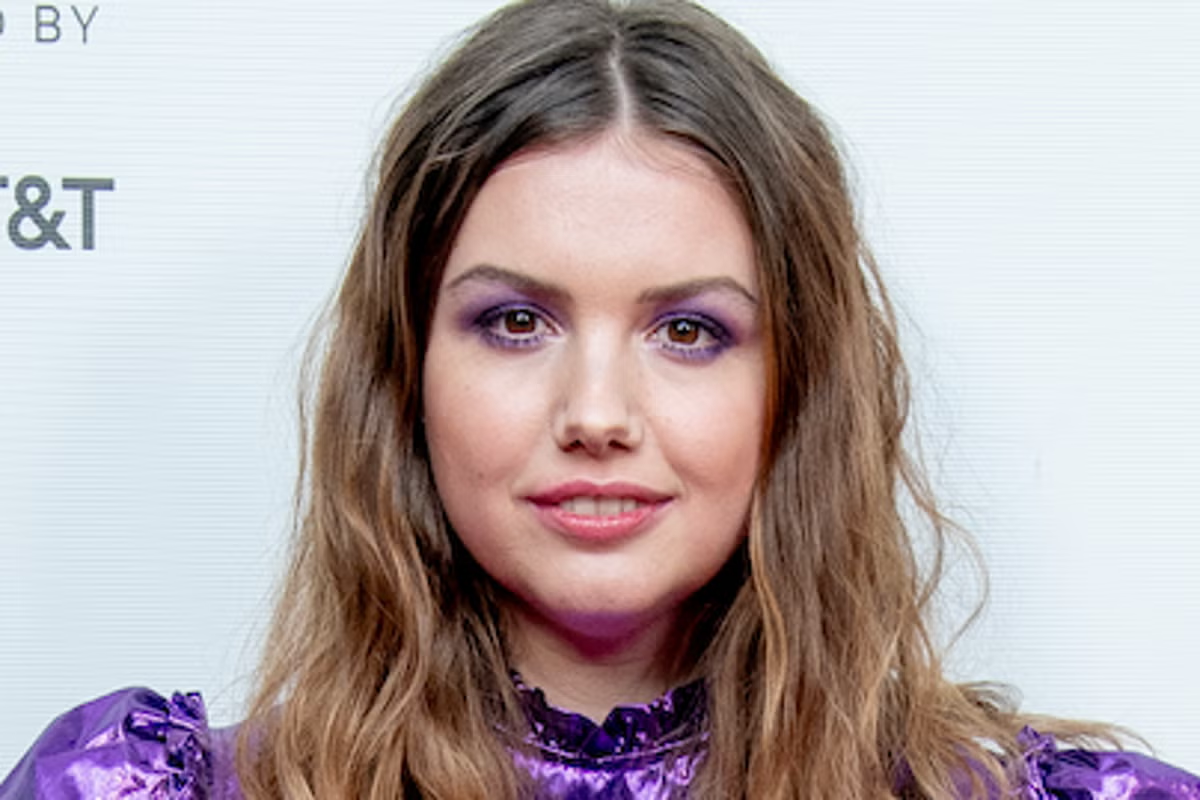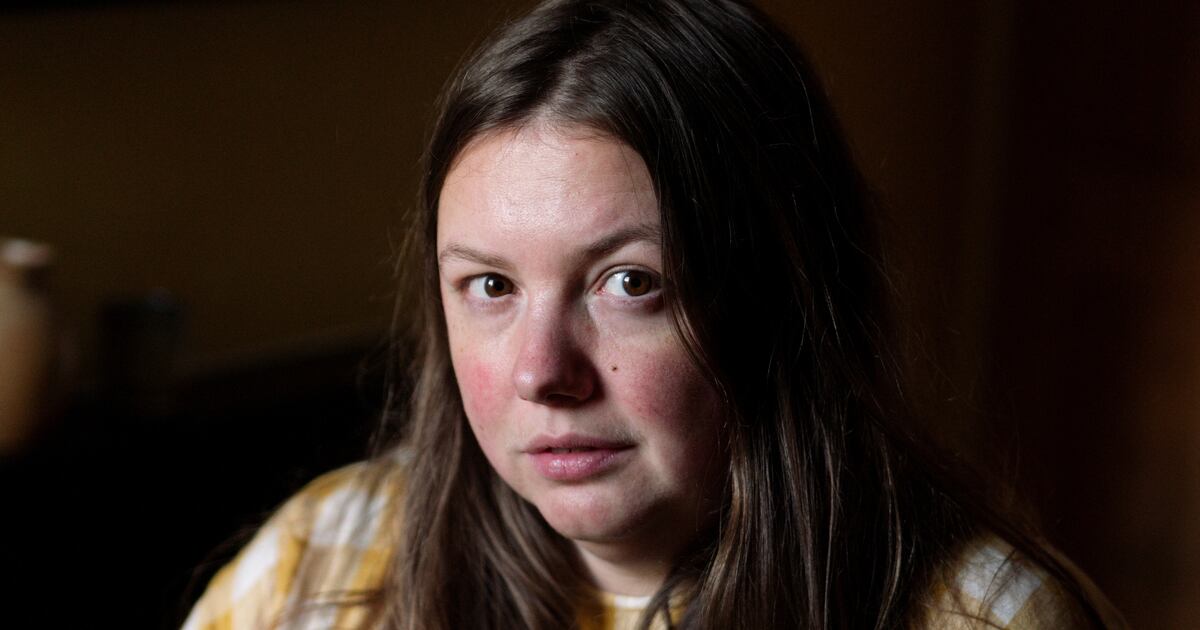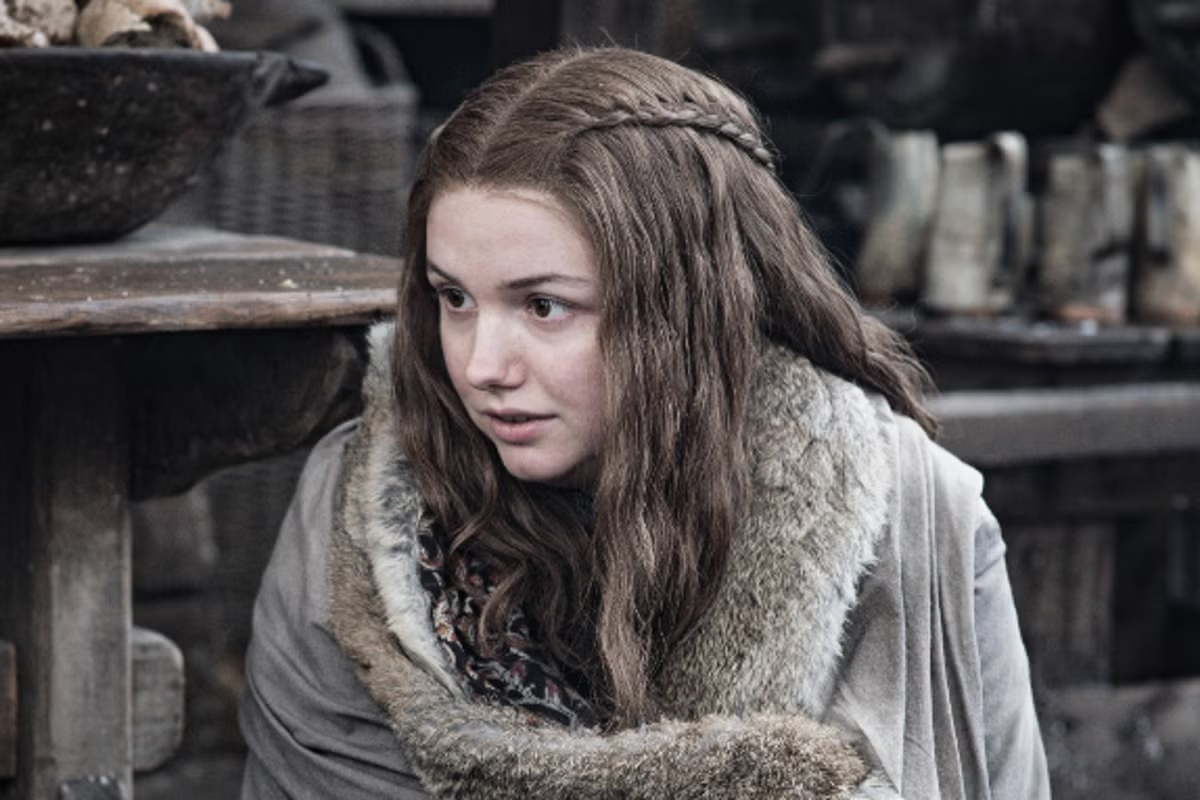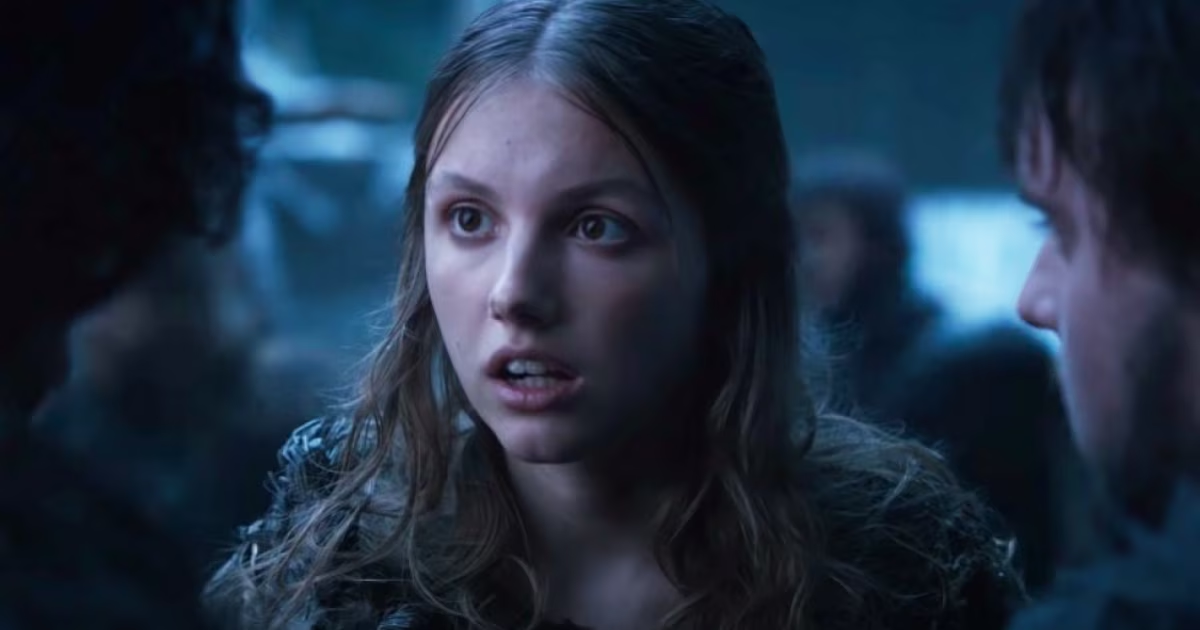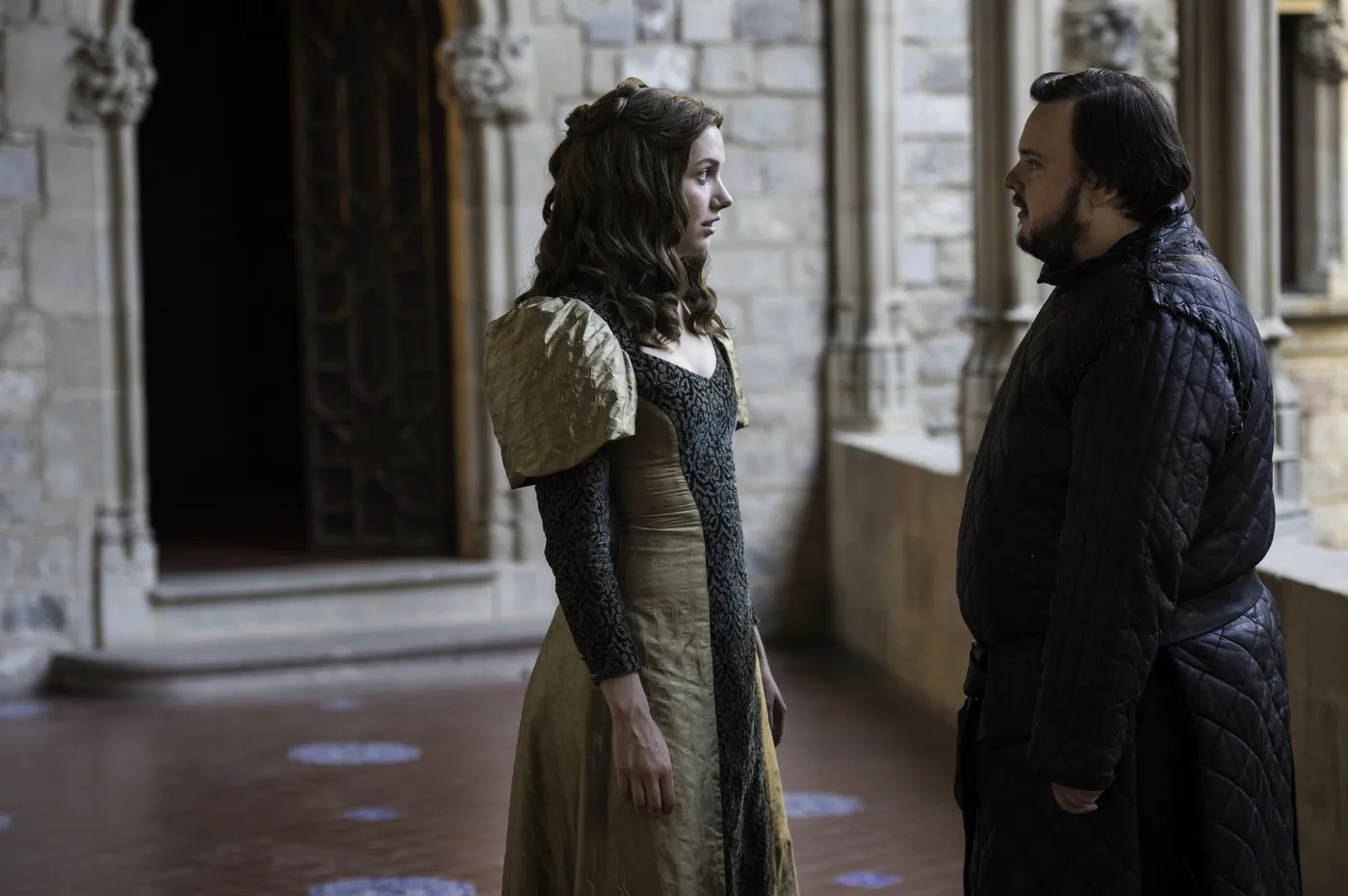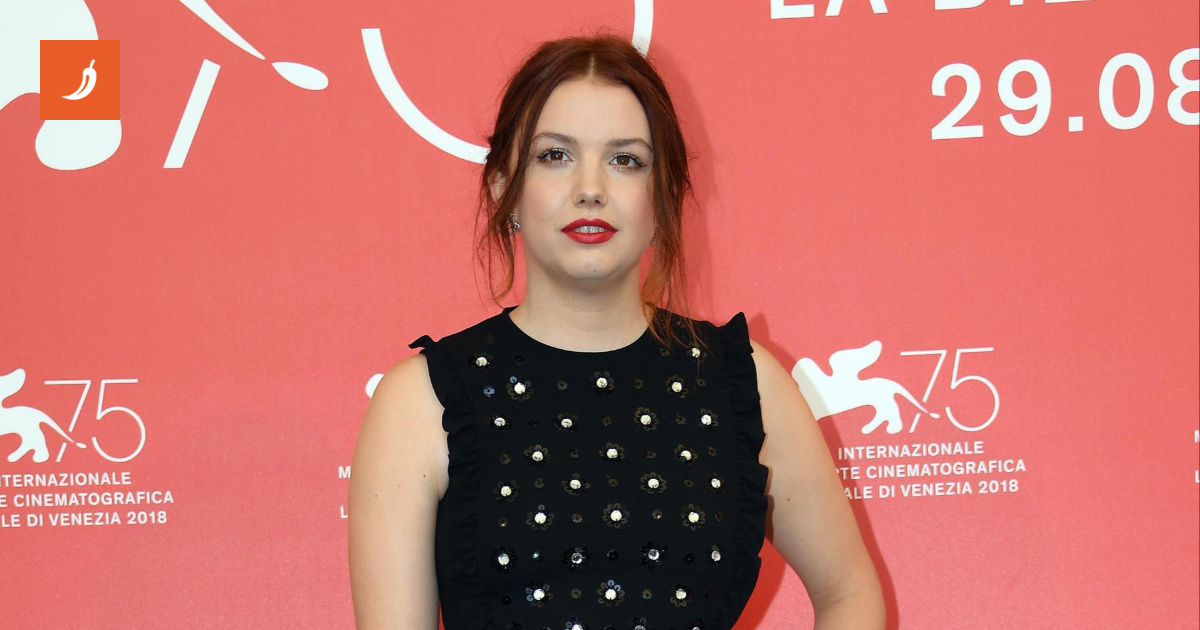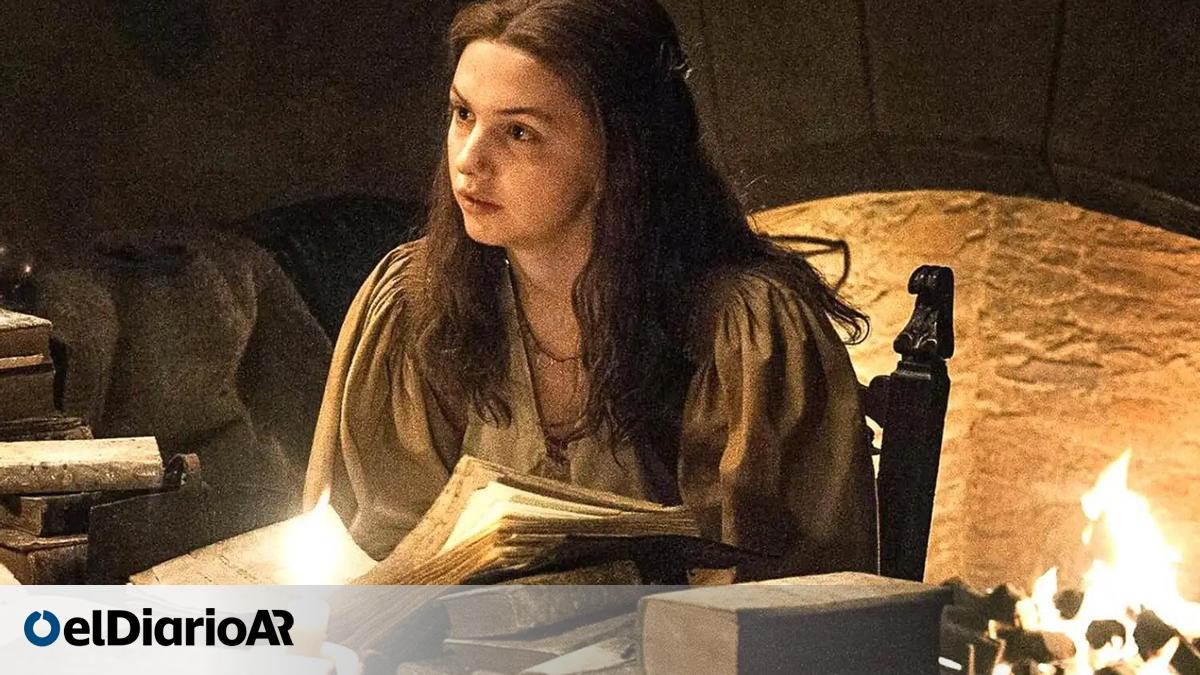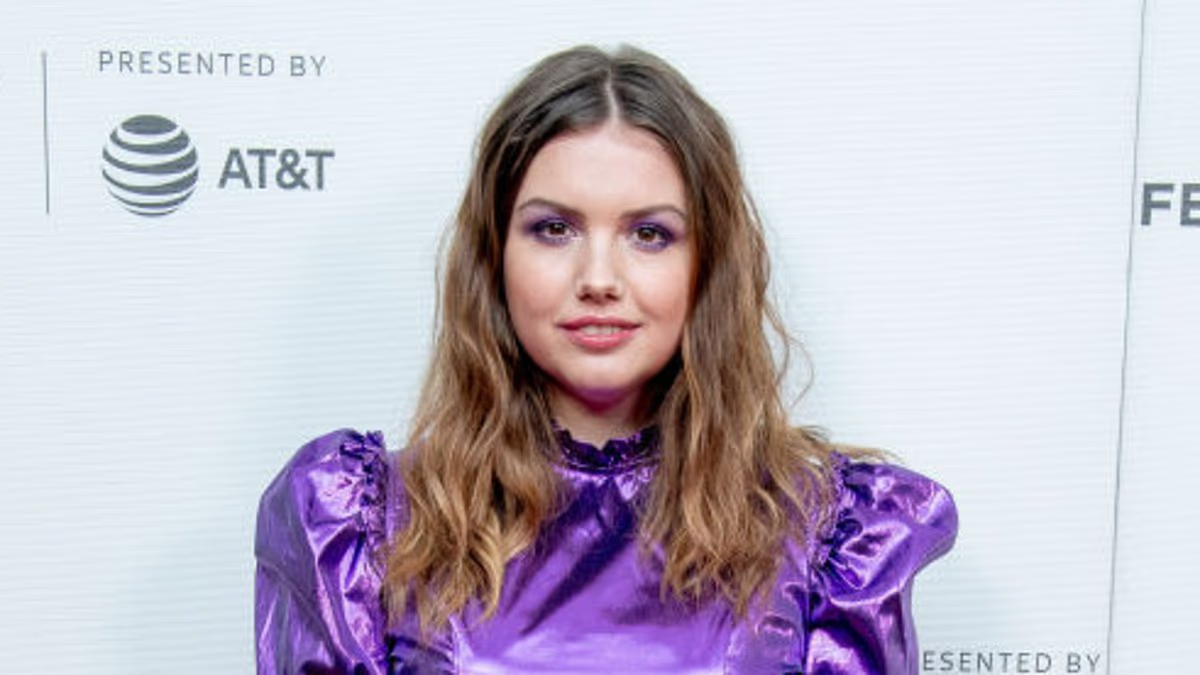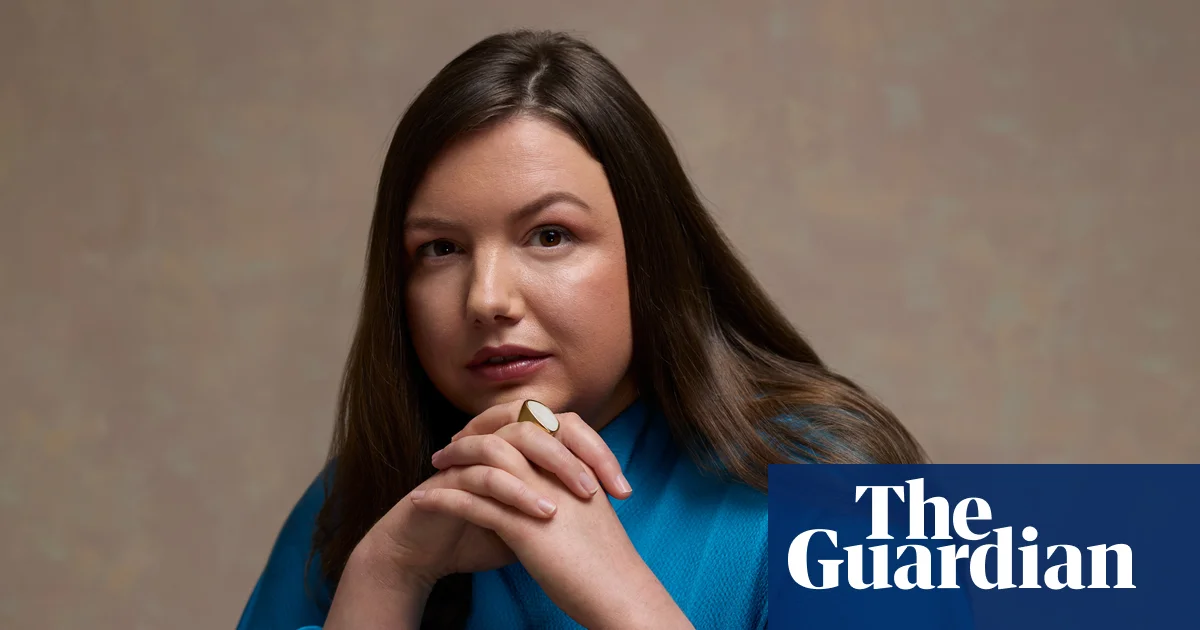
At least once a week, Hannah Murray has this one overpowering thought: “Thank God I don’t act any more.” She might be climbing her stairs, mug in hand, or at her desk opening her computer, she might be taking a casserole from the oven, or browsing the high street in the East Anglian town where she now lives. The thought will arrive along with what she describes as a sort of total bodily relief. She tries to hold on to this “I’m not an actor any more” feeling because it’s accompanied, she says, by “a real surge of joy”.It’s not just because she doesn’t have to strip for the camera any more, although there was plenty of that, starting with Cassie, whom she played aged 17 in the E4 hit show Skins, mostly in underwear. And it’s not because she doesn’t have to cope with the relentless focus on her weight, though there was plenty of that too, accompanied by questions from journalists: was she anorexic in real life? Were her parents worried about her weight? It’s not because she’s not recognised everywhere, as she was after playing Gilly in Game of Thrones, with grown men having tantrums if she didn’t autograph their whatever or pose for a selfie. Nor is it having to negotiate which body parts she will contractually agree to show. Or contending with the highs of landing a great part followed by the lows of wrapping the shoot only to be thrown back on to the audition carousel and told: “Please go in looking nice. They need to believe Benedict Cumberbatch could actually be attracted to you.”It’s a mixture of all these things. Plus, the lifestyle, the booze, the drugs, the reckless sex (she once took a Kurt Cobain lookalike to a loo cubicle in a Detroit nightclub simply because, yes, he looked like the long-dead Nirvana singer). She knows it was all desperate, a bid to feel special. “That was a big factor of being an actor: being chosen for a role makes you feel incredibly special. But it lasts only for that project. I was on this hamster wheel of, ‘Where’s the thing that’s going to make me feel special for ever?’” She tried reading from the personal growth section of the bookshop – the gateway drug, as she wryly calls those books now. She tried meditation, gratitude diaries, she had two psychoanalysts.Given all that, perhaps it wasn’t surprising that, by the age of 27, Murray had been drawn into a wellness cult – a cult so ludicrous, looking back, the head guy wore a symbolic necklace and carried a giant Starbucks cup. It promised wisdom and specialness while costing her thousands. Far worse, however, was the cost to her mental health. Murray experienced a psychotic episode so catastrophic, she was sectioned in an acute mental health unit. Later, a psychiatrist diagnosed her with bipolar disorder.As Cassie in an episode of Skins from 2007. Photograph: ZWA/WENNWith John Bradley in Game of Thrones. Photograph: HBOIn the nine years since, Murray has tried to make sense of what happened. Mostly through writing down everything she could remember of that intense decade, raking through texts, notes, films, and talking to friends. The result is The Make-Believe, a frank and often darkly funny exploration of the convergence of hedonism with the self-help industry that led her headlong into “the underbelly of the wellness and spiritual world”.While Murray is best known for Skins (three series) and Game of Thrones (five series), she appeared in a host of film, TV and stage roles that drew on her vulnerability, her innate rawness and something unquantifiable that made her mesmerising to watch. Not least, there was the teen suicide movie Bridgend (2015), for which she won best actress in three separate awards; US race riots film Detroit (2017); and the Manson Family movie Charlie Says (2018). Somehow she also squeezed in a degree in English at Cambridge.Today, sitting opposite me in a cafe in the Barbican, in London, she is fresh-faced, her brown hair middle-parted, shirt open over a bright, striped top. The two cans of fizzy water she’s ordered are on the table when I sit down. Mostly her hands are hidden in her lap, but occasionally, while recalling a fact or anecdote, she’ll loop strands of hair in her fingers. The provincial town, the cooking, the writing, that’s all part of the non-drinking, non-smoking, post-acting, post-cult Murray, now 36. Photograph: Chantel King/The GuardianShe stays away from the wellness business now. “Even the tame stuff can feel quite distressing. I don’t meditate any more. I wouldn’t go into a crystal shop. I don’t do yoga, because I don’t quite know what might come up that might feel a bit too woo-woo for my personal threshold. But I realise now how pervasive it is. How often people you don’t know will offer it as a remedy. You’ll say, ‘I’m not really sleeping,’ and they’ll say, ‘Have you tried meditation?’ It’s everywhere, seen as an inherently positive solution. And there are harmless or positive versions. But as someone looking for something to fix me entirely, a magic wand or silver bullet, the promise felt seductive and addictive.”In general, “there’s not enough critical thought about wellness,” she says, “particularly the way it’s been transformed into an industry”. She was a vulnerable young person, she says, and she saw other very vulnerable young people staking their happiness on what turned out to be a pernicious, exploitative cult.So, let’s talk about the cult. She doesn’t want to name it, refers to it simply as the organisation. In the book, she lays out how easy it was to be drawn in – slowly, over a period of months – and asks people who believe they’d be immune to recall all the times they’ve been tempted by a quick fix. “It’s easy to go, ‘Well, that would never happen to me’, but we do ourselves a disservice when we start saying that, because you don’t know. I had no idea I was going to go through any of the things in the book. I would’ve assumed I couldn’t, that I was safe. I was well educated, from a middle-class family; everything should have been fine. I thought, ‘I’m smart. I make good choices.’ Well, I made terrible choices. But it’s important to understand why people do these things, rather than going, ‘Oh, they must be idiots.’ Or, ‘How stupid could you be?’”Her first encounter with the organisation was via an “energy healer” called Grace*; she had been introduced to her by her personal trainer on the set of Detroit, in which she appeared alongside John Boyega, Will Poulter and Kaitlyn Dever. The film was directed by Oscar-winner Kathryn Bigelow, whom Murray absolutely loved. Even so, the subject matter was “violent and dark”, the true story of three black men murdered by police in the 1967 urban uprising. Murray was playing Julie, an 18-year-old from Ohio, pistol-whipped, interrogated and sexually assaulted by white police. Murray stayed lean during filming, doing press-ups to raise her heart rate before every intense scene. An acting coach had encouraged her to “open up” in a way that was “almost shamanic”. Then came the dress-ripping scene. “My breasts were exposed to the room and to the camera. I covered them immediately with my arms. Then we did it all over again … So many times that I did not keep count.” Every time, she says, “my heart was racing. Every time there was pain in my stomach and chest. Nerves on fire. I was trembling with adrenaline.” It was not real, she knew that. But at the same time, it felt traumatic. She was plagued by nightmares. When she woke in the night, she rushed to the bathroom to vomit. This was her state of mind when she met the “energy healer”.In the 2017 film Detroit, directed by Kathryn Bigelow.Grace asked Murray to talk. And Murray had a lot to say. She was, anyway, an “oversharer” – the girl at parties telling her life story as a way of making connections – and she liked a “confessional conversation”. She told Grace about Detroit. About acting. About the pressure to feel happy and lucky – I mean, look at her life of glamour and success – the strain of never complaining, especially professionally, even if she was asked to film half-naked in -9C New York, or on a Welsh beach in 45mph winds with a fever. About the arrogant co-stars who hadn’t learned their lines. The cruel directors, the intrusive casting agents. She spilled about her life, her family, her core sadnesses. Grace listened.Then Grace said she could either try reiki on her or offer something more, “for people who want to get in there and sort their shit out”. Yes, that sounded like what Murray wanted. Grace presented a card reader and soon, $150 down, Murray received a session of “healing”. Afterwards, Grace told Murray about a class she could take to learn the tools to help herself. Because she’d been introduced to her by someone on set, Murray thought Grace was legit.If she were honest, there were moments when Grace made no sense. She talked about bringing “light” into her body and how she could activate her “spiritual DNA” using “powerful and ancient” tools. Caught up in Grace’s zeal, Murray chose to move past those moments, as she “would decide to move past or gloss over or ignore so many little things” in the months to come. For whatever reason – probably exhaustion, possibly the early rumblings of a bipolar high – Grace’s healing session felt magical and Murray experienced a total release. Before she left, Grace gave her a little bottle of drops, stressing how important they were, how they’d help with the “process … to clear things out”. Murray has no idea what they were. “Most likely nothing more than water, prettily packaged, harmlessly useless, deceitfully overpriced.” That night she slept for 14 hours.Grace had given Murray the contact details for a woman in London. When she returned from the US – via LA, where she watched a Beyoncé concert, auditioned to play Janis Joplin and attended the Emmys, then Belfast for two days shooting on Game of Thrones – she was shattered. She was met by Siobhan, a strange woman, somewhat “dazed” and “disconnected”, who was also wearing the symbolic necklace. Siobhan ran her through what she would be taught in class – the rituals, routines, ways to protect herself from other people’s energy – and Murray handed over £700, the first of many payments. Looking back, she doesn’t describe Siobhan as a con artist, more, a “guileless true believer”.The class – also attended by an Uber driver Siobhan had recruited on an airport run – required imagination. At one point, Murray was asked to sum up the feeling of “holding on to pillars of light”. She was amazed to feel something almost solid in her hands, but reminds me today that her job at that time involved “an ability to invest in fantastical things – like CGI work on Game of Thrones, where I was looking at a tennis ball and imagining it was a giant wolf”.Siobhan talked about shamanic and Kabbalistic rituals, sanctuaries and chakras, salt baths and magic circles, higher selves and spiritual guides. She talked of one true soul mate – something Murray, who is bisexual and open to polyamory, found a little uncomfortable and old-fashioned but again glossed over. Each class opened a path of progression to another class or course, which promised more answers, more ways to self-heal and self-protect – at a price. Murray was hooked; she wanted to be on that path. She wanted to be a “Warrior”, which was possible if she took the courses called Ritual Master Novice, Ritual Master Apprentice and Ritual Master Magus Hermeticus. “I wanted to go further and further, as far as you could go.”So naive and trusting was Murray that she didn’t look up the organisation online. If she had, she would have read crazed testimonials from devotees as well as furious accounts of financial and spiritual swindles. She would have learned that it operated on a pyramid and that ascent would strip her of her personal freedoms and individuality. “The pyramid was structured to exploit everyone who tried to climb it,” she writes in The Make-Believe. “Except for one person, one man, who sat at the very top.” She did not meet him until she had progressed through a number of expensive courses. Photograph: Chantel King/The GuardianBut before we start on the man she calls “Steve” in the book, there’s one thing Murray thinks very relevant to her story: she is of the Harry Potter generation. “Like, that can’t be overstated,” she says. “This book that was so popular for so many people my age, and the most appealing thing was the idea that you might discover this whole magical world, just under the surface of our world. As a kid, I desperately wanted that to be true.” Similarly, she says, the young adult fiction her generation consumed offered storylines where the weird kid turns out not to be weird but special with incredible gifts. “When I was going through psychosis, my brain was a cocktail of those stories, this idea that I had discovered the truth, which was that I had this incredible destiny. I was going to save the world. I could fly. Not to say that those stories are bad or anything. I just think we are fed on a diet that makes us want this.”So, Steve. Steve, somewhat predictably, was a Game of Thrones fan. Murray’s first impression was of a middle-aged white man with silver hair and beard, wearing a yellow jacket that clashed with his red shirt. He gave her the “heart-to-heart” hug that was a feature of the organisation. It felt a little indecent, but also exciting and maybe more intimate than it should. He was wearing the necklace they all wore, and when she looked at his face, “he looked so confident. He exuded power in a way I had never known anyone to exude it. Magical power … I knew I was in the presence of a magician … Then, he spoke. ‘Hey, I’m here in London to initiate some Ritual Masters as Celtic Shamans.’”Most of the teachers in the organisation were women and mostly they wore skirts, a fact Murray didn’t fully clock until female devotees were instructed to wear skirts, too. Murray looked askance at this. She was more of a sweatpants girl. But she noticed other things. When the gathered were addressed by Steve, he opened with a sex joke. “How we were supposed to do 45 minutes of cardio a day and how he’d rather have sex for his cardio than do anything else.”Did she see signs of sexual exploitation? “My own experience felt highly eroticised, without anything explicitly physical happening,” she says. “There was just this charge to the energy in the room. I think there often is in these hierarchical spiritual organisations. I found it interesting that it was a primarily quite female space – the teachers, the healer – and then this man walks in and he’s incredibly confident and magnetic. The first thing he says is a joke about sex. From this quite floaty, quite gentle, wishy-washy energy, it was suddenly, like, ‘Hey, I’m here,’ and, ‘Let’s fuck.’ I think he was doing that deliberately.”Even at the time, she recalls, she looked at these women and thought: “Sex cult!” But when she suggested this to one of the teachers, they replied: “Oh my God, that’s hilarious. No, he’s just really good at breaking down your ego and so a lot of sexual stuff might come up.”It was while on this five-day course held in a London hotel that Murray’s behaviour started to become erratic. She was existing on very little sleep and found she was talking at “a million miles a second”. Her brain was making random connections – for instance, linking a dinner she had with five other participants to the five miscarriages her mother endured before she was born. She felt pure and ascetic on water and vegan food, and more deliriously happy than she’d ever been on drugs. She absorbed stories told by other participants like a “bolt” as if they contained secret messages, noting them on her phone. Everywhere she saw signs and symbols. A girl called Lauren said there was a message in the film The NeverEnding Story. Then Lauren said she wasn’t sure about Steve, that he reminded her of a “dodgy used-car salesman”. Murray interpreted this as an example of how she was special; Lauren couldn’t see the truth.That night while in a bath with the “against evil” salts she’d bought from the organisation’s shop, she started to hear Steve’s voice in her head. She believed he loved her, would marry her, that he controlled the weather, that she had special powers. By the middle of the next day, she was hallucinating diagrams on people’s necks that showed her how to “heal” them. She had the thought: “Steve is my father and I do want to fuck Steve.” (Perhaps an echo of the fact that her character in Game of Thrones was impregnated by her father).Had Murray been surrounded by people other than cult followers, her manic high might have been spotted. Instead, she spiralled higher, experiencing something like a shattering of her mind. She sought refuge in a locked toilet cubicle, the most agonising pain in her head which felt as if she was “giving birth through my skull”. On the other side of the locked door, the teachers crowded around, holding bronze tools and chanting: “Be gone, evil spirit in Hannah.” Even in her distraught state, Murray realised on some level that this was “fucking hilarious”.God knows how much time passed before someone called for help. Murray – by now running around looking for Steve, who had conveniently disappeared – was pinned to the floor by men in uniform. She was rushed to the Gordon hospital in Bloomsbury and detained for 28 days under the Mental Health Act. As a reader, some of the most enraging parts of the book are the text messages Steve sent Murray while she was committed. Looking for answers for what has happened, she texts him: “I feel like I have been experiencing some very bad side-effects as a result of one of your courses. I would like to know if this is normal.” Steve tells her it is not, but adds: “You got free and it will be OK.”Hannah: “Free from what, Steve?”Steve: “There are good things and bad things in the world and sometimes bad energy can get inside us.”Hannah: “Do you really expect me to be satisfied with that explanation?” Steve sent a rambling answer suggesting that while Murray was working on Detroit, “a bad guy got inside you”, and concluded: “It’s a big thing but in simpler terms you got possessed.”Murray says it took a long time for her to get angry, but there are certain passages in the book, including these texts, that she still finds “difficult”. “Because I remember how vulnerable I was at the time I received those messages. I feel sad for myself.” I ask how her parents felt, and she says that she doesn’t think it’s fair to share “every aspect of how they felt. But yeah.”Murray grew up in Bristol. She jokes that she is the cliche: “only child of two elderly parents”. Her father, 47 when she was born, is an academic, who loved steam trains and timetables, and her mother is a lab technician (“very loving, very positive, very sweet”). She spent huge amounts of time alone as a child, giving names and personalities to her stuffed toys. “I was really bored,” she laughs. “I remember, like, playing with the blinds for hours and hours.” But she read a lot, too. “And lived mostly in my head. I was a dreamy kid. My memories of being a teenager are of being this giant head, floating, not connected to my body at all.” She craved siblings and experienced a sort of survivor’s guilt about her mother’s miscarriages. She became obsessed with the notion that she had to live a full life on behalf of each one of them.Styling: Roz Donoghue. Hair and makeup: Lauren McCormack. Murray wears: (above) blue dress, by Edeline Lee. Striped outfit: dress, by Karen Millen; rings, by Completedworks and Maudella; shoes, by Manolo Blahnik. Red outfit: blazer, by Marina Rinaldi; trousers, by River Island; top, by Phase Eight; shoes, by Malone Souliers. Photograph: Chantel King/The GuardianAged seven, she was planning her future in veterinary medicine, choosing university courses and so on. Aged 11, she changed direction after watching a play about woodland creatures and aliens who made friends. “It wasn’t, ‘Maybe I’m interested in acting.’ It was, ‘I’m going to be an actor.” Looking back, her mental health felt “odd” in her early teens. By her mid-teens she was self-harming but told no one. She remembers watching a Stephen Fry documentary about bipolar disorder and having a feeling that what was being discussed “was very relatable. But also, I was a teenager, and so everyone has highs.”She auditioned for Skins at 16, while enrolled in youth theatre, landing the part on her 17th birthday. The first series was shot the summer before her A-level year, the second while preparing and taking exams. “I missed a lot of school in that final year.” It didn’t stop her securing a place at university, and by the time freshers’ week came around, the show “was this huge thing”, famous for its shocking depictions of teenage excess. She was recognised almost everywhere, found it “quite overwhelming” and gravitated to people who didn’t know who she was. Or didn’t care. What was Cambridge like? “Intense. I was way more organised than I am now. I did three films over the three years, and was also going to London every week to audition. I would just do my essays and hand them in early. Somehow I made it all work. Everyone was baffled by me. The first time I used my degree was when I applied to UEA for a Master’s in creative writing to do this book.”Although she did not suffer from anorexia, she describes a “disordered relationship with food”. In those days, the IMDb film site hosted message boards on the pages of actors. “I was kind of addicted to going on and reading stuff about myself online. It was horrible, like the sewer of the internet; for every person saying my body was ‘thinspiration’, there was someone else saying: ‘She’s disgusting.’”Were there any early signs of the bipolar disorder? “It wasn’t a word suggested by anyone else. Occasionally, there were conversations where maybe it was an unspoken word under the surface. There was talk from friends and the therapist I was seeing at the time about ‘high highs’ and ‘low lows’. I struggled for a long time with this idea that I wasn’t entitled to feel as sad as I did. There wasn’t anything wrong with me. I was privileged to have this incredible career. Why couldn’t I just be happy all the time? Be grateful.”Her last full-length film, Charlie Says, about the women of Charles Manson’s murderous cult. She is pictured second left. Photograph: Courtesy of IFC FilmsOnce she was diagnosed, “everything made so much more sense. Diagnoses can be complicated for different people, but for me, it was a big relief to understand my emotional landscape through that lens.” She says there is a lot of stigma still attached to bipolar, which is why she wanted to be “quite raw” about the experience in her book. “I hear so much, ‘We need to talk more about mental health.’ What they mean is, like, anxiety and depression. We’re all happy to talk about that. But there’s such a taboo around the idea of people who are sectioned. They are beyond the pale. It felt really important to say, ‘I went through this.’ Lots of people go through this. That doesn’t mean they are bad or fucked up for ever.”Somehow the biggest relief is that she doesn’t have to immerse herself in a role any more. Take herself to the edge of who she is in order to inhabit someone else. Ironically, her last full-length film was Charlie Says, about the women of Charles Manson’s murderous 1960s cult. As Murray read for the part of Leslie Van Houten, all she could think was, “That could’ve been me.” After the film wrapped, the director, Mary Harron, told her: “It was crazy … we saw so many girls for Leslie, so many actresses auditioned, and none of them could do it … You just did it effortlessly. You said the lines and it felt completely true.”There was a time when Murray railed against the idea of being boring, “I did a lot to try and be interesting. It was crazy, chaotic, nomadic, whereas now it’s rooted, grounded, simple.” About this time 10 years ago, she was on the red carpet in Hollywood for the premiere of Game of Thrones series six, dressed in burnt orange tulle, looking big-eyed and innocent despite fighting the mother of hangovers having “pounded neat whiskey” and danced to Rihanna until 5am. Her life now is quiet. Low key. It has a lot of routine. She lives alone and goes to bed at eight or nine to wake at five to write. She hasn’t had a drink for three years. Therapy? “No. I think therapy can sometimes be positioned as that kind of panacea as well. A lot of the things that feel helpful to me are things that don’t rely on another person’s guidance or wisdom. Things that keep me stable are things like exercise, going for a walk, cooking.” Wellness culture, she says, “might be causing some of the problems it claims to be able to cure”.* All names of people related to the organisation have been changed
‘I thought I was the saviour of the planet’: how Game of Thrones’ Hannah Murray found a wellness cult – and lost her mind
She landed a role in hit TV show Skins at 17 and went on to star in the fantasy epic. Then she was drawn towards a mysterious spiritual community. How did she end up being sectioned?
4,351 words~20 min read