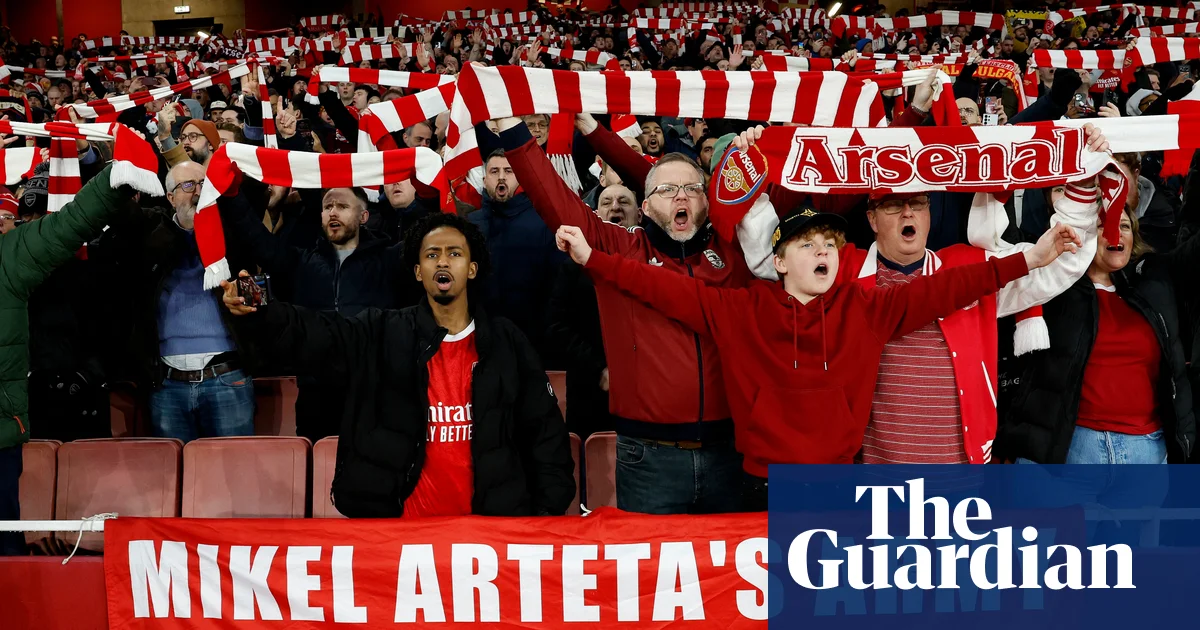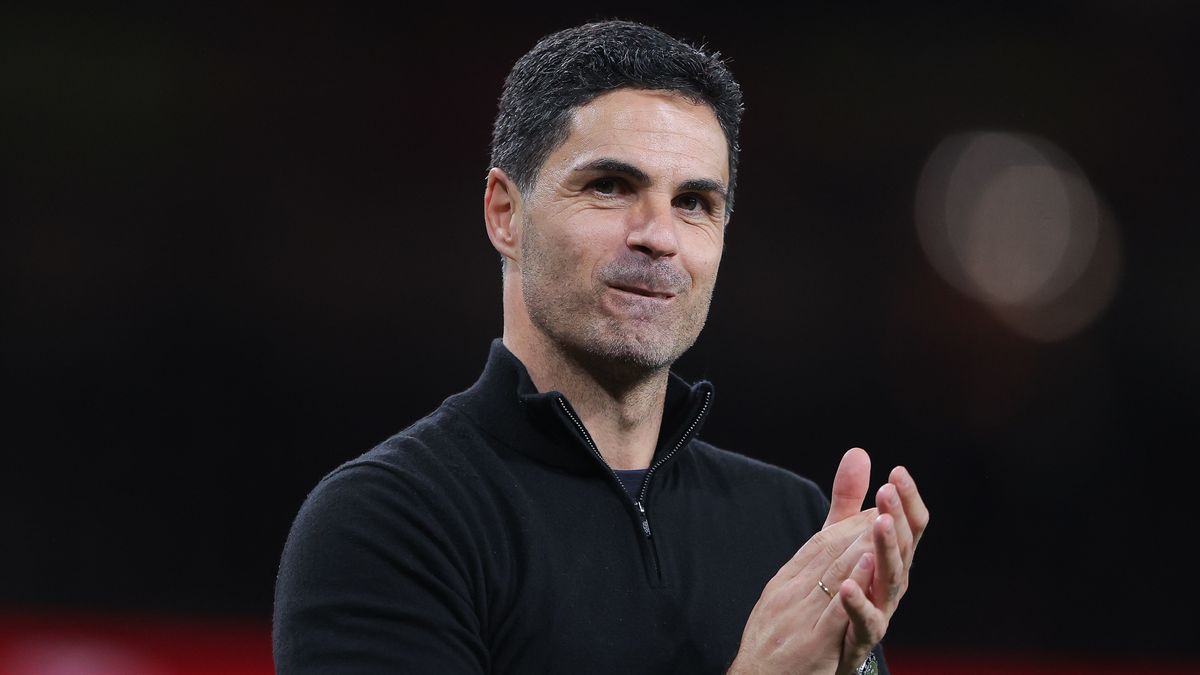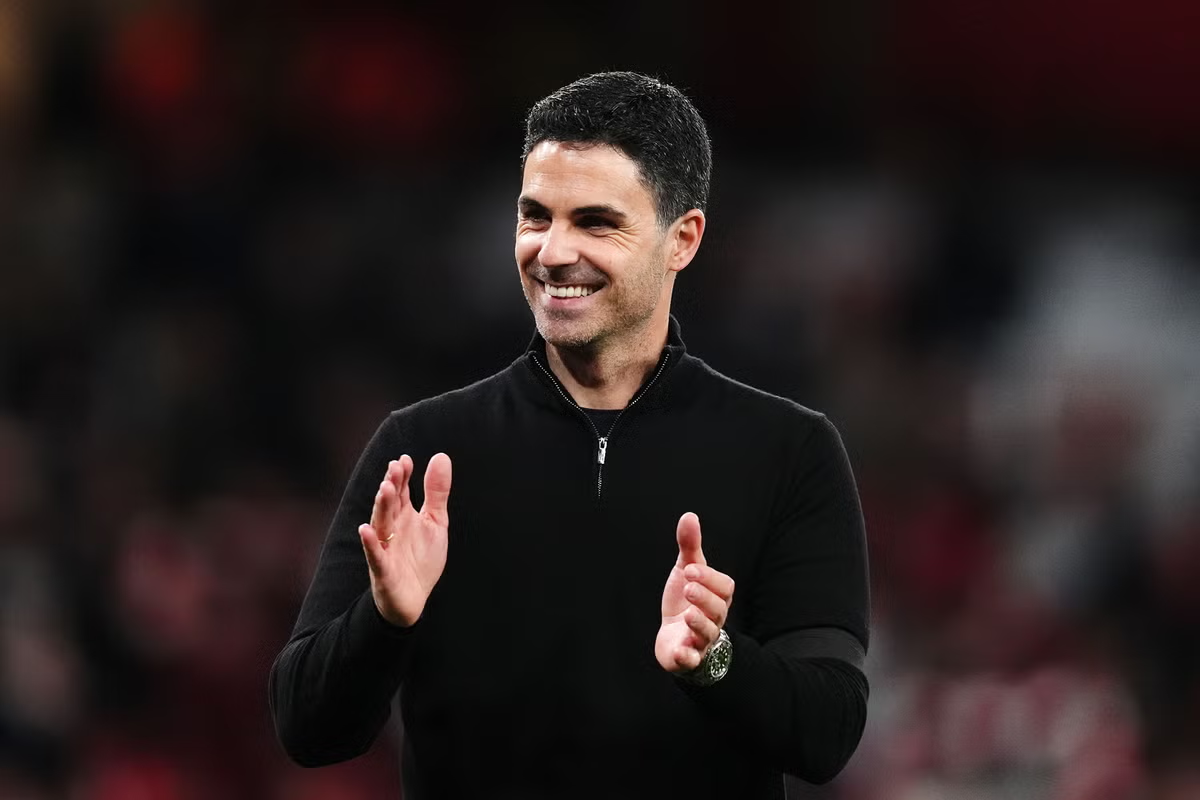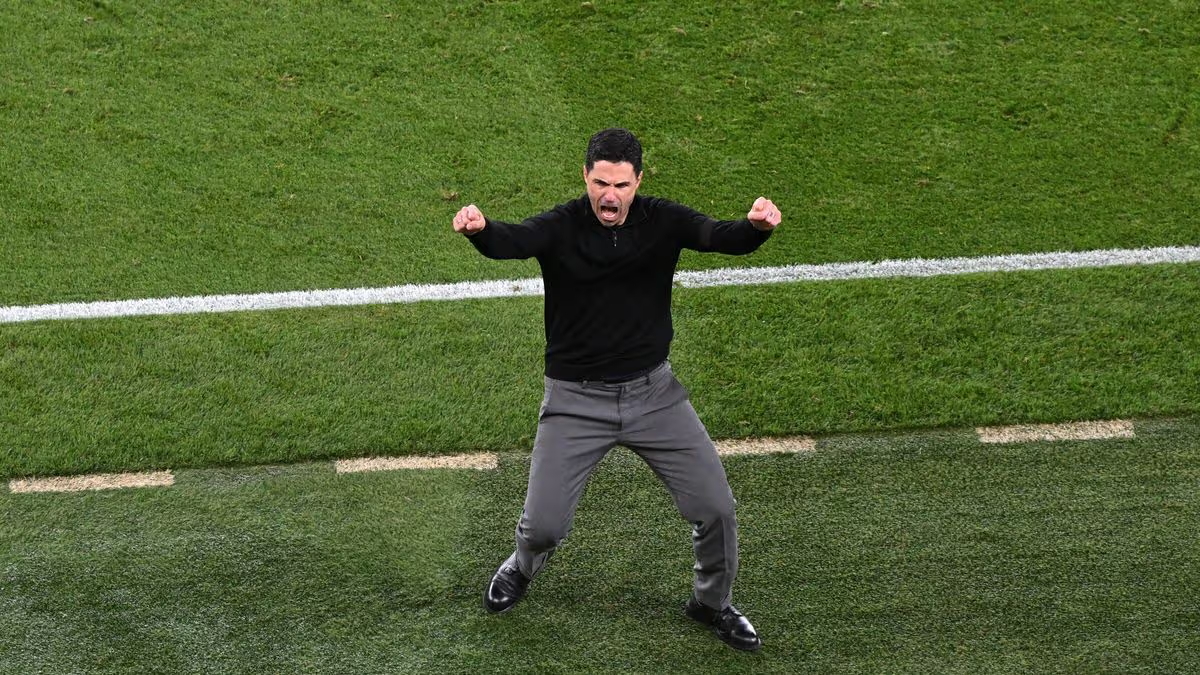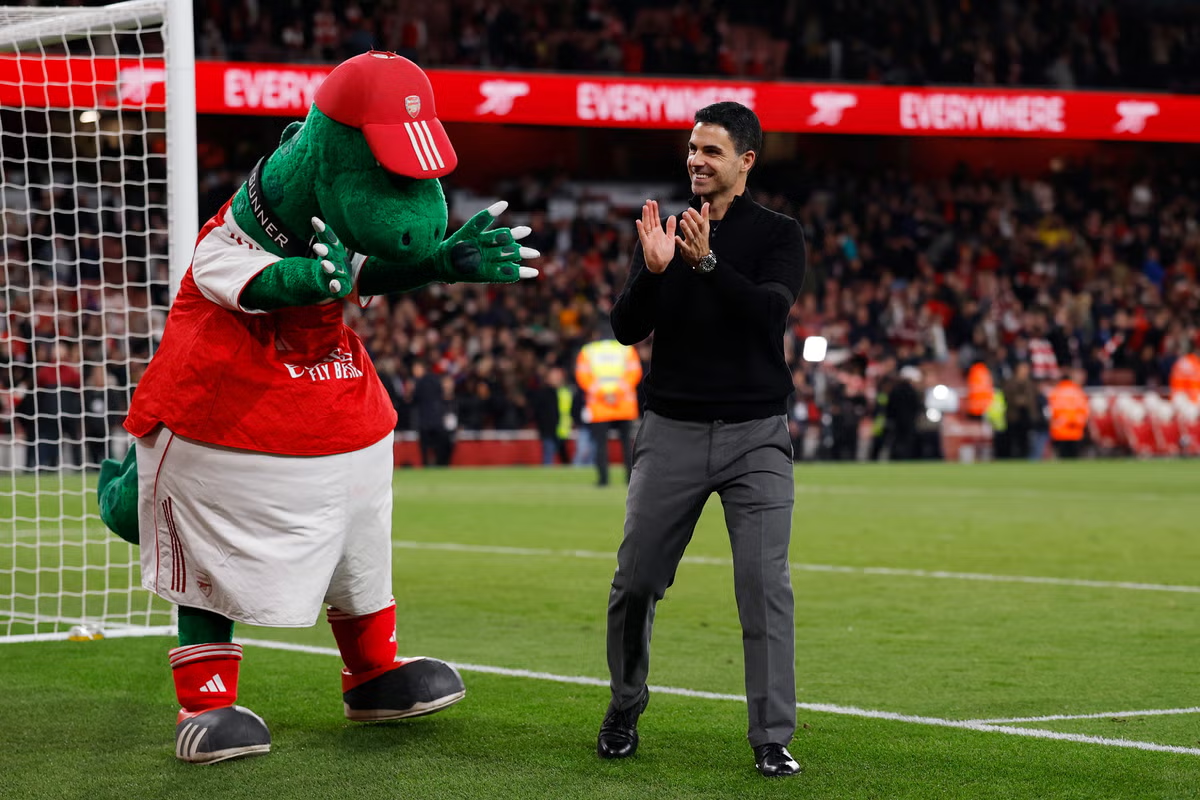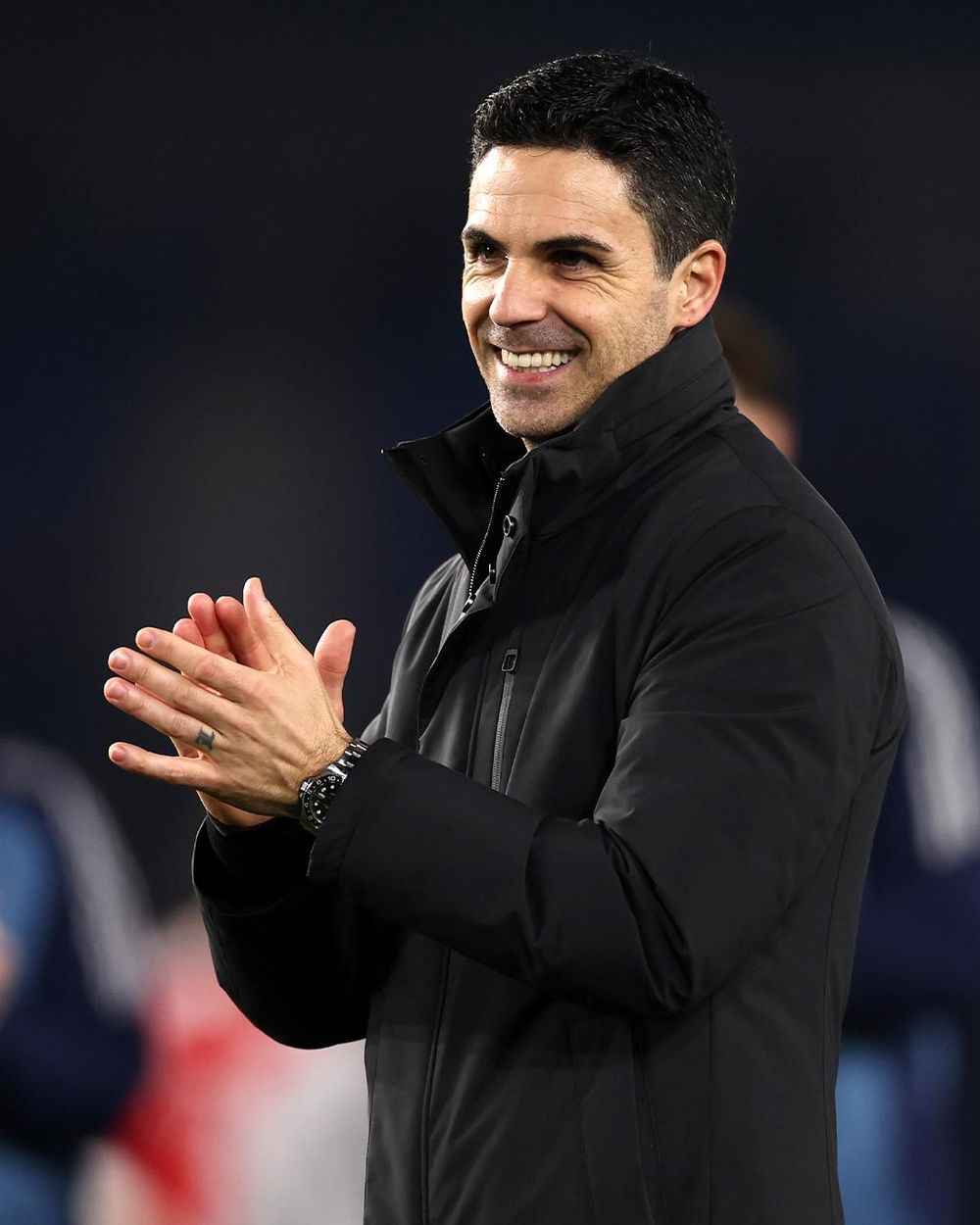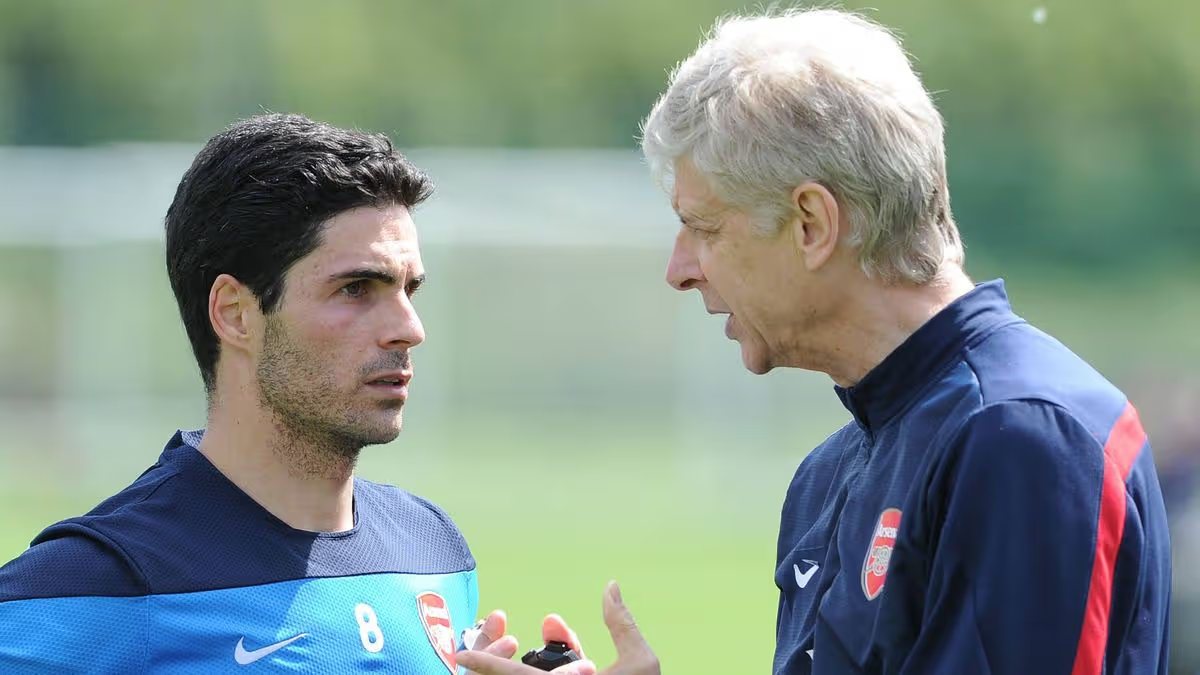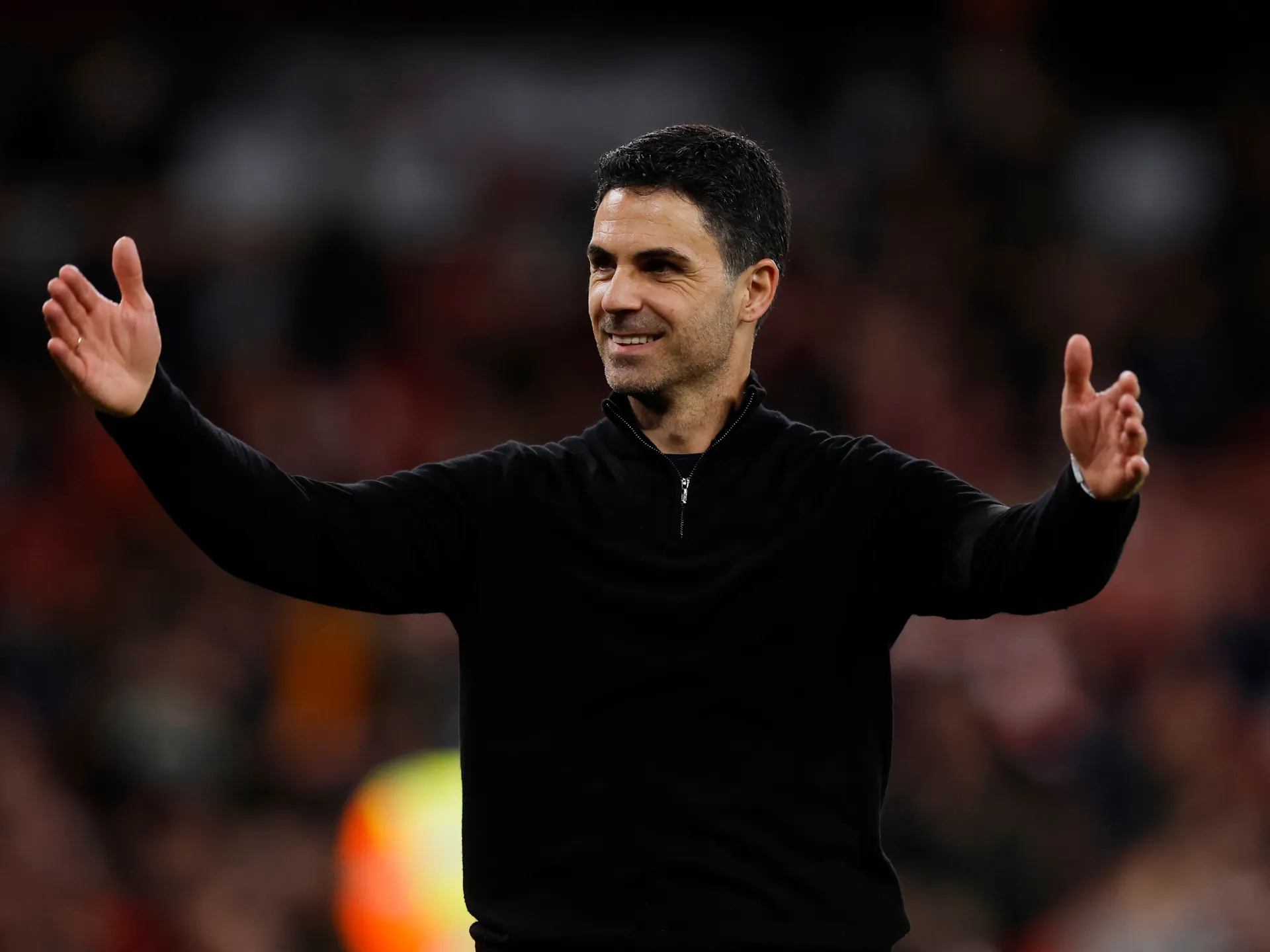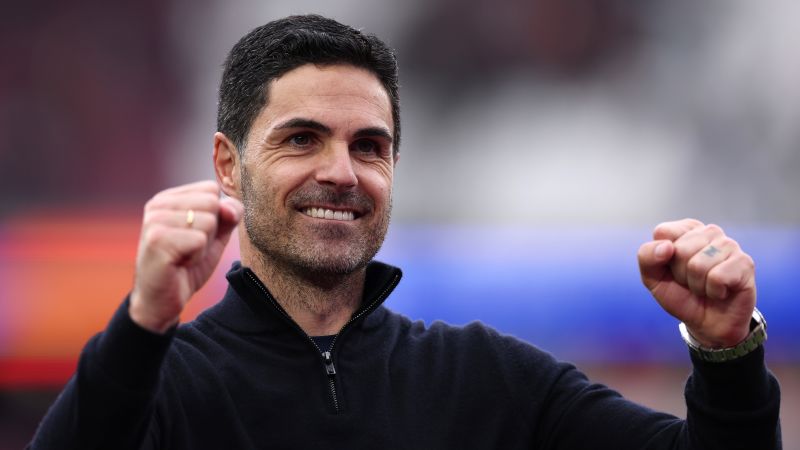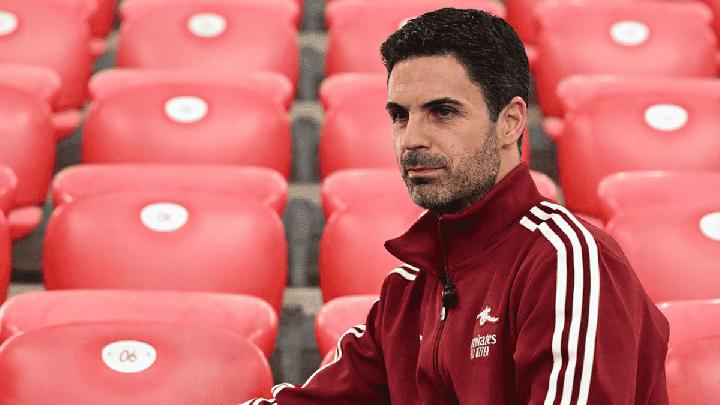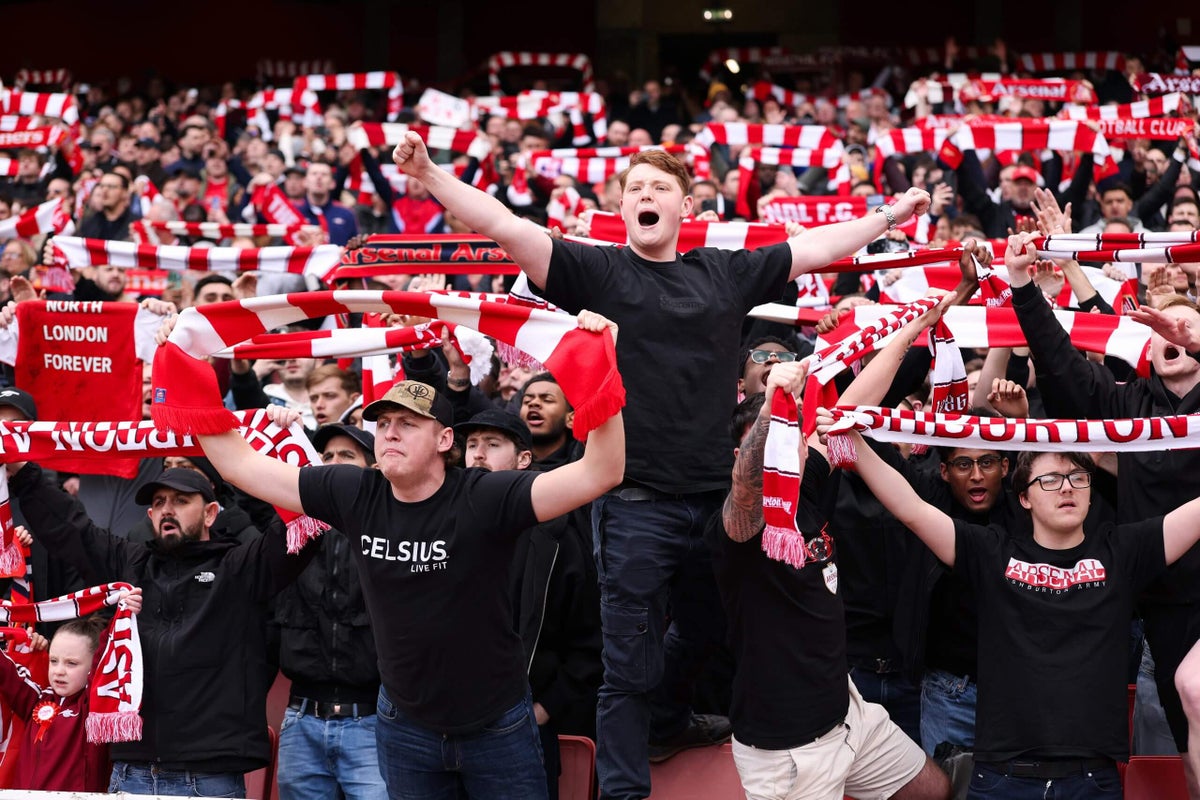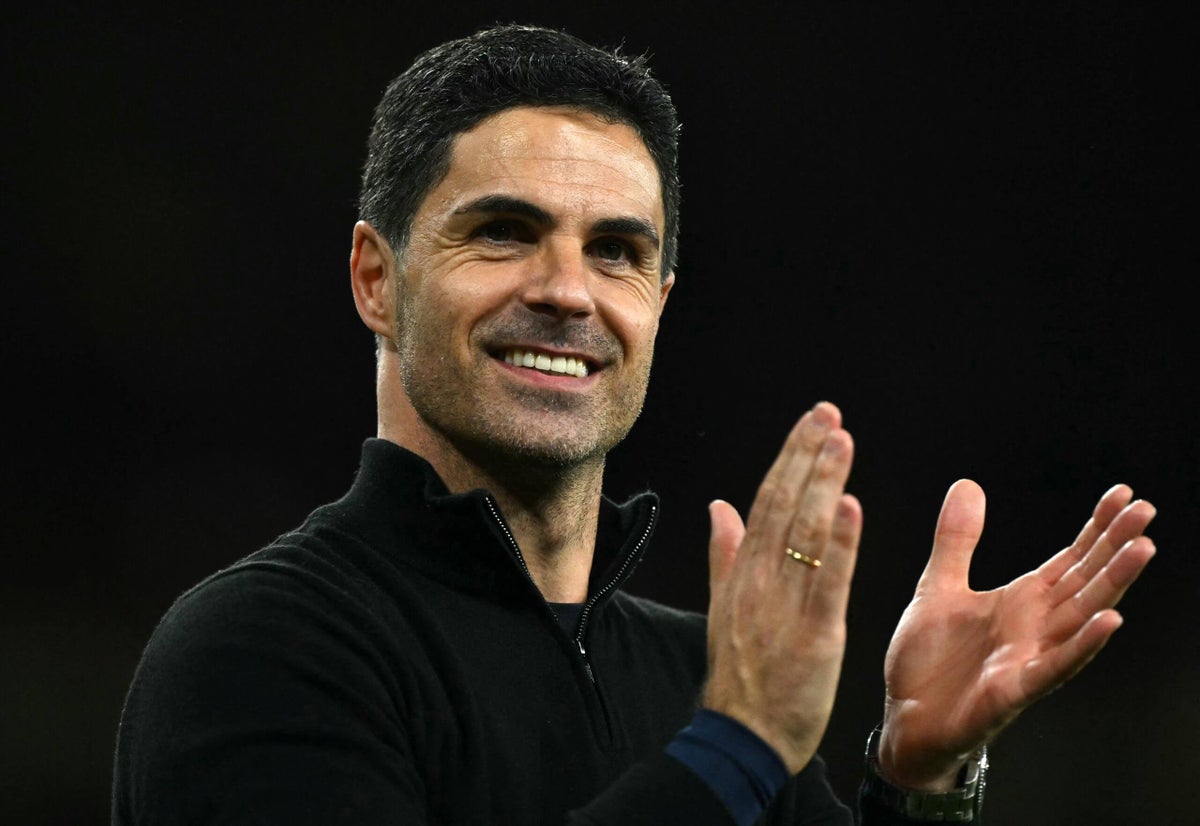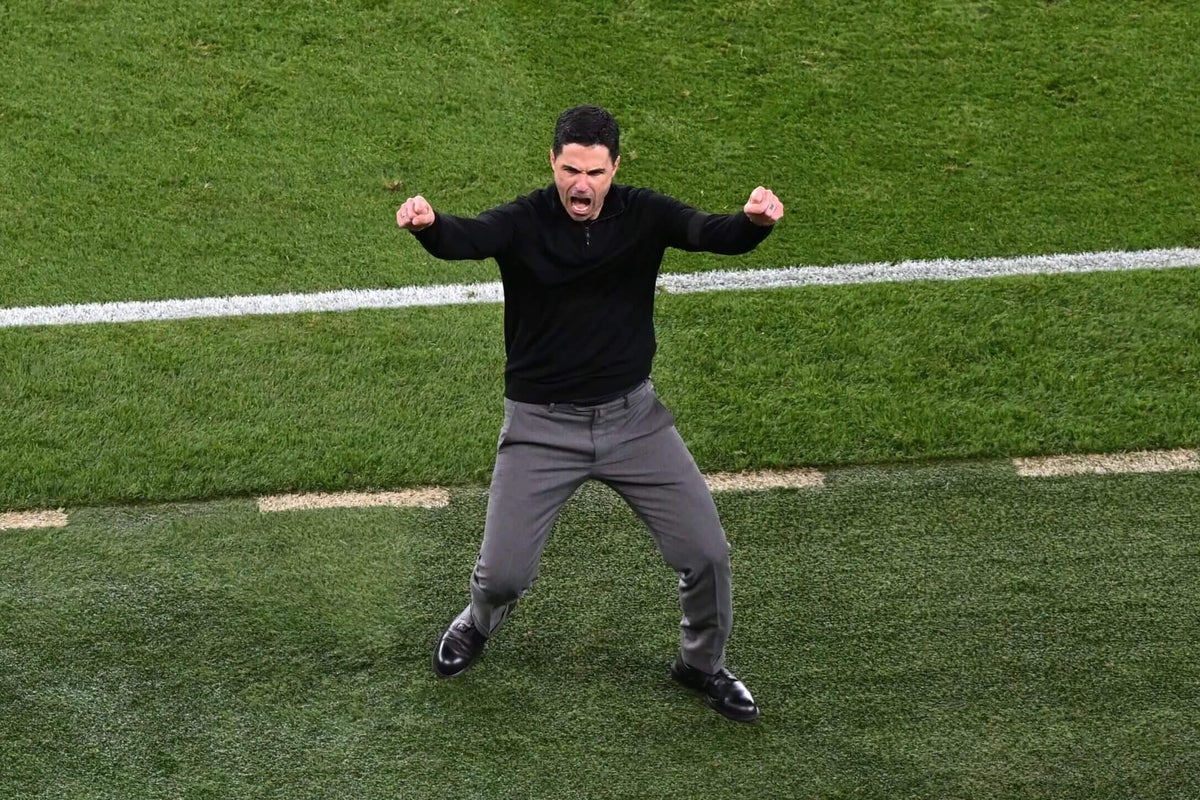
Maybe it is not so surprising that Mikel Arteta felt compelled to remove himself from the Arsenal squad’s watchalong that accompanied them sealing their fate as champions. This is a man who has dedicated six and a half years of his life, just about every waking moment, to dragging his club to the top of the mountain. Maybe having that moment to himself, quietly, lost in his own thoughts and feelings to try to comprehend it all, was needed.Arteta is the first manager with a previous association at his club to win the league in England since George Graham in 1991. Decades ago, it used to be more common but with the broadening of horizons and globalisation of the game, the best candidates (or not, in the case of clubs who chop and change several times a season) are recruited from anywhere.That Arsenal connection is a fascination. Truthfully, if any supporter of the club during Arteta’s time as a player was asked to pick their top three with the strongest bonds to the club, the then-midfielder might not have made many lists. He was popular, sure, but not as much as the homegrown star Jack Wilshere, the glamour signing Mesut Ozil, or the dazzling magician Santi Cazorla.He was a respected member of the squad from 2011 to 2016. He was a very positive influence on the team in his first three seasons, although the last two were badly injury-hit and he was more peripheral. And then he retired, left the pitch in tears, and started coaching.Somehow, during his playing days, the club got under his skin more deeply than anyone imagined. Why did he fall in love with Arsenal so much?It wasn’t the most striking period of their modern history. The team was in a pattern of usually finishing third or fourth, routinely exiting the Champions League in the knockouts and they twice won the FA Cup, which was lovely, but they did not scale the heights of serious ambition.It’s funny. Arteta was incredibly committed even before he turned up. When he learned of Arsenal’s bid for him on transfer deadline day in 2011, there were issues about the fee and Everton were reluctant to let him go. But even then, Arteta was thinking creatively about what he could do to make it happen. He took a significant pay cut to ensure his dream move.He returned as an ambitious yet inexperienced manager intent on shaking this drifting club up and pulling it towards the high standards he demands. As he expressed his passion for it, about engineering a renaissance not just anywhere but here, I found myself wondering about the roots of this relationship.Just before this season began, an opportunity presented itself to ask Arteta directly: Why did he get so drawn to this place? Why did it mean so much to him? Why Arsenal?Arteta spent five years as an Arsenal player during a relative fallow period (Julian Finney/Getty Images)It actually started long before he signed as a player, when he was watching a lot of football and starting to compose his own ideas.“It happened because of the charisma and aura, first of all of Arsenal, and then the players of that era,” he reflected. “When I was watching on TV, I was all Arsenal! Arsenal! Arsenal!” He clapped his hands for emphasis.“When I came to the country, I thought if there was one club I wanted to play for, it was Arsenal. And then once you are inside the club, you fall in love. This is exactly what I want to be.“For me as well, the way it happened was that it came just at the end of my career. I had to do so much to get to that point. Realising that, I think it gives you an extra feeling, an extra taste as well.”In contemporary football, the cult of the manager remains strong. It is perhaps not quite as intense as it was when there was less player power, less interference from agents and fewer entourages around stars. Nevertheless, teams still tend to reflect the personality of their manager and Arsenal 2025-26 is absolutely Arteta’s team.His fingerprints are all over this title win. From the recruitment, in which he plays a key role in convincing targets that this is where they want to be, to the environment at the training ground, which is designed to give the players maximum support. From removing the roof of the tunnel at The Emirates to encourage a more direct connection with fans, to the detailed set-piece work in the spirit of marginal gains. From his press conferences to create positive messaging to the words he tells a finisher (not a substitute) when they are about to come on.It is not often that he is lost for words. Arteta looked completely taken aback when handed a microphone to address supporters at the end of their last home match this season, only to be drowned out by the sound of The Emirates choir serenading him with song. “We’ve got super Mik Artetaaaa!” they blared, “He knows exactly what we neeeeed!”Then, 24 hours later, his team were champions and north London was bedlam.Managers, as well as being the technical and tactical leaders of their team, are also the spiritual leaders of their wider club. That is something Arteta has fully embraced. In what he has achieved, in the scale of change he has inspired at a place that was drifting badly when he was appointed in 2019, he joins a select group of men who paved the way in shaping Arsenal in their image at different points of the club’s history.When George Graham was sacked by Arsenal in 1995, it felt devastating. He left such a strong mark on the club and inspired winning feelings so transcendental that I distinctly remember thinking things would never be the same again. “Remember who you are, what you are, and who you represent” was a motto he had learned as a player, and he kept it at the forefront as a manager.With his smart, cannoned blazer, he represented and defended the club in a way it was hard to imagine anyone else emulating. I was so distracted by the news that he was fired, my boss took pity on me (or realised it was absolutely useless me sitting there staring into space all afternoon). “Amy,” he said kindly, “Go home.”And then Arsene Wenger came along. Things were not the same but they took off in a completely new direction. He gave the team what Paul Merson poetically described as “unbelievable belief”. He introduced football as art. He broadened horizons but also respected the club’s own traditions. He liked to do things with a touch of class and was incredibly successful with it.When Wenger waved goodbye after 22 years and told the crowd to “take care of the values of the club”, that old feeling around a departing maharishi came back. Things would never be the same again. Who else could understand and care and represent as he did?And now Arteta has come along and done his stuff. He brings an interesting mix of Graham’s pragmatic desire to win with Wenger’s human ability to create an environment for his players where they feel so connected, supported and encouraged to bring the best out of themselves.(Gareth Fuller/PA Images via Getty Images)For Arteta to step into the pantheon of Arsenal managers to conquer the English football landscape is a testament to his work. He follows not only them, but, amongst a few others, the original innovator Herbert Chapman as well — he was another one with singular ambition and a boldness to push boundaries. Arteta is in outstanding company and has earned the right to be there.From day one, a rookie with conviction, ideas and serious commitment, until the day he hoists the Premier League trophy, Arteta has continually pushed himself and those around him to think of every tiny detail which might make a positive difference.We live in an age where it is apparently permitted for a television presenter to ask his pundits whether they would like to punch a manager in the face because they don’t like him. It is somehow normal for critics to put objectivity to one side and obsess over personality traits they find unappealing.To external critics who have formed a caricature they choose not to see beyond, Arteta is not a manager they care to try to understand. He is simply an irritant for his “touchline antics” if he strays beyond his technical area, a joke magnet for cringeworthy ideas involving lightbulbs or music or catchphrases about boats and fire to make his players think or feel something important, and a cautious tactician who is ruining the beautiful game.There comes a point — and winning a title is as good a point as any — where it makes sense to think again. Is this perception of Arteta fair or just a modern media construct?From the way Arteta has handled this season — leading his team brilliantly, expressing himself with clarity and composure, and doing everything needed to win big — it appears he is chronically misunderstood and undervalued outside of Arsenal.But the other side of that coin is that he is loved and admired within. He does not need external validation and may not bother with personal vindication. Because when he looks at his players, his staff, his club’s supporters, in their moment of celebration, that is more than enough.
Mikel Arteta’s Arsenal love affair began 15 years ago. It has reached an unforgettable apex
Arteta first arrived at the Emirates during a relative downturn. Now he stands among the Arsenal managers who have conquered the league
1,576 words~7 min read