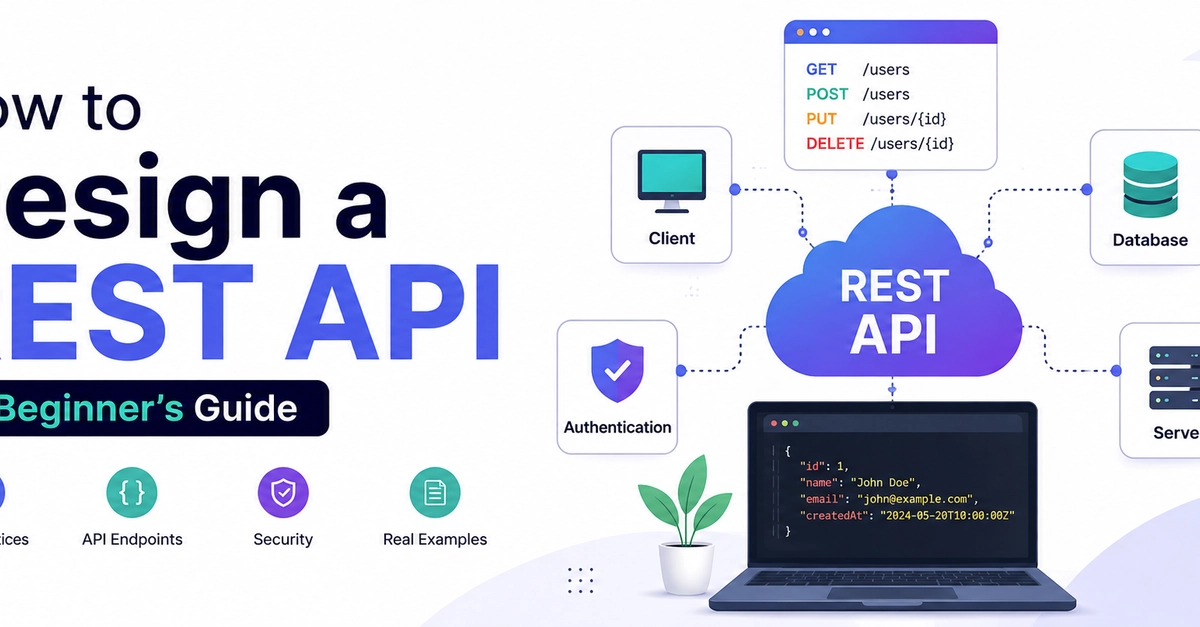
Designing RESTful APIs is one of those skills that separates developers who build systems that last from those who end up rewriting everything six months later. A well-designed RESTful API is predictable, consistent, and easy for other developers to consume without reading a wall of documentation. Whether you are building a public-facing API or an internal service, getting the fundamentals right from the start saves enormous headaches down the line.
This guide walks through the practical decisions you will face — from structuring your endpoints to handling errors gracefully — with real code examples to make things concrete.
Start With Resources, Not Actions
The single most important mental shift when designing a RESTful API is thinking in terms of resources rather than actions. Many developers who come from an RPC or SOAP background tend to design URLs that read like function calls. That is the wrong instinct here.
A resource is a noun — a thing your API exposes. An endpoint should represent that thing, and HTTP verbs (GET, POST, PUT, PATCH, DELETE) should describe what you are doing to it. This distinction keeps your API surface predictable for anyone who consumes it.