Does democracy work? What can cause it to fail? And why do people who support democracy so often hesitate to offer a defense when it actually matters?
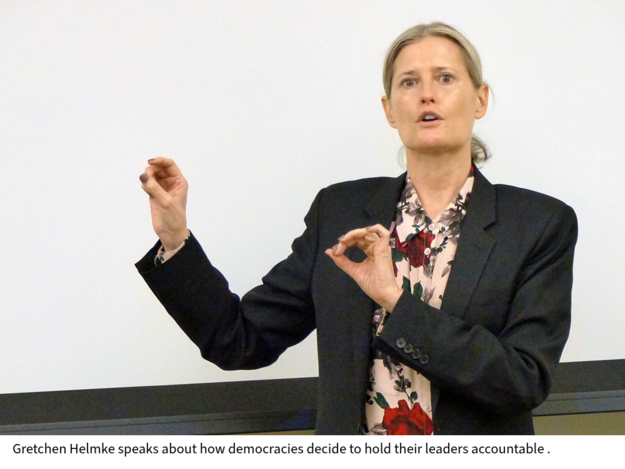
These and similar questions inspired two days of discussion at the Institution for Social and Policy Studies among leading experts in democratic backsliding.
“For a long time, the proposition that a place like the United States would flirt with authoritarianism was unthinkable from most political scientists,” said Milan Svolik, Institution for Social and Policy Studies faculty fellow and Elizabeth S. & A. Varick Stout Professor of Political Science. “But our current politics is challenging us — sometimes on a daily basis — to examine our confidence in democratic stability in many countries around the world, including the United States.”
For the second year, Svolik gathered Americanists and comparativists — once studying seemingly different political worlds — to rethink what political science truly knows about democratic stability. Participants often acknowledged the fading of American exceptionalism, as patterns once studied abroad increasingly illuminate domestic politics.
The event was sponsored by Democratic Innovations, an ISPS program designed to identify and test new ideas for improving the quality of democratic representation and governance.