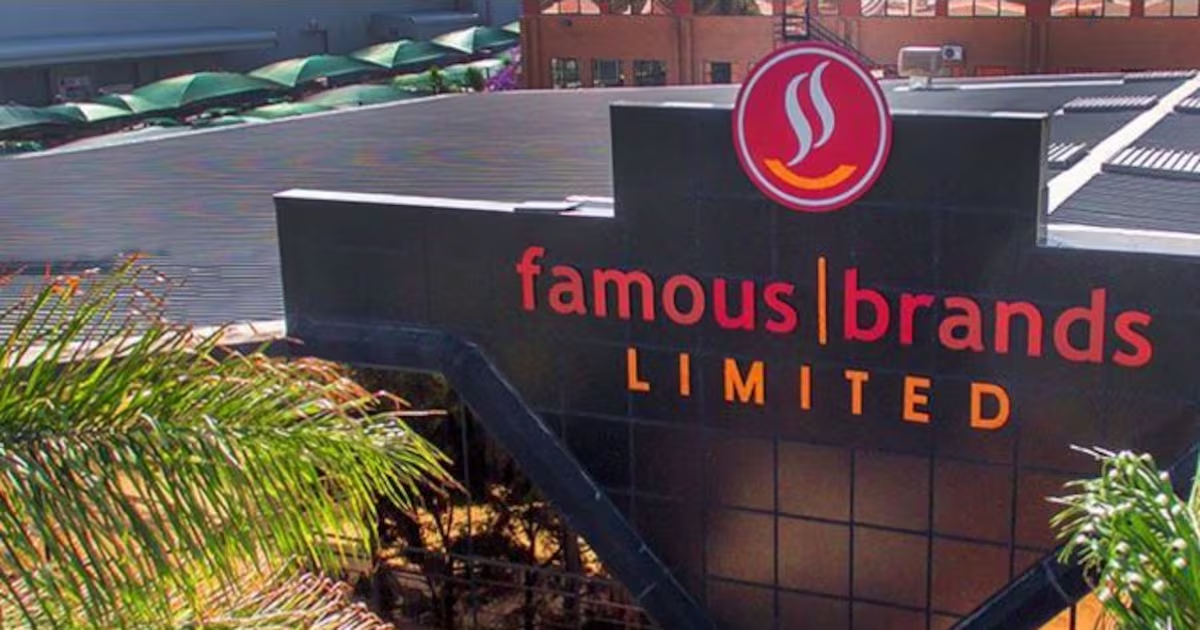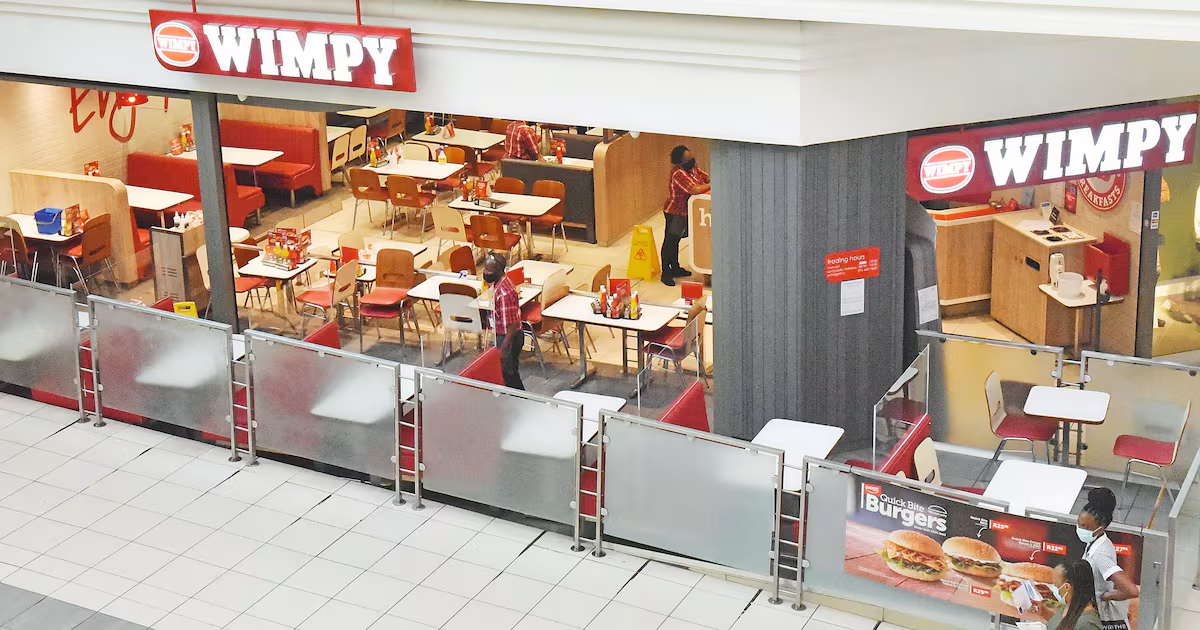
Famous Brands is accelerating its expansion in Africa with plans to enter two new countries on the continent.The JSE-listed restaurant group, which operates more than 3,000 restaurants across 22 markets, said it is in discussions with potential partners to roll out Mugg & Bean in the two countries, but nothing final has been signed. “We’re looking at markets on a licensed basis. There are two African markets that we would be new to, but we haven’t signed an agreement yet,” CEO Darren Hele said.The move forms part of a broader strategy to scale the business internationally following entry into Malaysia and re-entry into Sudan.Mugg & Bean, with 338 restaurants across 11 countries, is seen as a suitable entry vehicle given its broad appeal.Famous Brands CEO Darren Hele (Gareth Gilmour) The company is also targeting fuel forecourt opportunities. Hele said the proliferation of petrol stations is creating openings for brands such as Wimpy, Steers, Debonairs Pizza and Mugg & Bean.“Petroleum stations absolutely remain an opportunity,” he said, noting that the four brands “generally work well in that kind of environment”.This week, the group reported a 5.6% increase in revenue to R8.7bn for the year to February and operating profit grew 4.5% to R955m, lifted by brands such as Steers, Debonairs and Fishways and by the supply chain business — manufacturing, logistics and retail. Famous Brands makes condiments and frozen products such as chips and burger patties. These are sold at retail stores and distributed to its restaurants. Within its restaurant portfolio, the turnaround of Milky Lane, which has 141 outlets in five markets, has emerged as a notable bright spot. Rather than relying solely on traditional shopping mall outlets, the group is taking Milky Lane directly to consumers via pop-up activations at events, school sports days and exhibitions. Famous Brands will also introduce Milky Lane-branded ice cream into retail.We are taking the brand closer to where the consumer is— CEO Darren Hele“It’s really the fact that we are taking the brand closer to where the consumer is,” Hele said. However, margins for the reporting period came under pressure from elevated global beef and coffee prices. Hele said that to protect volumes, not all the cost increases had been passed on to consumers. “We had passed some of the coffee on, but not all of it, and some of the beef, not all of it. We took the loss in the year essentially on the basis of hoping that pricing would come back,” he said.Analysts said while performance was good, lifted by the mainstream brands and the supply chain operation, other parts of the group such as “signature” brands (including Mythos, PAUL, Vovo Telo and Turn ’n Tender), rest of Africa, Middle East and UK Wimpy were weighing on the business. Mandi Dungwa, portfolio manager for Camissa Asset Management, said performance in the signature brands division, where the company competes directly with Spur, had lagged. “The business remains unprofitable, while Spur has executed successfully, continuing to gain market share in the sit-down restaurant segment.”However, she said Debonairs is positioned as “one of the few value-oriented pizza brands in the market, supporting resilient consumer demand despite ongoing pressure on discretionary spending”. Anchor Capital investment analyst Sean Culverwell said the group’s results came in ahead of expectations, supported by stronger second-half earnings and resilient core divisions.However, he cautioned that Famous Brands is still “playing catch-up” in key segments of the quick-service restaurant market. “The company has not embraced convenience to the extent the market now demands. McDonald’s, KFC and Burger King have a near-universal drive-through footprint, while Famous Brands remains constrained by shopping-centre locations it does not own — sites that are not conducive to installing drive-through offerings, in contrast to the standalone buildings favoured by its peers.” Hele said the company intends to open more drive-throughs and small formats to meet customer demands for convenience. Culverwell said the other gaping hole in the portfolio is chicken. Famous Brands “could have acquired a number of QSR [quick-service restaurant] chicken chains in their infancy — Galitos, Hungry Lion and Mochachos among the independent operators. Meanwhile, the likes of McDonald’s and KFC have built out extensive chicken portfolios to promote at a time when beef prices remain elevated.”Despite these concerns, Culverwell said the group’s “leading” brands and supply chain divisions continue to underpin earnings stability. “[They] continue to do the heavy lifting, and we expect this pattern to persist,” he said. However, signature brands, by contrast, “is a messy mix of businesses that do not fit the Famous Brands QSR mould, and we have little doubt management would divest the division if the right price were offered”.Culverwell said international peers continue to be aggressive on new store rollouts, menu assortment, and lower average menu pricing — all of which are required to generate growth against a weakening consumer backdrop. “Combined with Famous Brands’ lack of chicken exposure and the limited visibility on its underperforming assets [the offshore businesses and signature brands], we remain cautious on the outlook and believe the group’s conservative valuation is warranted.”Dungwa said Famous Brands is well positioned to benefit from rising demand for convenience and out-of-home dining, supported by ongoing investment from franchisees into formats such as drive-throughs in the QSR segment. “Over the longer term, the rest of Africa remains an attractive growth opportunity, supported by increasing urbanisation, rising consumer demand for convenience and eating out.”
Famous Brands’s caffeine rush into Africa
Restaurant group Famous Brands is accelerating its expansion across Africa through a capital-light licensing model, while simultaneously growing its retail product footprint and reviving legacy brands such as Milky Lane.
895 words~4 min read