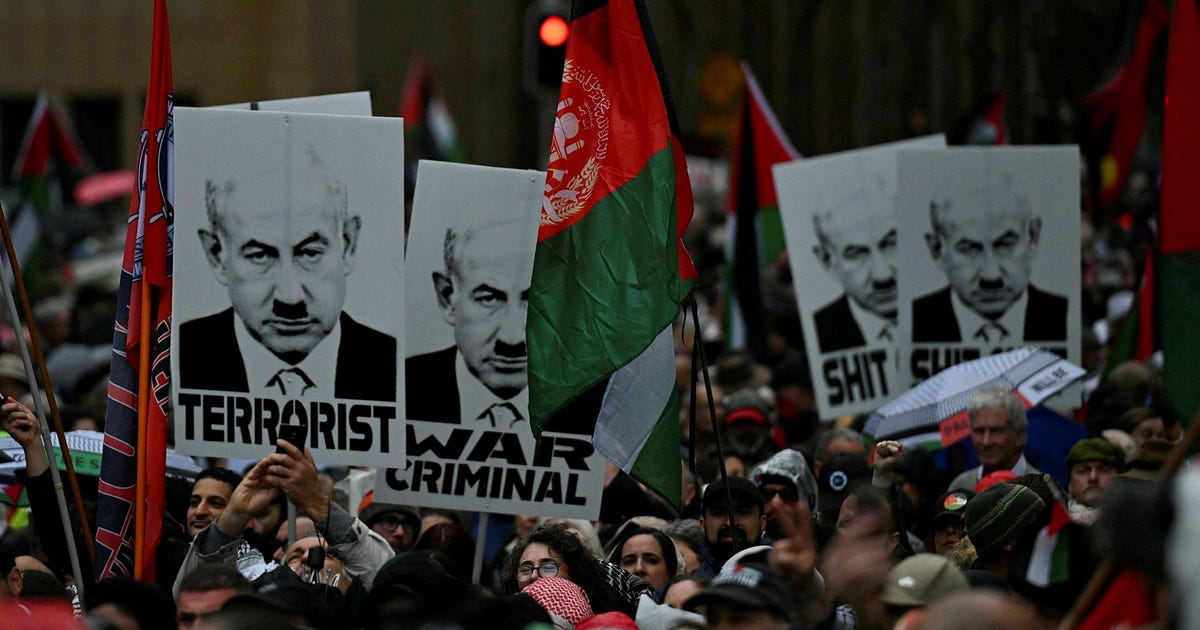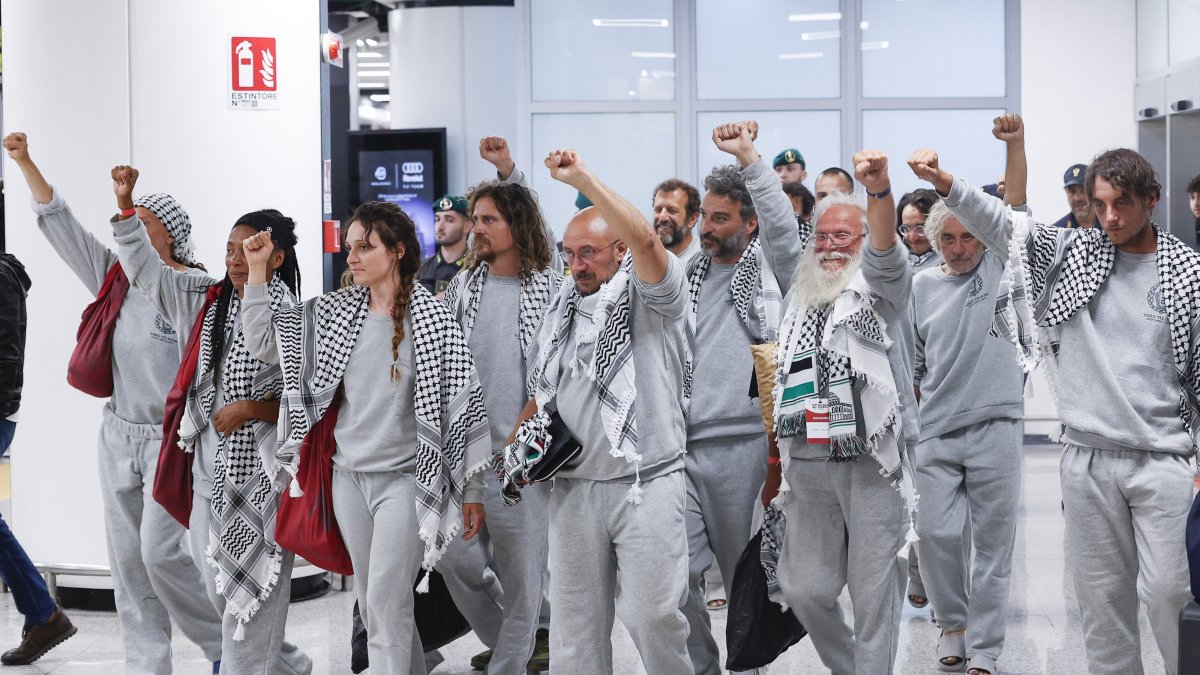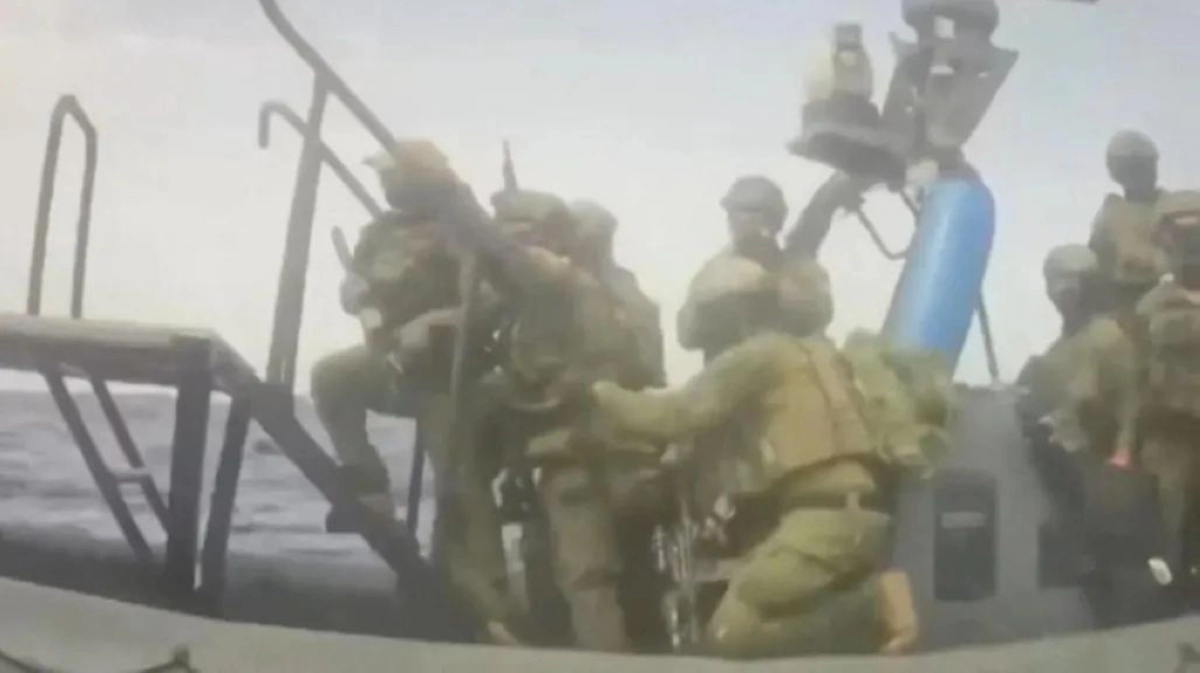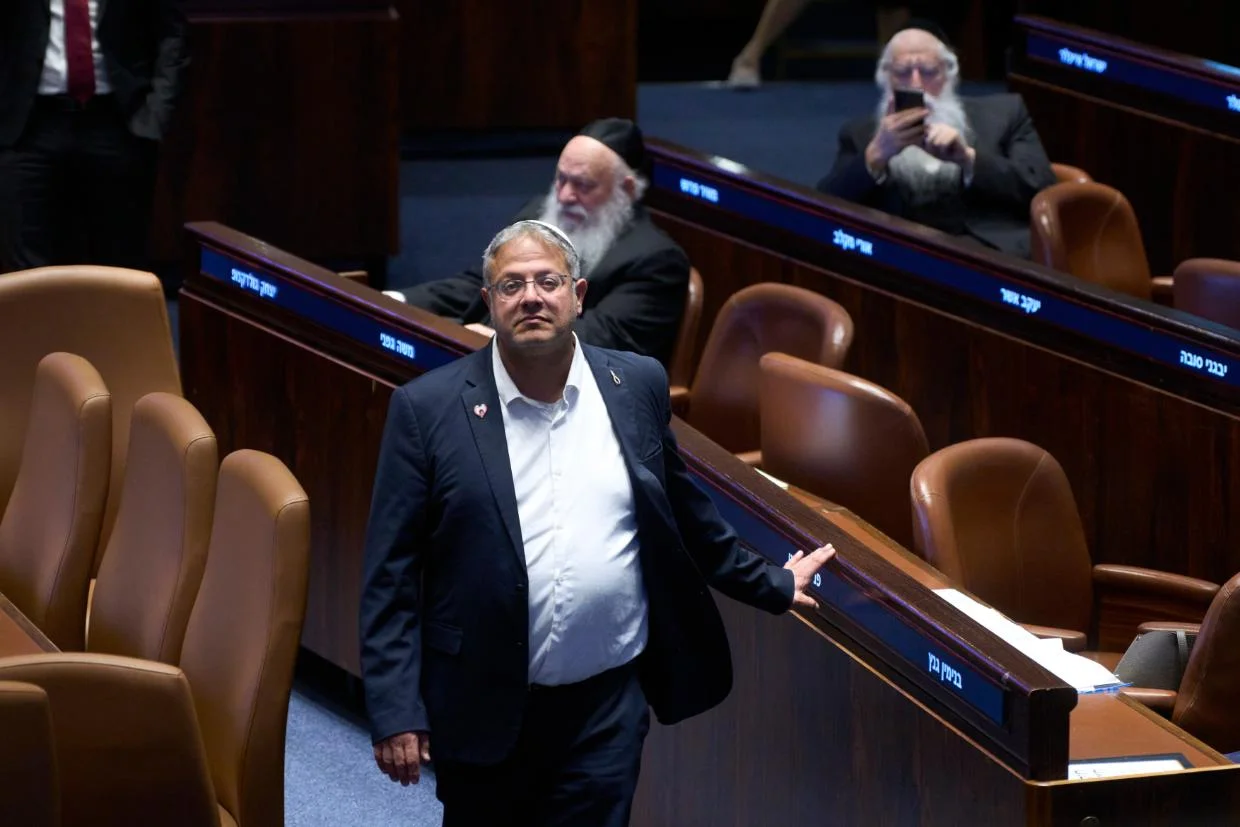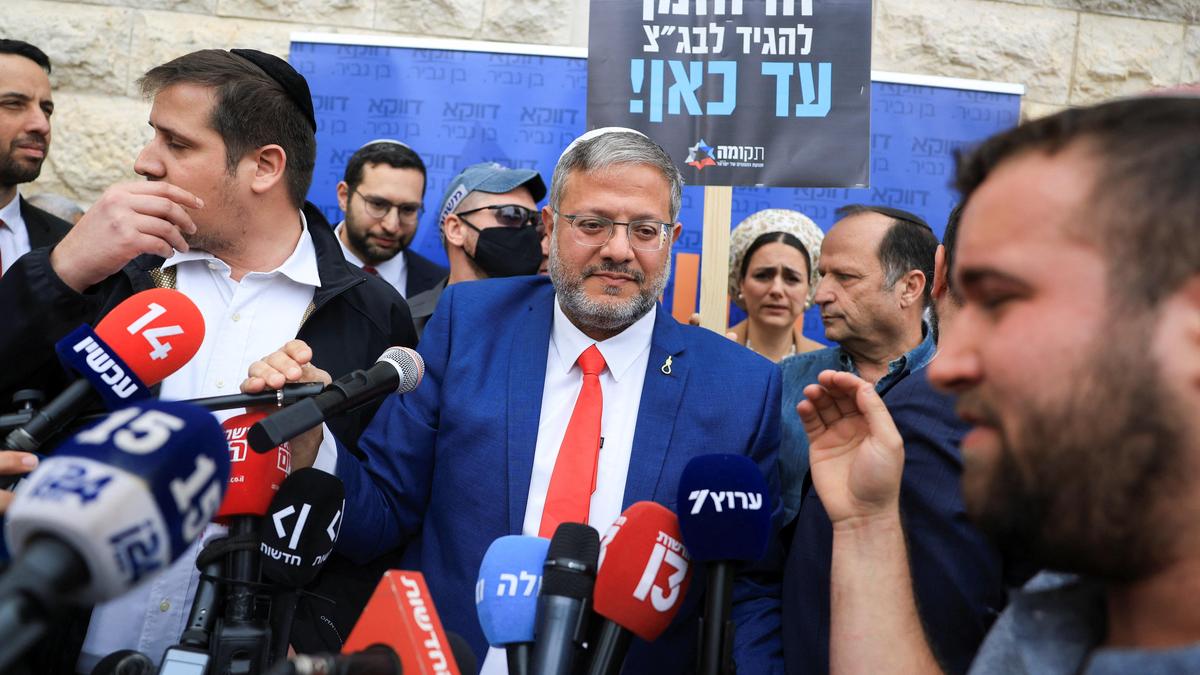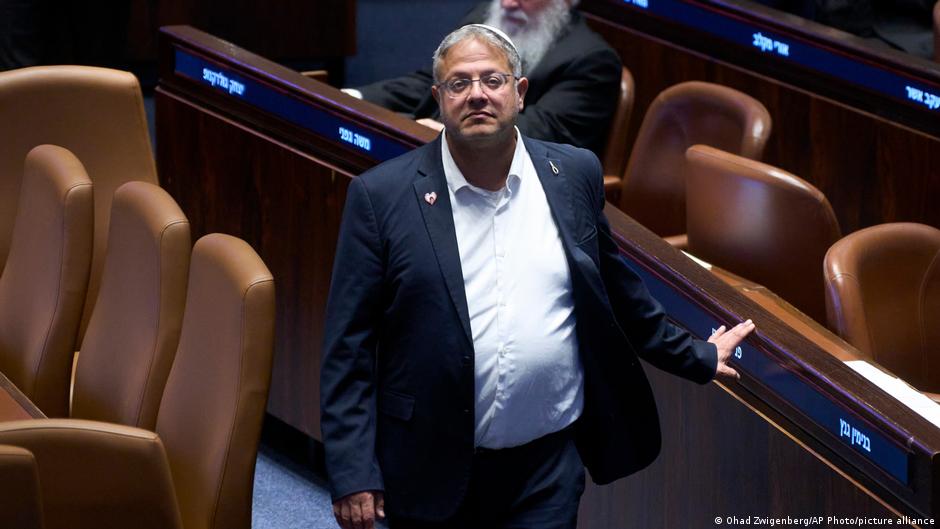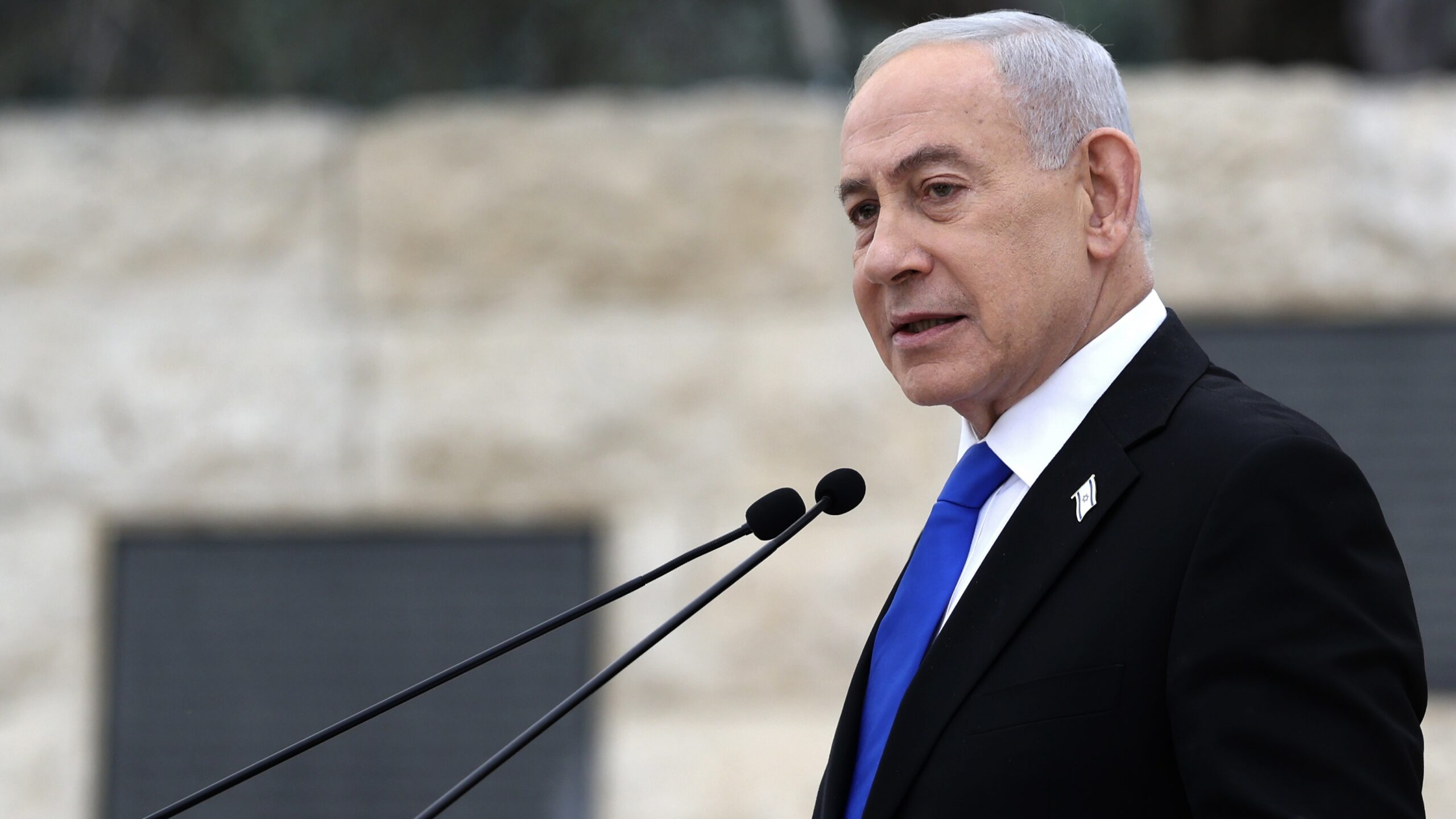
Hundreds of flotilla activists who were detained while trying to break Israel’s naval blockade to get aid into Gaza have reportedly been released and deported. That’s after video footage showing Israel’s national security minister, Itamar Ben-Gvir, taunting detainees drew intense international backlash.Israeli Prime Minister Benjamin Netanyahu has condemned the behavior in the video, saying it does not represent Israel’s values and norms. The scandal comes as Netanyahu faces challenges on many fronts, both abroad and at home. Israeli Supreme Court judges assemble on the day of a petition to force Israeli Prime Minister Benjamin Netanyahu to oust Israeli National Security Minister Itamar Ben-Gvir from his position at the court in Jerusalem Wednesday, April 15, 2026.Ronen Zvulun/Pool Photo via APThis week, the Knesset voted to dissolve Netanyahu’s government. Gaza, too, is likely to become a liability for the Prime Minister. The World’s Host Carolyn Beeler spoke with journalist Noga Tarnopolsky about how, today, Gaza factors into public opinion in Israel.Carolyn Beeler: How does Gaza factor into public opinion in Israel today?Noga Tarnopolsky: Well, I’m very glad you’re asking me about Gaza because, like in the rest of the world, in Israel also, Gaza has fallen behind the headlines, because Iran seems so current and the border with Lebanon is proving deadly for Israel, and on and on. But it’s impossible to say that it doesn’t figure, especially in the last few days, since the chairman of the board of peace, [Nickolay] Mladenov, the Serbian diplomat handpicked by Donald Trump, gave his first serious press conference. So, the subject has resurged. The question now seems to be, for Israelis, can anything be done to compel Hamas to let go of their weapons? It’s an armed terror group by definition. And it appears that neither the Trump administration, Mladenov himself, nor Israel has a real solution to this conundrum. Of course, the solution eventually would have to go either through Qatar or through Iran, which are Hamas’ sponsors. But right now, because Iran is waiting for the end results with the United States, and Qatar has been sidelined as a mediator, all of that is on hold. The other way that Gaza resurged in the Israeli consciousness in recent days is that Prime Minister Netanyahu recently made a boastful comment, I think it was Thursday night, and he said, with a wink to his base, it was a gathering of his followers, he said, ‘We now control 60% of the Gaza Strip, and ha, let’s see what happens tomorrow.’ That’s the kind of thing that his most extremist followers want to hear, but that’s also the kind of thing that could get him into trouble with the Trump administration. Because they do seem still pretty intent on holding to the terms of the Gaza ceasefire. And if Israel is now controlling 60% of Gaza and not 48% of Gaza, that’s going to be an issue that will come up. Because 48% of Gaza is in terms of the ceasefire?It was defined in the famous Trump 20-point plan, which was imposed by Trump on Netanyahu and on Hamas back in October, that brought an end to the active part of fighting. But what that did is not a ceasefire by any conventional measure. What happened is that Donald Trump said ‘enough,’ clapped his hands, and he froze the conflict where it was. He forced Israel to withdraw from more or less half of Gaza, militarily. And he was able to compel Qatar to compel Hamas to release all the remaining Israeli hostages. And since then, none of the other 20 points have been realized or put into play. It’s just been frozen. And because it’s frozen and because of this Israeli creep towards more territory and because of the really remarkable Hamas creep towards regaining sovereign rule over the populated parts of Gaza, this is a very, very volatile situation. A tent camp for displaced Palestinians stretches among the ruins of buildings destroyed during the Israel Hamas war, in Gaza City, Friday, May 15, 2026. (AP Photo/Abdel Kareem Hana)Abdel Kareem Hana/APSo, you’ve been talking about the security situation and how it is at the forefront of people’s minds in Israel. Is there a lot of talk about the humanitarian situation there? There’s some talk, there’s not enough talk, and there’s an enormous amount of confusion, which, for me, it’s important to emphasize, is intentional confusion. So, for example, the Israeli army is in charge of figuring out how many aid trucks get into Gaza every day. But since the ceasefire came into being, this goes through the US headquarters in Israel in Kiryat Gat. Neither the American army nor the Israeli army releases figures. And so, part of the chatter you’ll hear in Israel is about how many trucks are really getting through. You hear from Netanyahu supporters’ fury that even five trucks, ‘How the hell are we feeding the enemy?’ That’s the line from the Netanyahu side of the political map. And then from the prominent Israeli human rights group, you’ll hear, you know, that just 250 trucks went in and that it’s not nearly enough. So, what you have is this kind of chatter in the airwaves of Israel, and what does that elide? It elides serious conversation about the worsening situation inside Gaza, and it elides something else that Prime Minister Netanyahu is very eager for us to forget; and that is the very difficult lives of the Israelis who have returned to live in southern Israel, many of whom lost family members. Remember, more than 1,200 people were killed, and there are many, many circles of grief and loss all around that. Another way Gaza came up in the last few days is that the Israeli army is facing a really cataclysmic crunch right now. The army announced that it was withdrawing several brigades from the southern border. This simply caused an eruption of PTSD among Israelis, among those who reside there and who are petrified of living without soldiers protecting them, but among all Israelis. And it was very interesting because what that eruption of fear did was bring up again to the public forefront the fact that this Netanyahu government has not been able to find a solution to staffing the army or to provide real security for the residents of the south, so all of these issues are swirling around permanently in Israel.In this AP file photo, Palestinians carry sacks and boxes of food and humanitarian aid that was unloaded from a World Food Program convoy that had been heading to Gaza City in the northern Gaza Strip, Monday, June 16, 2025. Jehad Alshrafi/AP/FileWhat is happening in Gaza has long been very much tied to the fate of Prime Minister Benjamin Netanyahu. Where does that stand right now? Well, you know, Prime Minister Netanyahu has adopted a number of slogans since October 7, 2023, and he really is something of a maven with slogans. But during this war, it hasn’t really worked. So, for example, everyone in Israel calls this the Gaza War, but he decided to pass a cabinet decision calling it the War of Resurrection. He’s trying very hard to paint himself as almost a biblical figure of savior for Israel. It hasn’t really won anyone over. No one uses these terms. Similarly, he keeps talking about ‘total victory.’ The slogan has become such an obsession for him that his followers even put it in a MAGA-style (“Make America Great Again” – a term popularized by US President Donald Trump) on baseball caps. And yet on every single front, Gaza, Lebanon, Iran, even to a certain extent, Syria, kids, draft-age boys and girls, are not coming home. And in Lebanon, certainly, and even in Gaza, they’re getting wounded and killed every day. So it’s a complex conjuncture that has weakened Netanyahu. It’s one of the reasons this week we’re seeing what looks like the collapse of his government. Netanyahu incredibly wants to push elections back all the way to the 27th of October, 2026, which is the final legal deadline. And yet his government seems to be coming apart at the seams. And right now it seems more likely that the elections will be brought up to August, September. It’s not a done deal yet, but that seems to be the direction. And it’s an indication of how he sort of lost his touch in controlling the narrative.And of course, there is fighting also in the north of Israel against Hezbollah on the border with Lebanon, more linked to the US-Israel war in Iran. How is that playing into awareness about what is happening in Gaza and also the political future of Netanyahu? So, if the matter of Gaza is kind of, I would say, in and out of the Israeli consciousness, like a cloud can come in and of your view of the sky, the situation on the border with Lebanon is the sky itself. It’s permanent. There is not a minute in the Israeli day in which the catastrophic situation in the north isn’t a headline. Soldiers are dying there every day. The losses on the Lebanese side are making a lot more news inside Israel. There’s a lot of, I would say, even sort of moral questioning about the fact that the Israeli army is operating very harshly in Christian villages in southern Lebanon that are allies of Israel. Right now, there’s no off-ramp, and certainly, as I understand it, as long as the United States and Iran don’t manage to come to a signed agreement, Iran is allowing Hezbollah to run unfettered. And Donald Trump isn’t saying anything to Netanyahu about operations in Lebanon because Netanyahu, who desperately needs to keep that war going so that he can tell his population, ‘I know you’re dying every day, I know your kids are being forced to duck under tables, and their teachers are throwing themselves on kindergartners just to try and save them.’ He’s saying that by continuing to fight, he does care about their safety and their future, but for now, life in the Israeli north is not livable. Even if Israeli losses are not as high numerically as they are in Lebanon, life is not livable. People cannot go to work, send their kids to school, anything, and that is a political time bomb for Netanyahu. Israeli soldiers carry the flag-draped casket of Capt. Maoz Israel Recanati who was killed in a Lebanese drone attack in southern Lebanon, during his funeral in Mt. Herzl military cemetery in Jerusalem, Sunday, May 17, 2026. Ohad Zwigenberg/APParts of this interview have been lightly edited for length and clarity.The story you just read is not locked behind a paywall because listeners and readers like you generously support our nonprofit newsroom. Now more than ever, we need your help to support our global reporting work and power the future of The World. Can we count on you?
Politically, Israel’s conflicts are a ‘ticking time bomb’ for Netanyahu - The World from PRX
With fighting in Iran and Lebanon taking over public consciousness, the crisis in Gaza has fallen somewhat out of focus for much of the world. At a moment of political upheaval in Israel, journalist Noga Tarnopolsky speaks with Host Carolyn Beeler about how Gaza factors into the current political landscape there, and how that relates to the escalating conflict on the border with Lebanon.
1,822 words~8 min read