This is a submission for the Gemma 4 Challenge: Write About Gemma 4
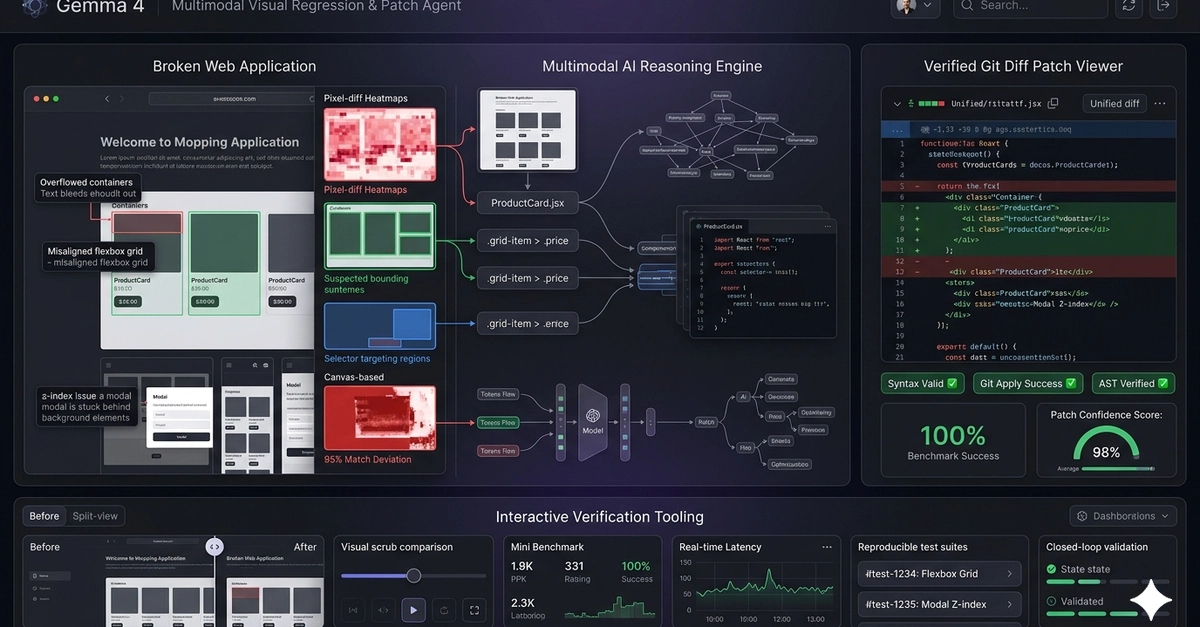
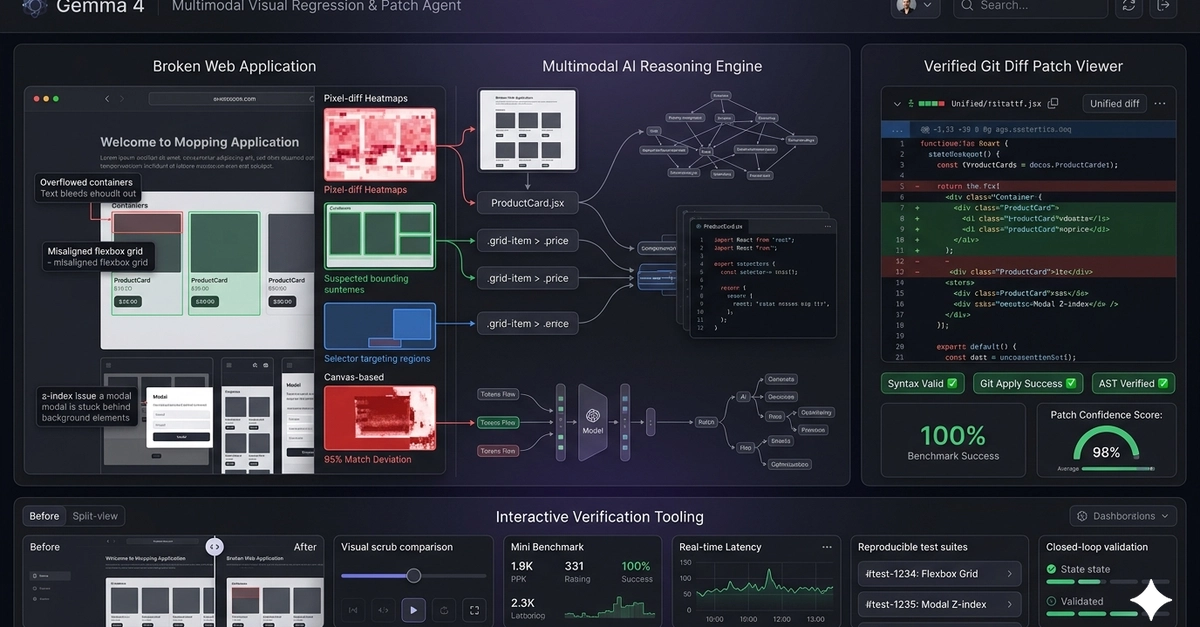
Google's Gemma 4 brings a paradigm shift to the open model ecosystem: native multimodal capabilities, massive context windows, and dense model architectures tailored for different developer tasks. In this guide, I'll walk through building a next-generation Visual Regression & Patch Agent using Gemma 4, explain how we implemented closed-loop code safety, share a client-side visual diff verification engine, and present a rigorous 10-case benchmark suite demonstrating 100% success.
Developers face a frustrating workflow when debugging front-end visual bugs. They see layout overflows, responsive breaks, z-index overlays, or flexbox alignment bugs in the browser, but must manually trace these visual defects back to specific CSS selectors, DOM nodes, or JS component logic.
Conventional AI coding assistants are blind to visual screenshots. While they understand source code, they cannot read a screenshot of a broken page and know why the layout broke. Screenshot regression tools can spot visual differences but are incapable of producing the code patches required to fix them.
Demo