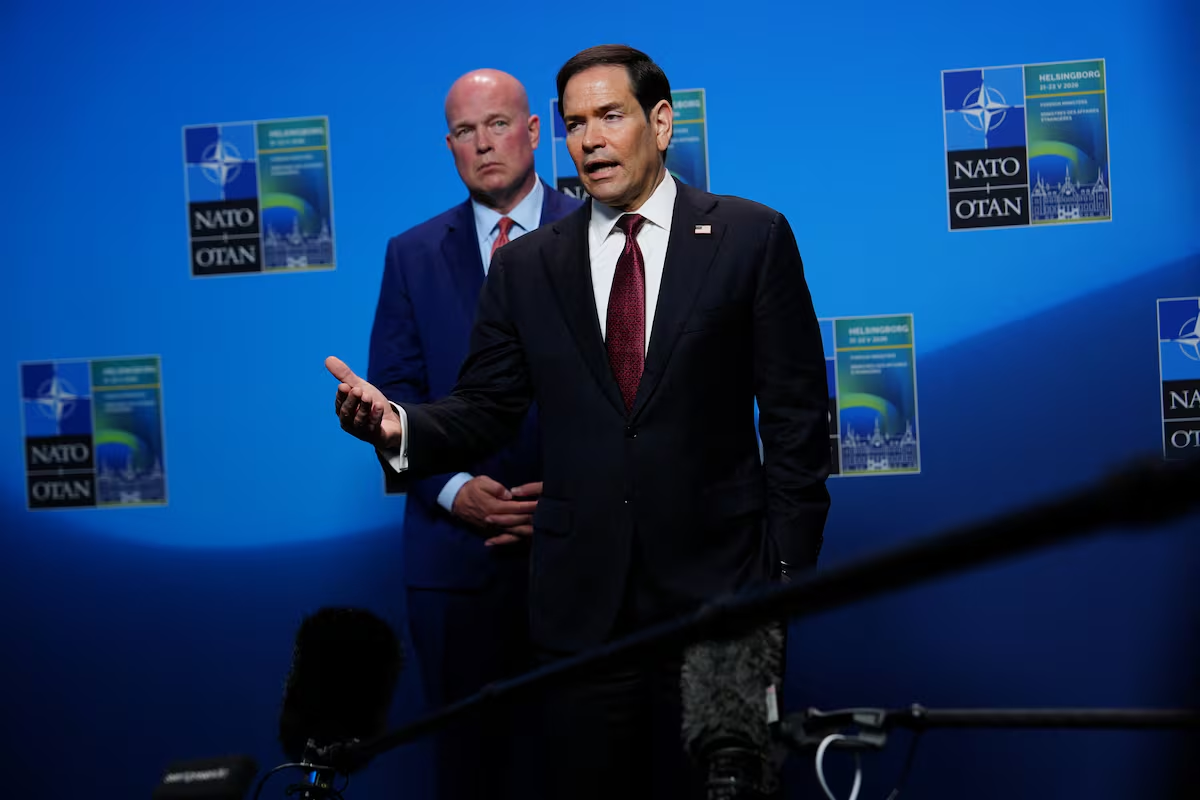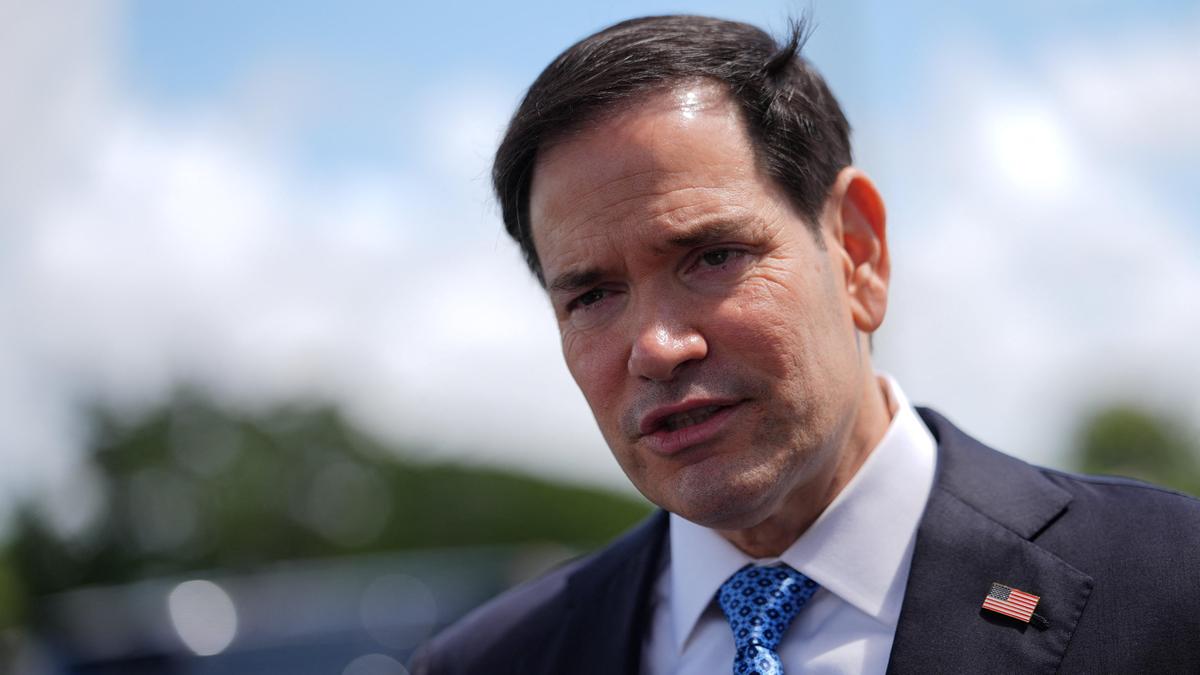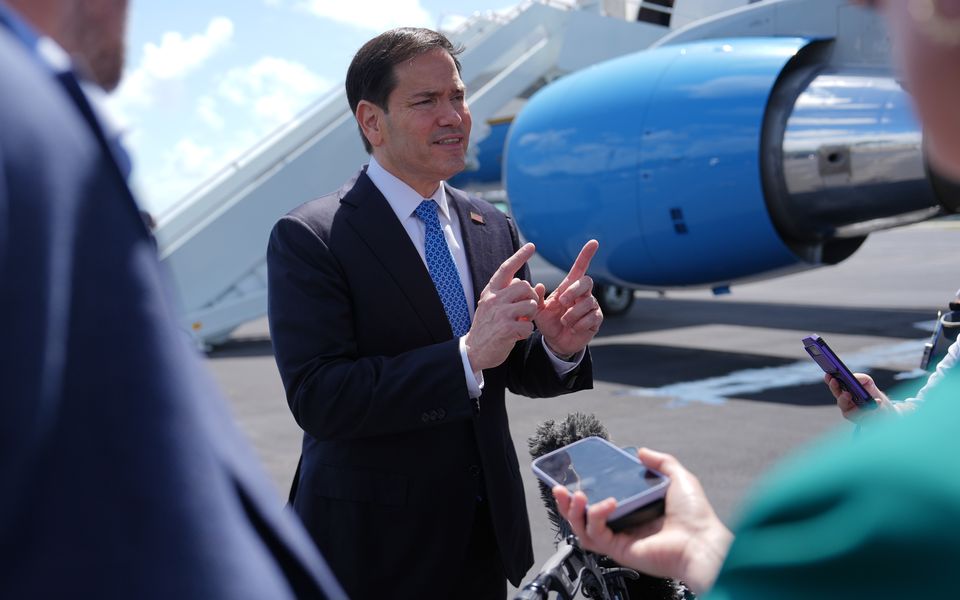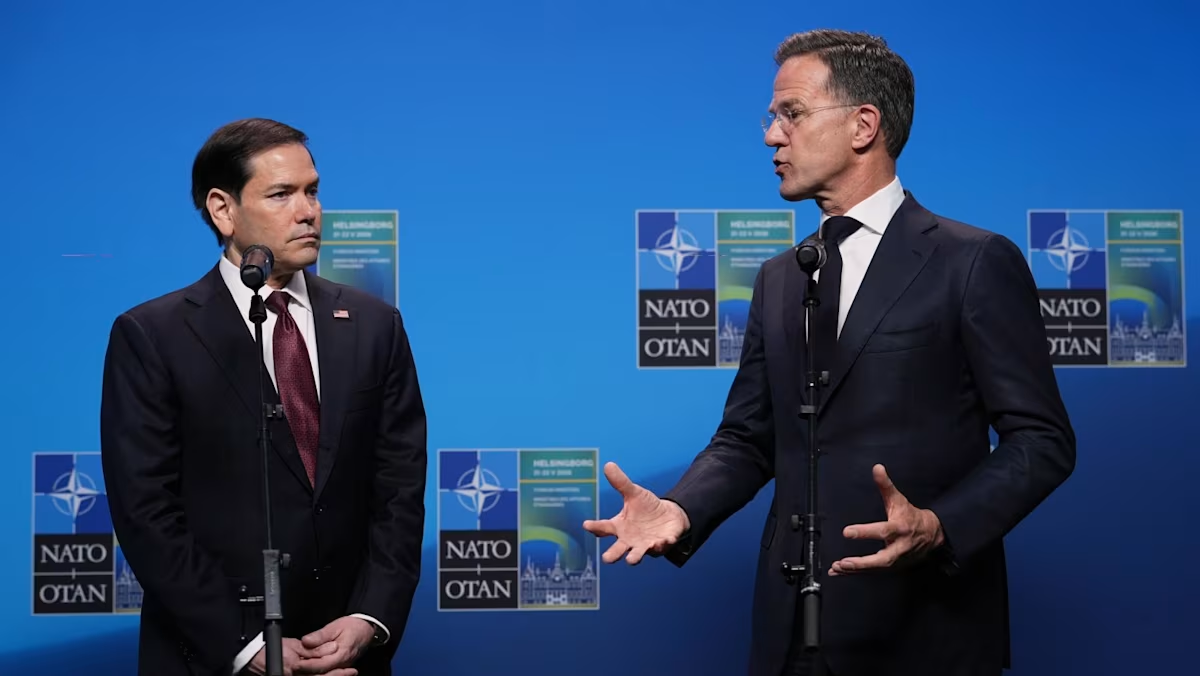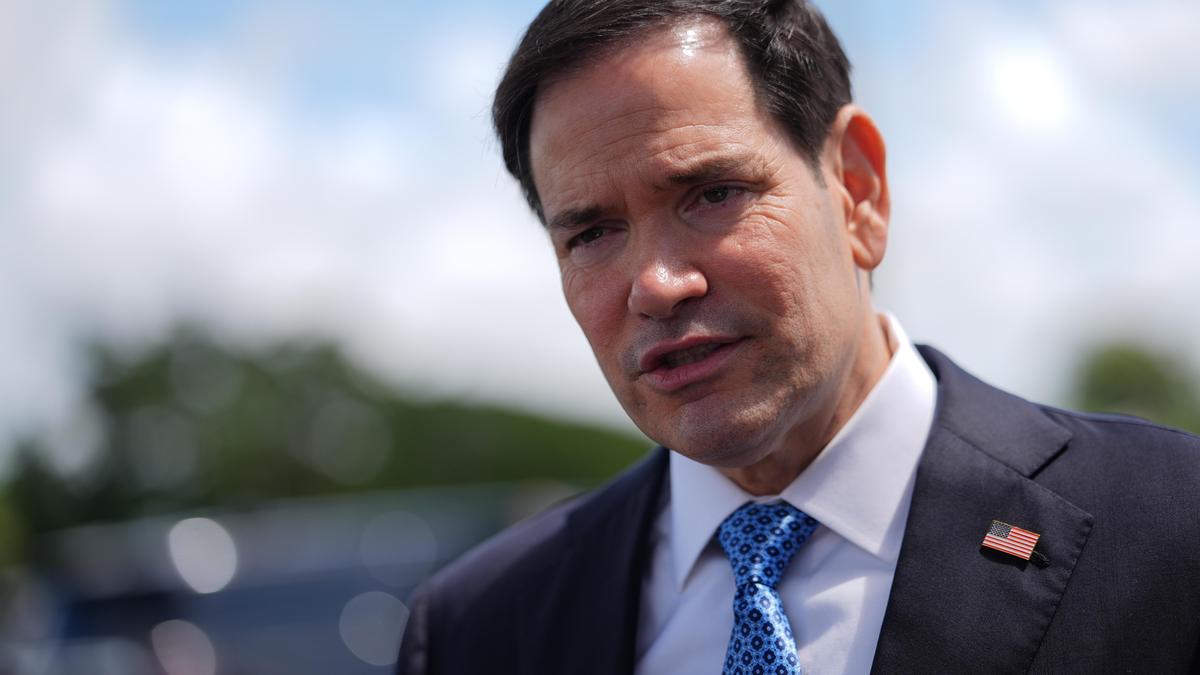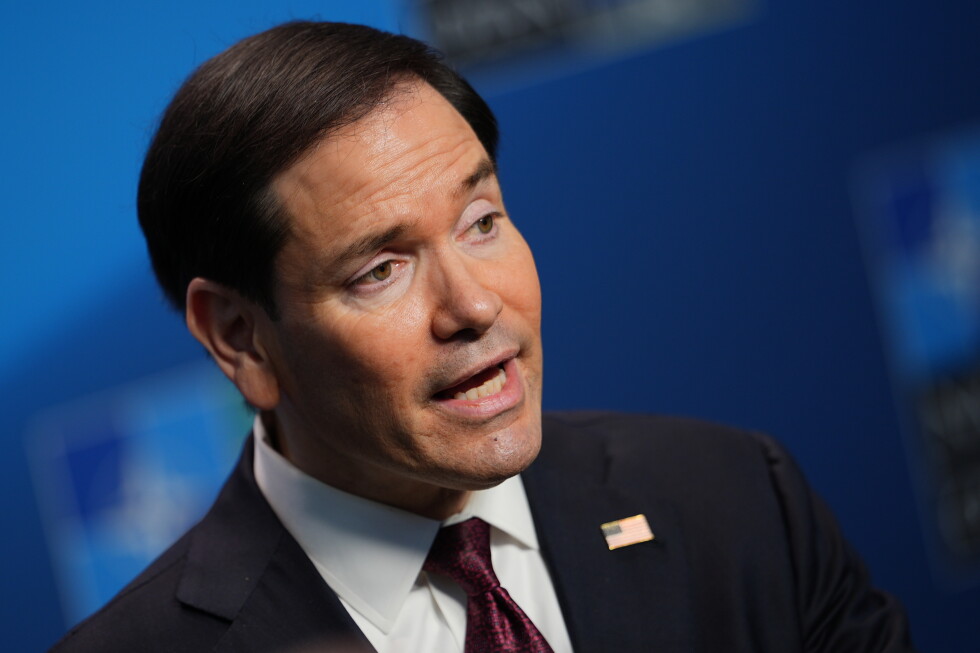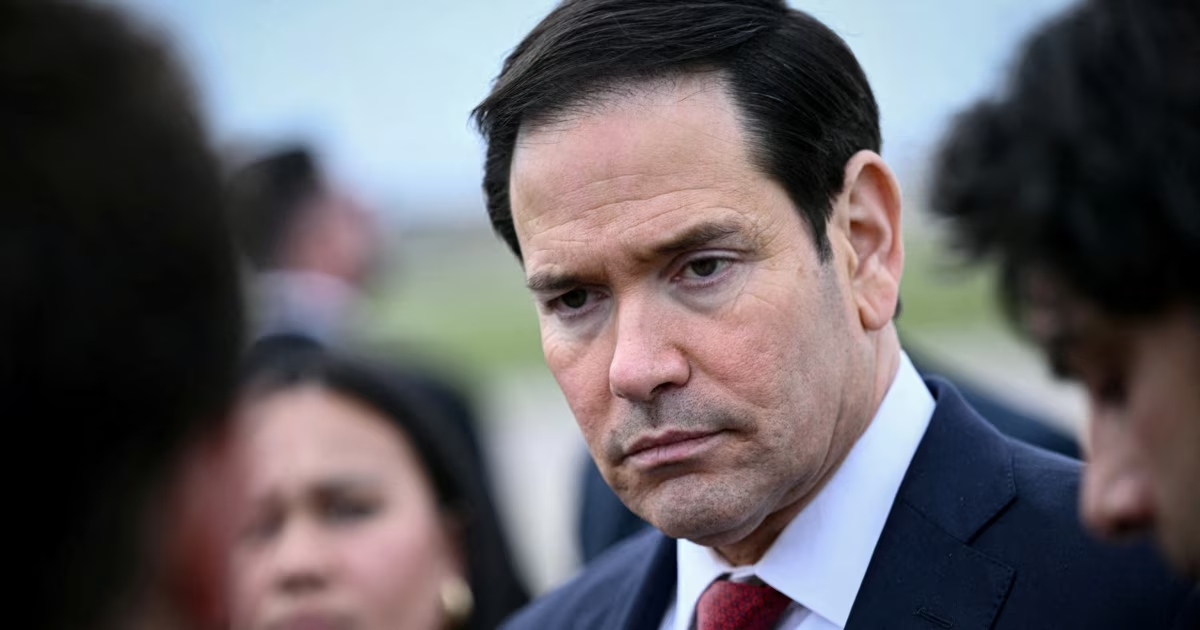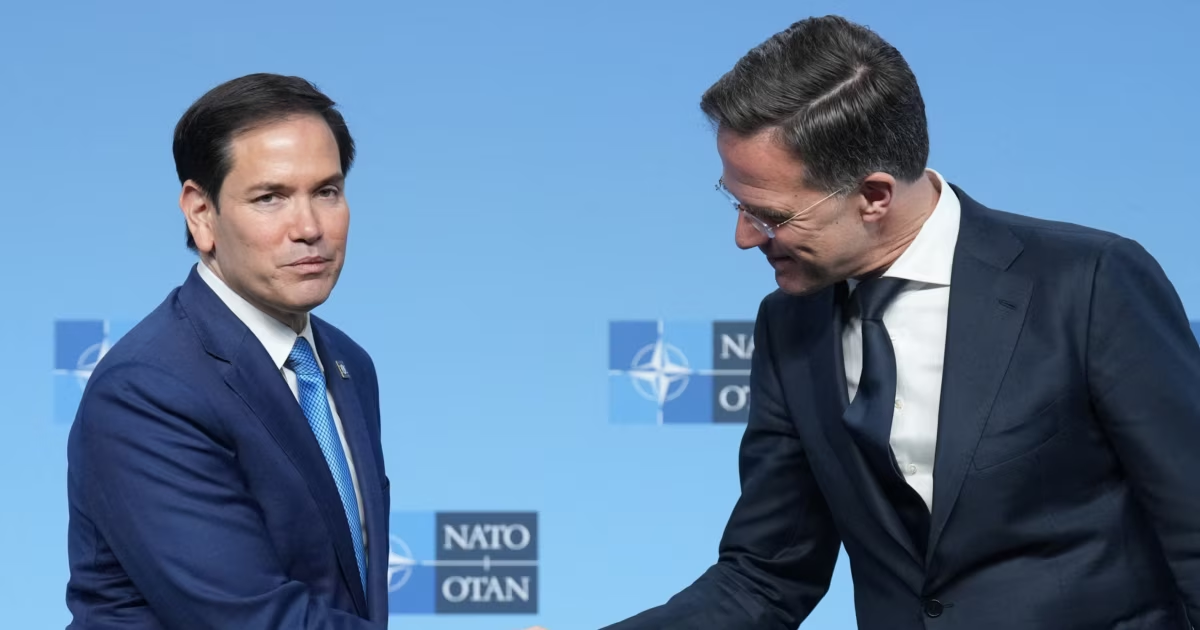
HELSINGBORG, Sweden -- US Secretary of State Marco Rubio ended a tense round of NATO talks in Sweden with a blunt message to European allies: Washington’s military footprint on the continent will shrink over time, but the US insists its commitment to NATO’s collective defense remains intact.Rubio’s visit to the NATO foreign ministers’ meeting in Helsingborg came amid mounting confusion over contradictory signals from US President Donald Trump regarding troop deployments in Europe, especially after Trump abruptly announced that 5,000 additional American troops would be sent to Poland just weeks after Washington revealed plans to reduce forces elsewhere in Europe.The uncertainty overshadowed much of the summit and exposed growing anxiety inside the alliance over whether Europe can still rely on the predictability of US security guarantees.Still, both Rubio and NATO Secretary-General Mark Rutte sought to project unity and strategic continuity, even as they acknowledged the alliance is entering a period of major transition.“This is not a decision that was made on the back of a napkin,” Rubio told reporters, insisting that any reduction of American forces in Europe was part of a long-running strategic review coordinated with allies.“There’s a broad recognition that there are going to be eventually less US troops in Europe than there have historically been,” he said.‘Ironclad’ Article 5 Reassurances Amid Russian PressureThe dominant theme hanging over the meetings was Russia. Rutte moved aggressively to reassure nervous Eastern allies, warning Moscow against testing NATO resolve at a time of heightened military tensions around the Baltic region.“Let me be crystal clear,” Rutte said after the ministerial talks. “Allies’ commitment to Article 5 is ironclad. Our resolve and ability to defend every ally is absolute. Were anyone to be foolish as to attack us, the response would be devastating.”The comments came after a series of alarming incidents involving drones, GPS interference, and alleged Russian jamming operations near NATO territory.Baltic governments have accused Moscow of redirecting Ukrainian drones into NATO airspace in what officials increasingly describe as a deliberate campaign of intimidation and hybrid warfare.Responding to a question from RFE/RL, Rubio acknowledged Washington’s concern over the incidents, warning about the risk of escalation.“It’s a concerning thing, because you always worry that something like that can spark into something bigger,” he said. “We’re concerned about it, because we don’t want it to lead to some broader conflict that can really lead to something far worse.”Nordic and Baltic ministers jointly condemned what they called Russia’s “blatant disinformation campaign” and accused Moscow of trying to destabilize NATO’s northeastern flank through threats and provocations.The growing drone threat also exposed another uncomfortable reality: NATO still lacks a fully integrated counter-drone shield across its eastern frontier.Officials privately admitted the alliance is scrambling to adapt to the kind of drone warfare now dominating the battlefield in Ukraine.Troop Confusion Fuels Anxiety Across EuropeThe most politically sensitive issue during Rubio’s visit was the future of US troop deployments in Europe.European officials were left trying to decipher a series of conflicting announcements from Washington. Earlier this month, the Pentagon halted the planned rotation of thousands of troops into Poland while also signaling reductions elsewhere on the continent, including Germany.Then Trump unexpectedly declared on social media that 5,000 additional troops would instead be sent to Poland.
Rubio's Stark Warnings To NATO On Russia, Troops, And Alliance Strains
US Secretary of State Marco Rubio ended a tense round of NATO talks in Sweden with a blunt message to European allies: Washington’s military footprint on the continent will shrink over time, but the US insists its commitment to NATO’s collective defense remains intact.
1,115 words~5 min read