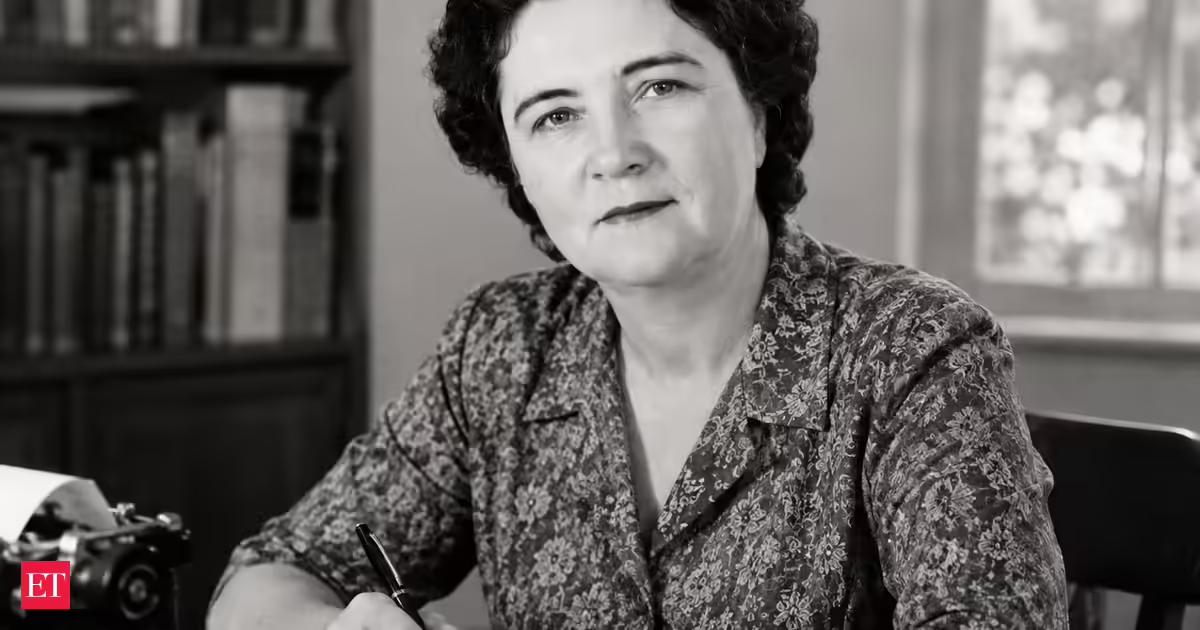
Quote of the day by Marjorie Kinnan Rawlings shares an insight about relationships, affection, and human nature. The line says, “A woman has got to love a bad man once or twice in her life, to be thankful for a good one.” The message speaks about experience and learning. The quote reflects how people grow through life and relationships. It also connects to the life of the American writer and novelist who created regional literature in Florida. This article explains the meaning of the quote, its relevance today, life lessons, and the biography of Marjorie Kinnan Rawlings. The story also shows how literature and life experiences connect with human nature.The quote by Marjorie Kinnan Rawlings is: “A woman has got to love a bad man once or twice in her life, to be thankful for a good one.”This line talks about relationships and human behaviour. It suggests that life experiences teach people how to value stability and trust. The quote uses simple words to explain a deep idea about love and life.Understanding the quote meaning and relevanceThe quote meaning focuses on life experiences and emotional learning. Many people experience relationships that do not work. These experiences help them understand what they need in a stable relationship. The quote explains how contrast helps people recognise value. When people face challenges in relationships, they gain awareness. This awareness helps them understand affection and trust.You Might Also Like:The quote relevance remains strong today. Modern relationships still involve learning through experience. People learn from mistakes and past connections. The quote speaks about emotional growth. It shows how human nature learns through life events. This message connects with readers across generations. Life lessons on relationships and human natureThe quote offers many life lessons. One lesson is about personal growth. People grow through experiences. Another lesson is about gratitude. Difficult situations help people value stability later. The quote also talks about awareness. Experiences help people identify trust and care.The quote explains how affection develops through understanding. People often learn through comparison. They learn what works and what does not. These lessons shape emotional maturity. The quote shows that human nature evolves through time and experience.You Might Also Like:Background of the writer and novelist Marjorie Kinnan Rawlings Marjorie Kinnan Rawlings was born on Aug. 8, 1896, in Washington, D.C. She later became an American short-story writer and novelist. She created regional literature about backwoods Florida.Her father worked for the U.S. Patent Office. He died when she was 17 years old. After his death, she moved with her mother to Madison, Wisconsin. Writing began early in her life. One of her childhood stories was published in The Washington Post when she was 11 years old. She also won a McCall’s writing contest in 1912.She graduated from the University of Wisconsin in 1918. In 1919, she married Charles A. Rawlings, a newspaperman. She worked as a reporter and feature writer for the Louisville Courier-Journal and the Rochester Journal. During this time, she tried to build a career in fiction writing.You Might Also Like:Move to Florida and literary successIn 1928, she made a major decision. She bought a 40-acre orange grove near Cross Creek in northern Florida. This move changed her writing life. She felt connected to the people and the environment of the region. Her writing voice developed after moving there.She sold two stories to Scribner’s magazine. In 1933, her story “Gal Young Un” won the O. Henry Memorial Award for short stories. Her first book, South Moon Under, was published in 1933. This year also marked her divorce from Charles Rawlings.She later published Golden Apples in 1935. In 1938, she released The Yearling. This book won the Pulitzer Prize. The story tells about a boy who adopts a fawn. It was made into a film in 1946 and became known as a classic.Marjorie Kinnan Rawlings later works and legacyMany of her stories appeared in When the Whippoorwill in 1940. In 1942, Cross Creek described her life in Florida. The book showed her connection to nature and local culture. It was later made into a film in 1983. She also published Cross Creek Cookery in 1942.Her last book, The Sojourner, came in 1953 and was set in Michigan. She was working on a biography of Ellen Glasgow when she died on Dec. 14, 1953, in St. Augustine, Florida, at age 57.After her death, Secret River was published in 1955. Rawlings’s Short Stories appeared in 1994. A collection of poems from the Rochester Times-Union was published in 1997 as Poems by Marjorie Kinnan Rawlings: Songs of a Housewife.Lasting impact of the quote and literatureThe quote by Marjorie Kinnan Rawlings continues to connect literature with life lessons. Her writing explored human nature and relationships. Her quote reflects emotional learning and growth. Her works continue to influence readers and writers. The message remains relevant in modern life and relationships.
Quote of the day by Marjorie Kinnan Rawlings: 'A woman has got to love a bad man once or twice in her life, to be thankful for...' Life lessons on relationships, affection and human nature by popular American writer and novelist
Quote of the day by Marjorie Kinnan Rawlings explores how life experiences shape relationships and affection. The saying explains how difficult relationships help people value stable bonds later. This explainer shares the quote meaning, the relevance today, life lessons, and the life story of the American writer and novelist who created regional literature about Florida and human nature.
807 words~4 min read