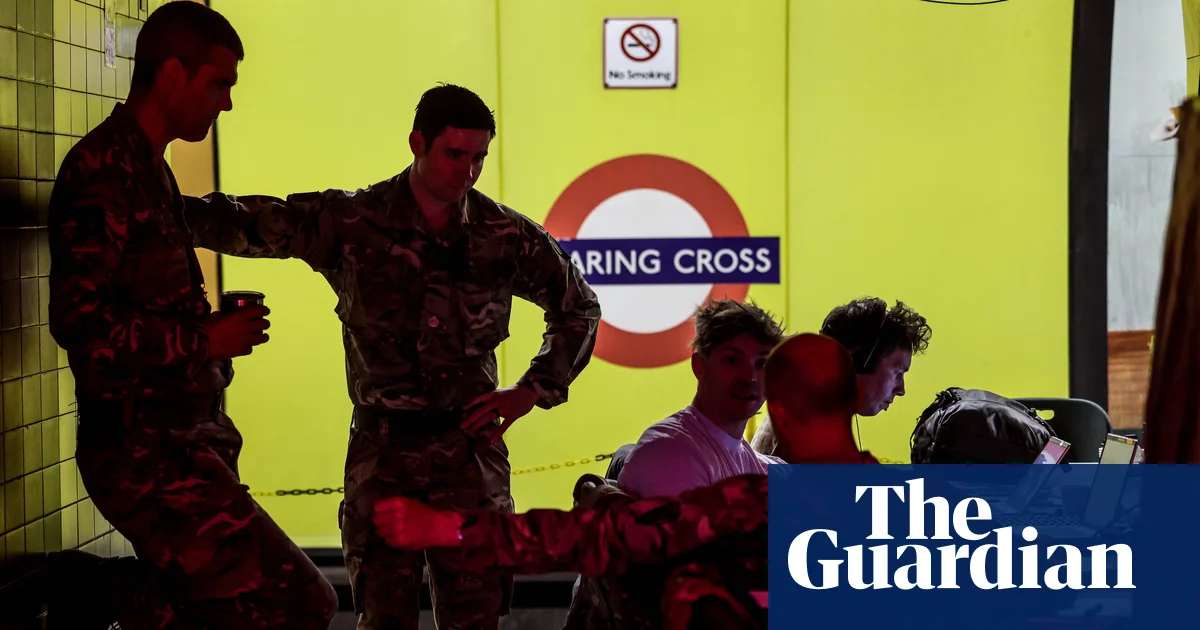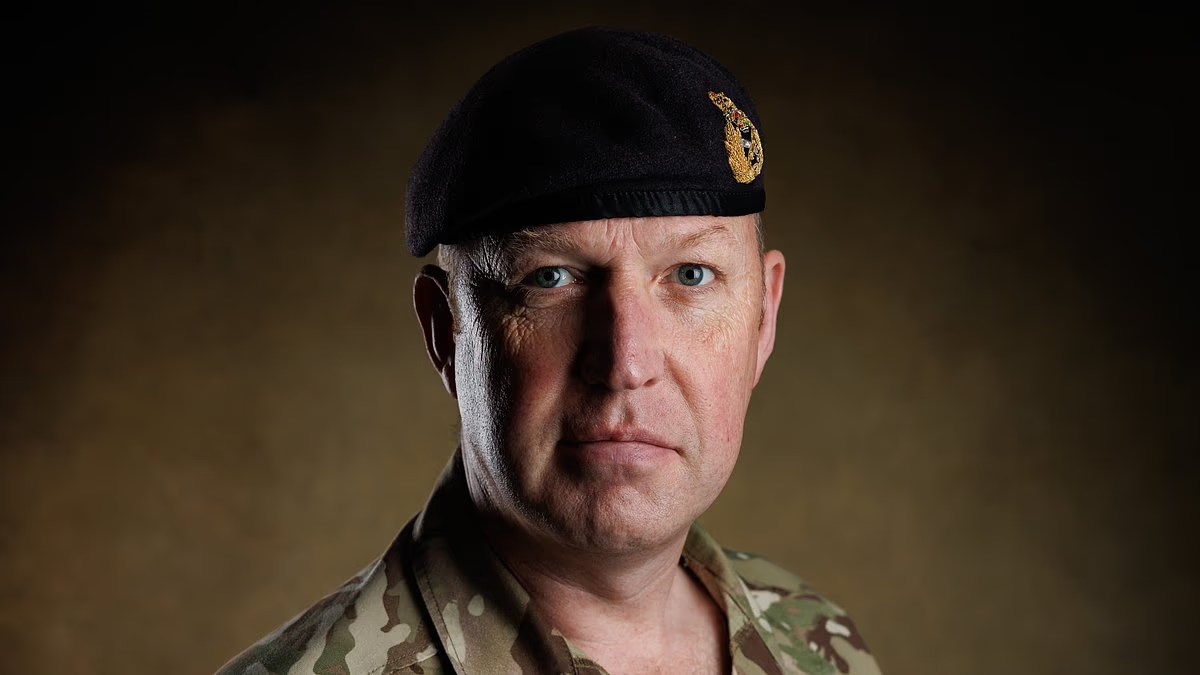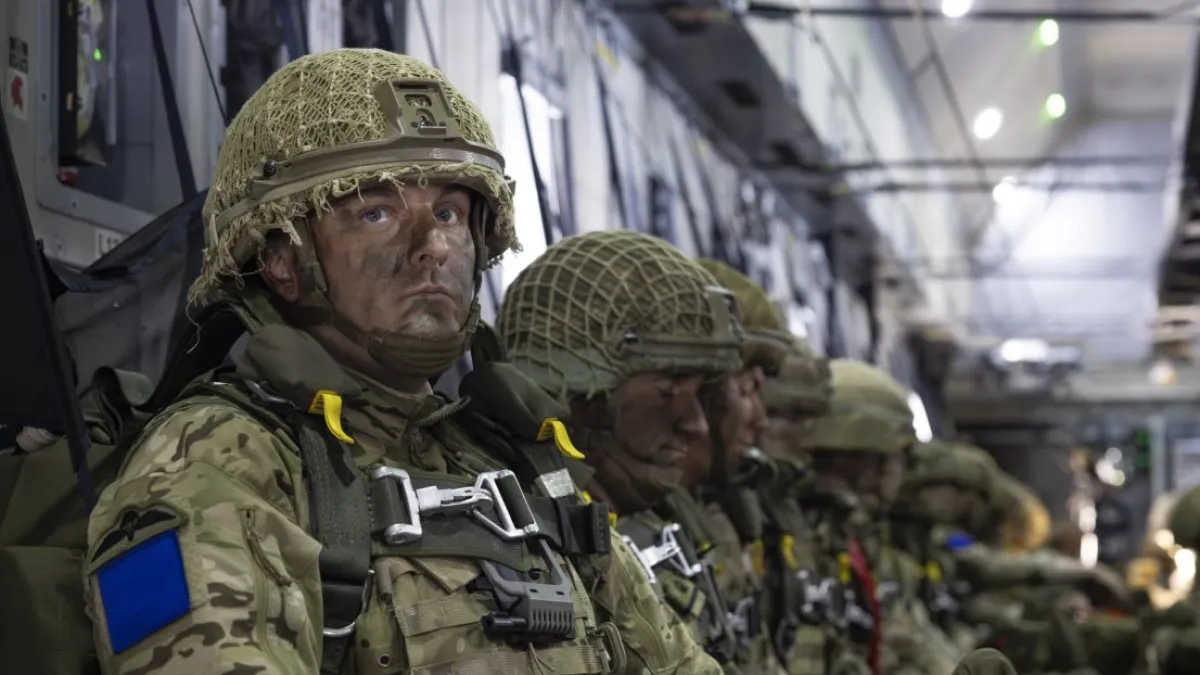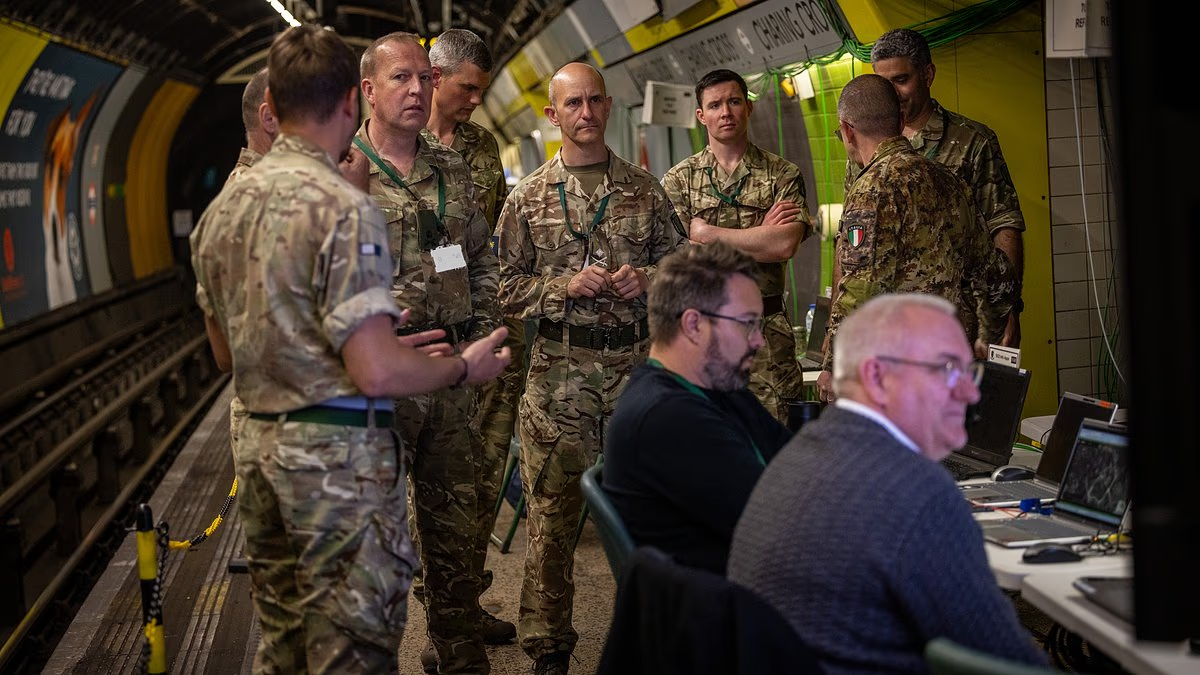
British soldiers are chronically ill equipped to respond to a Russian invasion of NATO territory, defence sources have confirmed.The precise shortages of drones and other weaponry remain classified for national security reasons.But senior officers suggested the UK’s stockpile of drones only last a week of combat in their most dire warning yet of how the UK would fare in the opening exchanges of a European conflict.The UK’s current contribution to the defence alliance has prompted serving commanders to issue a desperate plea for additional funding.They fear 2030 is the earliest Britain could respond adequately to a Russian invasion of a Baltic state or anywhere else along the alliance’s eastern flank.But commanders believe immediate investment is required to be battle-ready in four years time, otherwise British forces face being wiped out if or when the Russians advance. British commanders took over a disused London Underground platform to set up an operational headquarters - as part of a rehearsals for a possible Russian invasion of a Baltic state. As hundreds of feet above tourists and Londoners enjoyed a sunny afternoon, senior British officers rehearsed setting up a subterranean headquarters and coordinating drone strikes and long-range missile attacks on advancing Russian forces. Despite US President Donald Trump's threatening rhetoric, his troops are stepping up preparations to defend Europe's eastern flank with Stryker armoured vehicles conducting manoeuvres this month in PolandCurrently the UK spends 2.6 per cent of GDP on defence, while allies such as Poland spend 4.48 per cent and Lithuania 4.0 per cent.Labour has committed to spend 2.7 per cent from next year and maintains an ‘ambition’ to reach 3 per cent in the next parliament.The revelations came as senior officers staged a secret exercise beneath the streets of central London.Earlier this week an abandoned London Underground platform was transformed into a subterranean NATO command and control centre.Officers rehearsed setting up a headquarters in a disused public transport facility in a Baltic state – dovetailing with real-time exercises on the ground in Estonia involving UK troops.The mock command exercise – codenamed Exercise Arrcade Strike - involved deploying AI-integrated drones and using sophisticated 3D software systems to display the battlefield.Arrcade Strike brought together hundreds of UK personnel from troops from France, Italy and the United States. Together they tested NATO’s ability to command complex operations involving tens of thousands of troops on the actual frontline.The UK provides NATO’s Allied Rapid Reaction Corps, a force of 30,000 shock troops who will be first into action should the Russians advance into Eastern Europe.They will be backed up by the alliance’s Strategic Reserve Corps, formations consisting of as many as 100,000 troops protecting land, sea, air, space and cyber space.Offering a withering assessment of current readiness, and alarming caveats for future readiness, ARRC Commander Lieutenant General Mike Elviss said the year 2030 was ‘when we could realistically deliver the modernised technology and increased readiness required to meet that threat, but only with the right investment now and with the support of industry to build a national arsenal, not just of munitions stockpiles, although that’s critical, but also of the national means of production that can scale in wartime.‘There is a huge opportunity to here but peril if we ignore the risk. The battlefield is increasingly transparent. We cannot protect everything. So we must prioritise, harden what matters most, and ensure we can fight through disruption. Protection is no longer about perfection; it is about survivability and continuity. The foundations are in place. To secure full advantage we must continue to invest in the digital backbone and the partnerships that sustain it.’British commanders also conceded that whenever and wherever the Russians may strike, they can choose the time and place, with NATO forces scrambling to respond. They will also have momentum.To take on the Russians UK commanders have devised the strategy of ‘Recce-Strike’ involving engaging the enemy at long range using a sophisticated combination of sensors and platforms.AI is also playing a key role in intelligence, logistics and targeting, while in two hours AI is completing planning cycles that previously took officers 72 hours.AI can also be optimised to analyse enemy patterns of life and to predict the enemy’s behaviours. The UK’s military AI system is called Asgard Decide.Based on lessons from the conflict in Ukraine, battlefield AI technologies are developing at such pace that every six to eight weeks previous iterations are becoming outdated.The US will play a major role in defending the Baltic States, regardless of President Donald Trump’s repeated criticisms of European allies and fall out over his desire to acquire Greenland from Denmark.US Air Force officer General Alexux Grynkweich, the Supreme Allied Commander Europe (SACEUR) said: ‘Demonstrating our strength to Russia is how we deter future aggression and therefore avoid the horrific human and economic costs of conflict. NATO remains the cornerstone of our collective defence – in reality, not just in rhetoric.’The SACEUR also issued a veiled warning to Britain regarding the appropriate resources of its responsibilities.He added: ‘Without credible land forces escalation cannot be controlled, territory cannot be secured and war cannot be confined.‘The UK’s Strategic Reserve Corps is the Allied Rapid Reaction Corps and it is therefore the physical manifestation of the UK’s land commitment to NATO. So we need it to be fully mission capable.’According to defence sources Europe is facing its most complex and dangerous security environment in generations.As in Ukraine modernised, high-intensity land conflict is being conducted on NATO’s doorstep.The Mail was invited to the mock NATO command centre set up beneath Charing Cross Station. From there senior officers rehearsed the alliance’s response to Russian incursions across the Baltic states, triggering Article Five, an obligation upon member states to defend another.The command post was set up deep underground to reflect the threat to such locations in conflict zones. NATO commanders would choose locations such as metro stations in times of war to protect themselves against long-range missiles, drones and electronic surveillance.The UK is spending £4 billion on boosting drone capabilities based on lessons from the conflict in Ukraine – where more than 90 per cent of Russian casualties are being inflicted by unmanned weapon systems and stretches of the frontline are manned entirely by robots.The Royal Navy is transforming into the hybrid navy with unmanned ships and submarines set to accompany warships on the high seas in the coming months. The Army has been issued 6,000 additional drones already this year with a further 8,000 ‘One Way Effector’ drones due to enter service by the end of 2026.Today, Defence Secretary John Healey said: ‘We’re transforming our Armed Forces and delivering on our NATO-first commitment to boost deterrence and ensure we can keep the UK and our allies safe.‘This groundbreaking Army exercise shows that with UK leadership the ARRC can deploy at pace to command tens of thousands of troops to defend NATO territory. We are investing in our people and cutting edge technology and stepping up on European security.’
Britain's drones would last a week in war with Russia, officers fear
British soldiers are chronically ill equipped to respond to a Russian invasion of NATO territory, defence sources have confirmed. Senior officers suggested the UK's drones would last a week of war.
1,152 words~5 min read