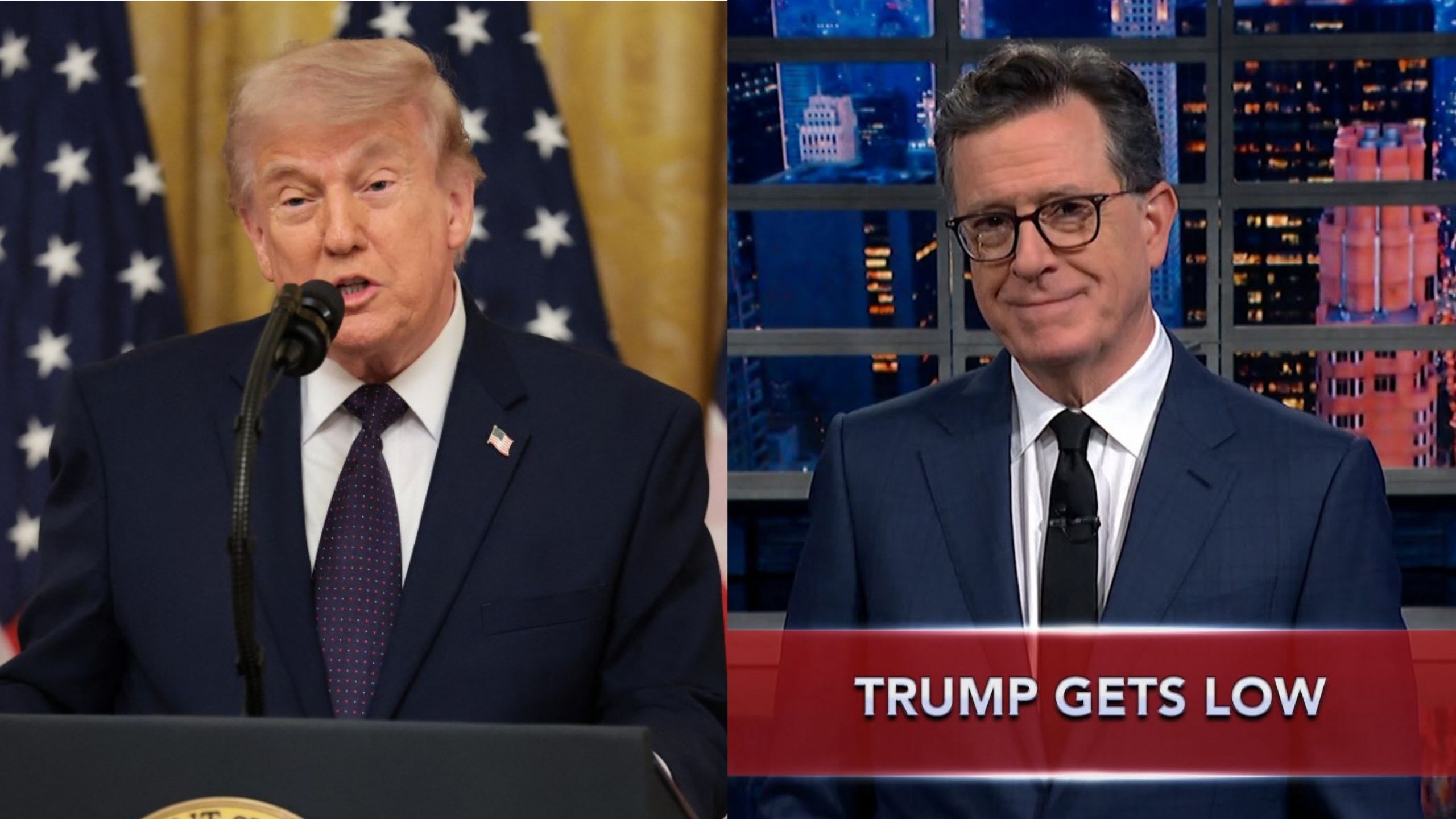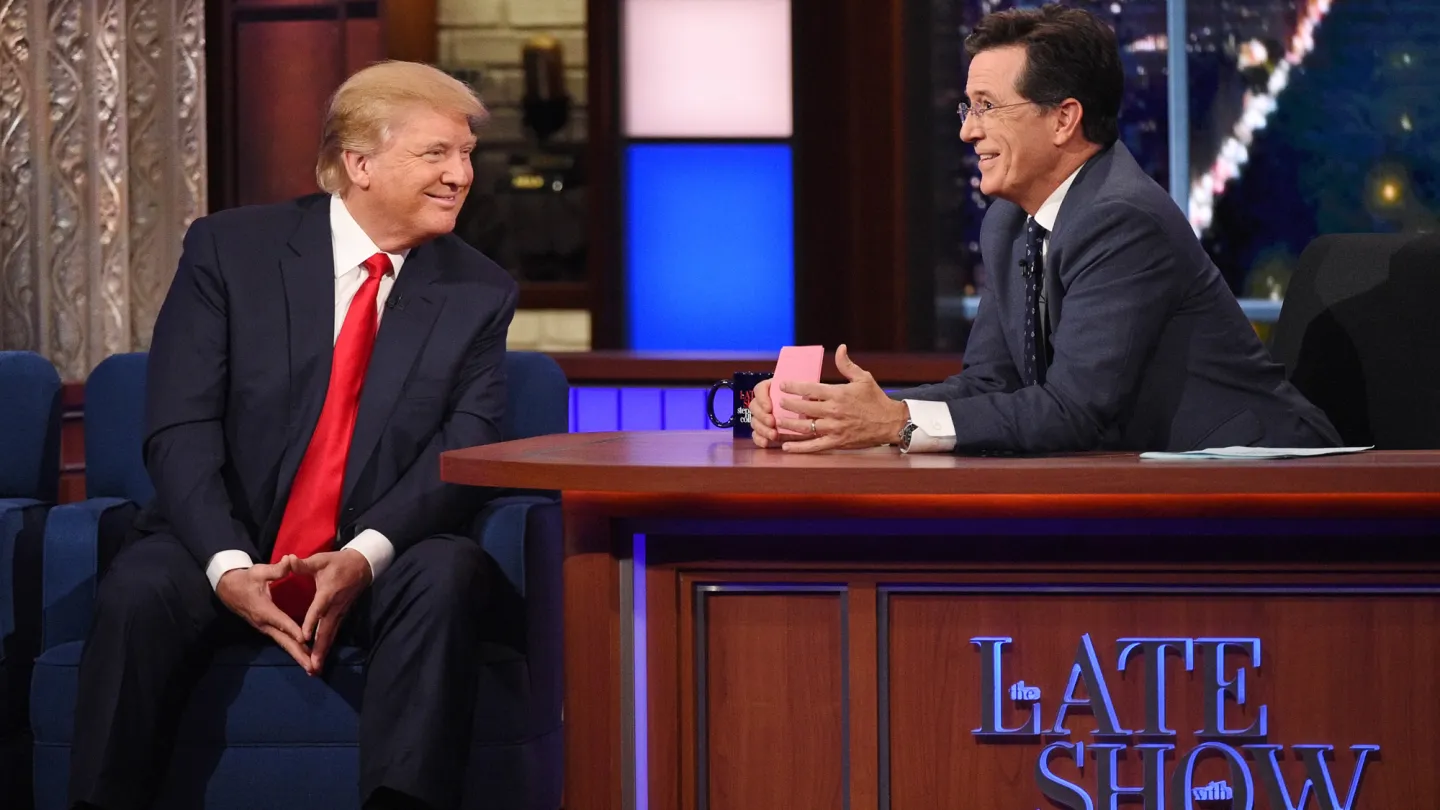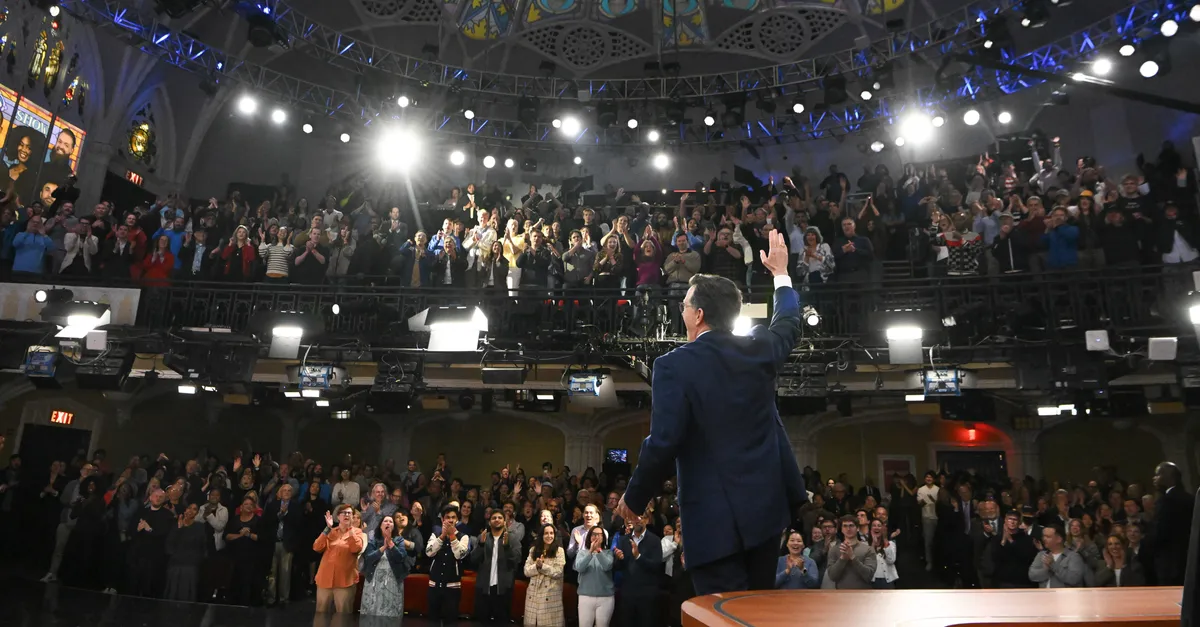
This article is part of HuffPost’s biweekly politics newsletter. Click here to subscribe.As Republicans flee Washington to avoid voting for President Donald Trump’s ballroom money or dealing with his $1.8 billion slush fund, the president got something that he wanted on Thursday. Comedian Stephen Colbert took the air one final time after “The Late Show” was canceled by the new Trump-allied owners of CBS.Trump took a Truth Social victory lap for driving one of his biggest critics off of television. “Colbert is finally finished at CBS,” Trump wrote on Truth Social after the conclusion of the final “Late Show.” “Amazing that he lasted so long! No talent, no ratings, no life. He was like a dead person.”But Colbert’s firing is no victory. If anything, it makes the comedian-turned-late-night host into something bigger than he was before: a martyr of Trump’s MAGArthyism.Colbert, the most popular late-night host and a fixture of American media for decades, has the kind of cultural cachet Trump craves. His ratings are high. His jokes are funny. The finale of his show was the kind of star-studded affair that Trump loves, but full of real stars and genuine moments — like having the show’s final guest, Paul McCartney, reflect on the Beatles’ debut on U.S. television. And while Colbert has for years successfully mocked, criticized, and generally roasted the president, his final show saved most of his barbs for his parent company, notably not even mentioning the president by name.For Trump, a man who deeply desires admiration and who cannot take being laughed at, who is currently watching his approval ratings drop and his allies look awkwardly towards the exits, it’s intolerable.But perhaps most damningly of all to Trump, a chronic fabulist whose version of events depends on whatever feels good at the time, Colbert also threatens Trump’s bid to rewrite reality.Since returning to office with a promise of revenge and retribution, Trump has tried to silence critics through executive orders, investigations, criminal prosecutions, regulatory oversight and, in the case of Colbert, billionaire mergers and acquisitions.The end of “The Late Show,” which was launched by David Letterman in 1993, came out of the purchase of Paramount, CBS’s parent company, by the Trumpy billionaire father-and-son duo Larry and David Ellison. It has long been suspected, but never confirmed, that the cancellation, along with a $16 million settlement paid by Paramount to the Trump administration, was part of the deal to get their purchase approved by Trump’s Federal Communications Commission. CBS has said that the cancellation was purely for financial reasons. We may never know the answer. But, as Colbert himself characterized the settlement, it sure looks like a “big fat bribe.”That is the kind of blunt realism in the face of feeble pretense that Colbert made into a career, and that threatens Trump’s entire project. It was on the very first episode of “The Colbert Report” where Colbert’s satirical Bill O’Reilly persona coined the term “truthiness” to describe the perpetual lying of the George W. Bush administration. Colbert’s truthiness describes the kind of argumentation that prioritizes emotion and gut instinct as truth over, well, actual truth. “Every night on my show, ‘The Colbert Report,’ I speak straight from the gut, OK? I give people the truth, unfiltered by rational argument,” Colbert said at the 2006 White House Correspondents’ Association Dinner.This satirical critique of conservative irrationalism was apt for 2006. But it feels almost quaint now. Where Bush’s lies sought to reframe reality, Trump’s lies aim to become reality. Trump has taken the idea of “truthiness” to a new level, not even aiming for the veneer of truth to support his demonstrably false claims — about the 2020 election, about the war in Iran, about the economy, about whatever he feels like at the moment.For Trump and his supporters, the lie is now their truth. They feel it in their gut. And those who say otherwise must be silenced.That’s why Trump wanted Colbert off the air. Why he tried, and failed, to silence Jimmy Kimmel. And why he is pressuring ABC to cancel “The View.” These are mainstream platforms that criticize him to a broad audience — although not as broad as TV used to draw — and, often, with jokes. And jokes sting harder than the serious fare of an editorial page.“You’re the first guy in America who lost his show because we’ve got a president who can’t take a joke,” Bruce Springsteen said on “The Late Show” on Wednesday.Colbert isn’t actually the first person to lose their TV job over things they said or political pressure. The original Red Scare in the early 20th century and then the McCarthy Era, for example, saw many figures lose their jobs, including entertainers and artists on the Hollywood Blacklist, over suspected ties to Communists or anarchism. But these pushes grew out of the existing climate of political fear and distrust in broader society, as American capitalism writ large fretted about cultural competition. This was, at least for a time, popular. But it still came crashing down in the end.Trump’s MAGArthyism, however, is not popular — nor is his presidency. His approval ratings are tanking. His allies may be starting to lose faith. This is a weak president with an unpopular agenda trying to slam the door on opposition — and a famous opposition that is substantially more popular than him, at that — through autocratic measures. And he only succeeded at removing Colbert, allegedly, because of support from the economic autocrats craving monopoly power.“I think I get it now. It looks like the end. And I wish it wasn’t, but that’s not for me to decide,” Colbert said in his finale. “All we have to decide is what to do with the time that is given us.”In the end, Colbert’s voice will continue to carry the message for truth in the face of rabid truthiness wherever he wants to go next. And it’ll probably be pretty funny.RelatedDonald TrumpStephen Colbert
Donald Trump’s Embarrassing ‘Victory’ Over Colbert
Trump, a man who wants to be popular and cannot handle being laughed at, has chosen to make an interesting martyr.
989 words~4 min read