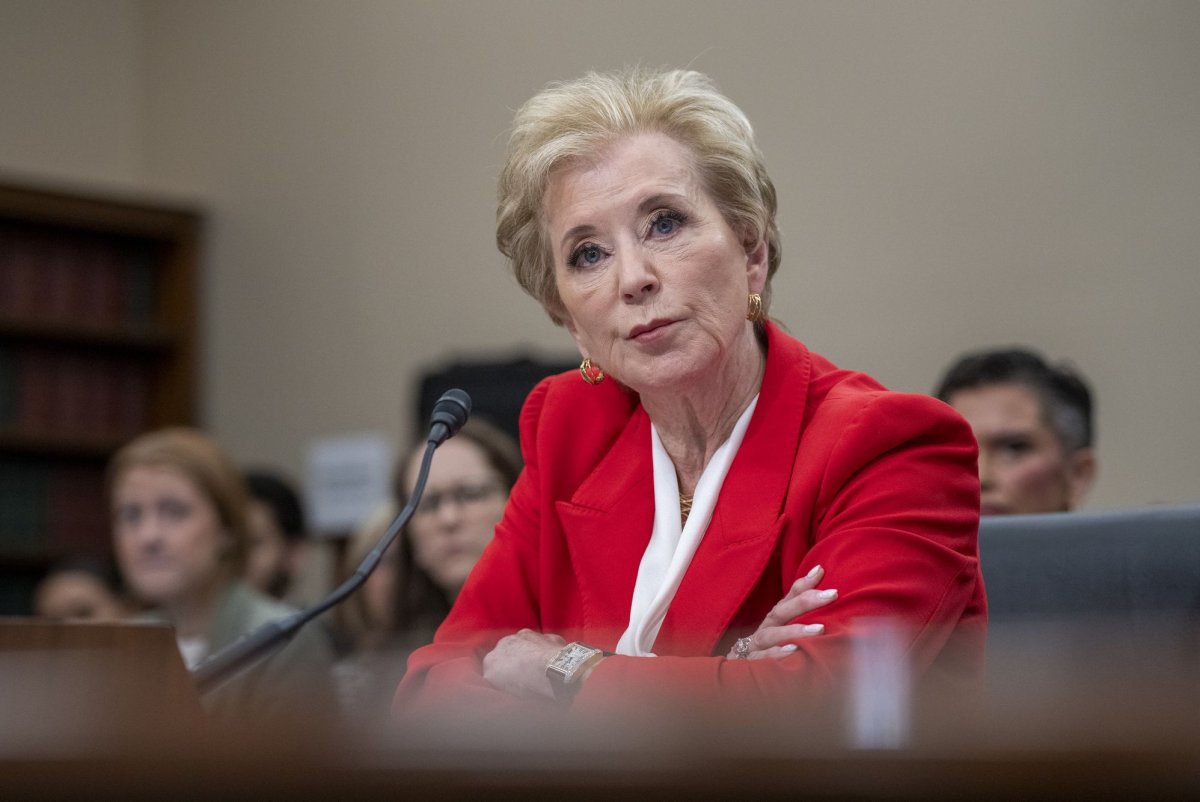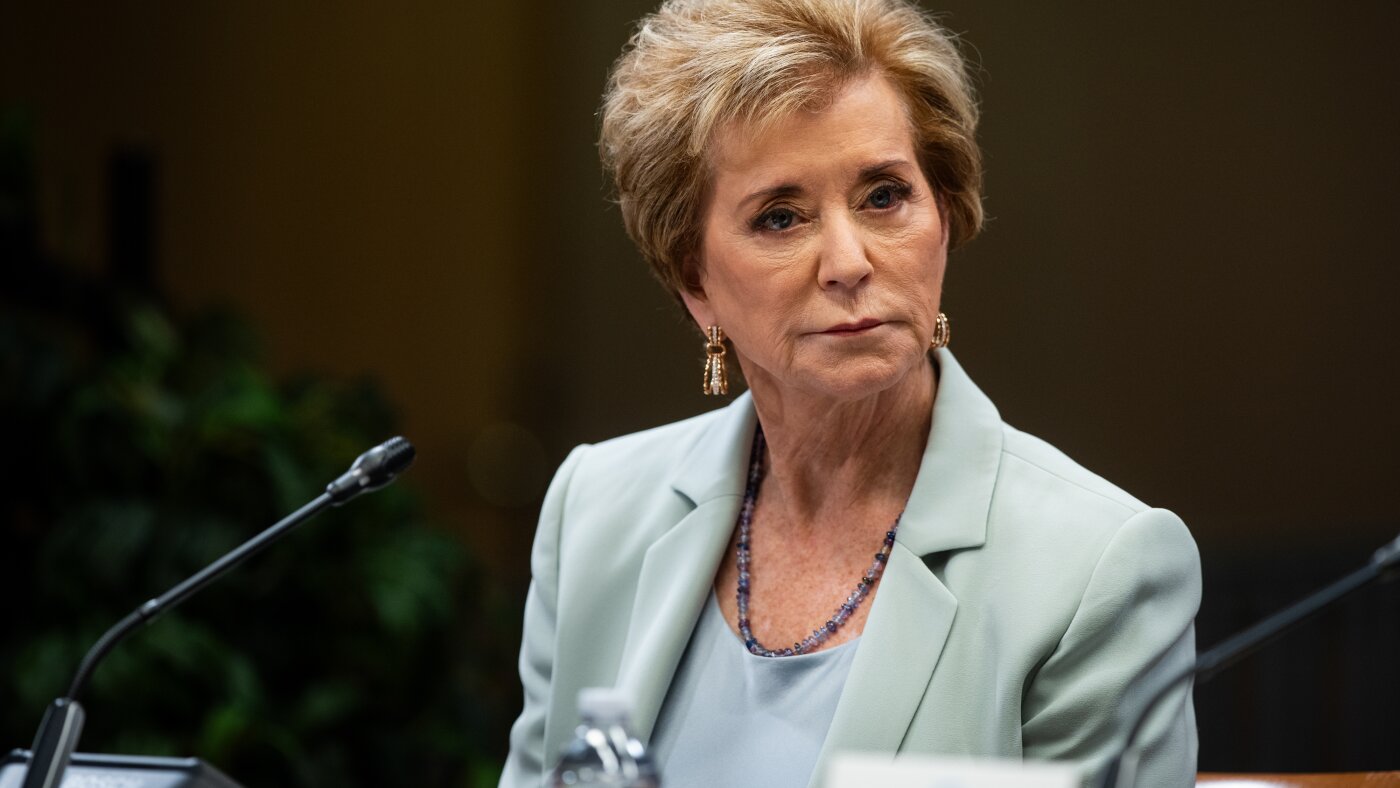
WASHINGTON, DC - JUNE 03: Education Secretary Linda McMahon testifies before the Senate Appropriations Committee's Labor, Health and Human Services, and Education Subcommittee about the proposed 15-percent cut to the Education Department's budget in the Dirksen Senate Office Building on Capitol Hill on June 03, 2025 in Washington, DC. President Donald Trump tasked McMahon with shutting down the Education Department. (Photo by Chip Somodevilla/Getty Images)Getty ImagesThe U.S. Department of Education has released its 2027 budget request, and it’s largely a repeat of the Trump administration’s unsuccessful 2026 proposal to cut roughly $4.5 billion in spending while turning other programs into a $2 billion block grant program.The 2027 proposal includes $2 billion for a new Make Education Great Again program. At least 25% of the grants would be reserved by the state for “literacy activities that advance, increase, expand, or focus on evidence-based literacy instruction,” with another 25% reserved to “support evidence-based mathematics instruction.” The rest of the funding could be used to fund 17 grant programs that are zeroed out in the proposed federal budget. Those 17 programs would have added up to roughly $6.5 billion, so states would be sent not only administrative burdens, but a hefty funding gap as well. Cuts are particularly focused on teacher professional development, rural schools, migrant children, English language learners, and academic enrichment. And even as Secretary Lindas McMahon has been promoting civics education, her budget proposal zeros out $162.9 million for American History and Civics Education. The 17 programs cut in the proposed budget with a note that their funding would now be part of MEGA grants include: Comprehensive Literacy State Development Grants, Innovative Approaches to Literacy, Neglected, Delinquent and At-risk Children and Youth, Supporting Effective Instruction State Grants, 21st Century Community Learning Centers, Education for Homeless Children and Youths, Alaska Native Education, Rural Education, Student Support and Academic Enrichment, American History and Civics Education, Magnet Schools Assistance, Arts in Education, Javits Gifted and Talented Education, Statewide Family Engagement Centers, School Safety National Activities, and Promising Neighborhoods. In addition to those programs, the proposal also zeroes out the following programs "as part of the Administration’s overall effort to return education to the States by reducing the Federal role in education and restoring fiscal discipline to Federal education spending:" Special Programs for Migrant Students, State Assessments, Native Hawaiian Education, Migrant Education, Training and Advisory Services, Comprehensive Services, Education Innovation and Research, Teacher and School Leader Incentive Grants, Full-Service Community Schools, Supporting Effective Educator Development, Ready to Learn, and English Language Acquisition. MORE FOR YOUThe proposal also consolidates several grant programs under the Individuals with Disabilities Act (IDEA) into a Grant To States. The proposal also cuts some assistance grant programs, such as the Parent Information Centers and Client Assistance State Grants aimed at informing and advising families of their available benefits. The proposal also cuts funding for Protection and Advocacy of Individual Rights. Meanwhile, the Charter Schools Program, with its history of fraud and waste, will stay steady at $500 million after last year’s $60 million.The administration proposed a nearly identical set of cuts last year, but they were not ultimately part of the budget passed by Congress. As reported by Mark Lieberman at Education Week, the administration has withheld funding for many of the programs that it tried unsuccessfully to cut. After a budget has been passed, and before the budgeted funding can be spent, the Office of Management and Budget must apportion (distribute) the correct amounts to the agency’s accounts. Historically, that process takes less than two months, but although the 2026 federal budget was passed on February 3, OMB has not yet apportioned the budgeted funds to many of the programs.Last year’s budget battle ultimately saw at least three competing proposals, with a House Republican proposal that was even more severe than the department’s request. But last year was not an election year. It remains to be seen which politicians have the stomach to slash education spending.
Federal 2027 Budget Aims To Slash Education Spending—Again
The U.S. Department of Education has released its 2027 budget request, and it’s largely a repeat of the Trump administration’s unsuccessful 2026 proposal to cut roughly $4.5 billion in spending .
657 words~3 min read