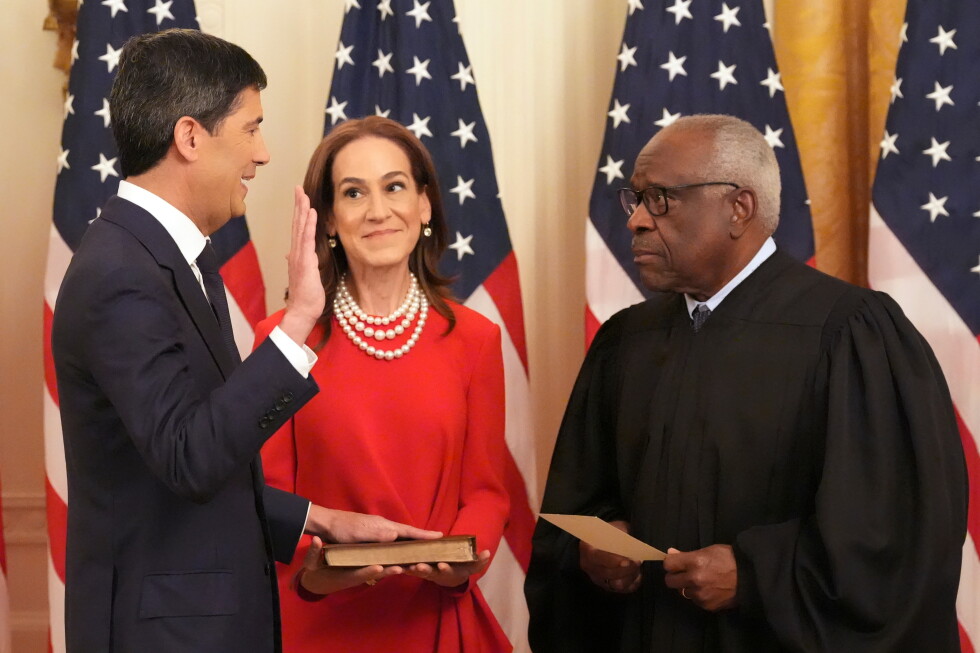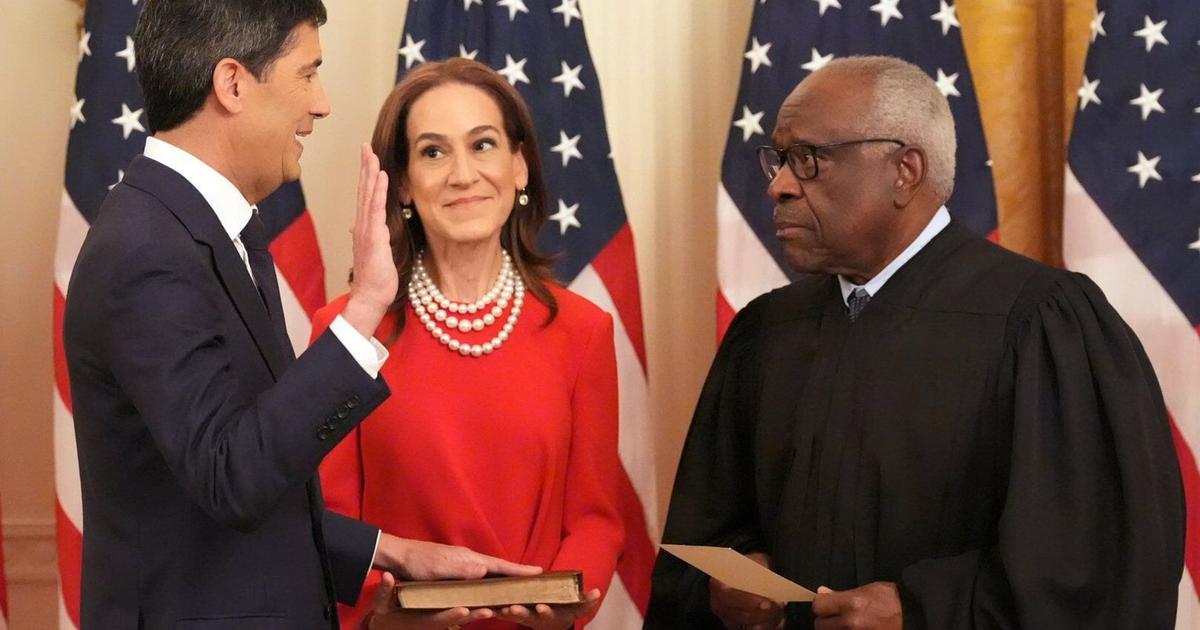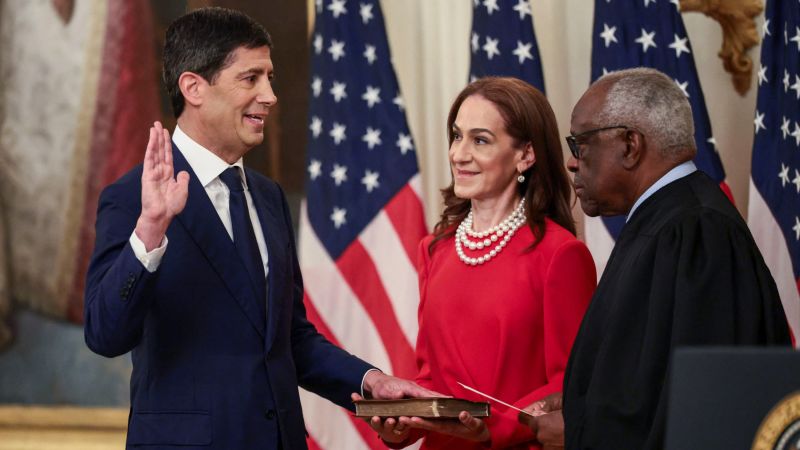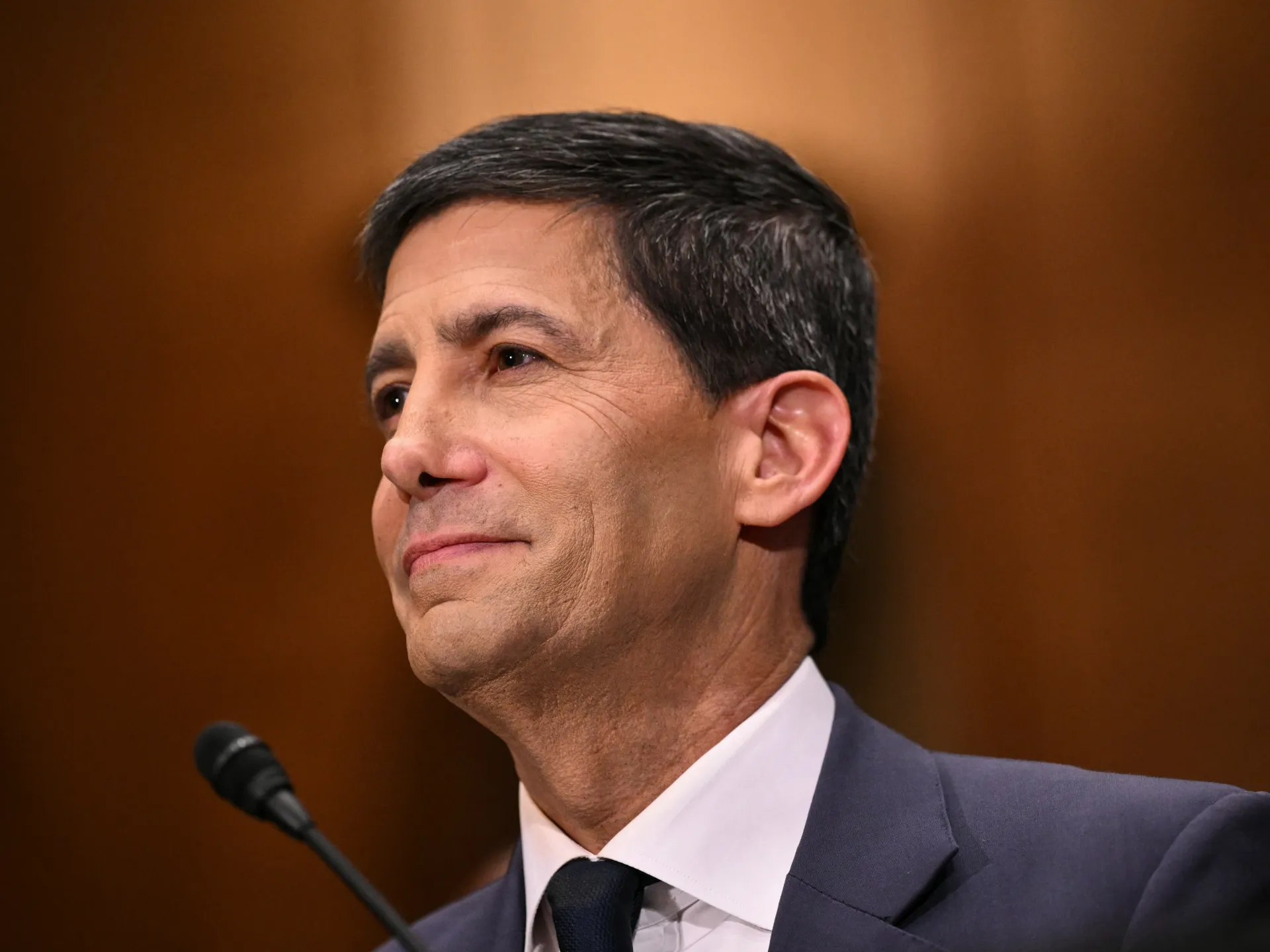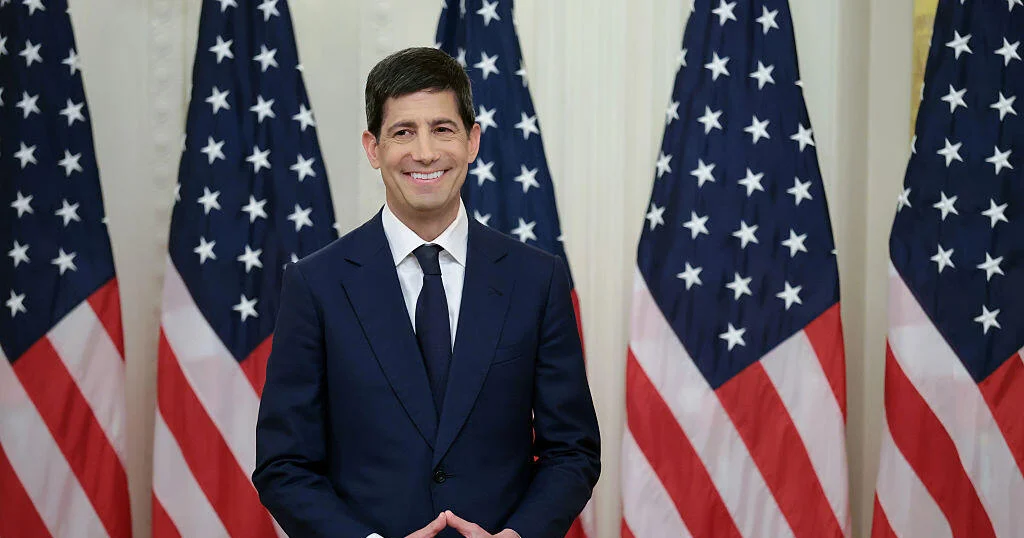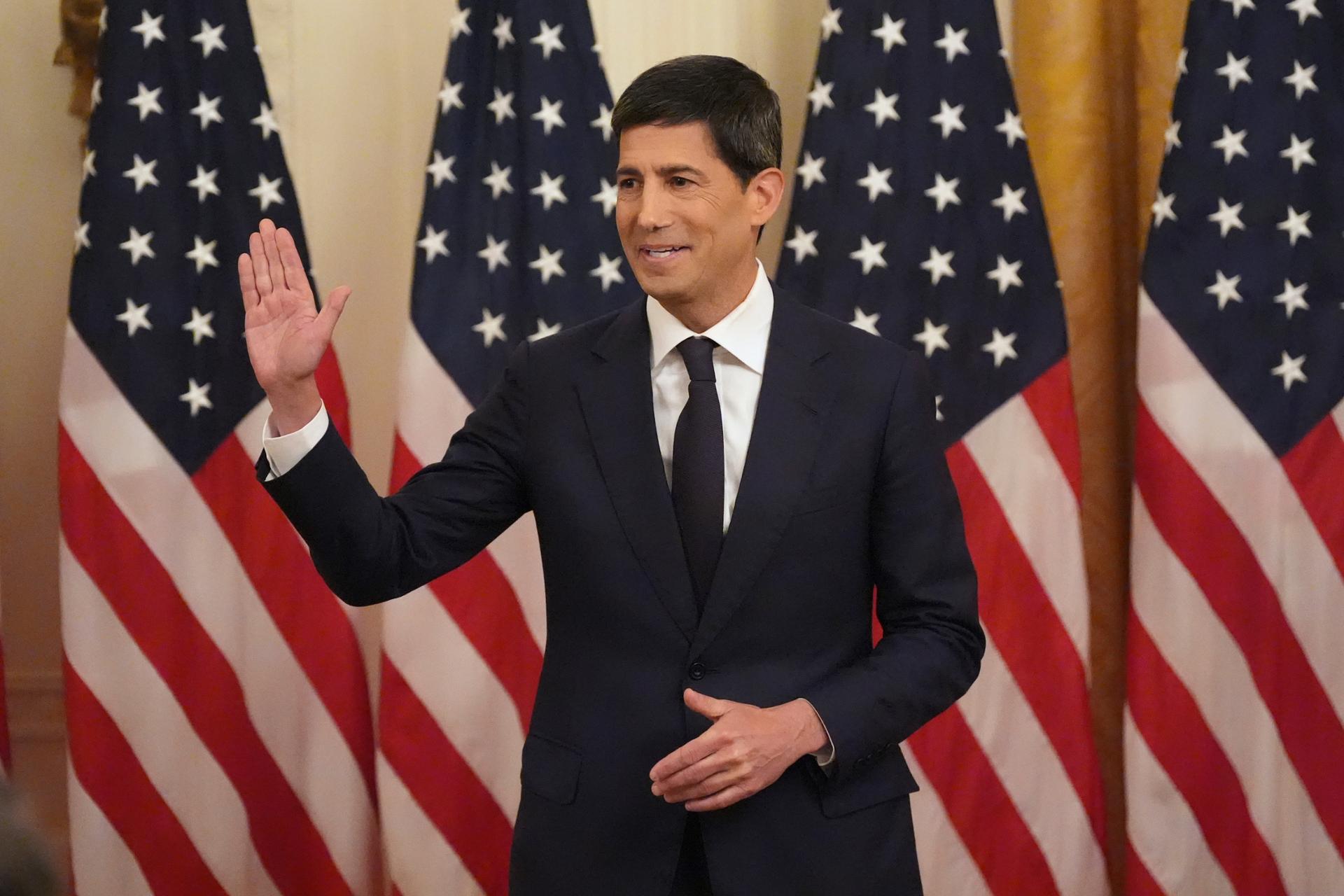
Kevin Warsh waves during his swearing-in ceremony as Chairman of the Federal Reserve in the East Room of the White House, Friday, in Washington. AP-Yonhap
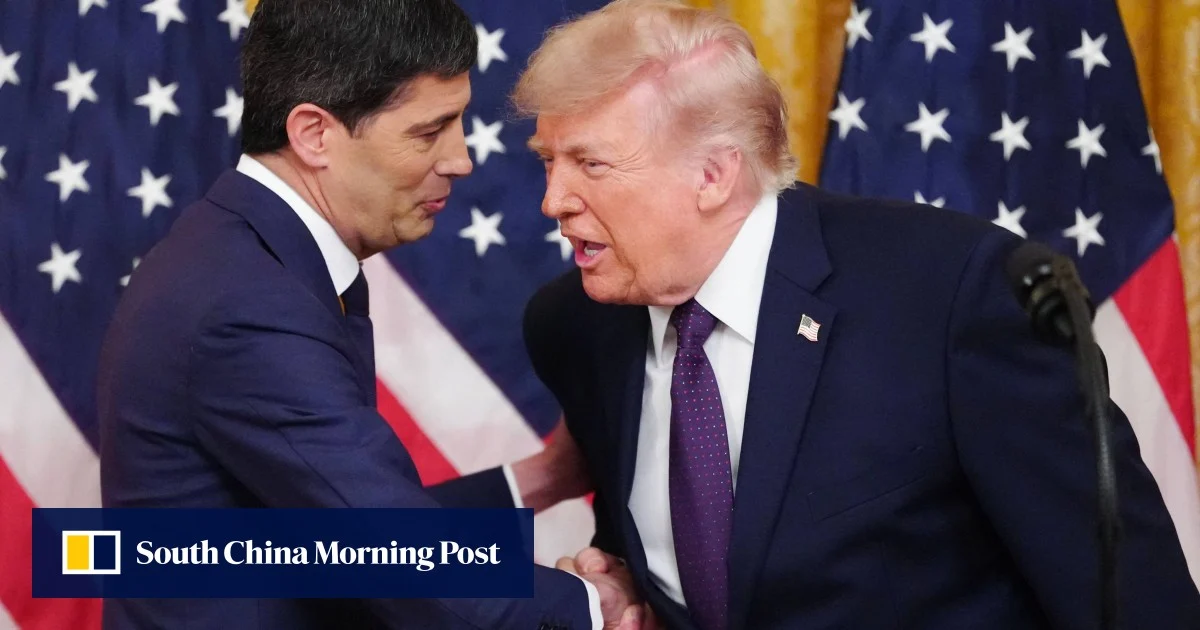
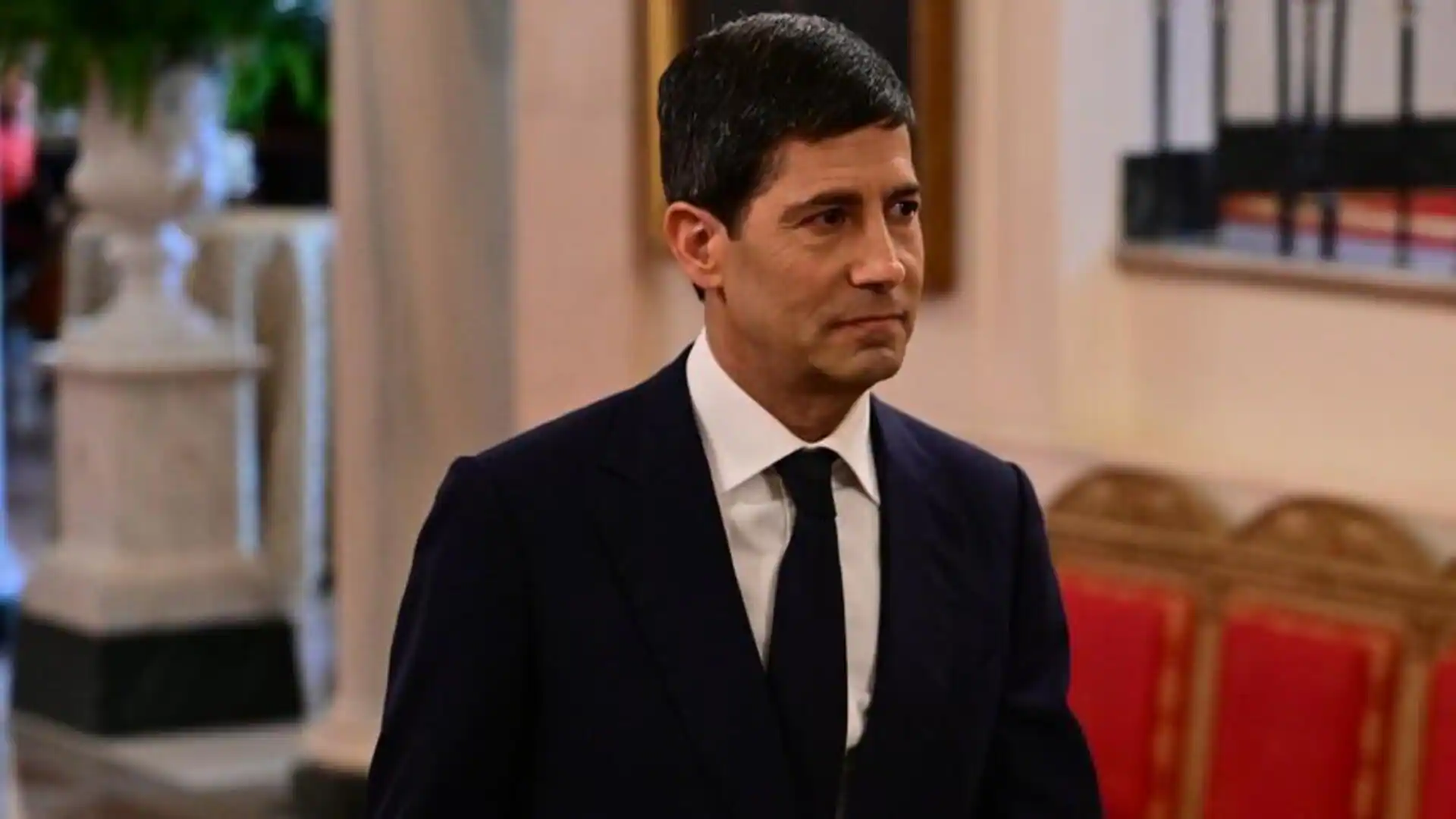
WASHINGTON — Kevin Warsh, whose broad criticism of current U.S. Federal Reserve officials, playbook for rate cuts and ties to President Donald Trump elevated him past other contenders to lead the central bank, was sworn in as Fed leader on Friday at a pivotal moment for monetary policy and the American economy.
An unfolding boom in AI technology is reshaping the economy in ways Fed officials say could be profound for workers, companies and consumers, but will be hard for Warsh and his colleagues to assess in real time. At the same moment, inflation is high and potentially heading higher as the economy copes with shocks including oil driven over $100 a barrel by the U.S.-Israeli war with Iran, high import tariffs, and utility and other costs rising due to the AI rollout.
Waller: drop 'easing bias'
The debate over policy is already at a high pitch, with Fed Governor Christopher Waller, a Trump appointee who was interviewed for the job Warsh won, on Friday making a significant turn in his own thinking and agreeing with a group of recent Fed dissenters that the central bank should drop the "easing bias" from its policy outlook and open the door to a possible rate hike. With recent data showing inflation broadening and intensifying across the economy, the Fed should "make it clear that a rate cut is no more likely in the future than a rate increase," Waller said shortly before Warsh was sworn in. The comments add to market sentiment already leaning towards tighter monetary policy and a potential rate hike this year.