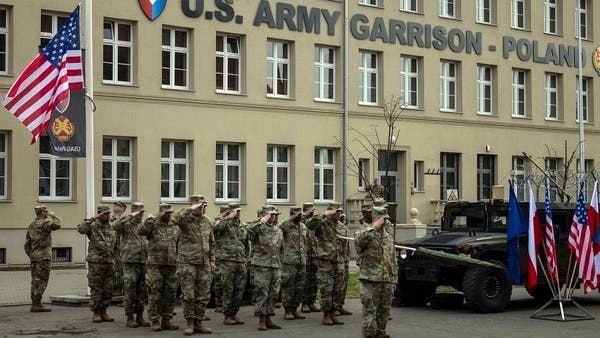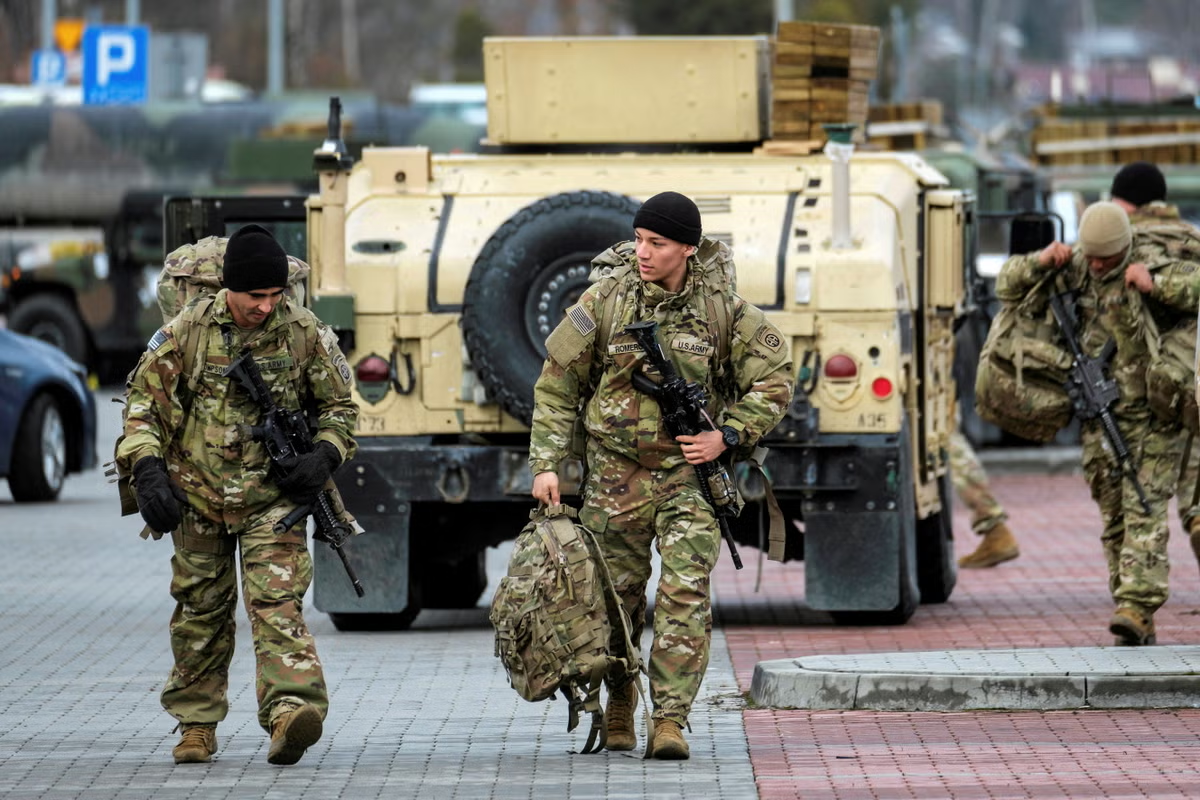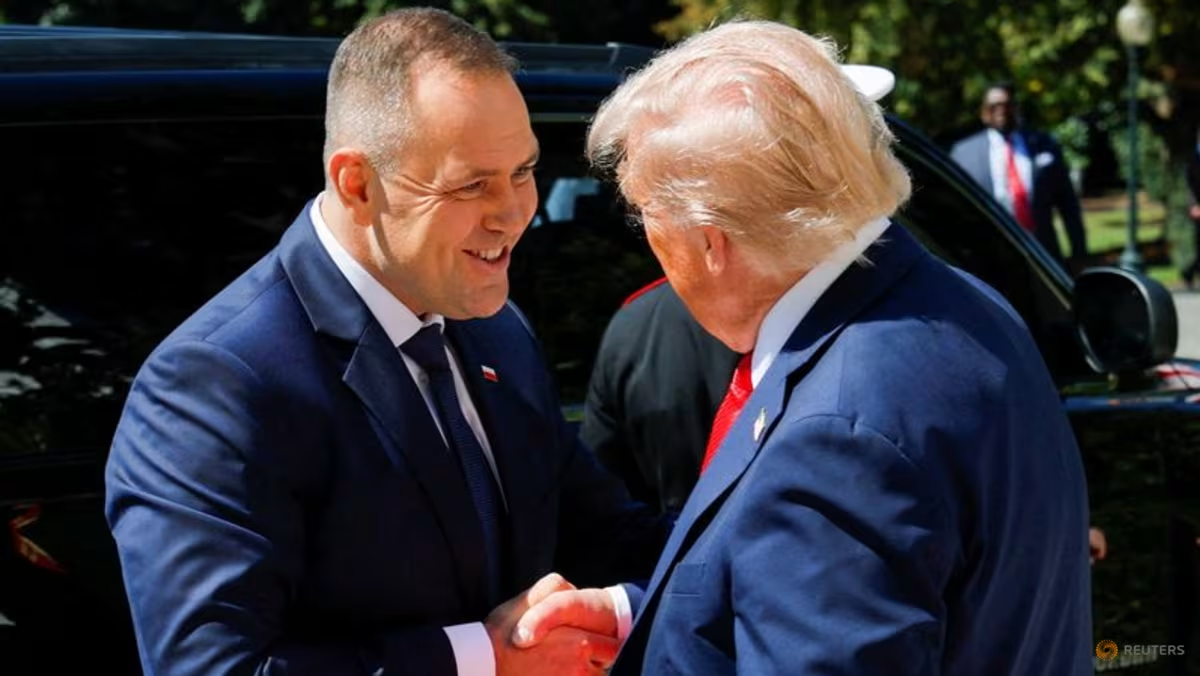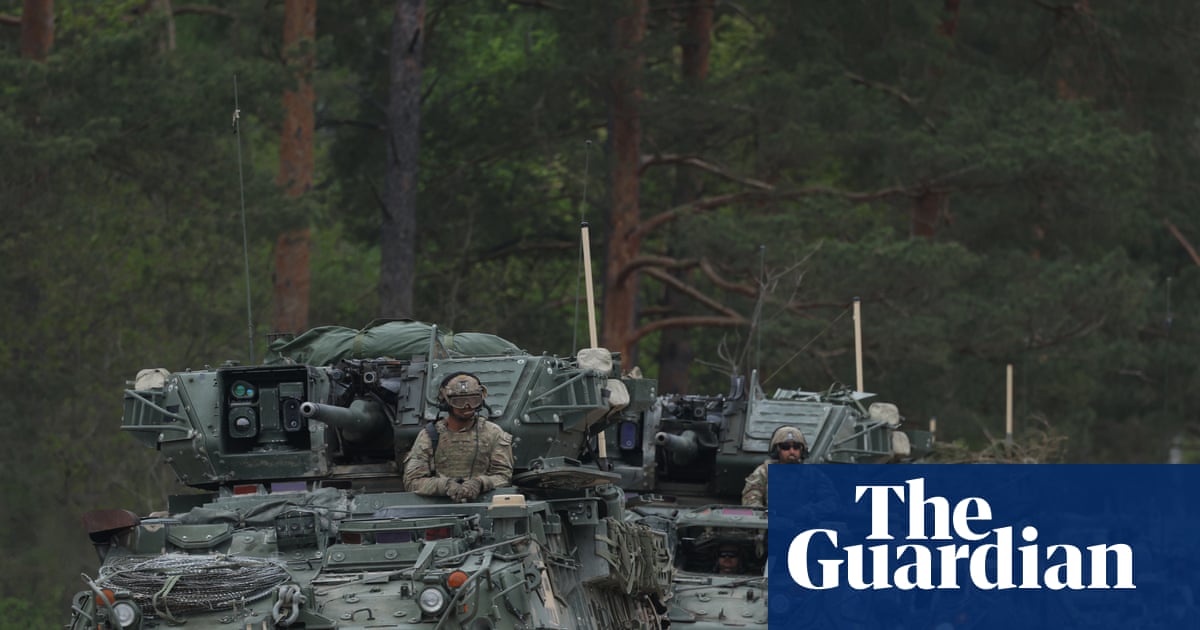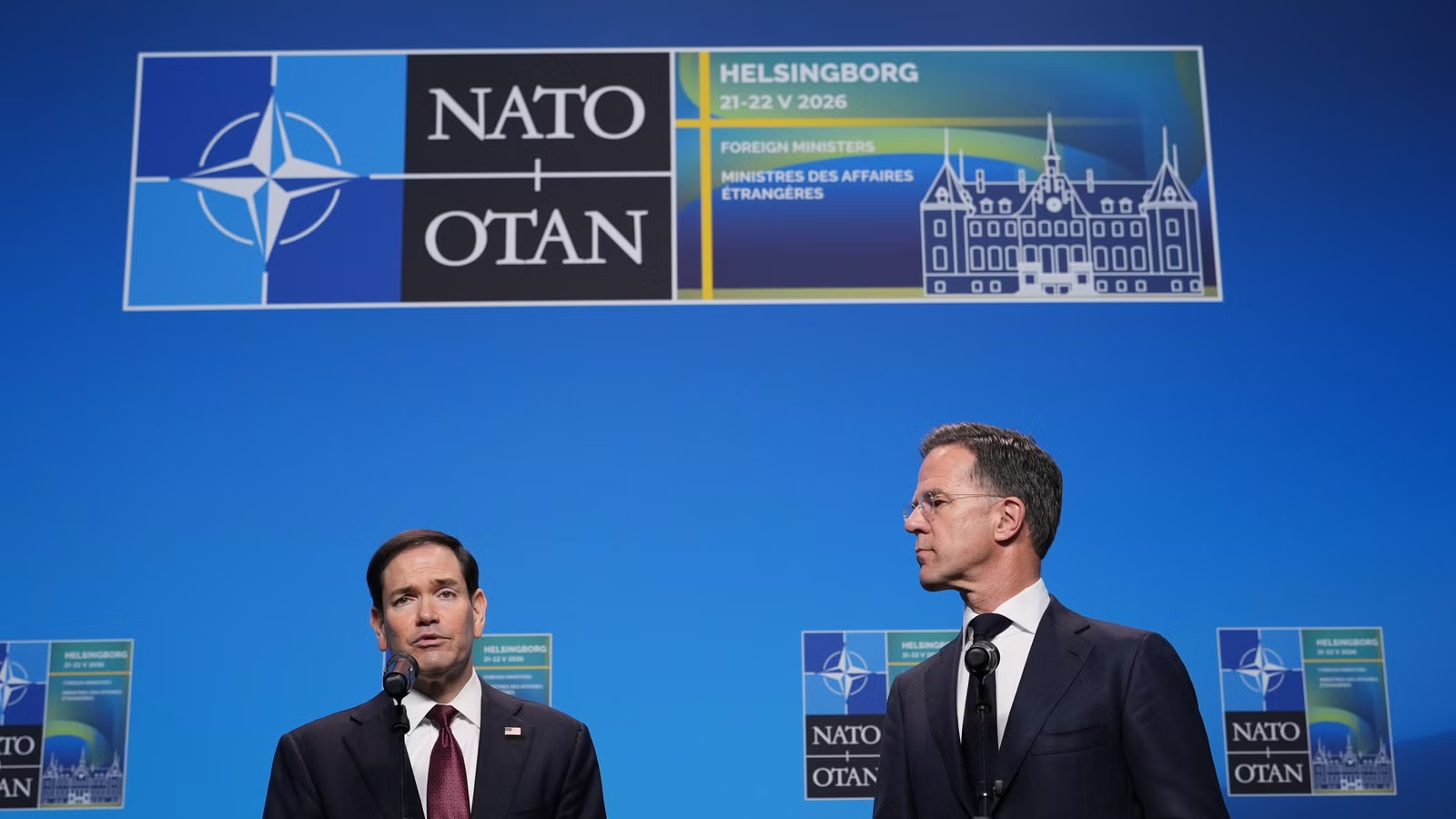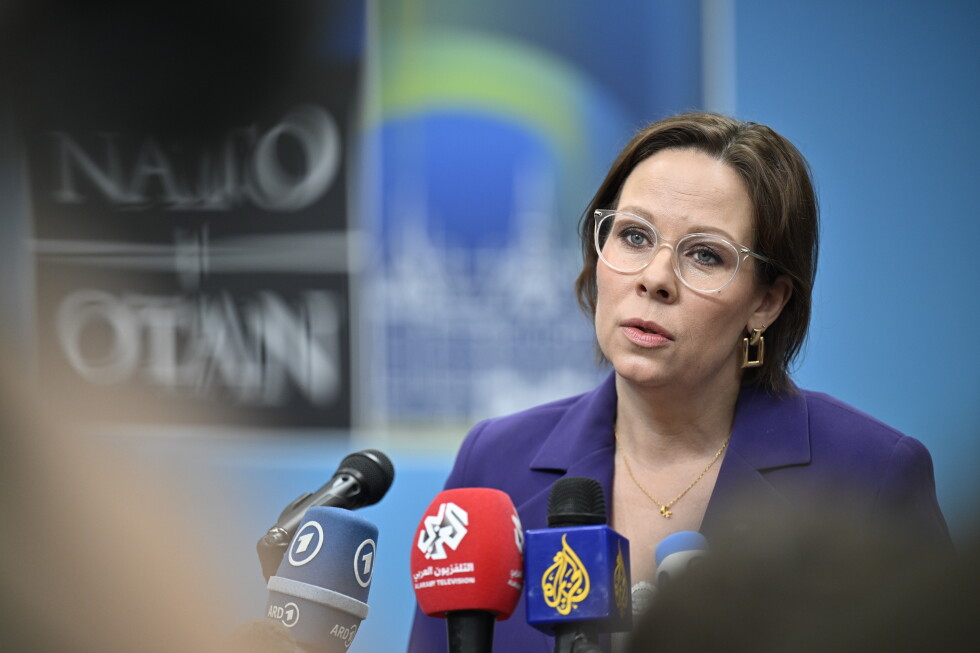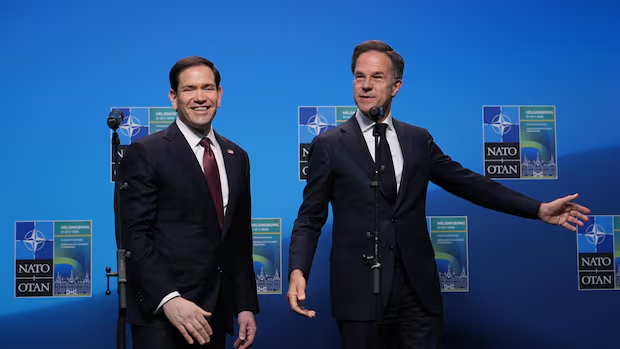
WorldU.S. President Donald Trump surprised NATO allies by pledging to send an additional 5,000 troops to Poland, only hours before the alliance's foreign ministers met in Sweden on Friday amid deep divisions over the Iran war.Rubio downplays differences, says no new announcement on addressing Strait of Hormuz dilemmaThomson Reuters · Posted: May 22, 2026 7:54 AM EDT | Last Updated: 1 hour agoListen to this articleEstimated 4 minutesThe audio version of this article is generated by AI-based technology. Mispronunciations can occur. We are working with our partners to continually review and improve the results.U.S. Secretary of State Marco Rubio, left, and NATO Secretary General Mark Rutte walk off the podium after delivering a statement during a meeting of NATO foreign ministers in Helsingborg, Sweden on Friday. (Julia Demaree Nikhinson/The Associated Press)U.S. President Donald Trump surprised NATO allies by pledging to send an additional 5,000 troops to Poland, only hours before the alliance's foreign ministers met in Sweden on Friday amid deep divisions over the Iran war.Trump, in a Truth Social post, cited his relationship with Poland's conservative nationalist president, Karol Nawrocki, as the reason behind his decision.It was a surprising turnabout after weeks in which Trump fiercely criticized NATO members for not doing more to help the U.S.-Israeli military campaign. He has said he is considering withdrawing from the alliance and questioned whether Washington was bound to honour its mutual defence pact."It is confusing indeed, and not always easy to navigate," Swedish Foreign Minister Maria Malmer Stenergard told reporters.European fears about Trump's commitment to NATO have been heightened by the decision to withdraw 5,000 troops from Europe, issued before Thursday's pledge to send additional troops to Poland.It was not immediately clear where the additional troops for Poland would come from. U.S. Secretary of State Marco Rubio said he would defer to the Pentagon to address that question.Pentagon doubles down on Canada rebuke with demand for NATO spending road map, F-35 decisionCanada taps Gen. Jennie Carignan for NATO's top military chairWashington's allies have also been confused and unsettled by the way the decision was communicated. U.S. officials first said the troops would be withdrawn from Germany but later said they would delay the deployment of a brigade to Poland. Ahead of the meeting, three sources familiar with the matter told Reuters that the U.S. planned to tell NATO allies it will shrink the pool of military capabilities it makes available to the alliance in a crisis.NATO Secretary General Mark Rutte on Friday declined to give further details to reporters. Rutte said the American contribution to NATO's so-called force model was being discussed, as the U.S. "cannot be everywhere at the same time," but added he could not go into detail."Of course, this is highly classified because we don't want to make anyone any wiser, but this is a process in place, this is nothing new," said Rutte.U.S. has many obligations, Rubio saysRubio said after the meeting that American obligations for its "force posture" in the Indo-Pacific, Middle East and the Western hemisphere mean that European commitments need to streamlined. "I understand why it creates some nervousness," said Rubio. "There's a broad recognition that there are going to be, eventually, less U.S. troops in Europe than there's historically been, for a variety of reasons."WATCH | McGuinty on what's next in defence spending:Canada's met its NATO defence spending target. What's next?March 29|Duration 8:49CBC's Rosemary Barton speaks to Minister of National Defence David McGuinty about Canada recently reaching the NATO target of two per cent of GDP spending on defence, what this says about the current state of global security, and how challenging it might be to maintain this level of spending.Rubio also said there are alliance members "more deeply impacted" by Iran's curtailing freedom of navigation in the Strait of Hormuz than the U.S., which is impacting the flow of resources globally. Some NATO countries have mine-sweeping capabilities that could potentially help in the strait, Rubio said, but he added, "we don't have an announcement for you today in terms of something that's happening."Greenland's self-determination is non-negotiable, PM tells Trump envoyRubio said earlier in the day that Trump was "very disappointed" in alliance members who had not allowed the U.S. to use bases on their territory for the war, singling out Spain in particular. NATO officials have stressed they are a defensive alliance, and that the U.S. did not ask the 32-member alliance to take part in the Iran war. Some alliance members eventually honoured commitments to allow U.S. forces to use their airspace and bases on their territory.European concerns about Trump's attitude toward NATO were also exacerbated this year by Trump's push to acquire Greenland, a territory of fellow NATO member Denmark. Periodic tariff threats directed by Trump at individual alliance members have also been a source of frustration.Rubio said a meeting on Arctic security took place, though Greenland was not specifically discussed.With respect to Canada, which has more ground to make up toward last year's NATO member pledge to increase defence spending, the Pentagon in recent days said it wants to see a clearer plan as to how Ottawa plans to meet the commitment to spend 3.5 per cent of GDP on the military, as well as additional 1.5 per cent on defence infrastructure. With files from CBC News
U.S. surprises, confuses NATO with about-face on troop deployment to Poland | CBC News
U.S. President Donald Trump surprised NATO allies by pledging to send an additional 5,000 troops to Poland, only hours before the alliance's foreign ministers met in Sweden on Friday amid deep divisions over the Iran war.
878 words~4 min read