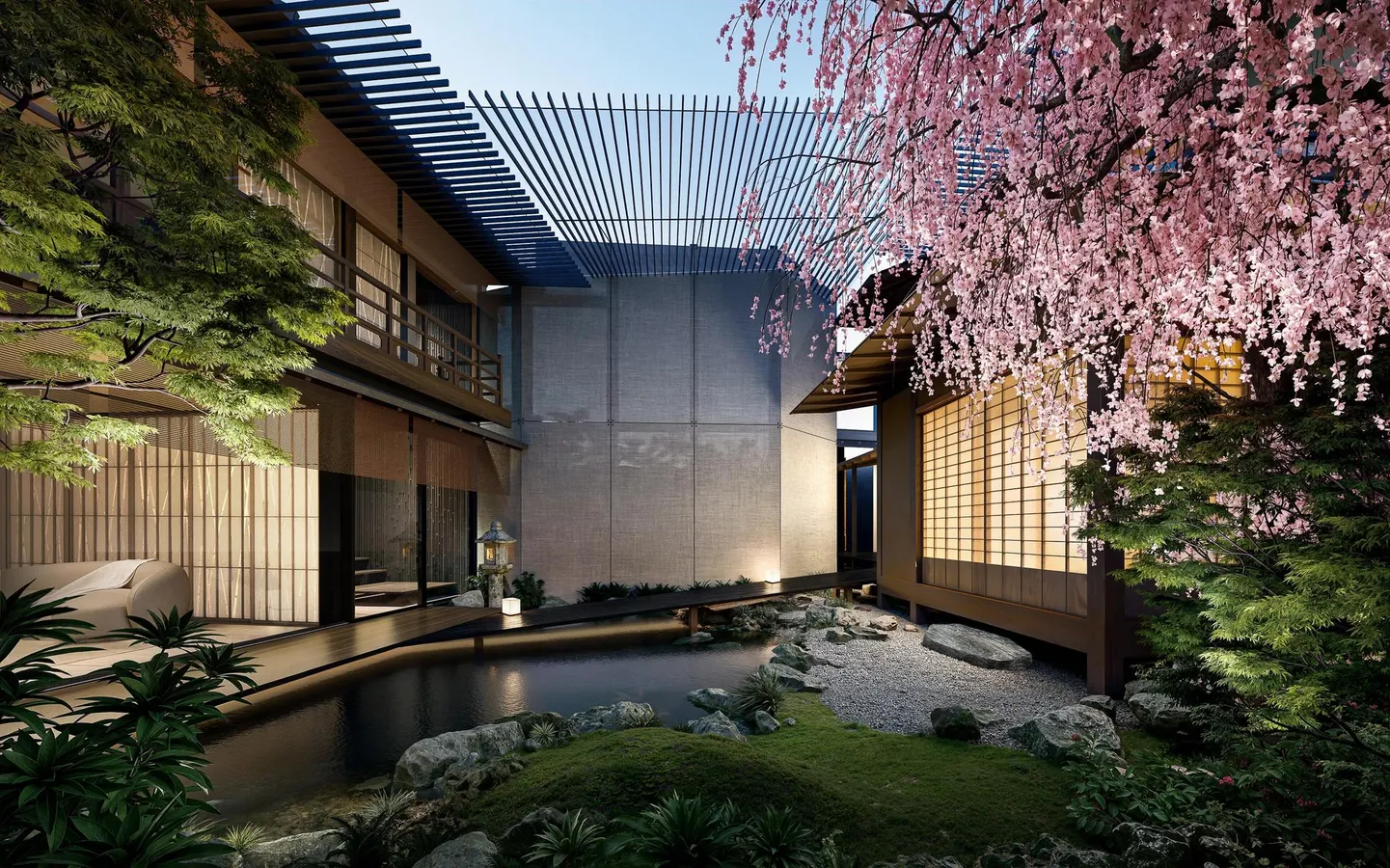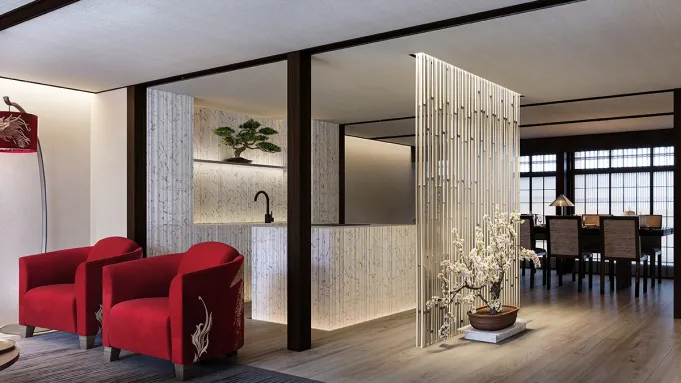
Japanese architect Kengo Kuma, known for blending contemporary design with natural materials, light, and traditional Japanese craftsmanship, is converting a traditional former teahouse in Kyoto into an ultra-private residence. Known as the Silence, the project centers around the former Hasegawa Residence, a 200-year-old property in the Kamishichiken district that is now slated for a major restoration and redesign. The structure was rebuilt in 1828 and, over the decades, hosted writers, artists, and wealthy patrons.
Located beside the nearly 1,100-year-old Kitano Tenmangu Shrine, the property sits in one of the city’s oldest and most culturally important districts, an area known for its traditional tea houses, performing arts, and centuries-old hospitality culture. Kamishichiken is considered Kyoto’s oldest geisha district, where geiko and maiko—Kyoto’s traditional female performers trained in music and dance—still work today.
Rather than replacing the original architecture, Kuma aims to preserve much of the home’s layout and historic details. Plans call for a main residence, detached guest quarters, and a traditional kura storehouse that together span roughly 3,060 square feet. The two-bedroom compound will include a tea room, a reception hall, a water garden, and a spa and sauna.