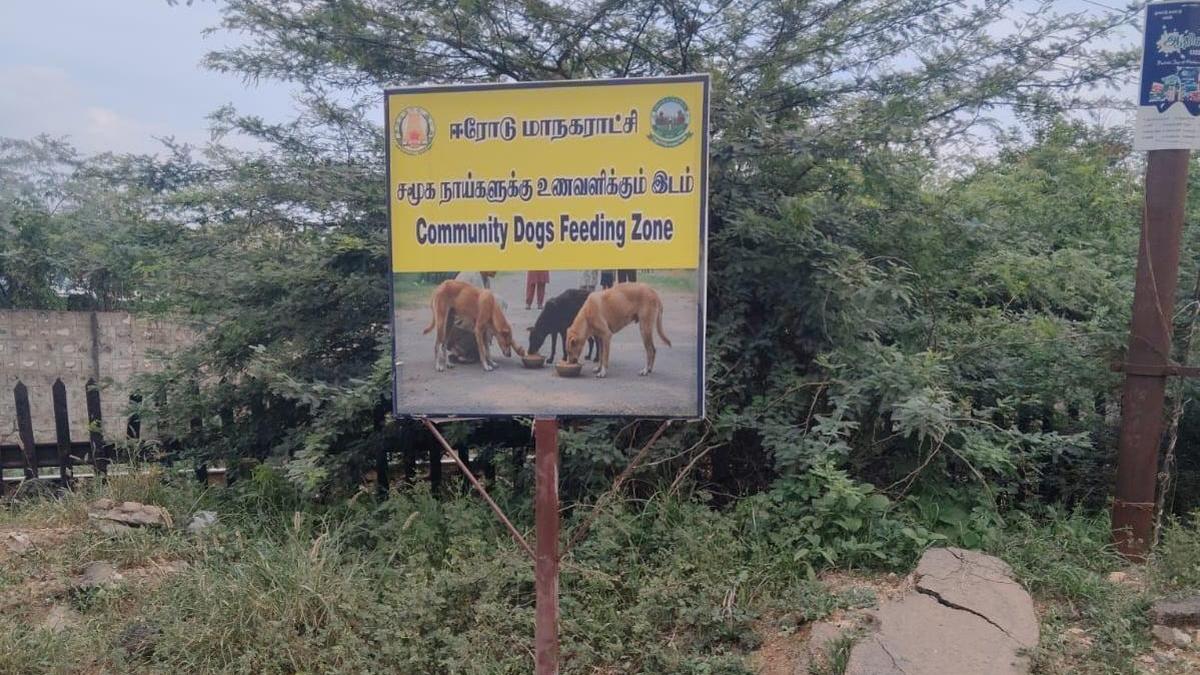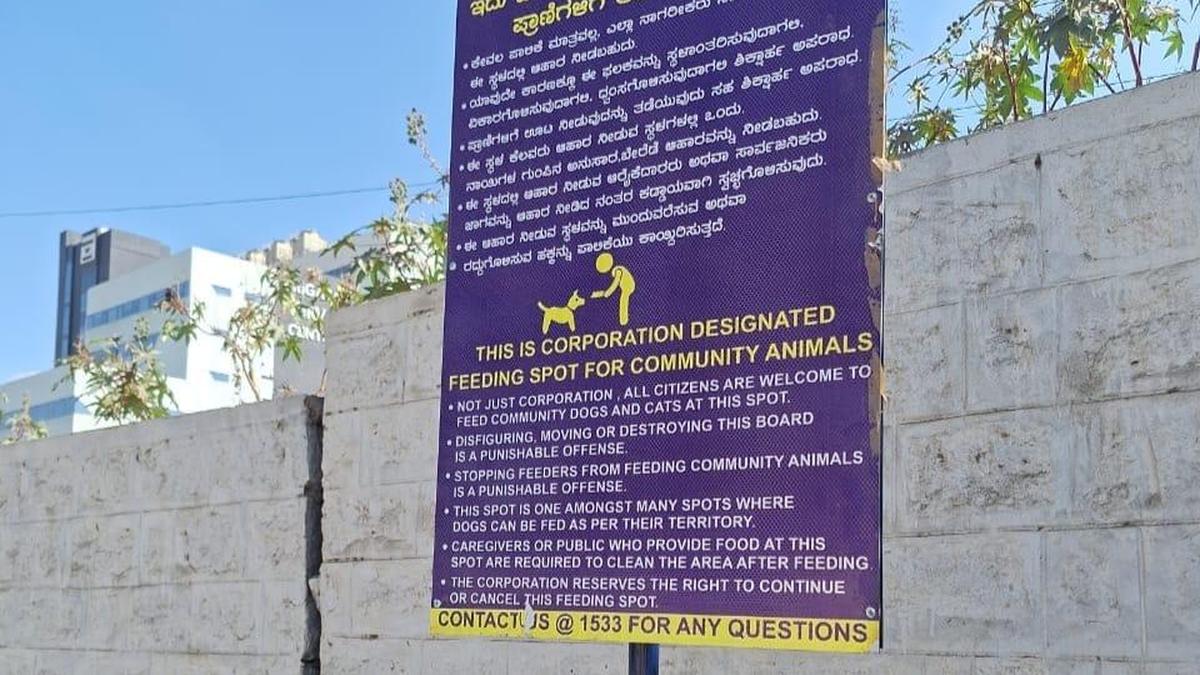
The Greater Bengaluru Authority has identified 455 feeding spots across five corporations in the city.
| Photo Credit: SPECIAL ARRANGEMENT
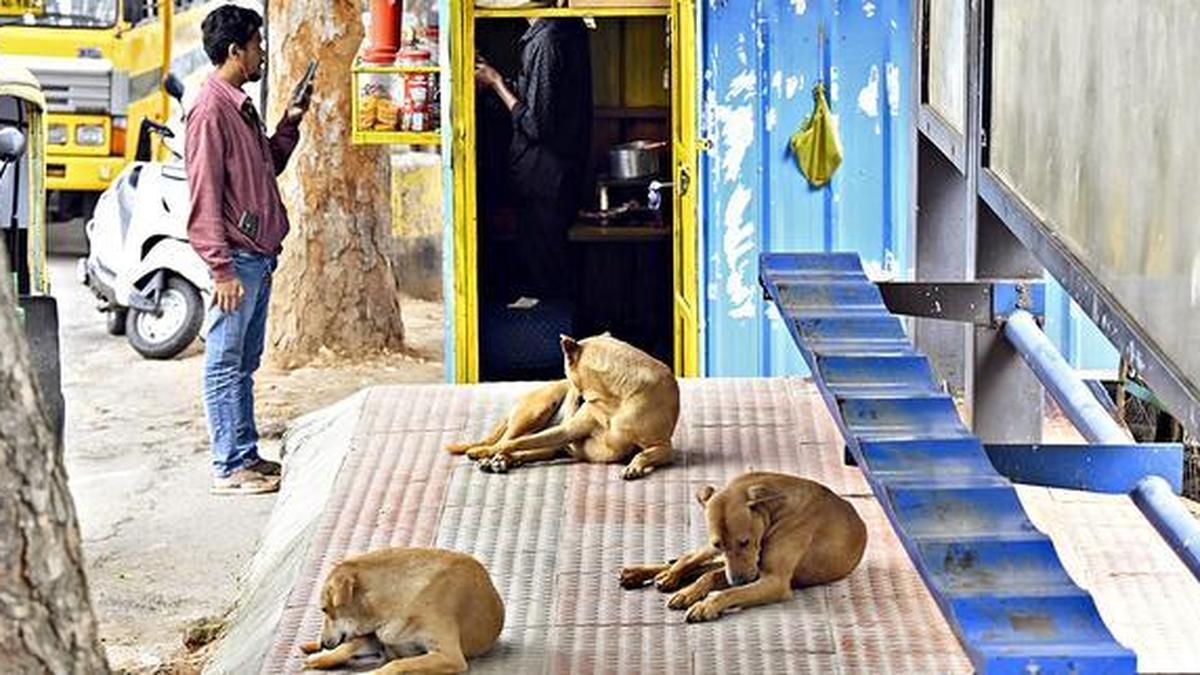
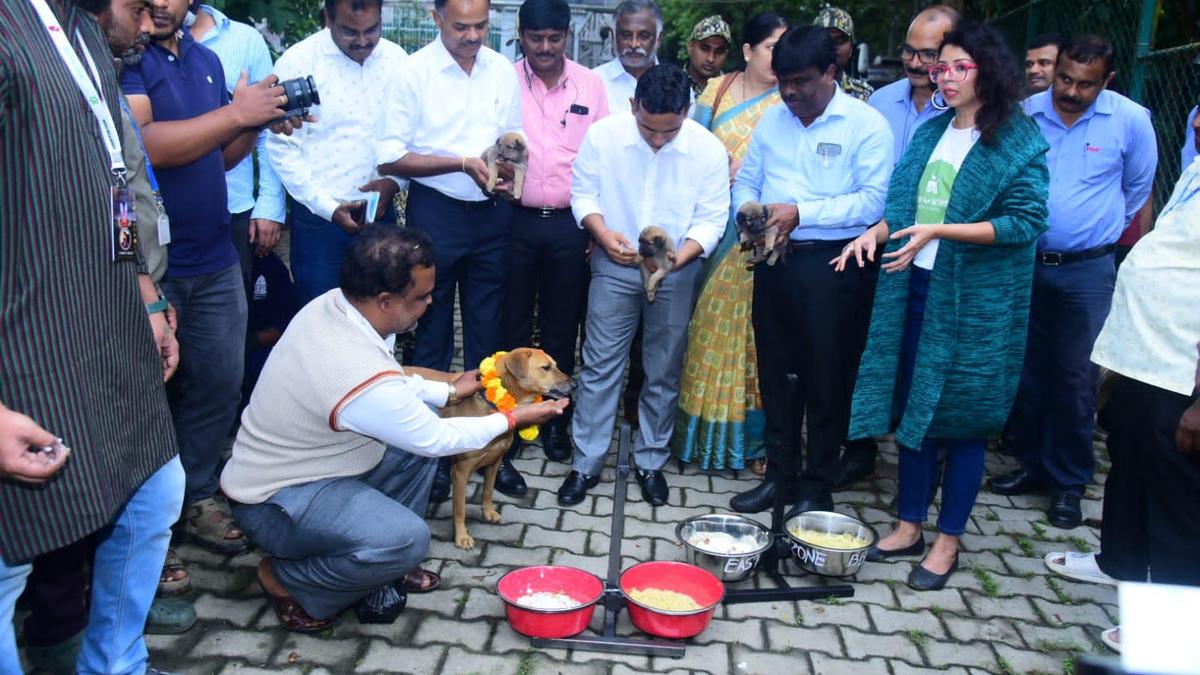
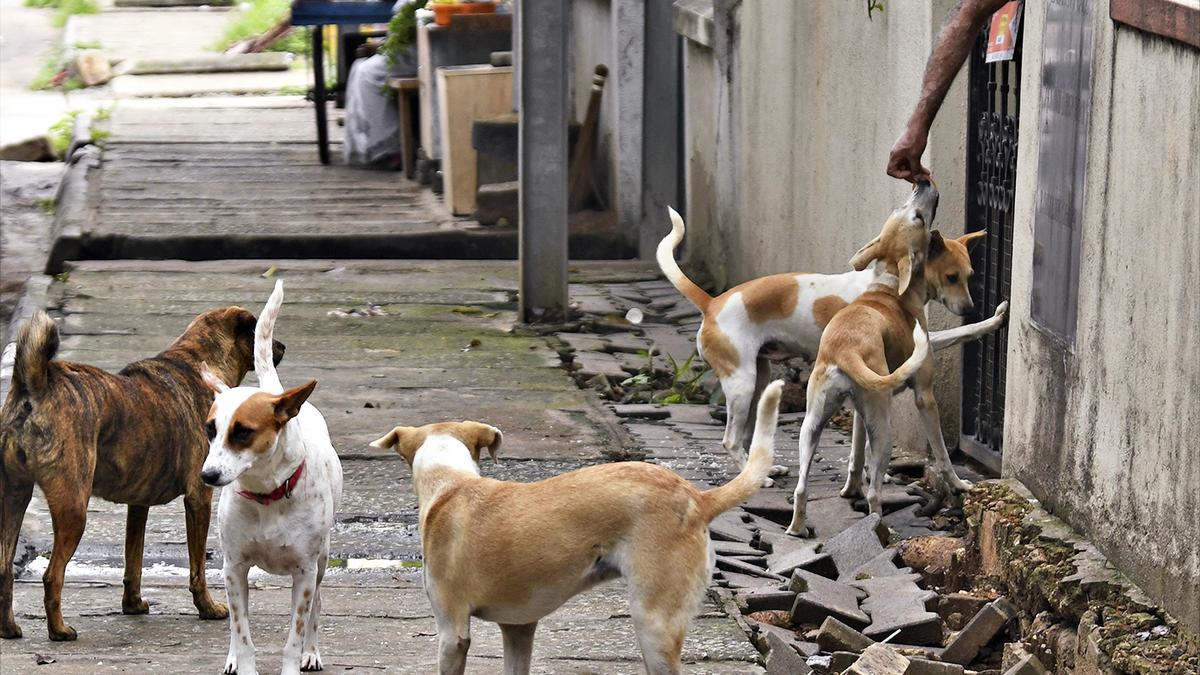
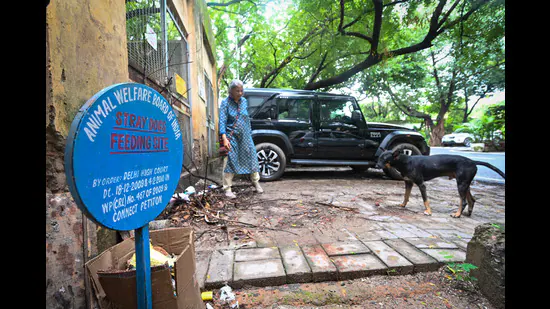
While the Greater Bengaluru Authority (GBA) has identified more than 450 designated dog-feeding spots across Bengaluru to reduce human-animal conflict, feeders and animal welfare volunteers said that many of the locations are impractical, inaccessible and disconnected from where dogs actually live, ignoring the purpose of identifying places.The GBA has identified 455 feeding spots across five corporations in the city. The East Corporation recorded the highest number with 150 spots, followed by 90 in the Central City Corporation limits. Officials said the locations were chosen in low-footfall public spaces and away from hospitals, schools, metro stations and bus stands to minimise public inconvenience and conflict.However, feeders argued that the planning ignores the territorial behaviour of street dogs, making several feeding spots ineffective in practice.Mahadev K., a volunteer with Halasuru Canine Squad, said dogs mostly remain close to the areas they inhabit and cannot be shifted to isolated feeding zones far away from their territory. In several places, the designated locations are difficult to access on a daily basis and have gradually turned into garbage dumping points instead of organised feeding spaces. The corporation officials admitted that several feeding spots are located away from main roads and populated stretches, but maintained that identifying spaces had become difficult because of resistance from residents in many areas.Pommala Sunil Kumar, Commissioner of the North Corporation, said 70 feeding spots were identified in the corporation limits after consultations with animal welfare groups and individual feeders. He said some locations are functioning effectively, but their upkeep largely depends on individuals regularly maintaining them.Asha, a dog feeder and rescuer from HSR Layout, said designated feeding zones are a good idea in principle, but restricting feeding only to such spots is not practical.Priyam Chhetri, a volunteer with South Bengaluru Cares, said several feeding boards have been installed either near garbage dumps or along busy roads, making the spaces unsafe for both dogs and residents. “People, traffic and constant movement around dogs while they are eating can easily spook them. In some places, the feeding boards are barely visible because they are surrounded by unsegregated waste,” she said. She argued that authorities and resident welfare associations appear to expect all street dogs in a locality to gather at one feeding point despite dogs naturally being territorial. “You cannot bring dogs from different areas to one common spot. The entire exercise loses relevance if it is not practical on the ground,” she said. She further said the larger goal of reducing human-dog conflict can only succeed if feeding spots are identified in consultation with feeders and based on the actual movement and habitation patterns of community dogs. Published - May 22, 2026 07:36 pm IST