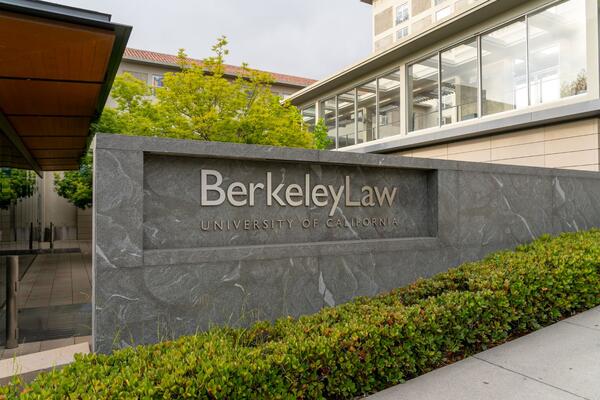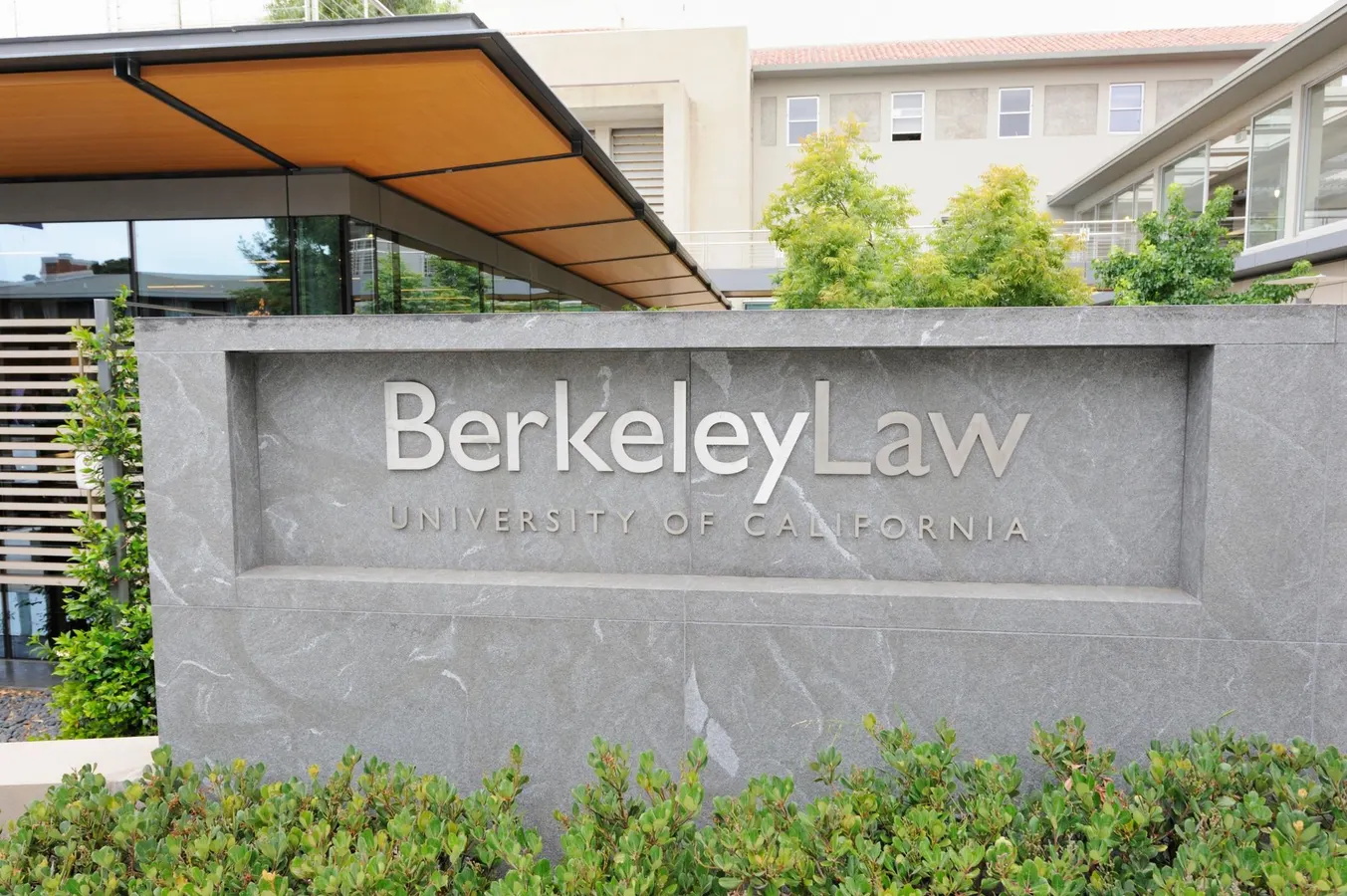
UC Berkeley Law has adopted a new policy banning students' use of AI for academic work they submit for credit.gettyThe University of California, Berkeley Law School has adopted a new, more strict policy governing law students’ use of AI. The rule, which goes into effect this summer, forbids their use of AI for most activities associated with academic work that’s submitted for credit.The new policy states that:“The use of AI is prohibited for aid in conceptualizing, outlining, drafting, revising, translating, or editing any work submitted for credit. AI use is prohibited for any use for any purpose in any exam situation. Students may not upload course materials—including assignments, readings, slides, class recordings, or other class content—into generative AI systems. AI can be used for research on papers ONLY for the limited purpose of identifying sources, such as cases, statutes, or secondary sources. Students are responsible for the accuracy of their research and all other aspects of their submitted work. Citations to sources that do not exist will raise a presumption of prohibited AI use.”A potentially broad exception is carved out for those courses that “are designed intentionally to teach AI fluency” as well as for other courses where the instructor decides for pedagogical reasons to ask for permission in writing to deviate from the default prohibition. In a series of posts yesterday on X, Chris Hoofnagle, a Teaching Professor of Law In Residence at UC Berkeley Law and Faculty Director of the Berkeley Center for Law & Technology, said that the prior policy was based on the concept of plagiarism, “but the rapid increase in capabilities in Claude particularly caused us to shift focus: the new policy seeks to protect the cognitive skills constitutive of a legal education.” While the former policy permitted students to use AI technology to help them make corrections to required writing assignments, the new policy specifies several prohibited uses of AI, including:Asking an AI tool to brainstorm a paper topic or thesis (prohibited conceptualizing)Asking an AI tool to propose an organizational structure for a paper (prohibited outlining)Asking an AI tool to compose a paragraph summarizing a legal rule for use in a paper (prohibited drafting)Asking an AI tool to identify repetitive passages in a paper that should be cut (prohibited revising)Asking an AI tool to polish a paper by correcting grammatical mistakes (prohibited editing)Asking AI to generate an exam outline, elements of which are then used on the exam (prohibited exam use)Asking AI to translate a paper originally written in another language into English (prohibited translating)Students would still be able to use AI to tutor themselves or prepare for class, but, according to Hoofnagle, a key concern is that “in the classroom, we don't want students to write the best possible paper, but rather the best possible paper that the student is capable of.”UC Berkeley Law’s new rule will almost certainly capture the attention of other law schools. Not only does it enjoy an excellent general reputation as a law school, it also has been a pioneer in teaching and researching about AI use by lawyers, lending extra credibility to its concerns about the proper and improper roles of AI in legal education. MORE FOR YOUThe policy acknowledges that future lawyers will need to use artificial intelligence fluently. In fact, most lawyers and many major law firms use it for a wide variety of purposes. But the rationale for the rule is that good lawyering requires that “AI use be coupled with the cognitive skills necessary to strategically deploy the technology, to critically assess its work product, and to uphold ethical obligations to clients and to the legal system. In short, thinking remains the sine qua non of good lawyering (and of a quality legal education).”As AI technology matures and its use advances, other types of bans and punishments are being introduced to try to maintain the integrity of research and scholarship activities. For example, the preprint platform arXiv has adopted a code of conduct for authors that will result in an immediate one-year ban if it finds “incontrovertible evidence” that papers they’ve submitted contain “inappropriate language, plagiarized content, biased content, errors, mistakes, incorrect references, or misleading content” written by large language models.“If a submission contains incontrovertible evidence that the authors did not check the results of LLM generation, this means we can’t trust anything in the paper,” maintained Thomas Dietterich, who chairs arXiv’s computing section, in a post on X. In addition to the 1-year ban, authors found to have submitted papers containing AI-generated mistakes or hallucinated references will be required to have their subsequent arXiv submissions “first be accepted at a reputable peer-reviewed venue.”
UC Berkeley Law School Adopts New, Strict Ban On AI Use By Students
The University of California, Berkeley Law School has adopted a new, strict policy governing students’ use of AI. It forbids the use of AI for work submitted for credit.
771 words~4 min read