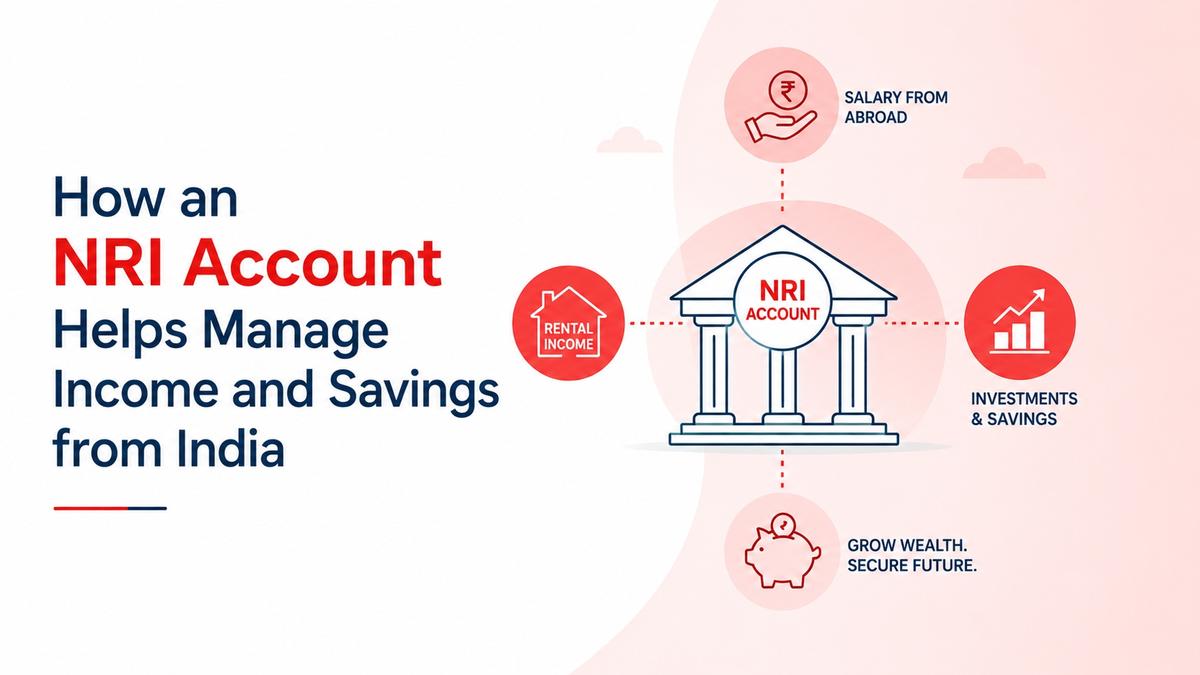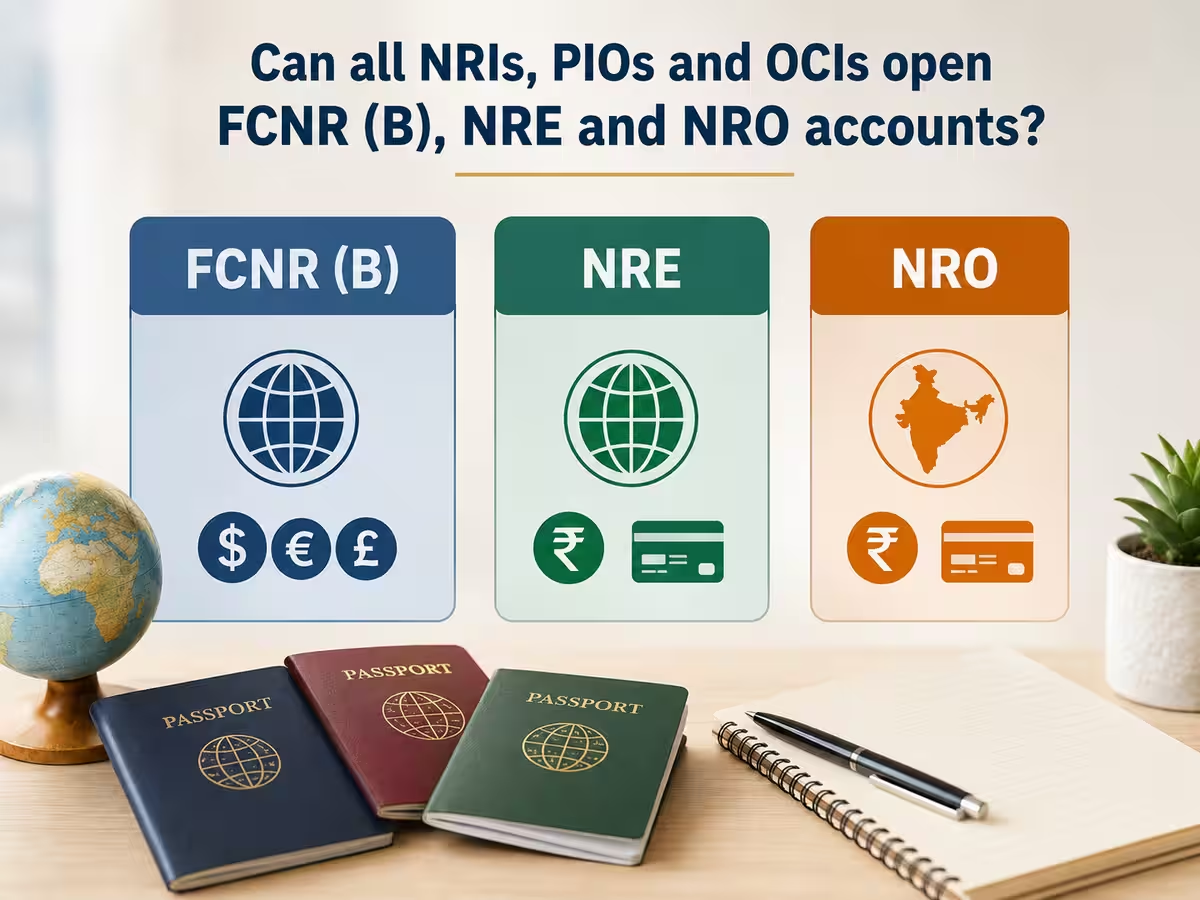
Moving abroad changes more than just your location. It also changes how you manage your money in India. Many individuals continue to receive income from India or need to send funds back home. This could be rent, investments, or family expenses. Once your residential status changes, the Foreign Exchange Management Act (FEMA) requires you to operate a NRI account in India. There are different types of NRI accounts available, and depending on your financial needs, you may choose one or more of them. They keep your transactions in line with regulations and make access easier from overseas. When Should You Open An NRI Account The moment your status changes, your bank should be informed. Continuing with a resident account can create issues later. Most banks will guide you to convert it into a Non-Resident Ordinary (NRO) account. If you also need a Non-Resident External (NRE) account, that has to be opened separately as a new account. Taking action early saves time and avoids complications. It also ensures that your regular payments or credits are not affected. Types of NRI Accounts Available Before you begin the process, it helps to know what options exist. Not every account serves the same purpose. • NRE account: Used mainly for income earned outside India. The funds are held in Indian rupees. • NRO account: Meant for income that arises within India. This includes rent, dividends, or a pension. • FCNR account: A Foreign Currency Non-Resident (FCNR) Account is a fixed deposit held in foreign currency. It allows you to retain funds without conversion. Each of these accounts work differently. The choice depends on where your money comes from and how you plan to use it. Documents Required for NRI Account Opening The documentation part for NRI account opening is straightforward, but it needs attention. Missing details can slow things down. NRI accounts can also be opened from abroad. However, if you are applying from outside India, copies of your passport and address proof submitted to the bank must be notarised. Step-by-Step Process for NRI Account Opening The process itself is not complicated. Most banks now allow you to complete it online. All you have to do is follow these steps: 1. Start the journey through your bank’s digital portal and select the type of NR account you wish to open. 2. Fill in your personal and financial details as required. 3. Upload copies of your documents. If you are applying from abroad, copies of your passport and address proof will need to be notarized. These notarized copies must then be sent to the bank by courier. Some banks also accept e-notarization, so it is worth checking with your bank beforehand. 4. Submit your application. If you have opted into a premium banking program, you may need to deposit a minimum amount before submission. 5. Once the bank verifies your documents, your account will be ready to use. Things To Keep In Mind During The NRI Account Opening Process A few small checks can make the entire experience smoother. These are often overlooked but matter in practice: • Ensure your status is updated correctly with the bank. • Choose the right account type from the start. • Keep documents complete and properly notarised. • Follow the bank’s funding instructions carefully. • Timelines vary by bank. While most accounts are opened within a few working days, choosing the right bank can make a significant difference. If all your documents are in order, some banks can have your account ready within a few hours to a day. Conclusion The process of opening an NRI account may seem detailed at first, but it becomes straightforward when approached step by step. What matters more is choosing the right account based on your income source and usage needs. Once the account is active, routine activities like receiving payments, making transfers, or handling investments become more predictable. A well-planned approach at the start reduces the need for changes later and supports better financial management over time. FAQs 1. Is a PAN mandatory for opening an NRI account? PAN is mandatory when opening an NR account from abroad. If you are opening the account in India and do not have a PAN, you may submit Form 97 (formerly Form 60) instead. 2. Can an NRI transfer funds between different NRI accounts? Yes, but the rules differ by account type. Outward remittance from NRE and FCNR accounts is permitted without any limitation. NRE and NRO accounts can be used for bill payments within India and for transferring funds to resident accounts. 3. Can an NRI account be converted back to a resident account? Yes, but the process differs by account type. An NRO account can be converted back to a regular resident savings account once you return to India. An NRE account, however, cannot be converted. It must be closed, and all funds must be withdrawn or transferred before closure.
What is the Process to Open an NRI Account in India
A simple guide to NRI account opening in India. Learn about documents, process steps, and important points for a smooth experience.
826 words~4 min read