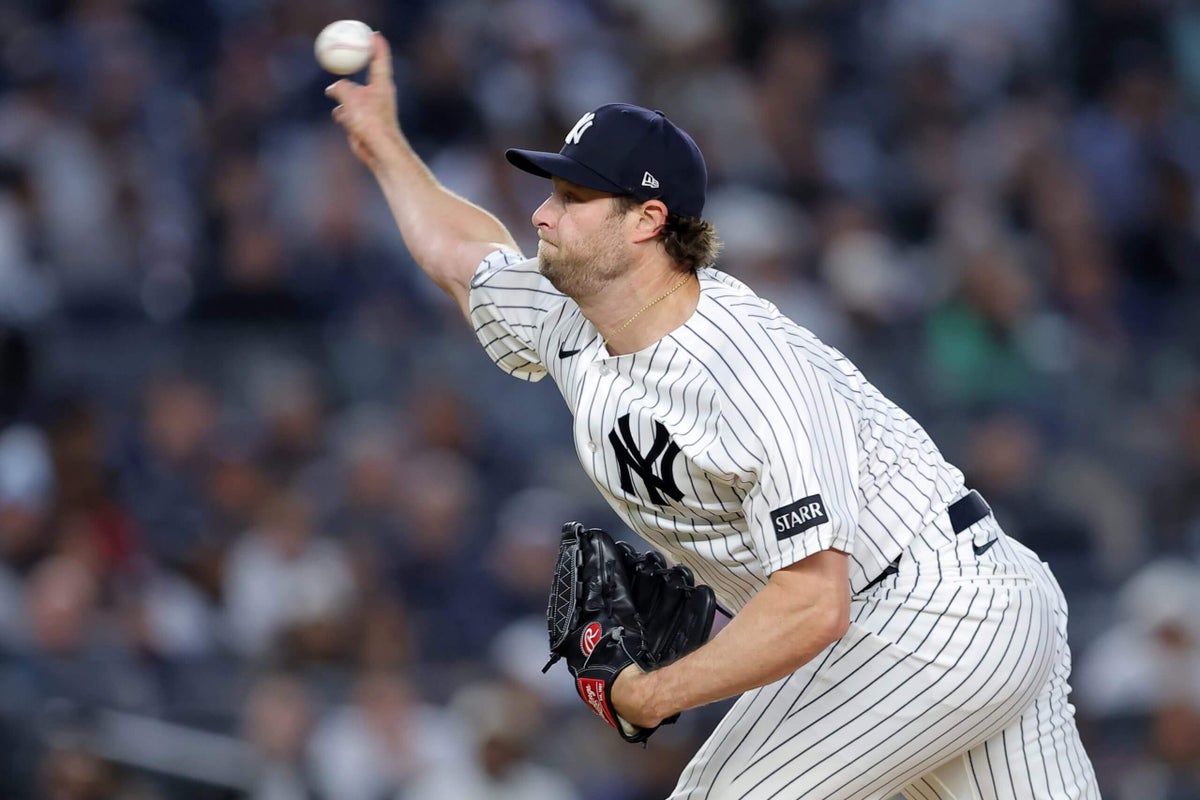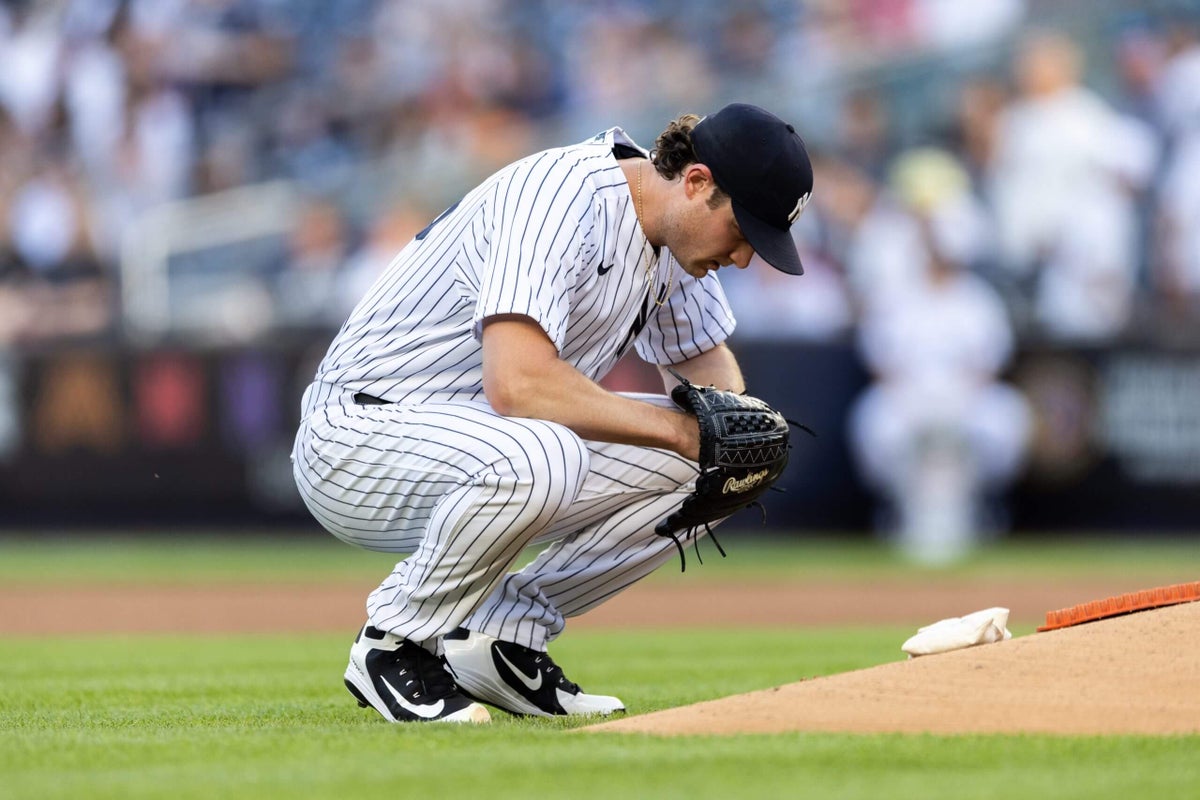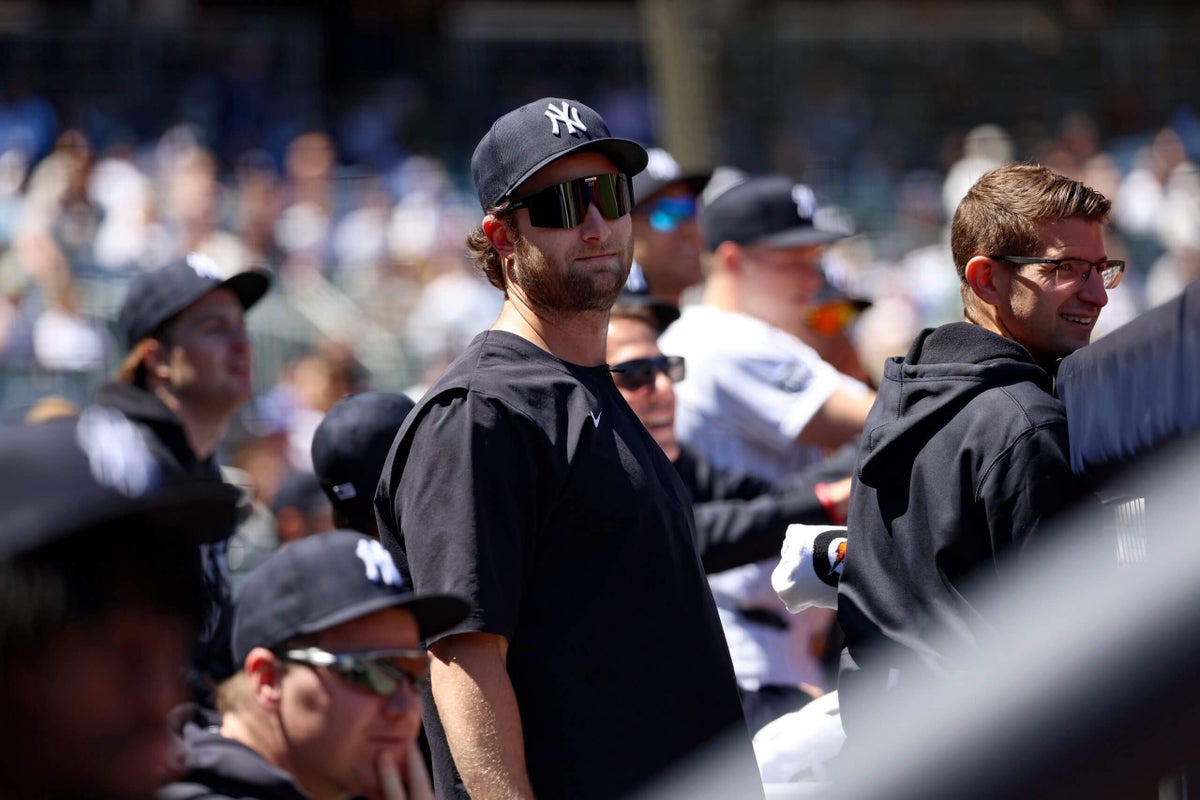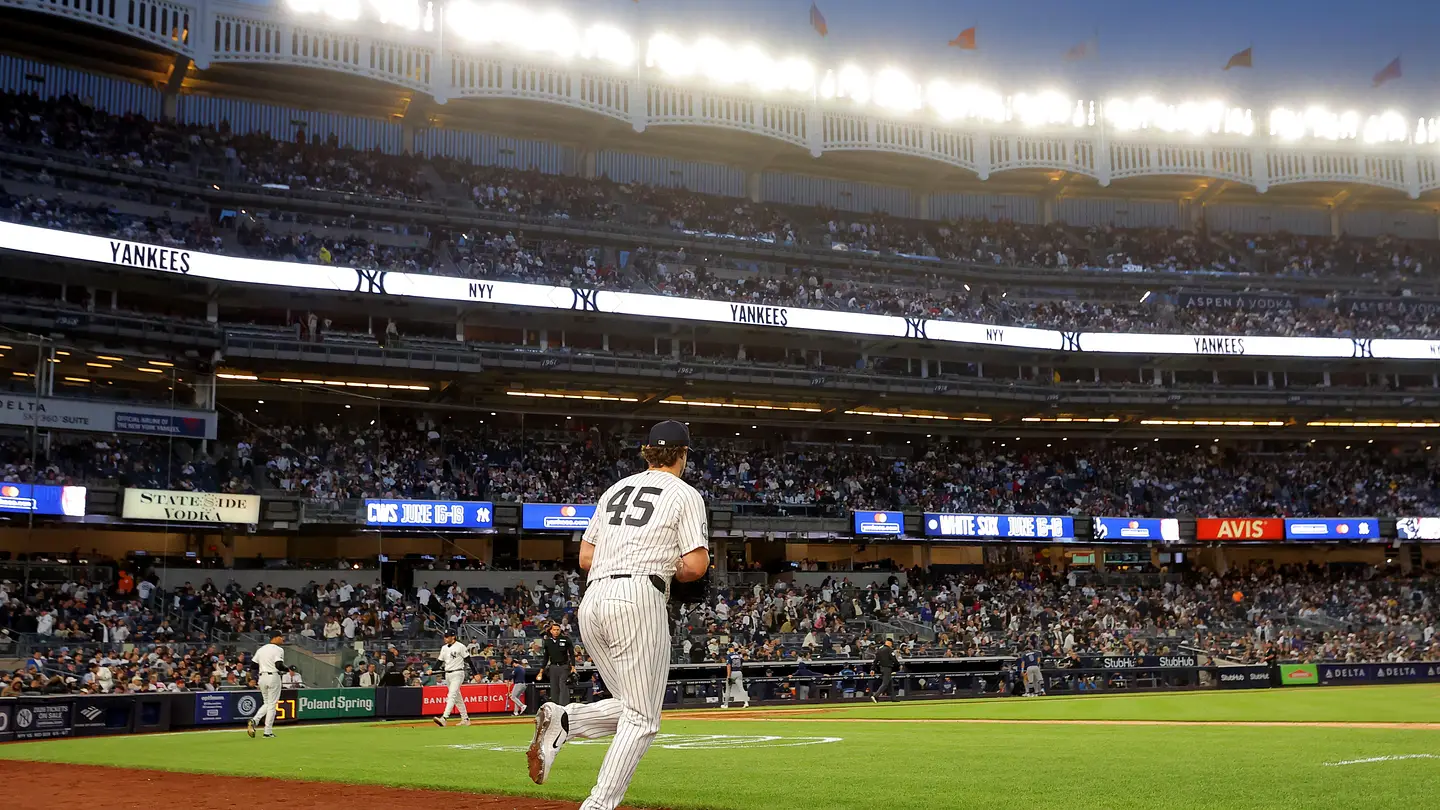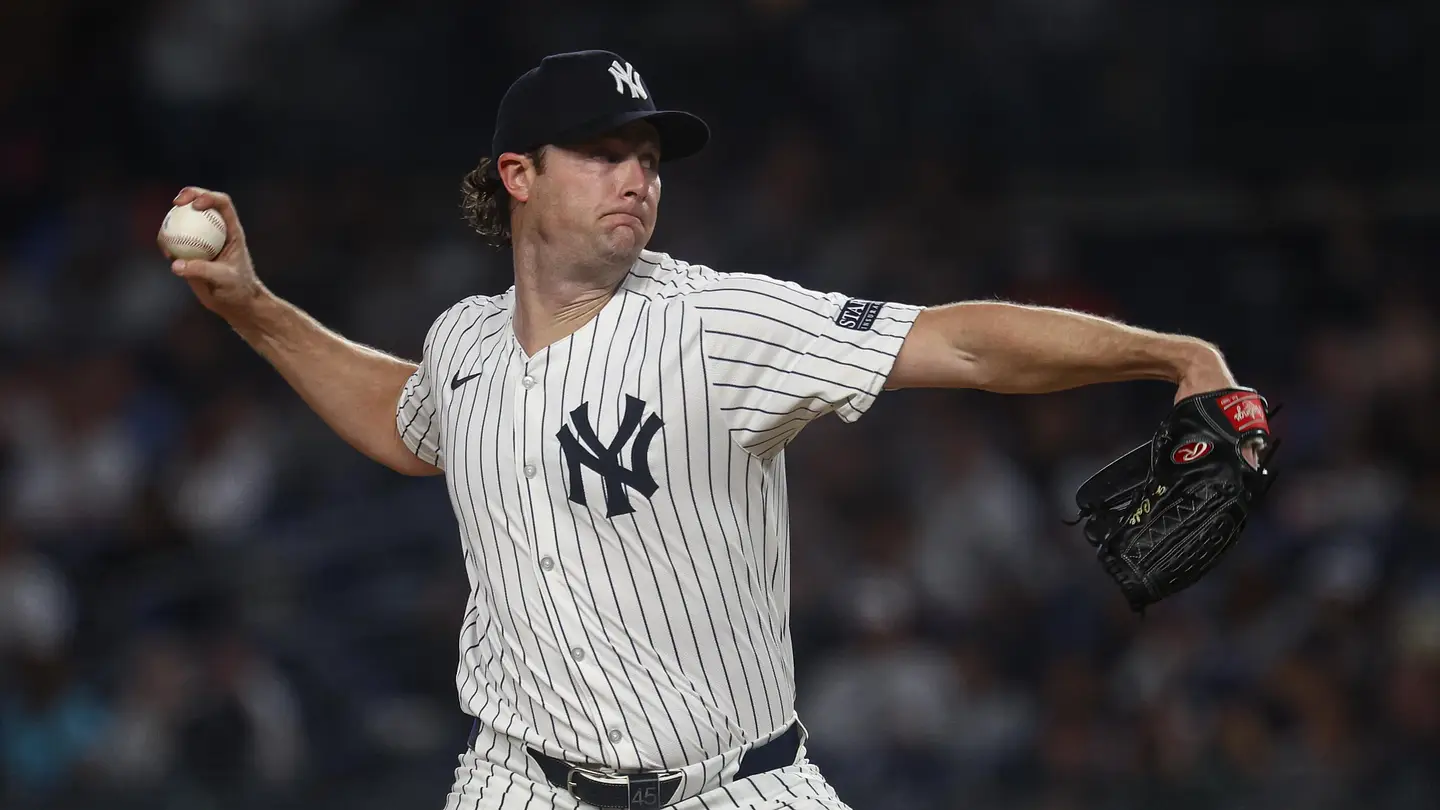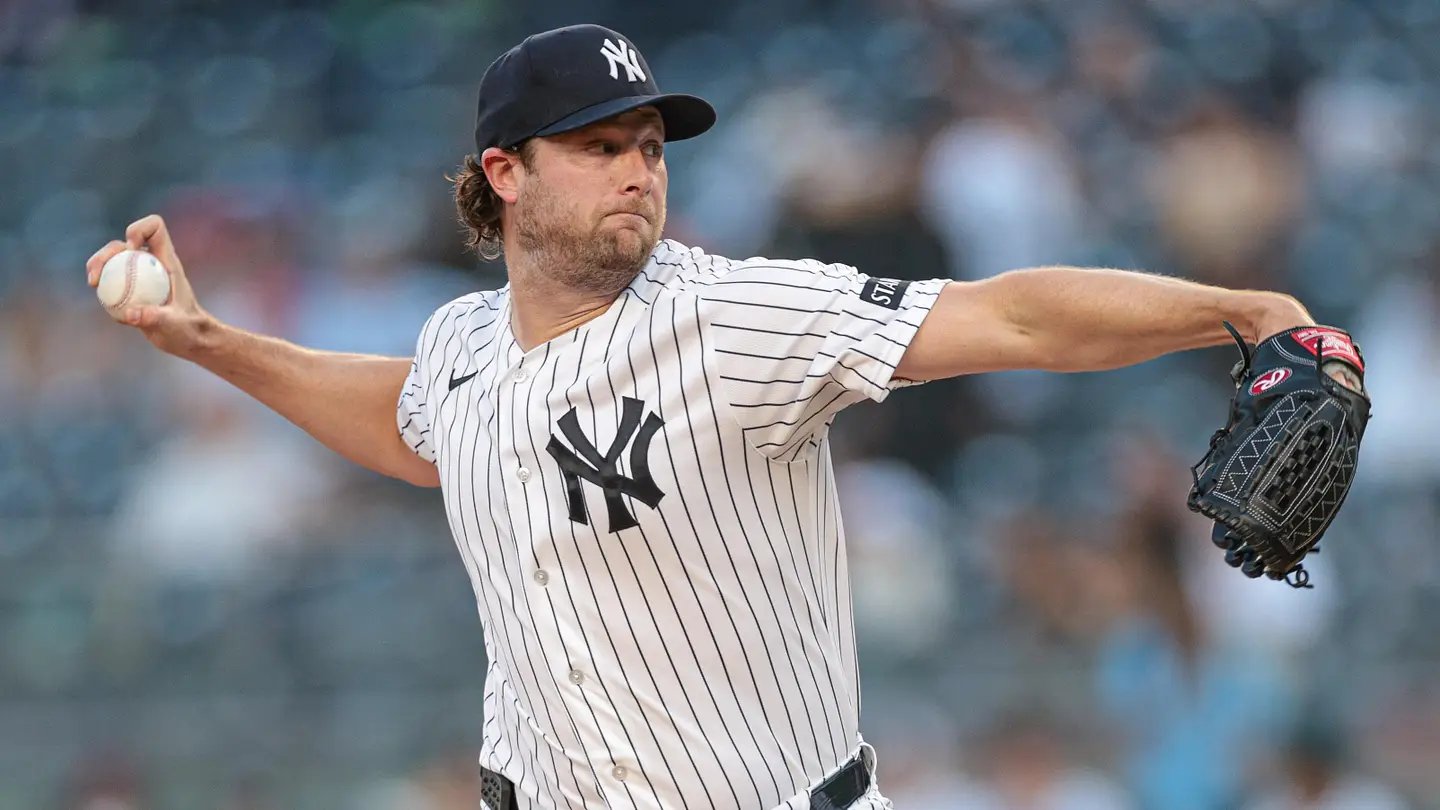
For starters, Gerrit Cole wasn’t entirely certain he was going to wake up from Tommy John surgery. He was not afraid of the possibility of dying on the table, exactly. “But you are aware of it,” he says.As the 35-year-old Yankees ace passes the first anniversary of the procedure that kept him off the field for the entire 2025 season and could define the rest of his career, he thinks back to those days last March when he felt his elbow ache and his world shake—and the nearly 400 days since. For the first time, he is ready to talk publicly about how he got through that period. Jess Rapfogel/Getty Images)“It’s hard to get any lower than when you’re going into it,” he says a year later, leaning against a chain-link fence on a back field at the team’s Tampa complex. “And then you keep hitting the bottom.”That started with the fear of the operation itself. No surgery is without risk, he points out. “I don’t know of anybody that hasn’t come out of the Tommy John room, but that contributes to your low point going in,” he says. “And we’ve seen really good pitchers struggle a lot after this. I know the aggregate is positive, but there are a lot of unfortunate stories out there. You don’t have to look very far to find one that hasn’t gone well, or to find that a setback is right around the corner. So you don’t want to be in that mindset like it’s not going to go well, because that’s not helpful. You don’t want to be in this oblivious mindset either, because that pragmatism and perfectionism and all those kinds of things drive me to execute at a high level in my preparation.”It was that diligence—and perhaps a bit of lobbying—that allowed him to return weeks ahead of schedule and start on Friday. He blew away the staffers charged with helping him rehab, says bullpen coach Preston Claiborne, who worked with him on a daily basis. “If we gave him an assignment or goals to hit, he would do it,” he says. “And so he was able to accomplish things at a faster rate [than we expected].”But even now, as Cole hits his milestones—bullpens, live batting practice sessions, Grapefruit League outings, rehab appearances—and remains on track to rejoin the Yankees this week, he tries to moderate expectations. “I’m still pragmatic about it,” he says. “I don’t take it more than one day at a time. I never let myself think I wasn’t gonna come back, and I’ve never let myself think this is all gonna be fine and there’s gonna be no challenges and it’s gonna come back better. I’m always trying to stay in the middle.” That’s an attitude he has cultivated over his 13 years in the majors—five with the Pirates, two with the Astros and now six with the Yankees—since struggling to remain steady as the Friday night starter at UCLA. When he pitched great, he would sometimes sleep in the next day instead of getting right back to work. When he scuffled, he would do too much. Now he tries to remind himself, when it’s going well, “you’ve got to do every rep.” And when it’s going poorly? “You’ve got to do every rep.”Cole was the first pick in the 2011 draft. Before the ’20 season, he signed the largest contract for a pitcher in the history of the sport. He is a two-time ERA king and the ’23 American League Cy Young Award winner. He had faced adversity in his career, but before that day last March, it was never anything a fastball on the black couldn’t fix. He’d always been all in. Now, suddenly, he had to learn how to be out. Cole had never really been injured before spring training 2024, when he began experiencing discomfort in his right elbow. Doctors diagnosed him with inflammation and edema, and he missed the first two and a half months of the season in what felt like a best-case scenario. A year later brought a worse case. Cole again felt soreness while recovering from a spring training outing, and this time imaging found a tear in his ulnar collateral ligament. He sought a second opinion, but Dr. Neal ElAttrache concurred: Cole would need an elbow reconstruction. His 2025 was over. “There’s a part where you’re a little angry at the game,” he says now. Cole (left) and Judge have the two largest contracts on the Yankees. | Getty ImagesFor a while, his primary concern was his quality of life. He had to learn to eat lefthanded, brush his teeth lefthanded, wash his hair lefthanded. It helped that the Yankees chose last spring to relax their decades-old facial hair ban, or he would have been shaving lefthanded, too. He had to explain over and over to his young sons—Caden, now 5, and Everett, now 3—why he could not lift them. (On the way to a hockey game late in spring training, a few days after their dad’s first live batting practice, they checked in: “How’s your booboo?” “It’s O.K.,” he told them.) It took more than two months for doctors to clear him to watch games from the dugout. “You’d be surprised how many people bump into you,” he says. He couldn’t shake hands after wins. His mood improved dramatically once he started to feel more like a person and less like a patient, he says: “As opposed to just getting in and [physical therapist Joe Bello] is tearing my arm apart and that’s all I gotta do for the day, and I can’t watch the game, and my kids are at home after school, waiting for me.”As a first-timer, Cole sought advice from friends who had undergone the procedure. He didn’t have to look too hard—statistics compiled by analyst Jon Roegele indicate that 39.4% of the men who threw a pitch last year did so with a reconstructed elbow—but he could not find anyone who had navigated his exact circumstances: He planned to remain with the team while he rehabbed. The vast majority of players who are losing a season either go to their off-season home or go to the team’s facility in Florida or Arizona. But Caden and Everett are in school in Connecticut, and Gerrit and his wife, Amy, did not want to pull them out. And on the baseball side, Cole felt “it was an advantage to not be removed from the environment completely,” he says. And the team wanted him around. “He’s so in tune with what’s going on, because he’s fully invested in his teammates,” says pitching coach Matt Blake. Besides, Cole planned to be a key part of the 2026 team. That meant he wanted to understand the 2025 team intimately. That turned out to be harder than he expected. “When I’m in it, it's easier for me to see it,” he says. “It’s easier for me to trust it. I’m throwing the pitches. I’m seeing how they’re reacting. I just have confidence that I’m much sharper than if the team is on the road and I’m watching it on YES Network, and then I’m coming in when they come back, and then they’re asking me questions. … ‘Should I have thrown him a slider there?’ It’s like, God, you know what, Will, I would have a better answer for you if I was on the road with you, and I had thrown sliders to him the day before. But I’m still being asked to help. So it was weird, because, of course, I want to do everything I can, and that’s both preparing for this year in the middle of last year, and also trying to help the [2025] team out. The mindset was way different.”For Cole, who spends as much time dissecting his rotationmates’ outings as his own, the worst part was his removal from the club. His teammates would be in the middle of a losing road trip, but he and the trainers would string together three or four good days back at Yankee Stadium. “We’re, like, riding on a high,” he says. “And then the team comes in and they’ve got a bunch of red ass, and you’re like, Oh man, can I still be excited today or am I not supposed to be excited today? What am I supposed to do?”Or, worse, the opposite. “I had a little bit of an argument with a player one time,” he recalls. “Not an argument, but I had a productive conversation between me, Joe, and another player at some point about, like, why aren’t you in a better mood today? “And it was like, ‘Well, I don’t know. I see my life right now and what I’m doing.’ “The player was like, ‘Well, what can you do about it? You can't do anything, so you might as well, you know, enjoy the day.’ “I'm like, ‘I’d really love to do that right now, but I can’t.’ But I was like, ‘Joe, how did my external rotation stuff look today?’ “He’s like, ‘Looked perfect.’ “How did my plyo ball or whatever I did today look? How did exercise, X, Y and Z look?’ “He’s like, ‘It looked really clean. It looked really good.’ “‘How was my focus?’ “‘High.’ “And I’m like, ‘So why don't you give me a little slack to have a bad mood, O.K.? Because I got in here and I did exactly what I needed to do, and even though I’m not super enjoyable to be around right now, I put money in the bank for ’26 today at a high level.’”Cole still believes he handled his recovery well, and that moment came when the club was on the road, so he was never in danger of infusing the room with negative energy. But in retrospect, he can acknowledge that his teammate had a point. “It’s a good warning shot across the bow,” he says. “Hey, we don’t want to be here dragging people down.”Quite the opposite. Cole has always been the sort of guy who watches games while engaged in constant dialogue with anyone who will talk to him, so as he rehabbed, he found himself spending more and more time in the coaches’ room. Eventually they just started including him in their discussions. (At one point as Cole is reminiscing about how badly Everett wanted to be involved with Caden’s football team, so they gave him a clipboard and let him help call plays, he pauses. It occurs to him that there might be a parallel with his own life.) “He’s going to be involved,” Blake says with a chuckle. “So it’s a matter of funneling and making sure it’s the same messaging and making sure we're on the same wavelength, and filling him in on the conversation, what they're working on.”Cole has six top-five Cy Young finishes to his name. | Chris Coduto/Getty ImagesThe coaches liked having “one of the best pitchers in the history of the game” help deliver their suggestions, says Claiborne. Sometimes Cole weighed in on whether someone should add a pitch or whether someone else was tipping. Often he reminded his teammates of the importance of the less sexy elements of the job, such as backing up bases. And sometimes he just thought he knew how to get someone into the right frame of mind. Before Cam Schlittler’s postseason debut, an eight-inning, five-hit, no-walk gem, Cole encouraged him with this message: I puked before my first playoff start. You’ll be fine.It became easier to feel connected as the season wore on, but he never totally felt comfortable. “I’ve always had so much respect for the vibe,” Cole says. “There’s always that uncertainty of, like, I’ve been at the field for two hours for the last 10 days. They’ve been at the field for 10 hours for the last 10 days. I’ve been wiping asses and taking kids to school and going to soccer camp and not locked in on all 220 balls thrown during the game. Now I’m going to an environment where they haven't missed a pitch in two weeks. I’ve missed a lot of pitches.” He sighs and says, “I did my best with it.”To be clear: He loved wiping the asses. When Cole signed that nine-year, $324 million deal before the 2020 season, he and Amy mentally crossed off the summers through 2028. So he cherished these recovered moments. “A lot of beautiful times with my kids,” he says. “Fourth of July with my kids, soccer camp with my kids, big moments with Caden, big moments with Everett, standing with the moms at school, picking them up and taking them home. Things that you never thought you would do, because you chalked nine years of summers gone.” But usually he is either at work during the season or at home during the offseason. These in-between days—almost like a perpetual spring training—were hard to manage. He would be playing with his sons and get a text about the Yankees. He struggled to hold both mindsets at once. “I’m not a woman,” he laments. “Focusing on two things doesn’t work.”Cole had spent most of his life inside the starting pitcher’s five-day cycle. That rhythm helped him avoid the monotony many position players experience; rather than the marathon of 162 games, he could focus on making 32 sprints. Until he found himself more than a year away from his next start. He had to change not only his goals but also the way he approached them. In some ways, he was a terrible candidate for a year like this one: He is an overthinker who thrives when he is in the thick of things. But in other ways, he was a great fit: He is meticulous and detail-oriented. The most helpful advice he received was to keep the mentality that makes him great. “Have confidence that the way you attack your bullpens, those processes—you can attack your rehab with those,” he recalls friends telling him. “Maybe some of them are going to be more mental than physical at times. But have confidence in how you go about your business, that you’re going to find your way to do this well. Don’t change anything that you’ve done before. And that’s been the most true thing.”For Cole, that looked like devoting himself to each stretch like it was a bullpen session—and allowing himself to feel as joyful about success in the training room as he did on the mound. “It’s always the firsts that kind of get you jazzed up,” he says. “The first time you can straighten your arm, first time you can bend your arm, first time you do a push-up, first time you do a single-arm [plyometric exercise], first time you do a throw, first time you’re off the mound.” It had been a long time since he celebrated such simple breakthroughs, and he found he enjoyed appreciating the game in that way. The most important milestone will come on Friday, when he rejoins the Yankees for his first meaningful start since Game 5 of the 2024 World Series. But he will hold onto the small moments, too, like the one that came this spring, on March 11, the first anniversary of his surgery. Bello, the physical therapist, greeted him that morning with a grin. Cole bent his arm. He straightened it. And he shook Bello’s hand.More MLB from Sports IllustratedAdd us as a preferred source on GoogleFollow
Inside Gerrit Cole's Grueling, Untold Journey Back From Tommy John Surgery
The Yankees' ace is returning to the mound Friday after missing all of last season with an elbow injury that left him at his lowest point.
2,580 words~12 min read