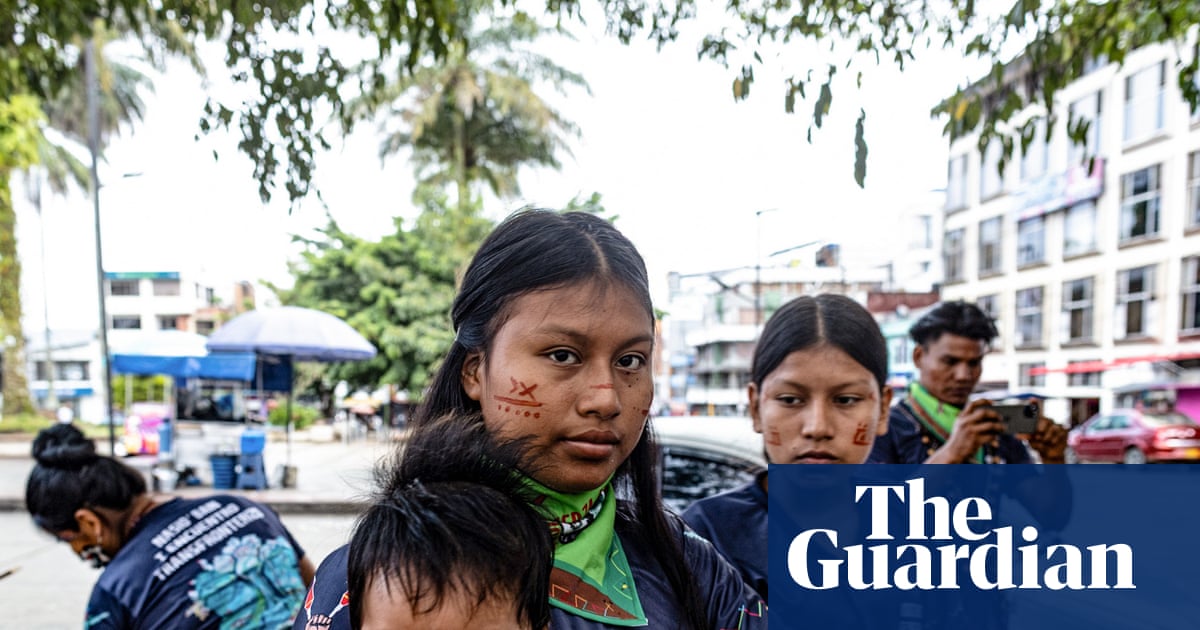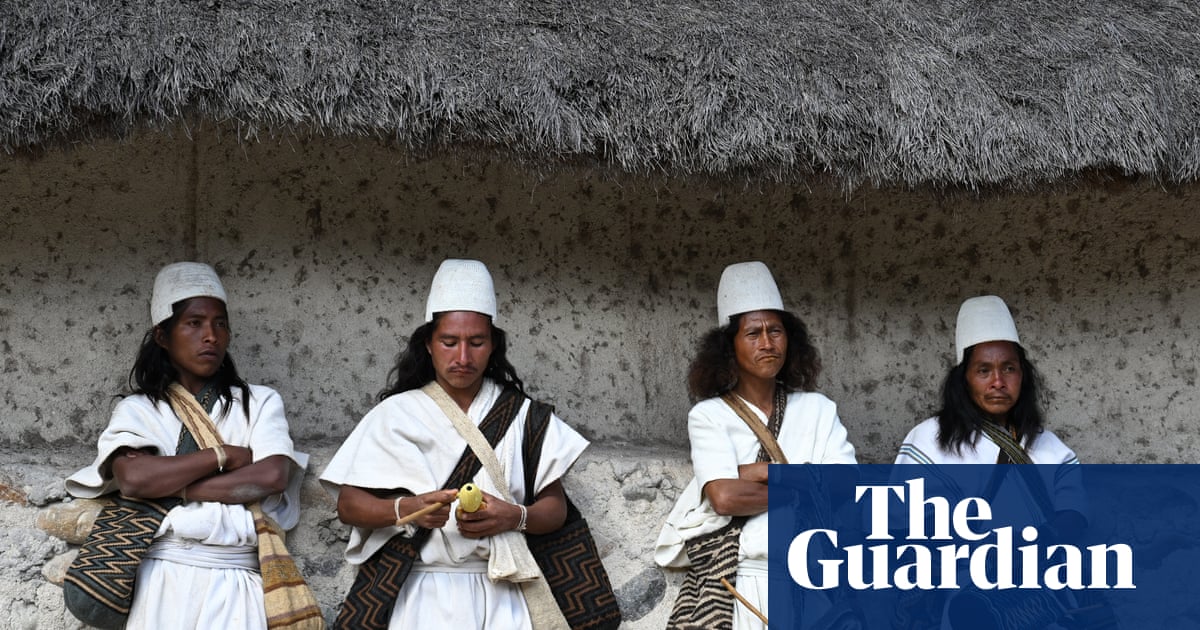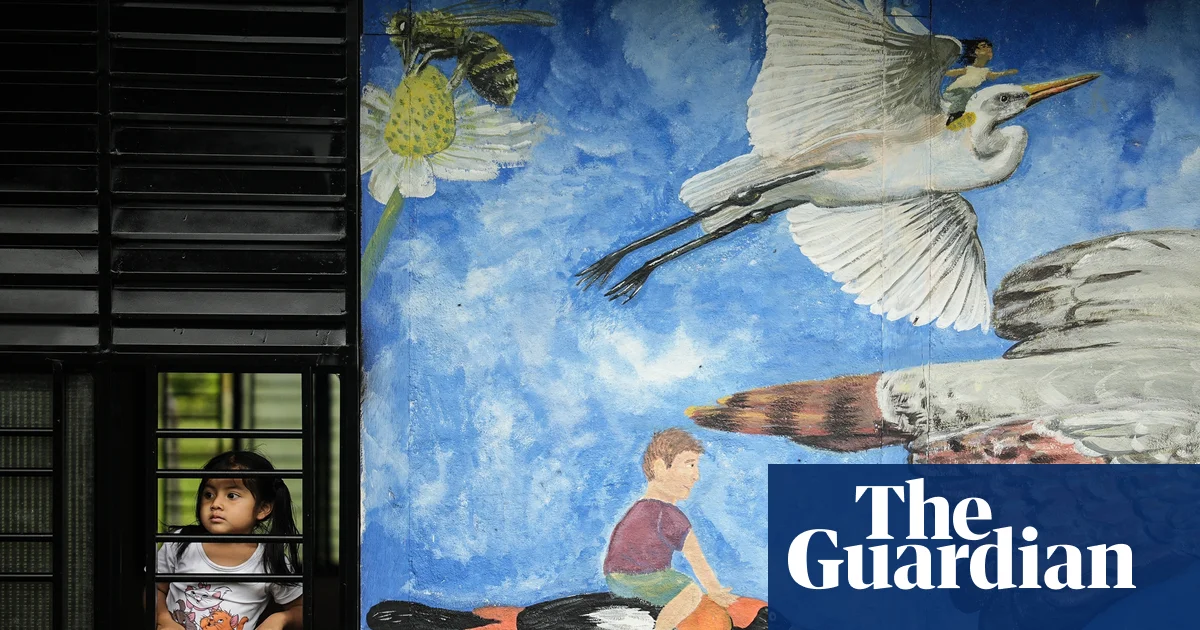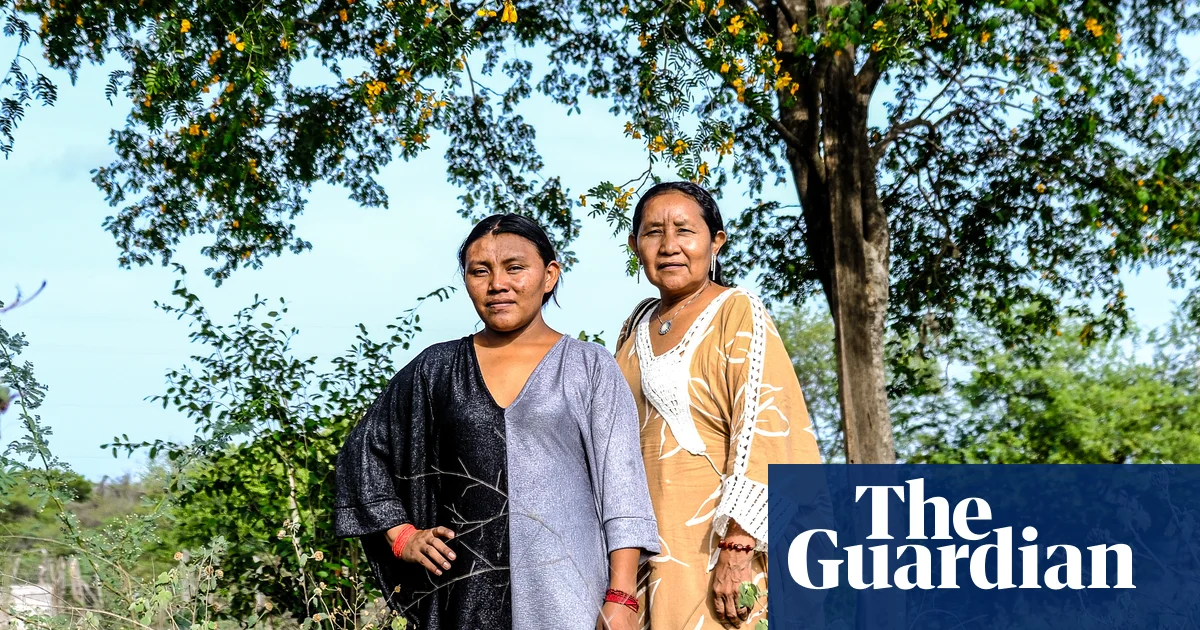
In the heart of the dry tropical forest, Maria Elena Aguilar Uriana walks past towering cacti, her ancestors’ graves, and patterned clothes blowing in the wind. Her brow is furrowed, her hands fixed on her hips. She points to a former watering hole, now nothing but dust.“Our children are malnourished and dying,” she says. “It’s all because of the mining. It has destroyed our landscape, our homes, our lives.”Now Uriana fears history is repeating itself. In Colombia’s far north-eastern corner, ambitious energy projects are colliding with decades of extractive conflict.The Wayúu, the country’s largest Indigenous group, say their territory in the arid La Guajira has long been shaped by outside interests – first by coal mining and now through renewable energy development. Leaders say the energy transition is repeating an old pattern: advancing national and corporate priorities while sidelining consent and control over land and water.“We were rich in animals and land, but the government’s energy projects and mining have put us on the verge of extinction,” says José Silva Duarte, president of Nación Wayúu, a human rights movement representing the group. “Development in the interests of the country has brought nothing but misery for the ethnic peoples of La Guajira, Cesar and Magdalena.”Towering over Wayúu territory is Cerrejón, one of the world’s largest open-pit coalmines. Operating for decades, the mine has transformed vast stretches of land. Campaigners have long raised concerns about its environmental and social impacts, including water pollution and the displacement of communities.Yukpa children playing football. The community has faced increased malnutrition and respiratory issues in recent years, which they blame on miningThe railway used to haul coal across Wayúu lands to the Caribbean coastCoal dust from the mine, Duarte says, settles over the land and on to the Wayúu’s herds. “When our people slaughter an animal, they find coal dust in its lungs,” he says, blaming a train line that hauls coal to the Caribbean coast. “Now imagine if they were to unclog our lungs, what would they find?”Coal mining requires vast amounts of water, which local people say has intensified the region’s already chronic water scarcity. The climate crisis – and prolonged droughts – has compounded the turmoil. Many families now rely on water deliveries provided by the state or the mining company, walk great distances to wells, or say they are left to drink from contaminated sources.The worsening conditions have forced many people to migrate to urban centres or across borders in search of work and food. Leaders say displacement is eroding cultural practices and social structures built over centuries.“Our people have already had to move once before, when the mining started in the 80s. I fear that soon we will have to move again,” says Luz Mila Uriana, 26. “What will happen to us?”Cerrejón, owned and operated by the UK-listed mining company Glencore, says it is committed to safeguarding the wellbeing of neighbouring communities, operates an air-quality monitoring system, and takes measures to minimise dust generation.The company also rejects claims that it negatively affects water. Regarding the displacement of Wayúu communities, it says it has conducted land purchases in accordance with Colombian legislation.Wayúu girl Luz Neida Elena, 10, fears her family will have to move awayIn the neighbouring Cesar department – Colombia’s biggest coal-producing region – the Yukpa Indigenous people tell a similar story, saying decades of large-scale mining have devastated their environment. They say their territory has been fenced off and rivers diverted, cutting their access to the resources their survival depends on.“They have had to stop fishing in most areas because coal-mining companies diverted huge stretches of their rivers,” says Edward Álvarez, a lawyer for the Yukpa. “The fauna and flora have been contaminated or cordoned off, so they no longer have much to eat.”Near the border with Venezuela, people in one village say fish have disappeared from their rivers, and crops now struggle to grow. “When I was a child, our river used to be full of fish, but now there are none,” says Luz Eneida Quiroz Rodríguez, 32.The Yukpa people say their waterways, such as this sacred lagoon, have become contaminated due to miningCommunity leaders say the environmental destruction has triggered a severe malnutrition crisis. Dozens of Yukpa children have died since 2023, according to Indigenous authorities.Quiroz Rodríguez lost her three-year-old son, Carlos Daniel, to malnutrition in 2022. “All of our children get sick now, and the elderly too,” she says. “We do not have enough food. Before we could fish and grow beans, but now our land is sick.”Colombia’s national mining agency says it is committed to ensuring that any mining development respects human rights and Indigenous territories. Yet for many affected communities, these commitments ring hollow. They say the damage left by decades of coal extraction has irrevocably altered their lands.The desert-like tropical dry forest, home to the Wayúu community, is swept by some of the strongest winds in the regionNow, they fear that new energy projects risk deepening existing wounds.Colombia is implementing its “just energy transition policy”, which aims to gradually expand renewable energy while existing oil and coal production continues, at the same time promising to support vulnerable groups.The strategy is a centrepiece of leftist President Gustavo Petro’s climate agenda and has been promoted internationally as a model for energy-exporting countries seeking to decarbonise without triggering economic collapse.La Guajira has become central to these plans. Swept by some of the strongest winds in the Caribbean, the region has attracted dozens of proposed windfarm projects, many backed by government incentives, multinational energy companies and international investors.A windfarm dwarfs the ancestral graveyard of the Wayúu people in La Guajira Colombia’s Mining and Energy Planning Unit has said the region could generate about 15 gigawatts of wind energy – enough to power an estimated 37.5m homes each year.The Wayúu’s concerns come as Colombia hosted the first international conference on the phaseout of fossil fuels in April, a flagship event aimed at helping oil-dependent developing countries transition.Indigenous leaders fear that the cumulative impact – decades of mining followed by large-scale wind developments – will place further strain on land and water resources. “We, as Indigenous peoples, do not oppose projects within our territory. We have always said that projects are welcome,” says Duarte. “But it must be just, fair and equitable. We cannot allow communities to be deceived with bags of food and water.”Joanna Barney, director of environment, energy and communities at development organisation Indepaz, says that the “incursion of multinational companies” attempting to operate in the territories is “inherently problematic”.“It is not just the issue of regulation, but also the way these companies enter Indigenous territories, disregarding their cultures and their ways of life in those lands,” she says. “This generates conflict not only between the community and the company, but also among the communities themselves.”The national mining agency said mining must operate in accordance with the law, under state oversight and with respect for communities and the environment. It noted that previous energy projects were granted decades ago under older regulations, before environmental and social standards were strengthened, and said that some related issues are subject to administrative and judicial proceedings.The Wayúu people say their way of life has been disrupted by coalmining and government-backed windfarmsThe mining and energy ministry highlighted that La Guajira has the greatest wind energy potential in Colombia, with more than 30 wind power projects in planning, licensing or structuring stages. It adds that this expansion is supported by established regulatory frameworks, including environmental licensing and national energy planning, while also emphasising a just energy transition through consultation, community investment and local economic participation.Community leaders say speaking out against energy projects comes at a high personal cost, including death threats. Three said they had survived assassination attempts. Despite the risks, they say silence is not an option.“They began to desecrate our sacred sites,” says Duarte. “We have endured great catastrophes. And yet here we continue to resist, surviving, almost on the verge of extinction.”
First there were coalmines, then came the windfarms. Why Colombia’s Wayúu people fear Colombia’s green energy boom
In the north of the country, mining has ravaged Indigenous lands and lives for decades. They fear history is repeating as the government’s clean energy transition comes to their doorstep
1,321 words~6 min read