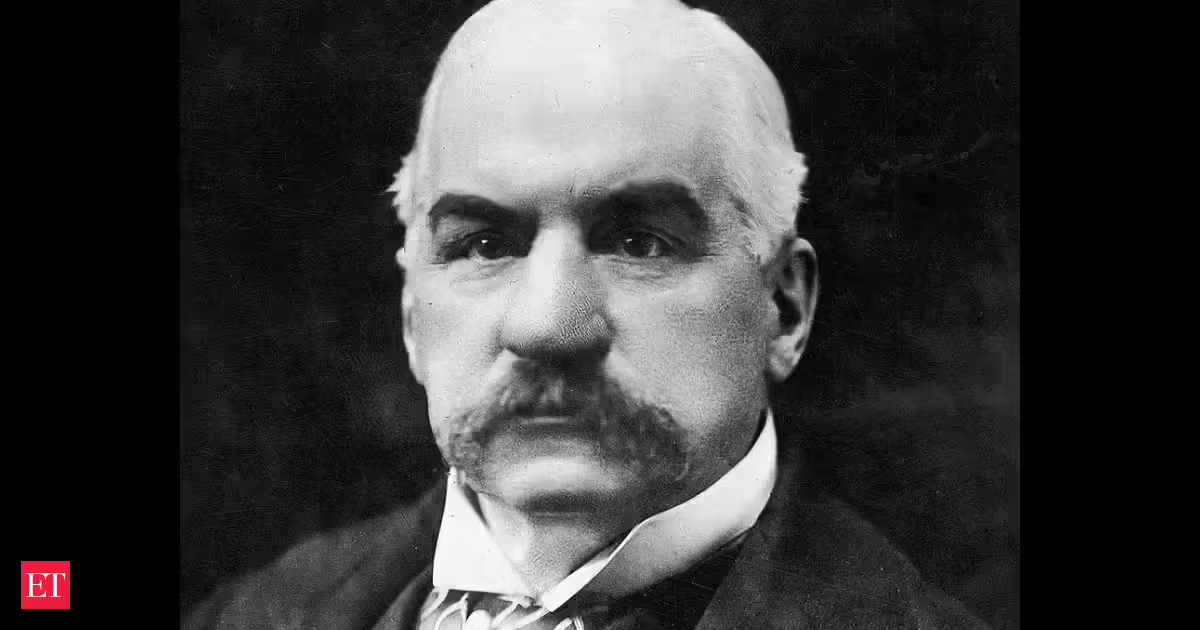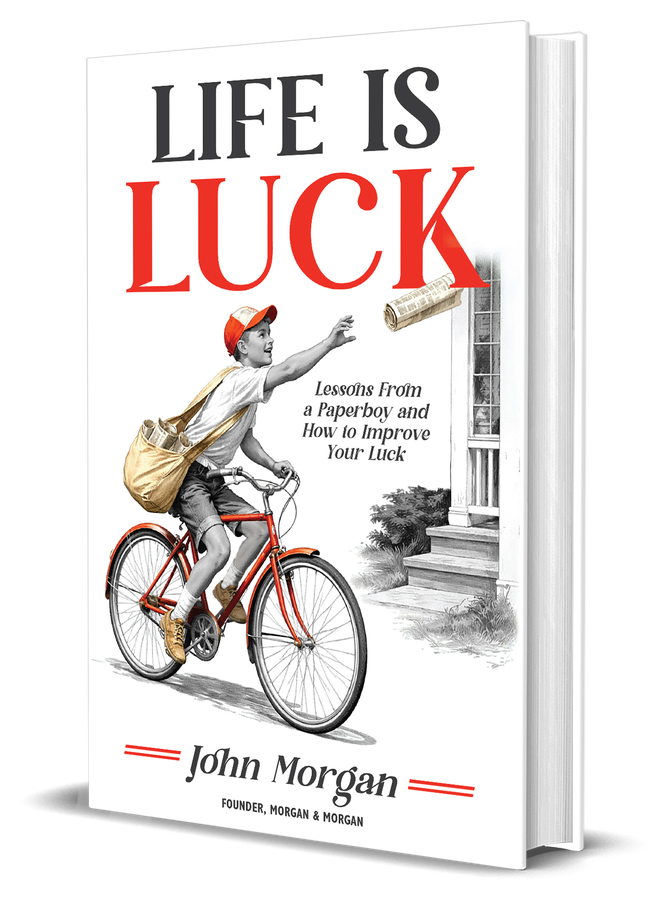
What does a billionaire lawyer credit most for his success? A paper route.Morgan & Morgan/John MorganForbes ranked billionaire lawyer John Morgan 92nd on this year’s Forbes 250 Self-Made list after he spent decades turning Morgan & Morgan into the country’s largest personal injury law firm through nonstop advertising, relentless work and an unusual ability to get people to trust him. Indeed, from the outside, Morgan, now 70, looks like the definition of self-made success. But in his new book, he argues that the self-made version of his story is incomplete. Hard work mattered. Talent mattered. But without luck, he says, his life wouldn’t have unfolded the way it did. That idea sits at the center of Morgan’s new book, “Life Is Luck: Lessons From a Paperboy and How to Improve Your Luck,” published by Maison Vero. Morgan argues that becoming a paperboy as a kid was one of the luckiest things that ever happened to him, even if it didn’t feel that way at the time. The job forced him to wake up early, work in bad weather, collect money from strangers and deal with responsibility at a young age. Throughout the book, he returns to the idea that hard experiences become a foundation for success, noting that a surprising number of billionaires and business leaders once had paper routes themselves.Underneath all of that, though, the book is really a reflection from a man who still seems slightly stunned by where life took him, from a paperboy in Kentucky to one of America’s richest lawyers. From a childhood without much stability to a man whose close-knit family is featured on some of his ads. (Morgan’s wife Ultima and their three sons are all lawyers and partners in the firm). Still, Morgan doesn’t believe good fortune is random.Some readers will probably hear a billionaire crediting luck and dismiss it as false modesty, the kind of thing people say to avoid sounding arrogant. Morgan clearly believes talent and hard work matter. The book would ring hollow if he didn’t. What he argues instead is that people can improve their odds by putting themselves in the right rooms, staying open to opportunities and refusing to let setbacks define them. One chapter is titled “Never Eat Alone,” reflecting Morgan’s belief that opportunity comes through relationships. At a time when more people work remotely and lean on AI instead of human interaction, the reminder to build real-world connections feels especially timely. The “luck” Morgan writes about isn’t like winning the lottery, but more like recognizing an opportunity when it presents itself.He breaks luck into categories. There’s pure luck, the kind nobody controls. Then there’s “planned luck” and “practiced luck,” which come from preparation, relationships, repetition and putting yourself in position for good things to happen. “Luck is the constant pursuit of opportunities,” he says while we talk about the book at the law firm’s downtown Orlando headquarters.The advice itself is, as good advice often is, trite. The ideas sound familiar because they’ve been passed down so often that many people stop taking them seriously. That doesn’t make them wrong. Work hard. Meet people. Stay open to opportunities. Learn from failure. Morgan doesn’t present a new grand philosophy of success. The book works because he delivers those ideas with the humility of someone who now realizes hard work alone doesn’t explain where he ended up.He openly discusses catastrophic thinking, imposter syndrome and the lingering anxieties that still follow him. He writes about growing up poor, his father losing jobs, and the experiences that still shape how he thinks. One of the strongest sections centers on Morgan having a tooth pulled as a kid because his family couldn’t afford a root canal instead. Decades later, despite having two brothers who are dentists and more than enough money to fix it, Morgan still hasn’t replaced the tooth because the gap reminds him of how far he’s come.The paperboy idea runs through the entire book, though sometimes loosely. Morgan drifts into stories about athletes, musicians, gamblers and celebrities he knows. It’s fun reading, but the structure wanders enough that you can almost feel Morgan reminding himself to circle back to the paperboy metaphor.Even so, the conversational approach helps the book more than it hurts it.Morgan writes the way he talks in person. He curses. He jumps between stories. He throws out opinions without sanding them down first. The book reads like you’re sitting elbow to elbow with Morgan at a dive bar while he explains how he thinks the world works.That honesty carries the book through its weaker moments.The most memorable parts have nothing to do with money. Morgan repeatedly returns to the idea that failure isn’t always bad luck. Sometimes the worst moments in life shove people toward places they never would’ve gone otherwise. His own career in personal injury law grew out of the anger he felt after his brother Tim was paralyzed while lifeguarding at Disney World.The book could’ve used a tougher edit. Morgan himself admits family members pushed him to cut some of the sports and music sections. Readers looking for a tightly argued business playbook may get frustrated. Readers who prefer blunt, personal storytelling over polished self-help formulas won’t.What stays with you after reading “Life Is Luck” is the sense that Morgan genuinely believes what he’s saying. He’s spent enough time around wealth and success to know how fragile both can be. And after reading the book, you come away with the feeling that Morgan sees gratitude, humility and resilience as traits every bit as important as ambition.That may not sound groundbreaking. But the messenger matters. Hearing those ideas from someone like John Morgan, a man better known for swagger than vulnerability, makes them feel anything but boilerplate.The book was published on April 21, 2026 and the audiobook will be released on May 25th.MORE FROM FORBESForbesMeet John Morgan, The Billionaire Lawyer Behind $350 Million A Year In AdsBy Brandon KochkodinForbesForbes 250: The Greatest Self-Made AmericansBy Alex KnappForbesWhy Safe Haven Gold Is Falling Despite The War In IranBy Brandon KochkodinForbesBillionaire Karthik Sarma Scores Big As Avis Stock Surges 160%By Brandon Kochkodin
Morgan & Morgan Founder John Morgan On Luck And Success
Billionaire lawyer John Morgan’s new book argues luck matters as much as hard work. The Morgan & Morgan founder reflects on success, failure and opportunity.
1,016 words~5 min read