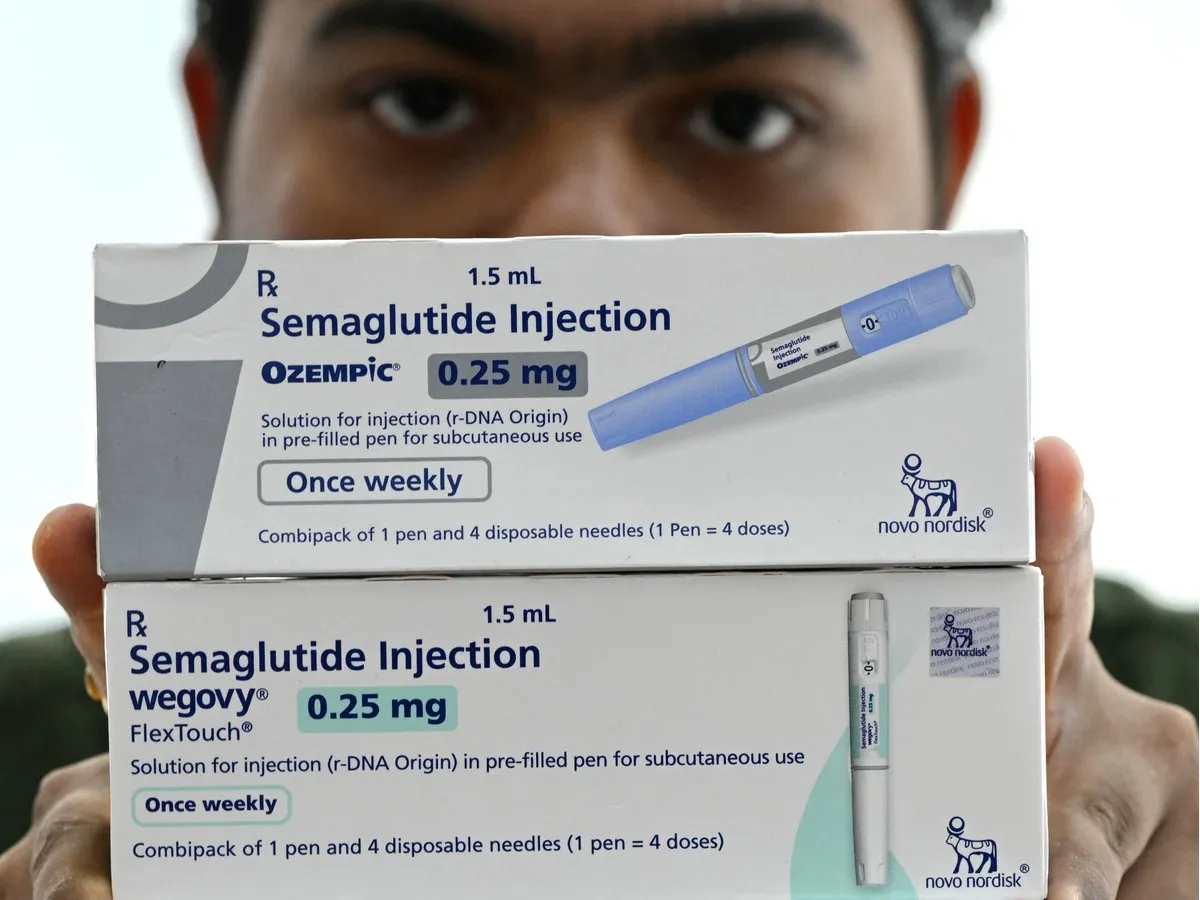
Skip to Content Subscribe Our Offers My Account Manage My Subscriptions FAQ Newsletters Canada Canadian True Crime Canadian Politics Health World Israel & Middle East Financial Post NP Comment Longreads Puzzmo Diversions Comics NP News Quiz New York Times Crossword Horoscopes Life Eating & Drinking Style Sponsored Play for Ontario Travel Travel Canada Travel USA Travel International Cruises Travel Essentials Culture Books Celebrity Movies Music Theatre Television Business Essentials Advice Lives Told Tails Told Shopping Buy Canadian Home Living Outdoor Living Tech Style & Beauty Kitchen & Dining Personal Care Entertainment & Hobbies Gift Guide Travel Guide Deals Savings National Post Store More Sports Hockey Baseball Basketball Football Soccer Golf Tennis Driving Vehicle Research Reviews News Gear Guide Obituaries Place an Obituary Place an In Memoriam Classifieds Place an Ad Celebrations Working Business Ads Archives Healthing Epaper Manage Print Subscription Profile Settings My Subscriptions Saved Articles My Offers Newsletters Customer Service FAQ Newsletters Canada World Financial Post NP Comment Longreads Puzzmo Diversions Life Shopping Epaper Manage Print Subscription HomeNP CommentColby Cosh: Did Ozempic kill its Canadian patent?Generic versions of the weight loss drug are about to hit the marketLast updated 17 minutes ago You can save this article by registering for free here. Or sign-in if you have an account.A pharmacist holds a box of Ozempic. Photo by George Frey /BloombergLadies and gentlemen, the moment has arrived: generic versions of the miracle weight-loss drug semaglutide, best known under its corporate trade names of Ozempic and Wegovy, are now beginning to arrive on Canadian pharmacy shelves. This will, perhaps, provide fresh data on one of the great unresolved questions of our time: was Novo Nordisk’s unnecessary loss of its exclusive Canadian rights to the drug a mistake, or an intentional strategy?Enjoy the latest local, national and international news.Exclusive articles by Conrad Black, Barbara Kay and others. Plus, special edition NP Platformed and First Reading newsletters and virtual events.Unlimited online access to National Post.National Post ePaper, an electronic replica of the print edition to view on any device, share and comment on.Daily puzzles including the New York Times Crossword.Support local journalism.Enjoy the latest local, national and international news.Exclusive articles by Conrad Black, Barbara Kay and others. Plus, special edition NP Platformed and First Reading newsletters and virtual events.Unlimited online access to National Post.National Post ePaper, an electronic replica of the print edition to view on any device, share and comment on.Daily puzzles including the New York Times Crossword.Support local journalism.Create an account or sign in to continue with your reading experience.Access articles from across Canada with one account.Share your thoughts and join the conversation in the comments.Enjoy additional articles per month.Get email updates from your favourite authors.Create an account or sign in to continue with your reading experience.Access articles from across Canada with one accountShare your thoughts and join the conversation in the commentsEnjoy additional articles per monthGet email updates from your favourite authorsSign In or Create an AccountorI call it a “great” question intentionally. Most every major event or development in human history can be seen either as an inevitable result of long-accumulating structural forces, or as a contingent and accidental thing that came about by happenstance. Usually there’s no right answer, because we’re limited in our ability to investigate counterfactuals. It is perfectly valid to see the carnage of the First World War as being a logical and necessary implication of, say, weaknesses in the post-Napoleonic settlement of European states that happened a century before. It is equally valid to suggest that if the Archduke Ferdinand’s driver had taken a different turn on June 28, 1914, the war might not have come about at all.This newsletter from NP Comment tackles the topics you care about. (Subscriber-exclusive edition on Fridays)By signing up you consent to receive the above newsletter from Postmedia Network Inc.We encountered an issue signing you up. Please try againCanada’s Ozempic question — how did we come to be the first Western country to have a competitive market in semaglutide? — is a bit like that. The story was originally cracked open a year ago by pharmacochemist/news analyst Derek Lowe, who noticed an interview with a Sandoz Group executive who had mentioned that Novo Nordisk seemingly let its guard down in the Canadian market. Lowe ran down the Canadian paper trail and confirmed that Novo Nordisk had failed to pay a fee of a few hundred bucks to obtain a routine extension on its Canadian patent. It thus lost about two years’ worth of protection from the underpriced generic rivals that are now materializing.That became the popularly accepted version of the story. Someone at Novo Nordisk had screwed up some paperwork, at a cost possibly amounting to nine or 10 digits. Canada is often said to be the second-largest market for semaglutide, not just because of medium-high domestic obesity prevalence but because we’re pressed flat up against the United States like an unlucky airline passenger.However, as the popular “happenstance” hypothesis spread on social media, analysts and lawyers in the drug trade began to push back, pointing out that a company the size of Novo Nordisk has unfathomably complicated and rigorous systems to track and defend the status of its patents in all countries of any significant size. Me, I don’t have any special knowledge of drug economics: my prejudice is that it’s obviously possible that there was a slip-up, and there’s a faint scent of turf defence by the intellectual-property experts here. Drug companies have complicated IP-defence systems because keeping track of the world’s legal landscapes is inherently complicated; but, for the moment, and perhaps only for a moment, those systems are still made of human beings, who are subject to biological laziness and stubbornness and flakiness.An English biochemist/lawyer named Carolyn Rogers, among others, ventured the theory that Novo Nordisk dropped the patent intentionally to elude Canadian price regulations applicable to patented medications — regulations which happened to be intensifying at around that time because American market prices were being dropped from the algorithm. For as long as a company is making a drug exclusively, they are bound, in Canada, by a price control involving international comparisons. The moment there are competitors, even hypothetically, they are free from those restrictions. So the apparent patent “fumble” might have been a conscious strategic decision, possibly a sound one.One problem with this analysis is that there’s no real escape from drug-price controls, not in Canada: when it comes to generic drugs, you in fact run into a different algorithm immediately, because the provinces have Voltroned up and created a “Pan-Canadian Pharmaceutical Alliance” (PCPA) that sets maximum eligible prices for generics under public-funded health plans. It’s not direct price control, but because of the purchasing power of the provincial drug plans, it’s the next best thing — and the PCPA rules force allowable prices downward, step by step, as more generic providers enter the market for a drug.The precise force of that effect is what we’re about to witness. What will consumer-facing prices for Ozempic and its generic knockoffs actually look like in the coming months? The expectation, based on the PCPA system, is that the alterna-‘zempics will be available at about half the reference price for the brand-name drug. It’s always possible that Novo Nordisk just wanted real-world data on consumer behaviour from Canada — and data on how fast generic manufacturers could ramp up — before its patents start falling off the IP tree everywhere else.National Post Join the Conversation This website uses cookies to personalize your content (including ads), and allows us to analyze our traffic. Read more about cookies here. By continuing to use our site, you agree to our Terms of Use and Privacy Policy.
Colby Cosh: Did Ozempic kill its Canadian patent?
Generic versions of the weight loss drug are about to hit the market
1,277 words~6 min read