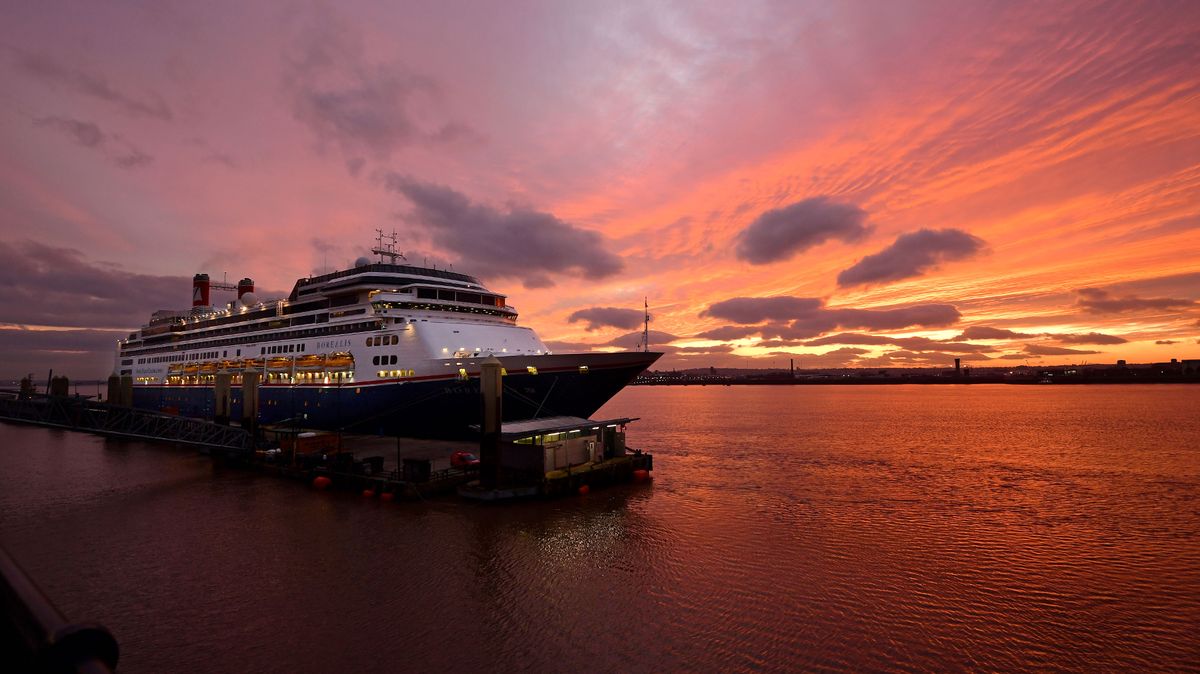
David C Tomlinson / Getty Images
A ship changes the way the world is organized. On land, the distance between Paris and Normandy is a logistical obstacle. A train journey, a rental car, a succession of transfers separate the city from its most historically consequential nearby landscape. On the Seine, it is the scenery itself, unfolding at river pace through medieval town centers and impressionist landscapes that road travel passes too quickly to absorb. The same logic applies everywhere cruising intersects with itinerary design: the Nile is not just a route between Cairo and Aswan but a living artifact of the civilization it sustained, and the Norwegian coastline is not merely the background to a Scandinavian tour but the geographical argument for why the Viking world existed where it did. Cruising makes geography legible in a way that other forms of travel rarely achieve.
The range of what a cruise now encompasses has expanded well beyond the Caribbean resort-at-sea format that defined the category for most of the 20th century. Expedition vessels cross the Drake Passage to Antarctic ice fields. Luxury riverboats the size of a large house navigate the Chobe on safari. Small sailing yachts tuck into Greek harbor towns too shallow for conventional cruise ships. Eclipse chasers book specific dates specifically to be at sea when the path of totality passes over open water. The decision of which itinerary to book has become as consequential as any other travel planning choice, because the range of experiences now available at sea spans the whole arc of what travel can mean. The spectrum runs from the purely scenic to the genuinely transformative, and the ship type, the route, and the operator all shape which end of that spectrum a particular voyage inhabits.