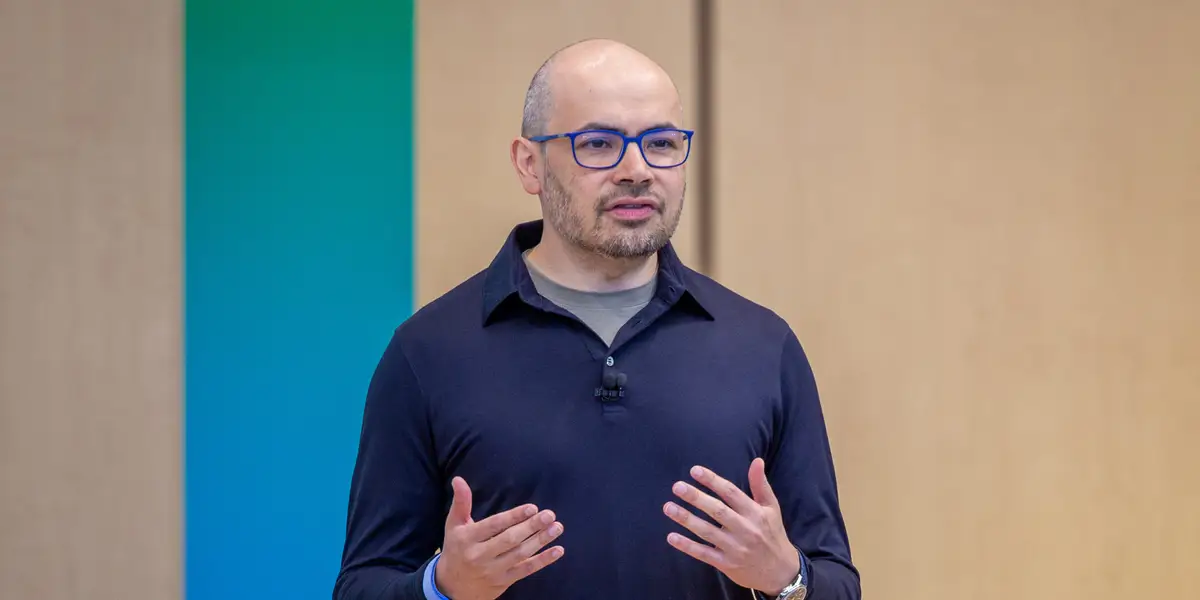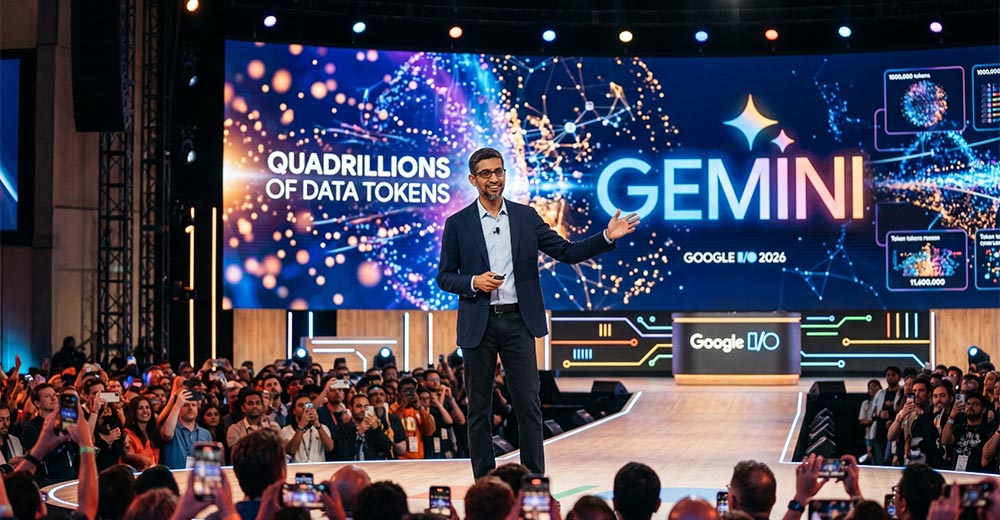
During Tuesday’s Google I/O keynote, Demis Hassabis, the CEO of Google DeepMind, proclaimed that we are currently “standing in the foothills of the singularity.” It was a striking statement—the singularity is the theoretical future moment when AI rapidly exceeds human intelligence and dramatically transforms the world. But what struck me as I listened in the audience was the context in which he said those words. He was on stage to close out the session with a segment on scientific AI, the centerpiece of which was a video detailing how the company’s weather prediction software provided an advance alert about Hurricane Melissa’s catastrophic landfall in Jamaica last year—and potentially saved lives. If that software, called WeatherNext, helped anyone escape the storm or better fortify their home, that’s an enormous and meaningful achievement. But it’s hardly evidence of an impending singularity. The juxtaposition of Hassabis’ lofty rhetoric with the real-world results of WeatherNext highlighted the tension between two very different approaches to AI for science. The first focuses on AI tools, like WeatherNext, that are designed and trained to solve specific scientific problems. The second is agentic, LLM-based systems that could one day execute cutting-edge research projects without human involvement. This second vision powers a great deal of AI enthusiasm right now, including recent excitement around recursive self-improvement, or the idea that AI systems could eventually become the primary drivers of AI advancement—a process that would get faster and faster as the AI systems grow smarter. And agentic systems are now making real research contributions, sometimes with limited human guidance.
Google I/O showed how the path for AI-driven science is shifting
Two years ago, an AI tool won Google DeepMind a Nobel. Researchers are now climbing toward a new goal.
1,122 words~5 min read