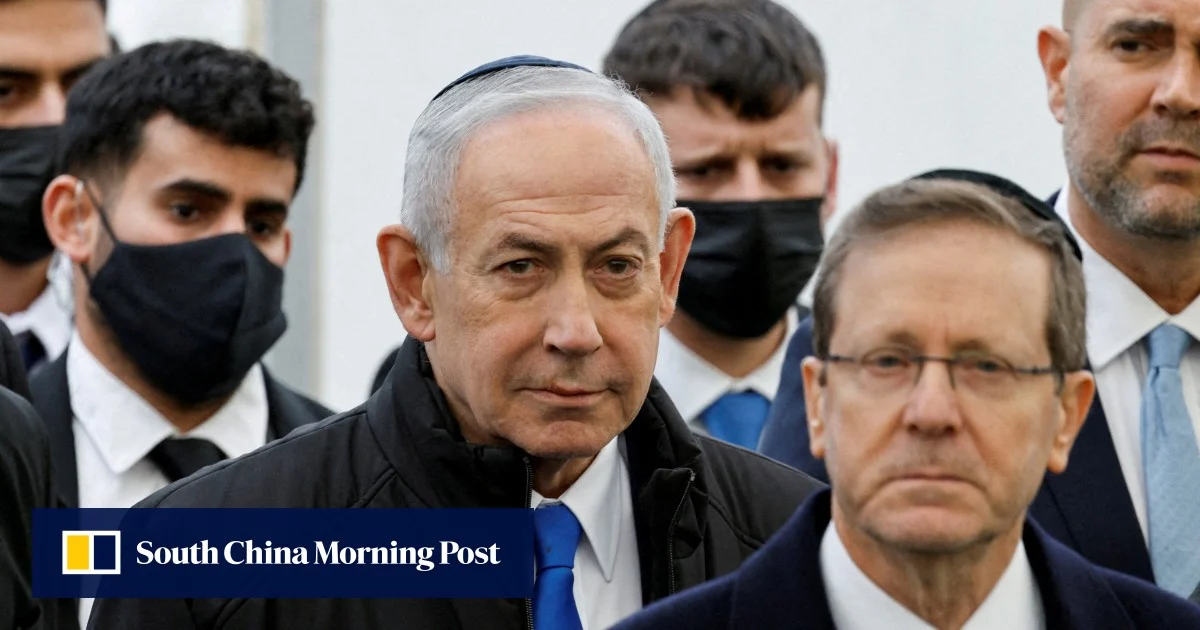
While South Korean President Lee Jae Myung lambasted Israeli Prime Minister Benjamin Netanyahu as a “war criminal” after two Korean activists on a Gaza-bound aid flotilla were detained by Israeli forces, Tel Aviv has avoided directly responding to the remarks, instead focusing on managing bilateral relations with Seoul. Israel’s response appears to reflect an awareness of the need to manage ties with South Korea, as well as mounting international criticism of its conduct. According to South Korea’s Blue House and Ministry of Foreign Affairs, Israel’s Foreign Ministry conveyed through diplomatic channels that it hoped the recent incident would not affect Israel-South Korea relations and that ties would continue to develop. Two South Korean activists were not sent to detention facilities but released and deported, and returned to Korea on Friday morning. The “recent incident” that Israel referred to can be interpreted as encompassing both the arrest (Monday) and release (Wednesday) of the South Korean nationals aboard the Gaza-bound flotilla, and Lee’s sharp criticism of Israel. In a Cabinet meeting held Wednesday, Lee said it was “out of line and inhumane to detain Korean citizens for reasons that are unjustifiable under international law.” Referring to Netanyahu, for whom the International Criminal Court has issued an arrest warrant, as a “war criminal,” Lee instructed officials to review measures to enforce ICC’s arrest warrant. Diplomatic circles are concerned that Lee’s forceful remarks could hurt South Korea-Israeli relations. However, Israel chose not to directly address such comments, instead using diplomatic channels to convey its position on the matter, which was more focused on maintaining friendly ties. This stands in stark contrast to how Israel reacted when Lee castigated the country on X in April while sharing a video showing Israeli soldiers throwing a body off a roof. Back then, Israel’s Foreign Ministry called Lee’s remarks “unacceptable.” Some analysists say Israel’s shift in tone reflects growing international condemnation of its behavior toward the Gaza-bound aid flotilla, after footage emerged of Itamar Ben-Gvir, the far-right Israeli minister of national security, taunting flotilla activists — forcing them to kneel and pushing their heads to the floor, all while shouting, “Welcome to Israel, We are the landlords” — sparking outrage. More than a dozen countries have denounced Israel for its actions, leading to growing criticism. However, Israel is still maintaining a hard-line attitude toward the Gaza Strip. The Israeli Embassy in Korea issued a statement Thursday saying that the flotilla was not a humanitarian mission but instead a “provocation” intended to attack Israel and distract it from its mission of combating terror. The embassy emphasized the legitimacy of Israel’s actions, stating that the flotilla that included South Korean nationals, was an attempt to undermine US President Donald Trump’s efforts to bring peace to the region and emphasizing the country’s “lawful” naval blockade of Gaza. The embassy said that the right to arrest aid vessels is delineated in international law’s Law of Naval Warfare, which it said stipulates the right to arrest vessels that threaten established sea blockades. During Wednesday’s Cabinet meeting, Lee asked if the international waters in the Mediterranean where the Gaza-bound flotilla was intercepted were “Israel’s territorial waters,” and if it was standard for “belligerents” to “seize other countries’ ships during hostilities.” An official with South Korea’s Foreign Ministry said the ministry was reviewing international law in regard to Lee’s comments.
Despite Lee’s jab at Netanyahu, Israel conveys hope of developing bilateral ties
After the president criticized Israel for seizing boats carrying Korean nationals, Israel used diplomatic channels to convey its hope to develop ties rather than clapping back on social media
555 words~3 min read