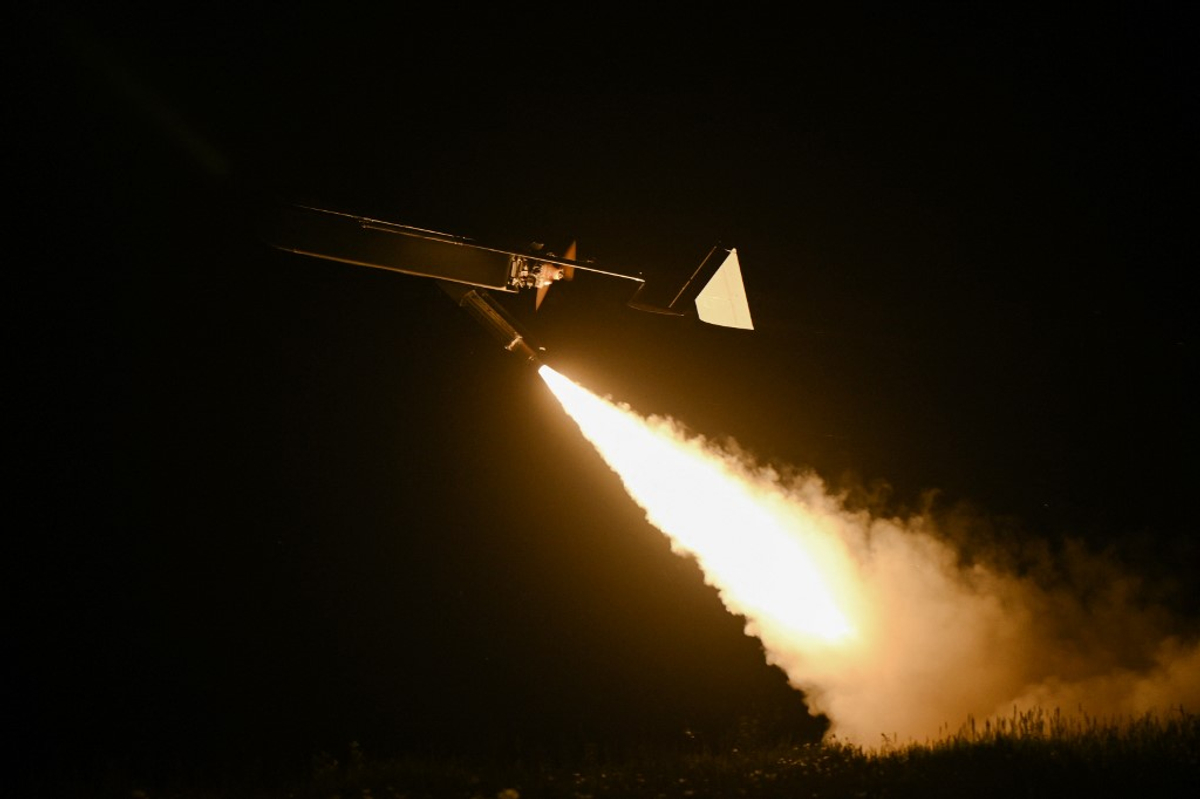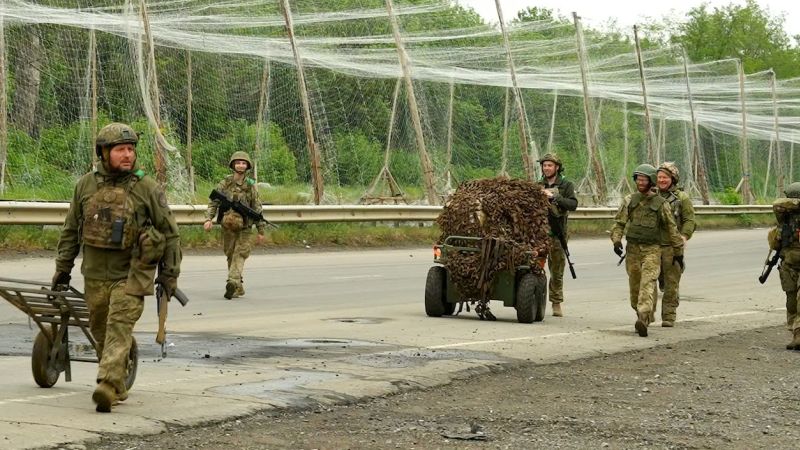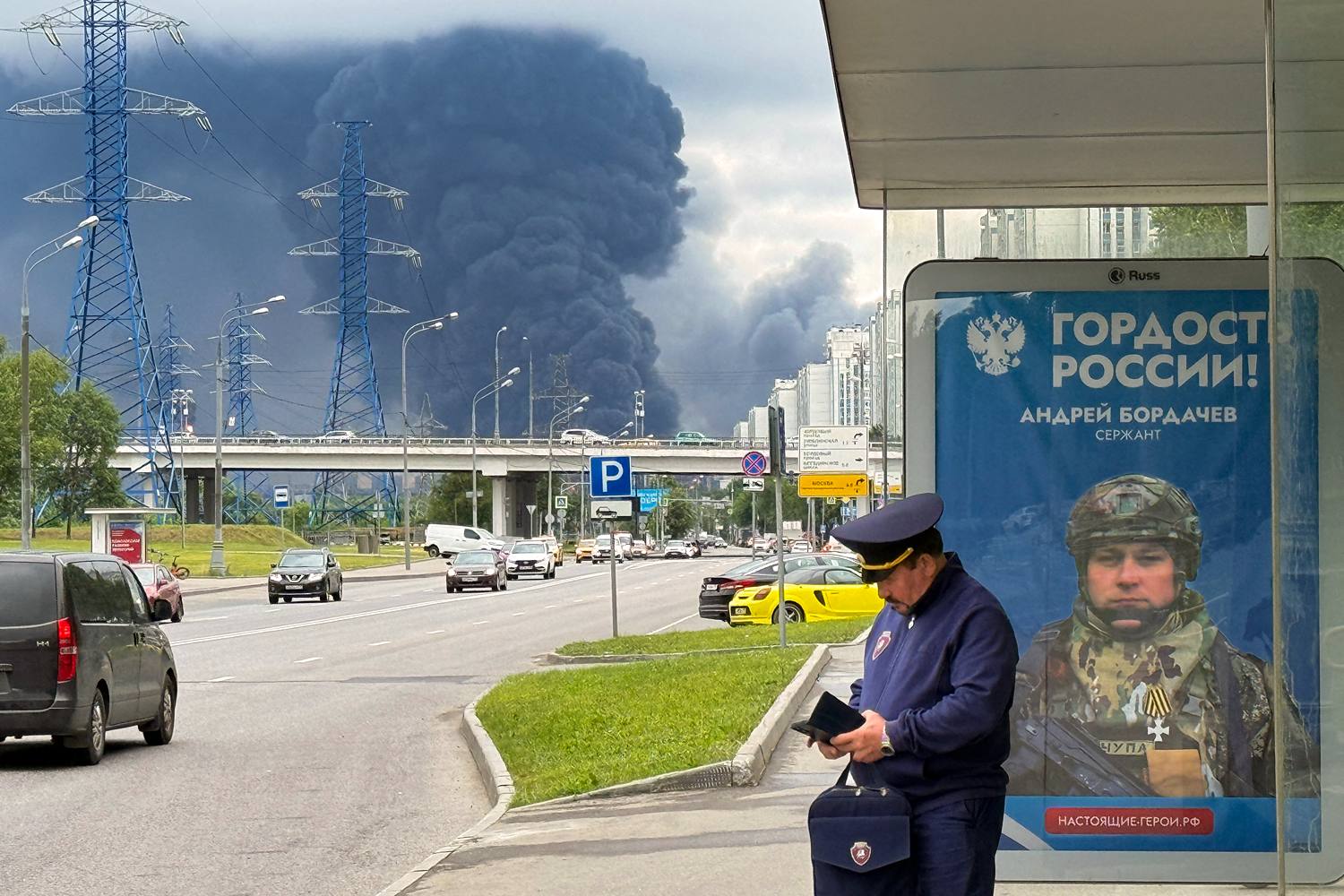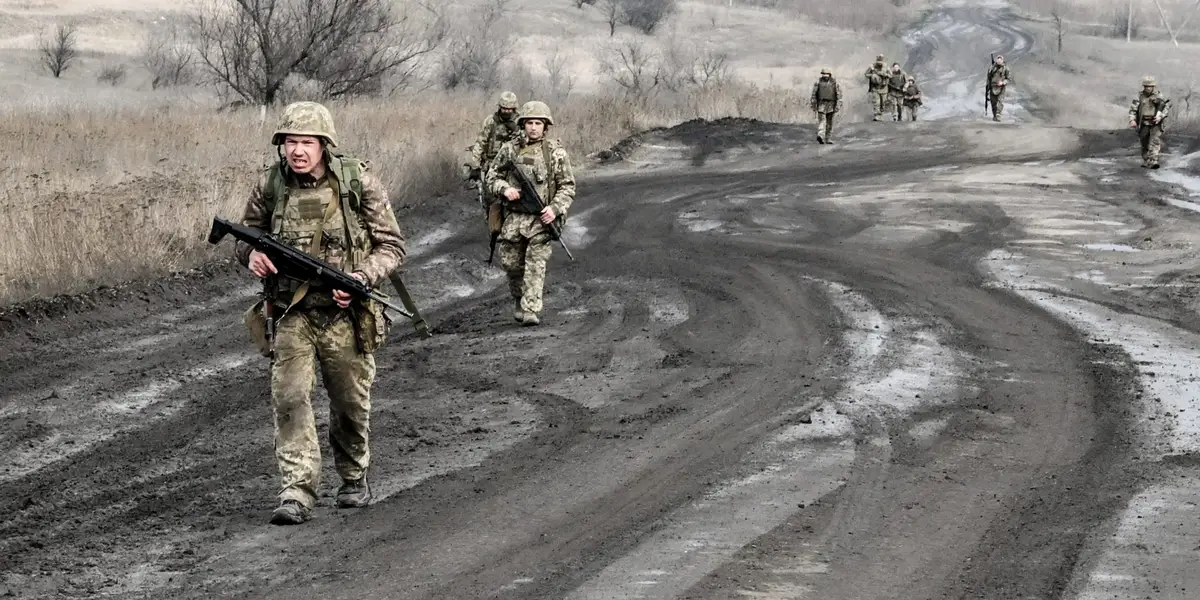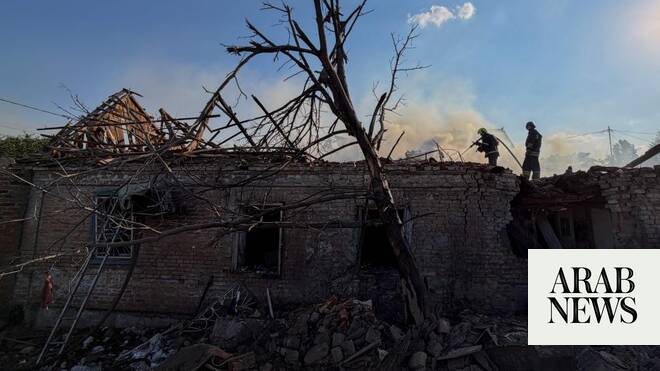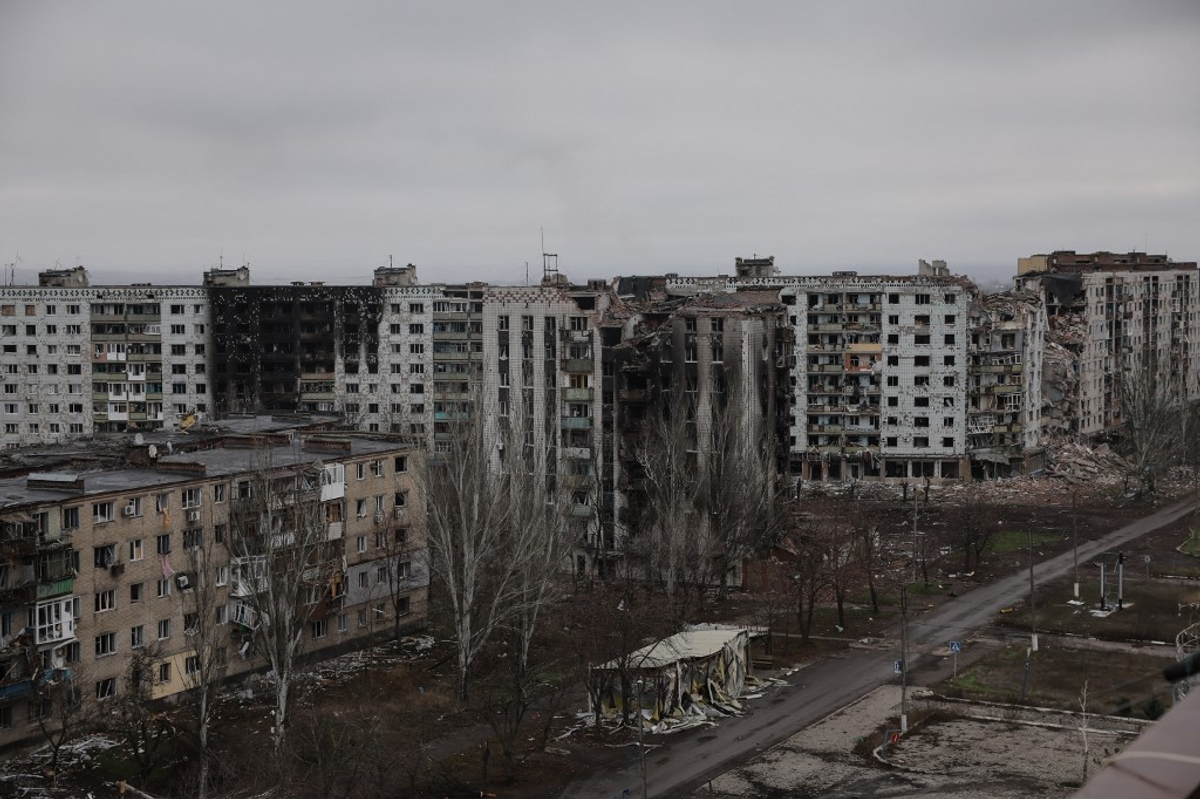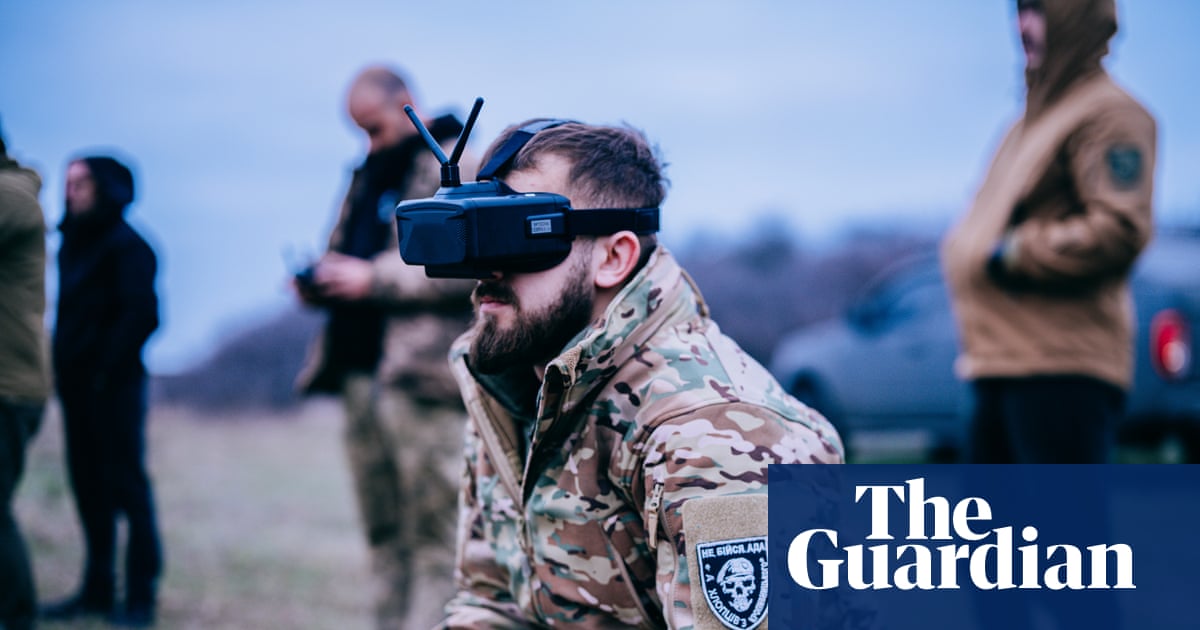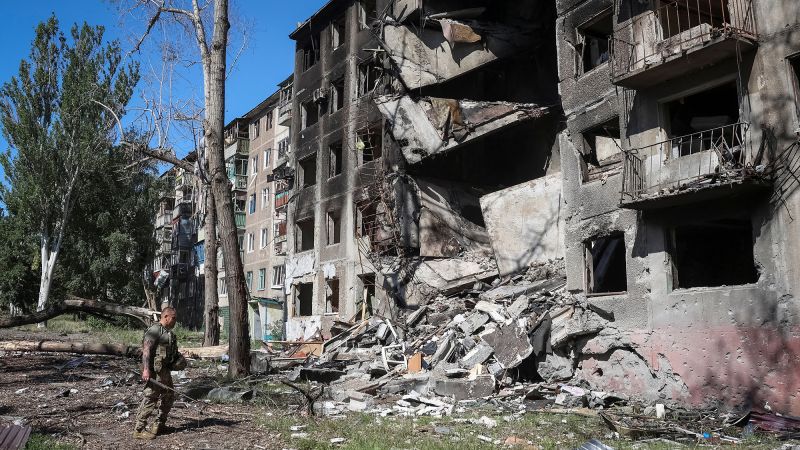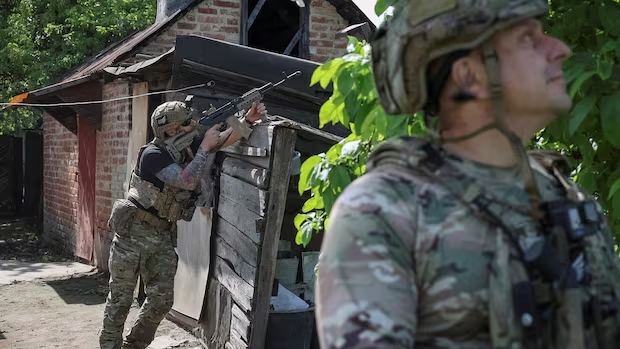
As Major Oleksandr described the situation in Ukraine’s embattled Donetsk region, he apologized that his eyes sometimes strayed from his laptop camera to a monitor beside him, where he could see feeds of Ukrainian drones flying near Kostyantynivka.The city represents one of the most dangerous sections along the sprawling frontline.“They’re trying to push toward the city centre. In some places they succeed, but our brigade and other units destroy them every day,” Oleksandr told CBC News.“Before, there were assaults with vehicles and armoured equipment. Now, it’s daily infiltrations — groups of two or three under cover of vegetation.”Oleksandr, who goes by the callsign Perepel, which means quail, is the chief of staff for the drone battalion Spalakh, or flare. It operates under the 28th Mechanized Brigade. As per Ukrainian military protocol, he is not being identified by his full name. His team uses reconnaissance and combat drones along an ever-expanding “grey zone” near Kostyantynivka, a besieged city about 20 kilometres south of Kramatorsk. Oleksandr says the grey zone — a shifting, fluid area where neither Russia nor Ukraine is in full control — used to stretch roughly three to five kilometres, but it has expanded to 15 to 20 kilometres in the area where his team is based.With the sky saturated by drones, it's difficult for either side to move troops, let alone large columns of vehicles or weaponry.As Ukraine enters its fifth summer fighting off Russia’s full-scale invasion, military analysts say the country may hold a slight tactical advantage in some sectors, having clawed back territory and further stalled Russian forces. But experts are cautious not to overstate Ukrainian momentum, particularly because drone warfare has created an ambiguous and volatile grey zone across parts of the front. A Ukrainian serviceman prepares a Gara, a Ukrainian multifunctional unmanned aerial vehicle equipped with artificial intelligence elements, near the frontline in Donetsk region on May 18. (Anatolii Stepanov/Reuters)Ukraine gaining some groundIt's become much harder to demarcate a clear division between Russian and Ukrainian forces.“It creates a very large space where it is difficult to assess exactly the control of areas…. Positions are intertwined,” said Yurri Clavilier, a research analyst at the Defence and Military Analysis Programme at the International Institute for Strategic Studies.“It is kind of difficult to frame it the same way we could three years ago.”An image taken at a funeral for a Russian soldier on Feb. 18, 2006. Estimates vary around how many Russian soldiers have been killed in the full-scale invasion that began in 2022, but a media project to track the deaths believe the the number is over 350,000. (Anton Vaganov/Reuters)In a May 20 battlefield assessment, researchers with the Washington-based Institute for the Study of the War wrote that Ukrainian forces “appear to be regaining the tactical initiative in different sectors of the frontline.”Researchers concluded that Ukraine has made several counterattacks in recent months that have contributed to its most “significant gains on the battlefield” since its incursion into Russia’s Kursk oblast in August 2024.Near the end of last year, Ukraine recaptured much of the city of Kupiansk and, more recently, several settlements in the western Zaporizhzhia region.Claims of mounting Russian casualitesEarlier this month, Ukrainian Defence Minister Mykhailo Fedorov said that Ukrainian soldiers were inflicting casualties on Russia’s forces in April at a greater rate than Moscow was able to recruit. On Wednesday, while participating in a virtual meeting with NATO members, Oleksandr Syrskyi, the commander-in-chief of the Ukrainian Armed Forces said that at least a thousand Russian soldiers are killed and/or wounded every day. Estimates of Russian military deaths are in the hundreds of thousands. Independent Russian outlet Mediazona, working with BBC Russian Service, has tracked names of the dead and estimates that more than 350,000 Russian soldiers have been killed.In this photo provided to CBC News by the 24th Mechanized Brigade, a soldier aims his gun at the sky in an attempt to bring down a Russian drone. (24th Mechanized Brigade)In an interview with France 2 TV, Ukrainian President Volodymyr Zelenskyy said that 55,000 Ukrainian soldiers had been confirmed killed since Feb. 24, 2022, but that number doesn’t include the tens of thousands listed as missing. Clavilier, says unlike in Bakhmut, where Russia relied on a seemingly constant flow of fighters including from the private Wagner Group to slowly inch forward, that doesn’t appear to be happening now. “The Russians are stalling and the Ukrainians are managing to hold them quite efficiently and in some places push them back.”Russia fires dozens of drones at Ukraine in 'obvious spurning' of ceasefire, says ZelenskyyUkraine beefs up northern defences, points to risks of new Russian offensive north of KyivIn Kostyantynivka, netting hangs above key logistical roads, an attempt to prevent strikes from the continuous drones hovering above. Earlier this week, Kostiantyn Melnykov, a spokesperson for the 24th Brigade, accompanied a CNN crew on one of these roads that was targeted several times by Russian drones. “The road from Kostyantynivka is essentially under constant drone surveillance, and almost any movement is targeted,” he told CBC News in an interview by Zoom. WATCH | End of 72-hour ceasefire:Air raid sirens sound in Kharkiv as 72-hour Russia-Ukraine ceasefire endsMay 11|Duration 5:37A U.S.-brokered 72-hour truce between Russia and Ukraine is set to end on Monday. Both sides are accusing each other of breaching it. Journalist Emmanuelle Chaze reports from Kharkiv, where she says the sound of air raid sirens is a constant.“We’ve repeatedly seen civilians trying to leave on foot or by car. Unfortunately, for the enemy there’s no distinction regarding who is moving.”He says Russia is continually improving his drone technology, saying that now a single drone can carry both a day and night camera, which makes it easier to spot those trying to obscure themselves and seek cover under the canopy of trees. “The enemy is adapting and shouldn’t be underestimated,” he said. “Even if they lack major operational success in our sector, we see improvements." Meanwhile, the kill zone, where combat drones are able to take out targets, continues to get larger, he said.Potential push near PokrovskAround 50 kilometres to the southwest, it appears that Russia is trying to concentrate forces in an effort to advance further near the city of Pokrovsk. Russia claimed it captured the strategically located city near the end of last year after a year-long offensive, but Ukraine says it maintains some positions in the community. “The aggressor is bringing up and camouflaging its artillery,” said Col. Volodymyr Polevyi, head of the communications department of the 7th Rapid Response Corps of the Ukrainian Armed Forces.“But the situation is under control.”WATCH | Ukraine's UGVs:Ukraine’s killer robots | About ThatApril 24|Duration 2:28Five years into the war with Russia, Ukraine faces persistent manpower problems. Andrew Chang explores the advantages and limitations of using unmanned ground vehicles (UGVs) on the front line, in Ukraine and beyond.
Ukraine makes some battlefield gains, but 'grey zone' along front is getting bigger | CBC News
Ukraine has been recapturing some territory and in other areas are stalling Russian forces, but drones have made it much harder to determine just who controls what in the volatile grey zone.
1,283 words~6 min read