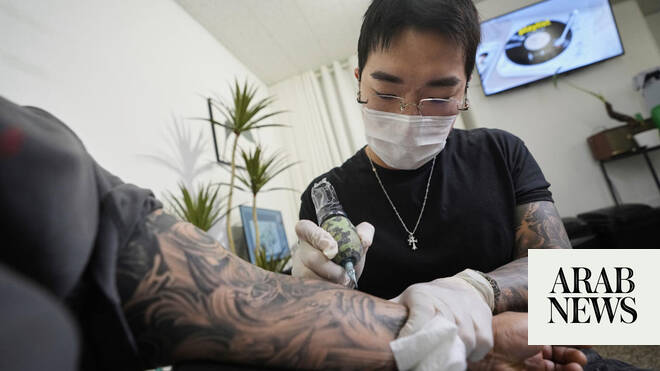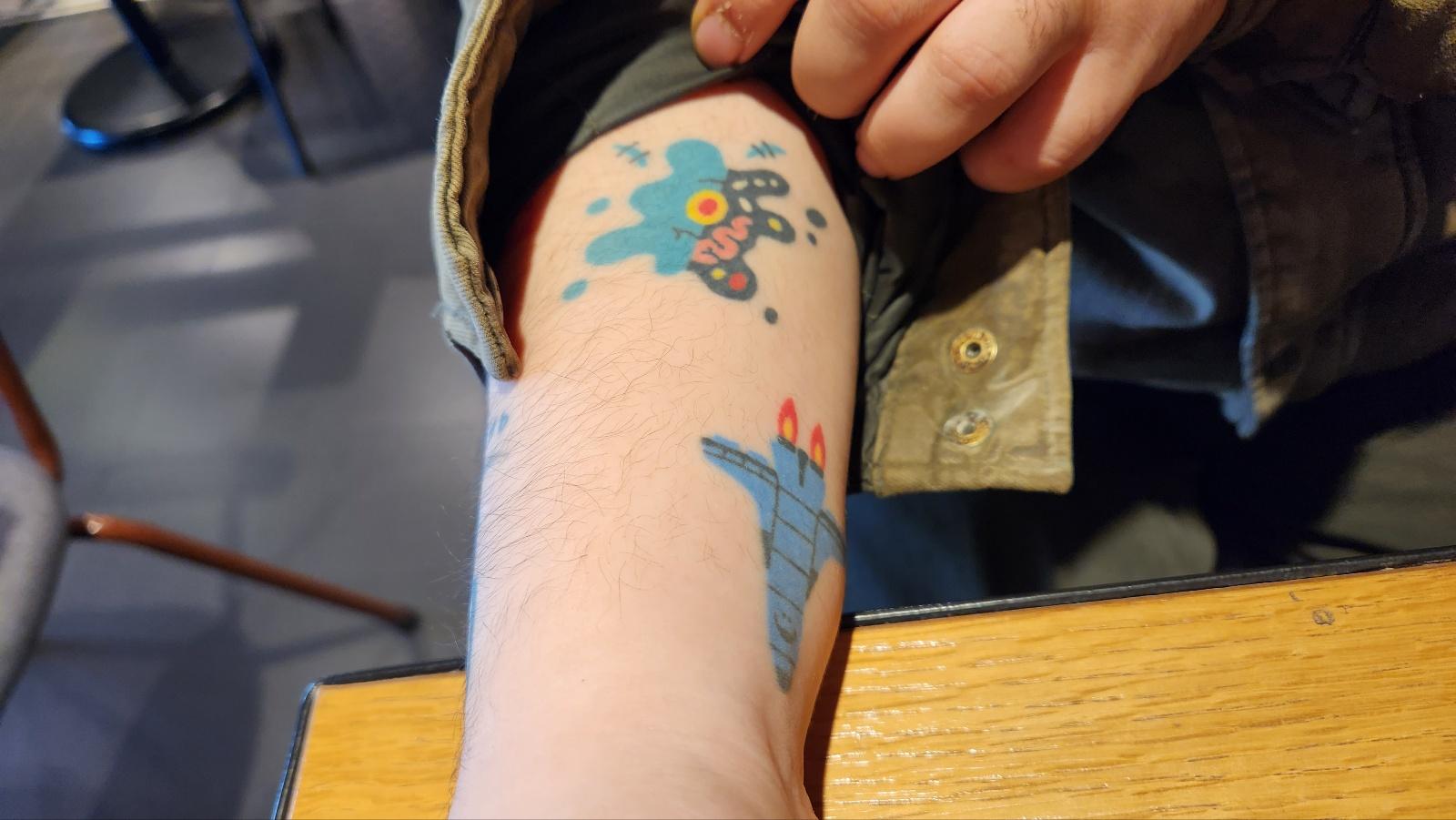
(123rf) A landmark ruling by the Supreme Court on Thursday stated that tattoo procedures performed by nonmedical practitioners do not constitute illegal medical practice, overturning a 34-year-old legal precedent that had effectively criminalized tattooing by nondoctors.The Supreme Court’s full bench unanimously overturned lower court rulings that had fined two tattoo artists for violating the Medical Service Act, sending the cases back to lower courts with suggestions to acquit them.“The act of tattooing existed widely before the emergence of medical professionals with specialized medical knowledge and developed as an independent profession distinct from medicine,” the court said in its ruling.The court added that tattooing is generally unrelated to disease prevention or treatment and instead requires aesthetic knowledge, technical skill and experience rather than medical expertise equivalent to that of doctors. It also cited technological advances, including safer tattoo machines that automatically regulate needle depth, and broader public awareness of hygiene and safety issues related to tattoos.Major step in legalization of tattoo artistsThe decision marks a major shift from a 1992 ruling in which the Supreme Court classified tattooing as a medical act. The legal precedent set by the country's highest court was used as a basis for subsequent rulings, which said tattoo procedures by nonmedical practitioners are punishable as unlicensed medical practice.Crucial steps toward legalizing tattooing by non-medical experts have already been taken, with the National Assembly passing the so-called Tattooist Act in September last year. Though this will officially allow nonmedical practitioners to perform tattoo procedures beginning in October next year, the recent ruling made it clear that such procedures are legal even before the new law's implementation.In Friday's ruling, justices further emphasized constitutional rights, saying interpretations of the Medical Service Act should protect the freedom of occupation and expression of tattoo artists, as well as the rights of individuals seeking tattoos as a form of self-expression.“Tattoos are no longer exclusive to certain groups but have become part of mainstream culture, carrying diverse social and cultural meanings,” the court said.Despite its decision, the Supreme Court noted that tattoo artists could still face criminal punishment under other laws in cases involving bodily injury caused by negligence or violations of public health regulations.Tattoo industry groups welcomed the decision.Kim Do-yoon, a branch leader at the Tattoo Union, called the ruling “perfect,” saying it finally resolved long-standing legal uncertainty for tattoo artists.“Many tattoo artists and small business owners who were unfairly treated can now finally operate their businesses with peace of mind,” he said.
Landmark Supreme Court ruling says tattooing by nondoctors is legal
A landmark ruling by the Supreme Court on Thursday stated that tattoo procedures performed by nonmedical practitioners do not constitute illegal medical practic
411 words~2 min read