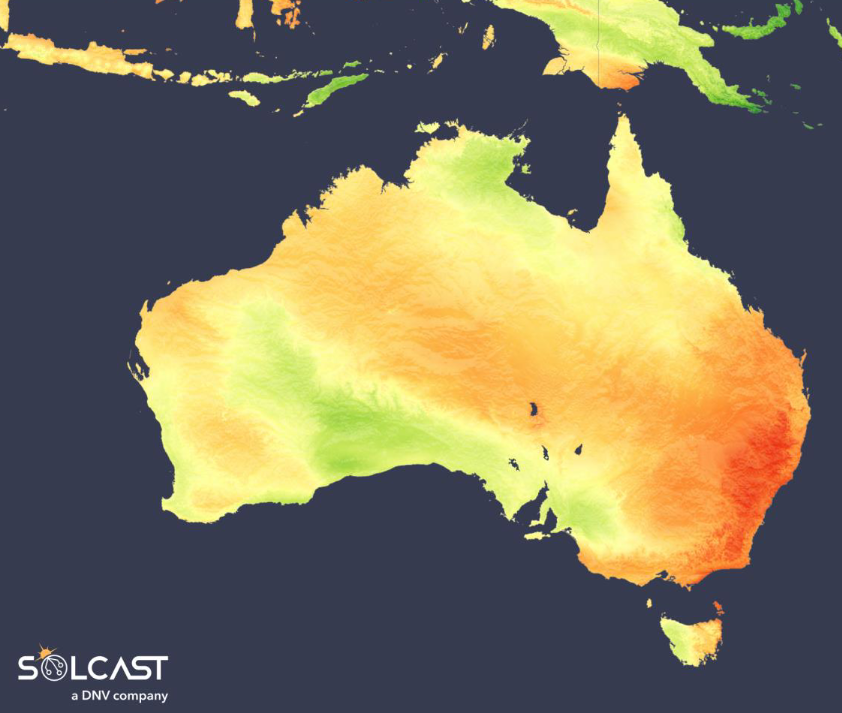
In a new weekly update for pv magazine, Solcast, a DNV company, reports that April 2026 was one of Australia’s driest Aprils in recent years, with widespread rainfall deficits driven by persistent high pressure and ENSO returning to neutral, leading to mostly clear skies and above-normal solar irradiance across much of the continent. New South Wales and Victoria saw the strongest sunshine surpluses, while remnants of ex-Tropical Cyclone Maila brought cloud and rain to the north, creating regional contrasts in rainfall and solar conditions.
May 22, 2026
April 2026 was one of Australia’s driest Aprils in recent years, with a persistent high-pressure pattern and the return of ENSO to neutral conditions combining to suppress cloud cover and lift solar irradiance across much of the continent. According to analysis using the Solcast API, global horizontal irradiance (GHI) tracked above normal in most regions, with New South Wales and Victoria the clear beneficiaries, while cloud and rainfall linked to ex-Tropical Cyclone Maila limited gains in the north.
The dominant weather feature through April was a slow-moving high-pressure system that travelled from the west across southern Australia before stalling in the Tasman Sea. This pattern produced extended periods of clear skies, cool nights, and warm sunny days. Nationally, Bureau of Meteorology reports rainfall totals were 43% below the long-term April average, the lowest since 2018, with every state and territory recording below-average rainfall except the Northern Territory. These conditions coincided with ENSO returning to neutral after La Niña, a phase typically associated with enhanced tropical moisture and cloud across northern and central Australia. The reduction of that moisture influence coincides with a turnaround in fortune for the continent from the cloudier conditions in prior months.