Organizations often call product managers the CEOs of the product. But PMs know that’s a myth. When a CEO wants a status report, they get one immediately. They don’t need to negotiate for engineering time, reconcile conflicting project priorities, or wait for a data scientist to find a gap in their schedule. For most PMs, simply understanding the state of the product is where growth can stall.
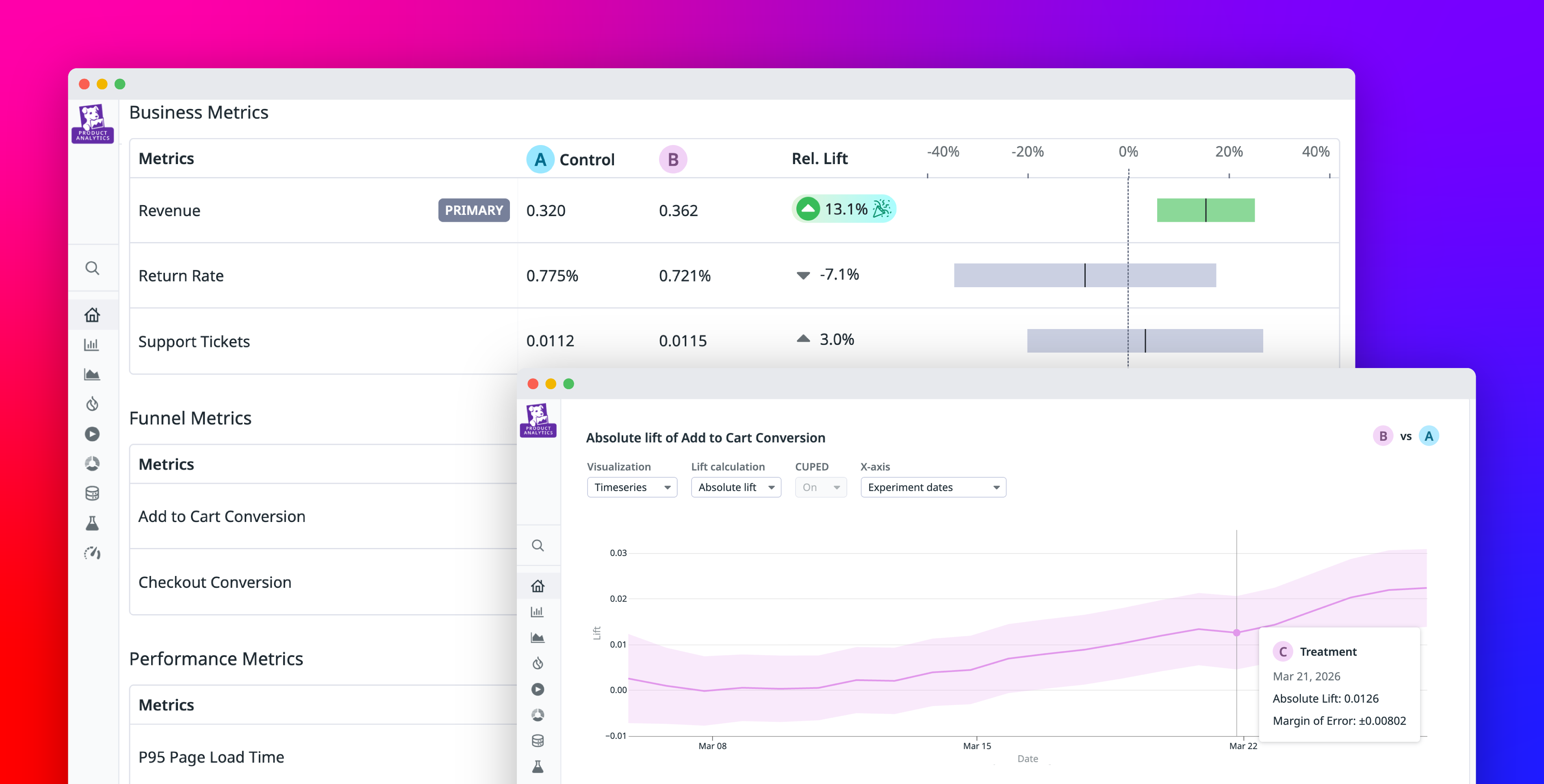
Product teams run on product signals, and those signals arrive at wildly different speeds. Performance data (latency, error rates, uptime) from engineering arrives in seconds. Frustration patterns (rage clicks, failed navigations, tickets) from support surface in minutes. But business metrics (retention, conversion, lifetime value) from a data warehouse can take days or weeks to materialize. Often, by the time a product change is shipped and its impact is confirmed, teams have moved on to new tasks. There’s no time to compound wins or course-correct failures.
The opportunity for PMs is in closing the gap between product signals; not by waiting for slow signals to arrive faster, but by acting on fast ones sooner. In this post, we’ll look at how categorizing your signals by latency changes the way you respond to them. We’ll also look at why the gap between system health and product performance is where teams lose the most ground.