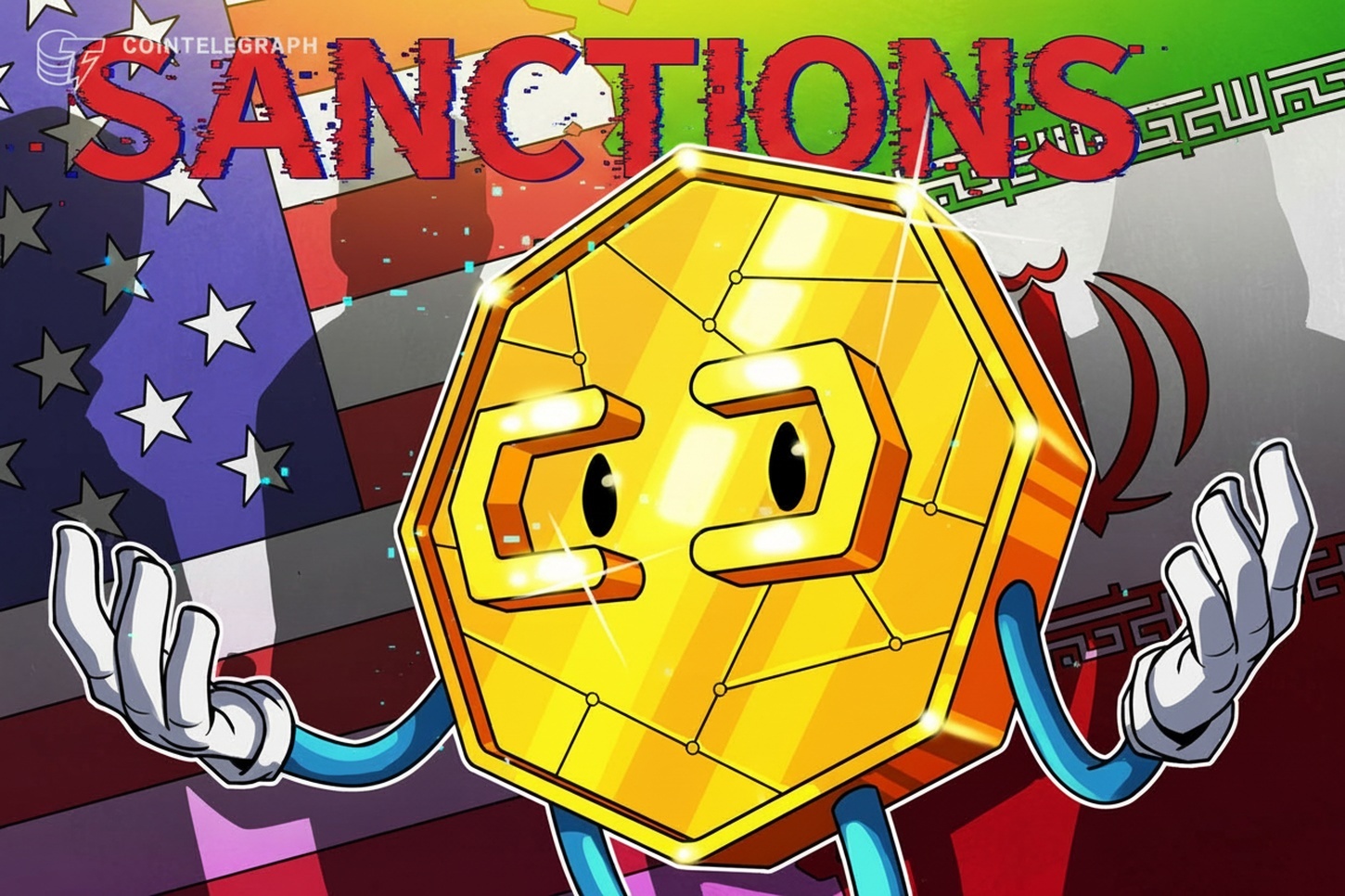
On April 24, 2026, the U.S. Department of the Treasury’s Office of Foreign Assets Control (OFAC) updated its designation of the Central Bank of Iran (CBI), adding new cryptocurrency addresses to its Specially Designated Nationals (SDN) list. The CBI was originally designated in 2019 for its role in providing billions of dollars to the Islamic Revolutionary Guard Corps (IRGC) and Hezbollah.This OFAC action coincides directly with a massive enforcement effort announced the week of April 20, 2026 by Tether and U.S. authorities, which resulted in the freezing of $344 million in USDT ostensibly tied to these newly designated addresses.This designation arrives amidst escalating geopolitical tensions in the Strait of Hormuz, involving new maritime toll collections, opportunistic scams targeting international shipping lines, and IRGC enforcement actions.Below, we explore the context of the updated designation, the Tether seizure, and provide an on-chain analysis of historical CBI-linked addresses.Background: The Strait of Hormuz, new maritime tolls, and geopolitical upheavalOn April 23, the Iranian government publicly announced that the Central Bank of Iran (CBI) had successfully collected its first “toll revenue” from commercial ships transiting the Strait of Hormuz — one of the world’s most critical maritime chokepoints.While Iran’s attempt to impose tolls on international shipping is a significant geopolitical escalation, it has also created a chaotic environment ripe for exploitation by bad actors. Recent maritime intelligence reporting indicates that several shipping companies, attempting to comply with the new toll demands to ensure safe passage, have been duped into paying offshore scammers posing as Iranian maritime authorities.Tragically, because the Iranian authorities did not receive these funds, the duped shipping companies were subsequently targeted and harassed by IRGC naval vessels when attempting to transit the strait.We are investigating the payment mechanisms used for these tolls. Given Iran’s restricted access to the global SWIFT network and traditional dollar-clearing systems, it would be consistent with the Iranian regime’s on-chain activity to accept these transit tolls in cryptocurrency, specifically stablecoins, as we have recently assessed. If confirmed, this would represent a novel state-sponsored use case for digital assets in maritime extortion. We will update this section as on-chain evidence becomes publicly available.Tether and OFAC’s concurrent actions: Freezing $344 millionOFAC’s updated CBI identifiers on the SDN List are linked to a proactive enforcement action executed last week. According to a public statement, Tether collaborated with U.S. law enforcement to freeze $344 million in USDT. A U.S. official stated to CNN that the seized funds were linked to Iran, citing “transactions with Iranian exchanges and a series of transactions routed through intermediary addresses that interact with Central Bank of Iran-associated wallets.”As is visible by open source trackers that monitor publicly visible freezing actions on-chain, TTiDLWE6fZK8okMJv6ijg42yrH6W2pjSr9 and TNiq9AXBp9EjUqhDhrwrfvAA8U3GUQZH81 were both frozen on April 23, 2026 and had balances consistent with Tether’s announcement. These two addresses are included in Friday’s updates to the SDN list, demonstrating how the public and private sectors are working in tandem to prevent the CBI and its IRGC affiliates from accessing the funds through their complex laundering networks.Iran’s heavy reliance on stablecoins is part of the regime’s broader macroeconomic lifeblood: illicit petroleum exports. Concurrent with Friday’s updates to the SDN List, OFAC also designated Chinese “teapot” refineries like Hengli Petrochemical and a sprawling shadow fleet of nearly 40 shipping firms. As we have assessed, Iran’s digital asset networks provide the critical financial infrastructure needed to launder the billions of dollars generated by these shadow fleet vessels back to the IRGC and Iran-aligned terrorist organizations across the region.As Tether CEO Paolo Ardoino noted following the seizure: “USD₮ is not a safe haven for illicit activity. When credible links to sanctioned entities or criminal networks are identified, we act immediately and decisively… We combine blockchain transparency with real-time monitoring and direct coordination with law enforcement to stop funds before they can move.”On-chain analysis: Inside the designated CBI addressesFriday’s OFAC update includes two new cryptocurrency addresses. We have labeled these addresses within our products to ensure compliance teams can screen for exposure.Designated Addresses:
OFAC Updates Central Bank of Iran Designation Following Tether Seizure
OFAC updated its designation of the Central Bank of Iran, adding new cryptocurrency addresses to its Specially Designated Nationals (SDN) list.
1,067 words~5 min read