Charles Long couldn’t decide what to wear.
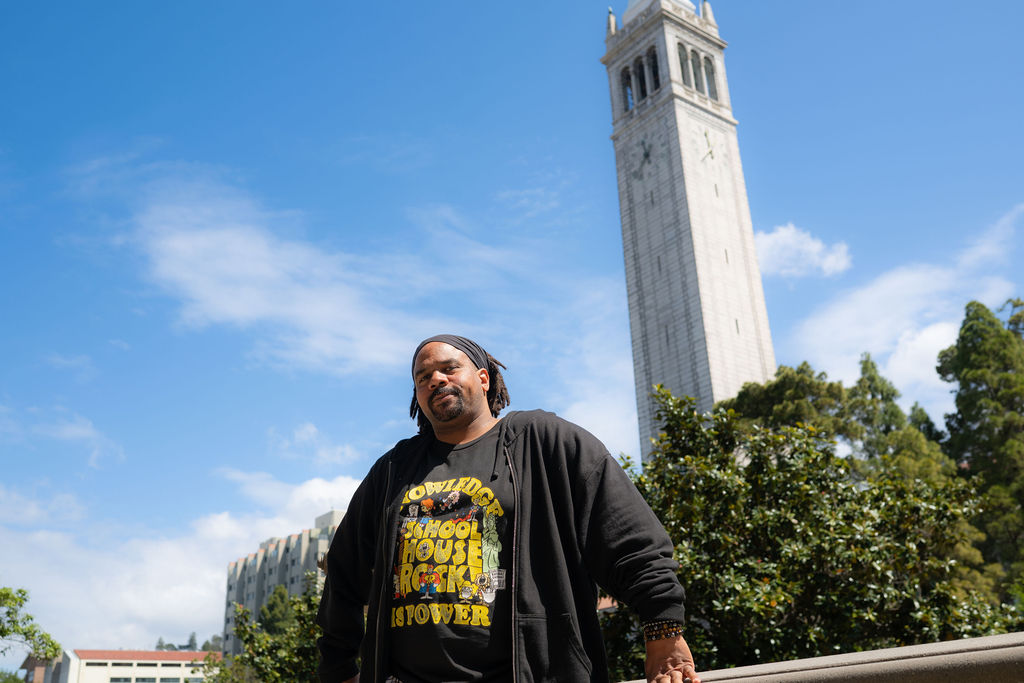
He had doubted that he’d even make it to the final round of consideration as UC Berkeley’s top graduating senior. But there he was, in his University Village bedroom, staring at two options for his interview with the prize committee. To his left was a neatly pressed suit; to his right was a black hoodie.
The suit was the obvious option for past contenders for the University Medal, Long thought. But he also knew that, in many ways, he was unlike those finalists.
At 43, Long was nearly double their age. Though he maintained his innocence, an arrest when he was 18 triggered a multi-year cycle in and out of jail. During short bouts of freedom, he was homeless in San Jose. Long was able to leave the state once his parole ended and, trying to start anew, he explored careers in Las Vegas as a massage therapist and as a computer repair technician. He was “surviving,” he said. But after his daughter was born, he wanted to do more. He wanted to set an example, which led him back to Berkeley.
As a sociology and social welfare double major, Long vowed to show up authentically on campus rather than try to blend in with his peers. Through his studies of policing and violence, he’d come to view his closet filled with black shirts and hoodies as a statement of identity and pride; his trusted black hoodie became a tribute to Trayvon Martin.