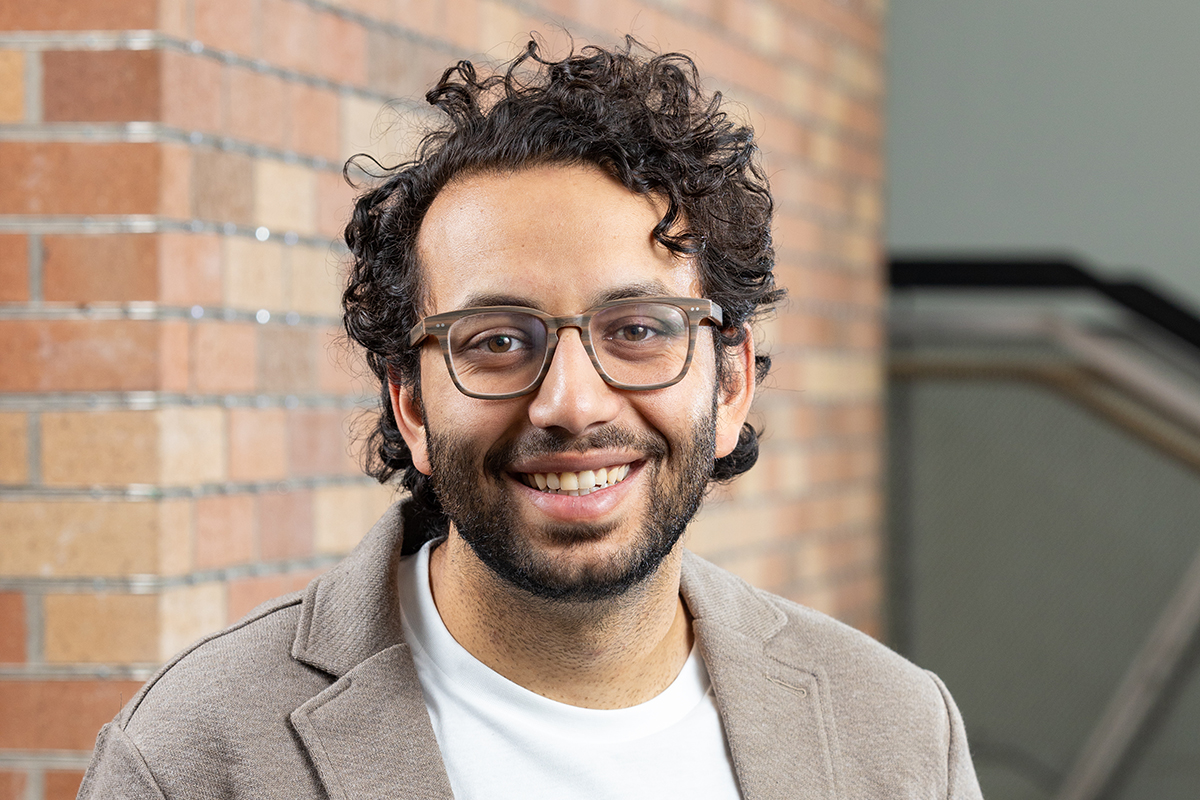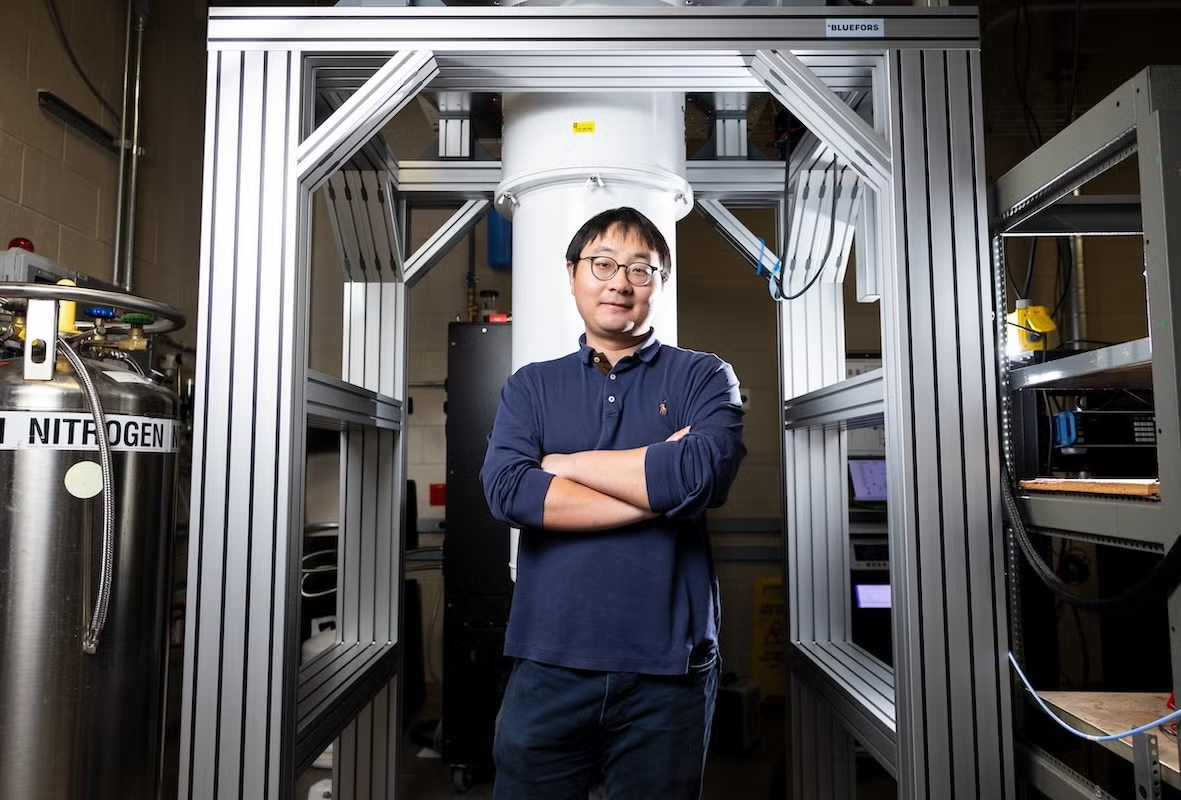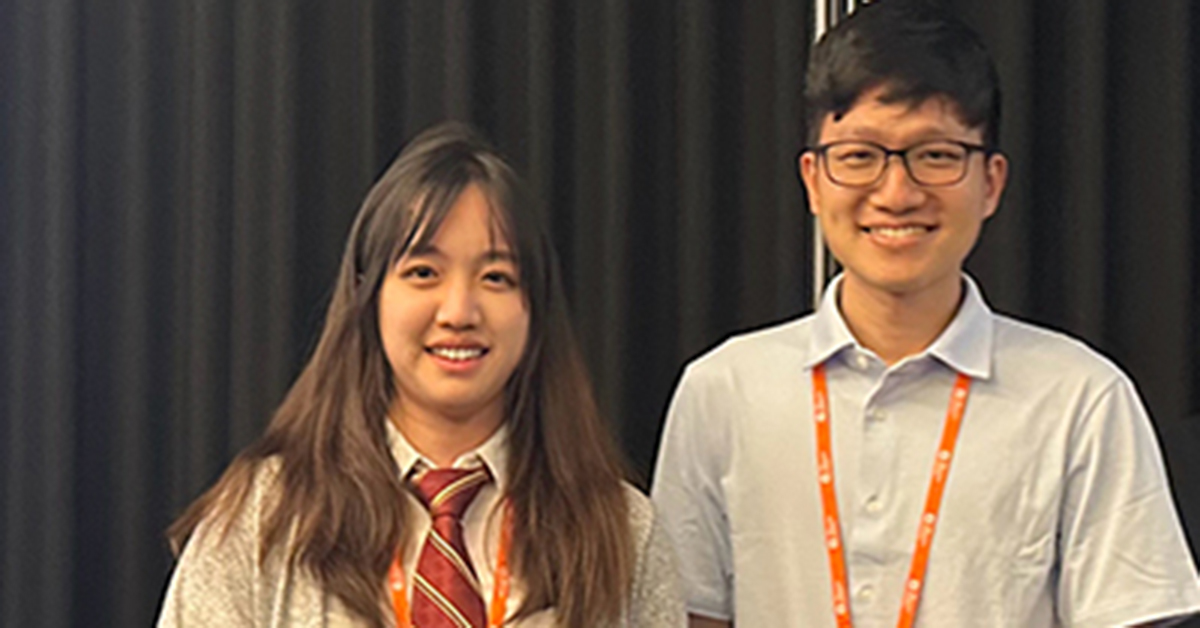
Er-Cheng Tang (right) and Mi-Ying (Miryam) Huang hold the plaque they received for the Machtey Award for Best Student Paper.
Program obfuscation, which aims to obscure the inner workings of a computer program while maintaining its functionality, is a central goal in cryptography and software protection. An emerging line of research explores the possibility of applying obfuscation to quantum programs. So far, however, researchers have only achieved obfuscation in specific quantum circuits — falling short of supporting obfuscation of general quantum input-output functionalities.
Enter Allen School Ph.D. student Er-Cheng Tang and collaborator Mi-Ying (Miryam) Huang, a Ph.D. student at the University of Southern California. The duo recently developed the first quantum state obfuscation scheme for unitary quantum programs, which are the backbone of quantum computing, in the classical oracle model.
“We achieve program obfuscation in the fully quantum setting for the first time, enabling software that runs on quantum data to be provably protected,” said Tang, who is advised by Allen School professors Andrea Coladangelo and Huijia (Rachel) Lin.
Tang and Huang presented their research at the 66th IEEE Symposium on Foundations of Computer Science (FOCS 2025) last December in Sydney, Australia, where they received the Machtey Award for Best Student Paper.