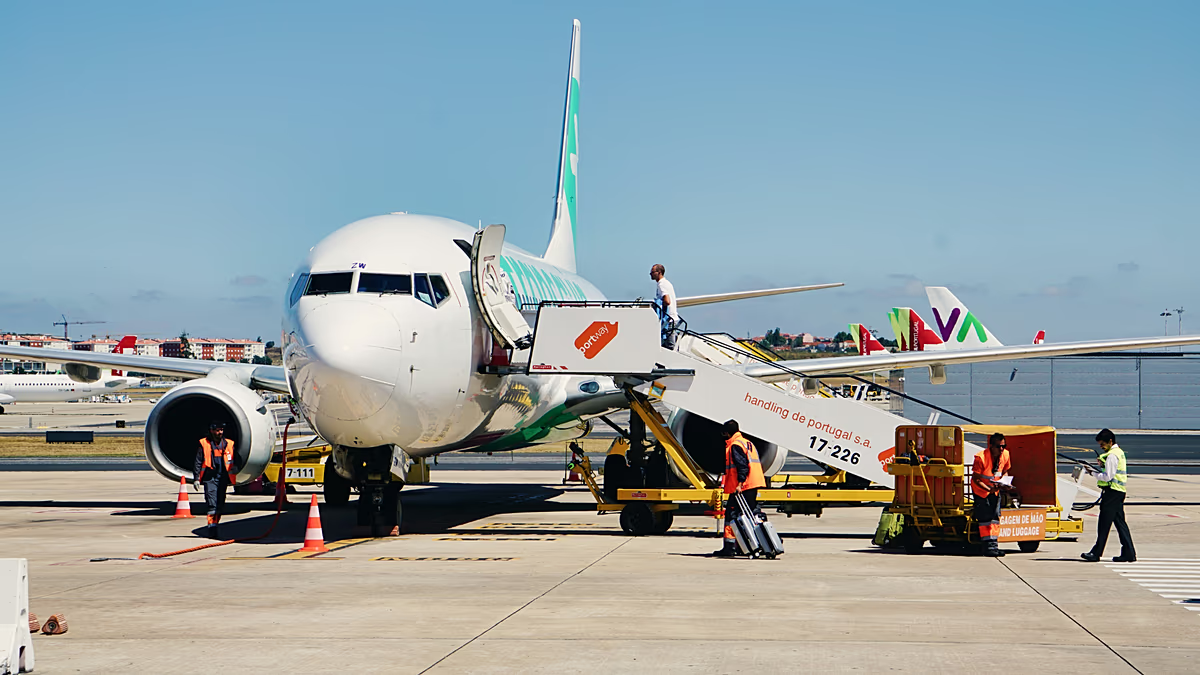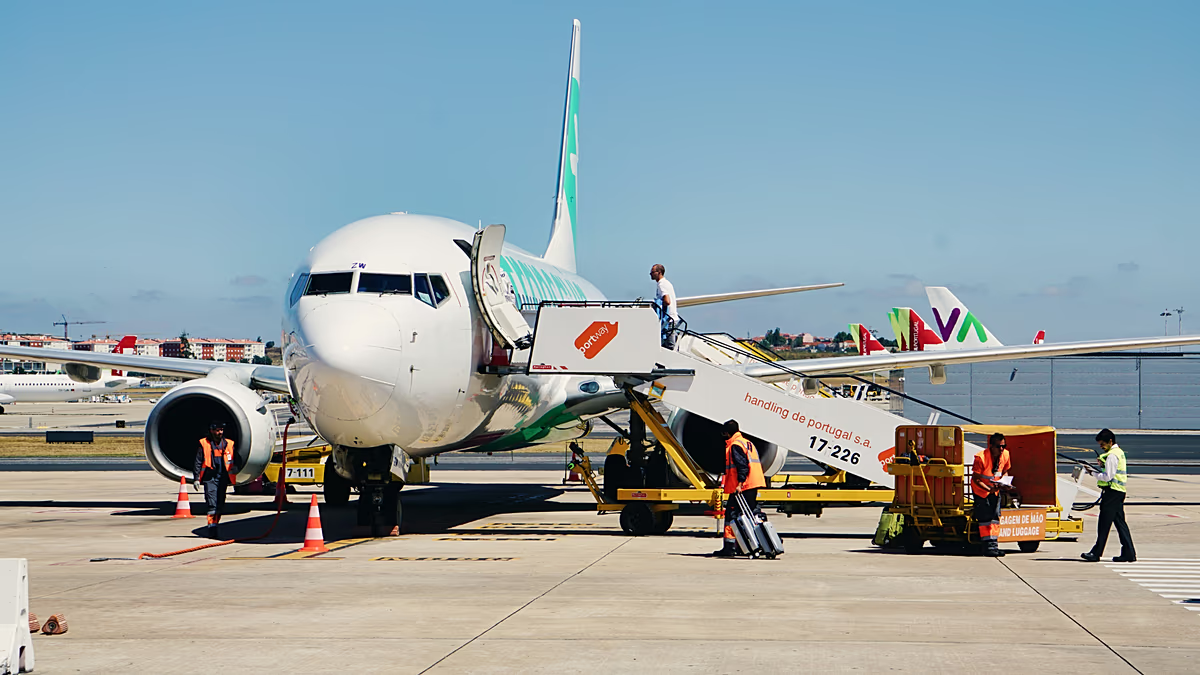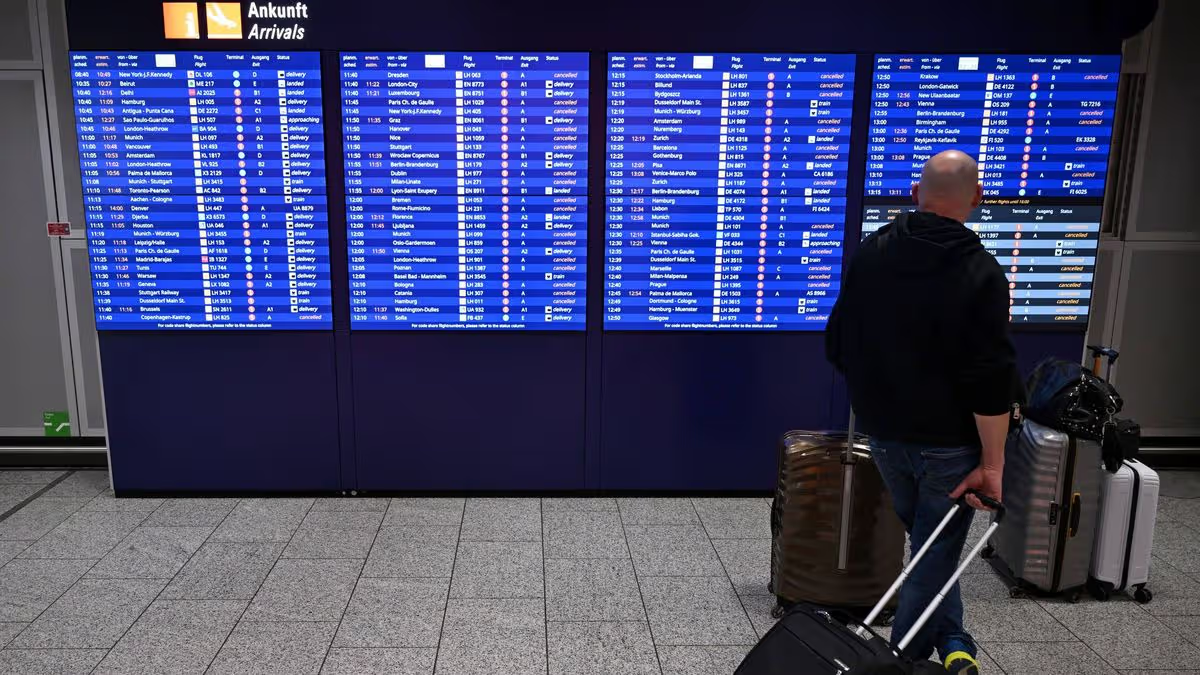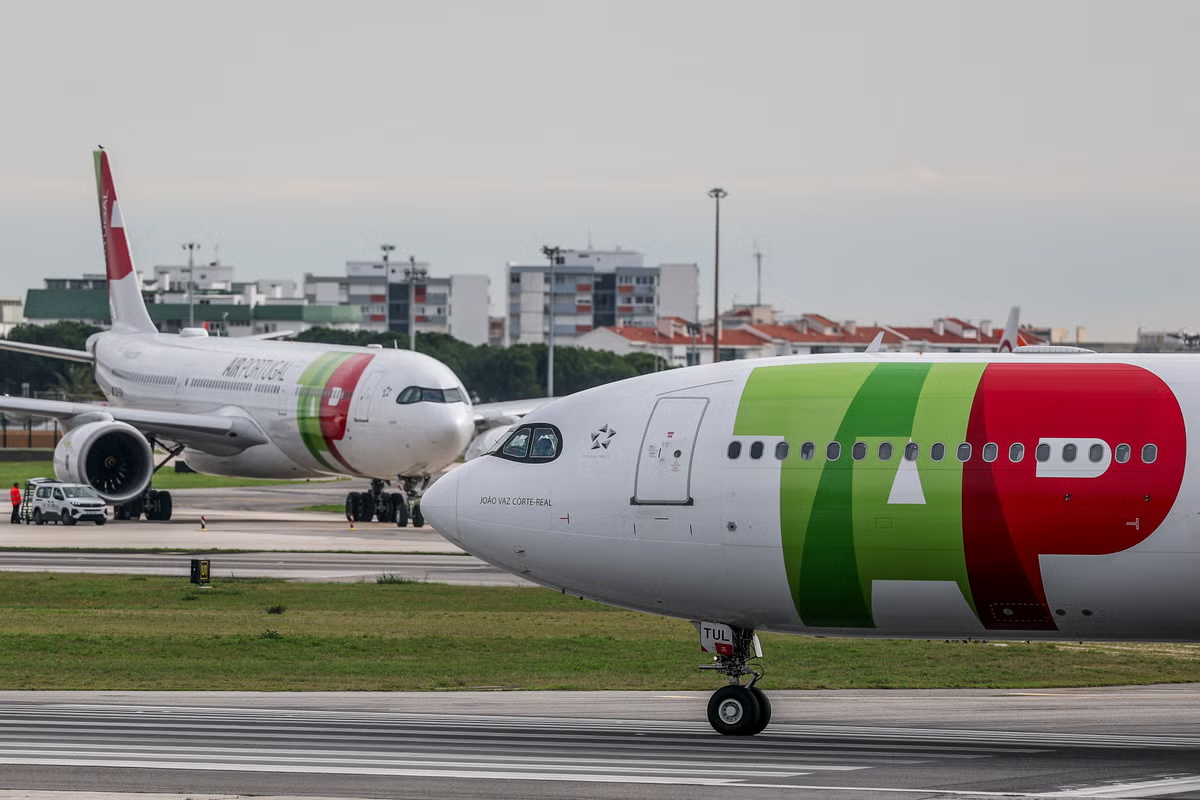
Travel plans could be set for major disruptionMaria Ortega, Robert Rowlands and Kate Lally Content Editor07:53, 22 May 2026Around 500 flights could be thrown into disarray due to a general strike set to take place in Portugal.Portuguese news sources are reporting that the industrial action is expected to trigger major disruption across the transport network. The CGTP (General Confederation of Portuguese Workers) has called the strike, with Sic Noticias suggesting that growing numbers of workers' representatives are backing the campaign.The National Union of Civil Aviation Flight Personnel (SNPVAC) has predicted that "around 500 flights" could be affected by the walkout on June 3, with the potential for travel chaos to also extend to the days surrounding that date. According to an internal document seen by Notícias ao Minuto and shared with union members, the SNPVAC has also warned that the general strike may impact "the days before and after".ECO has stated that the cabin crew strike will chiefly hit operations for TAP, Portugália and SATA. Idealista, along with several other Portuguese media outlets, indicates there may also be knock-on disruption to flights run by other airlines with Portuguese bases.The outlet highlights this could potentially encompass easyJet and Ryanair, as the industrial action involves cabin crew operating from Portuguese bases.This comes after comparable action last December which caused widespread chaos across the nation. Rail services ground to a halt across Portugal on December 11 last year. Hundreds of flights were cancelled simultaneously in protest against the very same proposed labour reforms that remain at the heart of this ongoing dispute.Members of the National Union of Airline Workers voted in favour of the latest industrial action on Tuesday, in opposition to the planned labour reforms.The CGTP filed a formal pre-strike notice for June 3 in protest against amendments to employment legislation, following fruitless talks with the Government.The proposed changes to labour law were rubber-stamped by the Government in the Council of Ministers last week and are now due to go before Parliament for debate.Minister of Labour, Solidarity and Social Security, Rosário Palma Ramalho, confirmed the development at a press conference, a week after Government negotiations on employment law changes ended without agreement in the Social Dialogue.What could be affected by the strike in Portugal?Portuguese media reports indicate that urban passenger transport across the country, as well as airports, are likely to face significant disruption. The CGTP has called on all workers to join the industrial action.The Federation of Transport and Communications Unions has thrown its weight behind the strike. Transport operators expected to be caught up in the action include Lisbon Metro, Carris, Transtejo/Soflusa, Fertagus, Porto Metro, STCP and CP – Comboios de Portugal. The National Union of Civil Aviation Flight Personnel has also confirmed its involvement in the strike, alongside the Union of Aviation and Airport Workers, with the decisions expected to cause widespread disruption across several airlines.The retail workers' trade union and the two organisations representing doctors and teachers had previously confirmed they would be taking part in the industrial action, with the Nurses' Union also verifying its participation.Meanwhile, Portuguese media is reporting that extra police will be deployed to the country's airports to manage lengthy queues caused by the new EES border policy. The system affects non-EU nationals travelling for short stays whenever they cross the external borders of most European countries, including Portugal, Spain, Italy and France.According to Sic Noticias, significant queues have been building in recent days at Portugal's Schengen Area entry and exit checkpoints. The system is intended to replace manual passport stamping for non-EU nationals, including British citizens, entering the Schengen Area for short-term visits. It captures biometric data - fingerprints and photographs - at border control points, and applies to 90-day, visa-free, or short-stay visa travel.There have been reports of queues stretching to three and four hours for some British travellers abroad, with a number of passengers even missing their flights altogether due to the lengthy delays. Portugal's Public Security Police (PSP) is set to strengthen the country's airports with an additional 360 officers in July, in a bid to cut waiting times for passengers arriving from outside the Schengen Area, according to an official PSP source.PSP spokesman Sérgio Soares confirmed that the 360 officers are among 560 new recruits who will finish their training on May 28 before immediately embarking on a four-week border guard course. The 360 newly qualified officers are due to begin their airport duties in early July, forming a central part of the PSP's summer contingency plan.Article continues belowPolice sources have revealed to Lusa that of the 360 new personnel, 150 will be posted to Lisbon airport, 90 to Porto, 70 to Faro, 30 to the Azores, and 20 to Madeira.
Portugal holiday warning as '500 flights' may be affected
Travel plans could be set for major disruption
782 words~4 min read