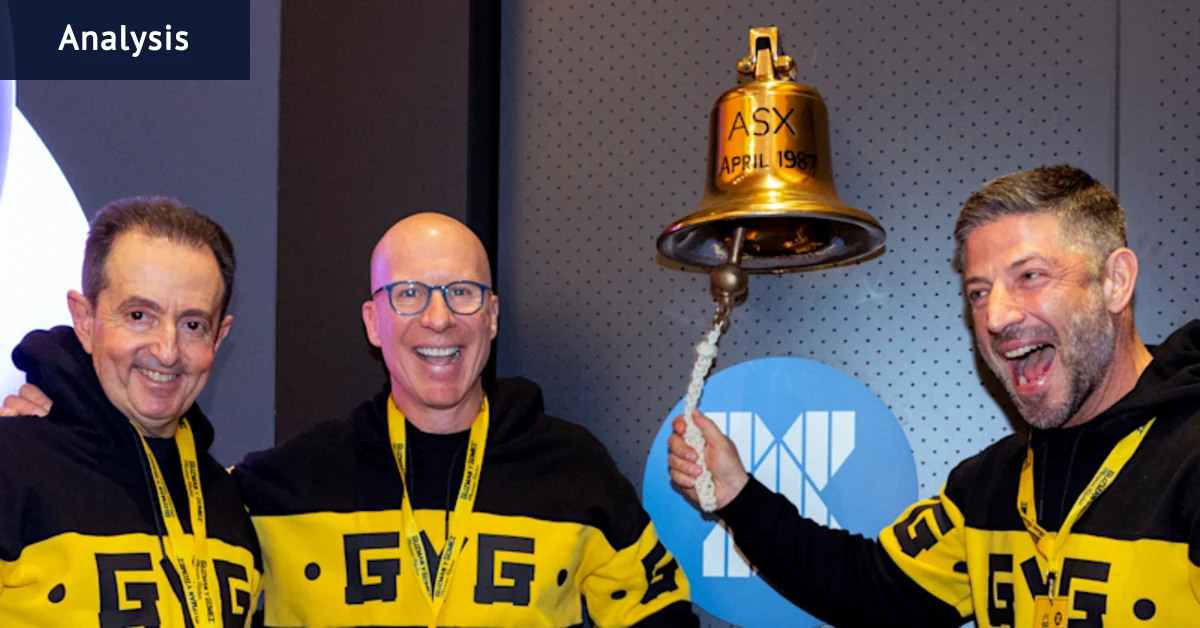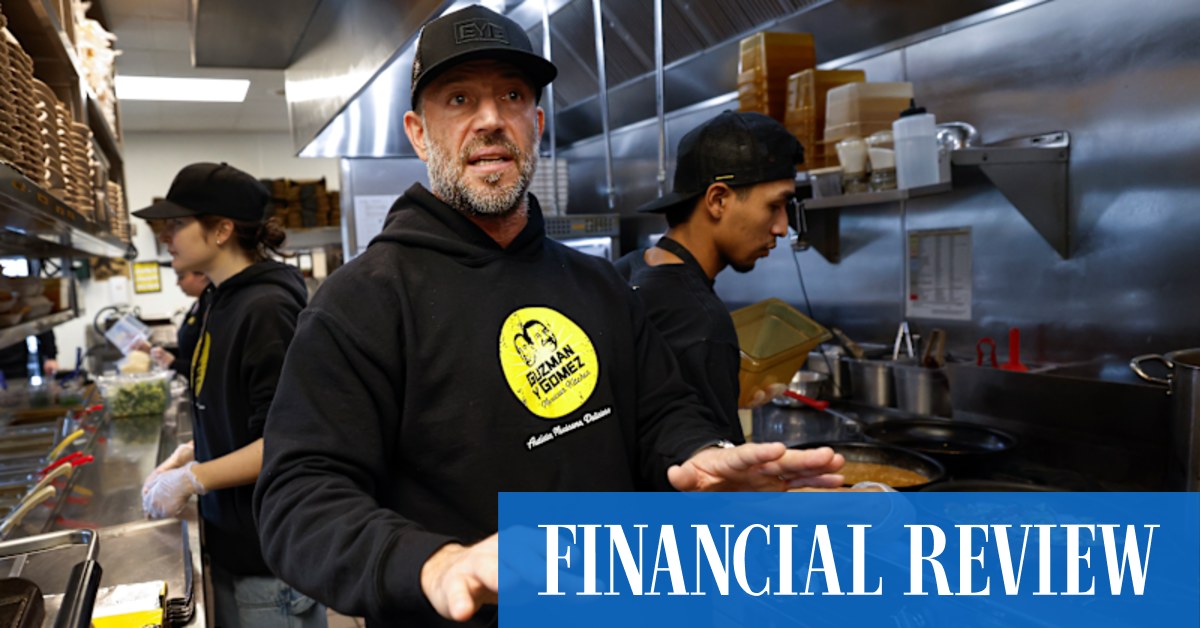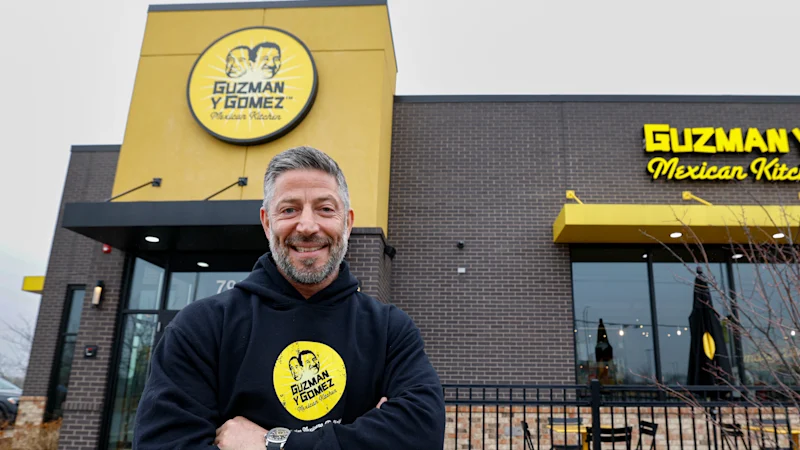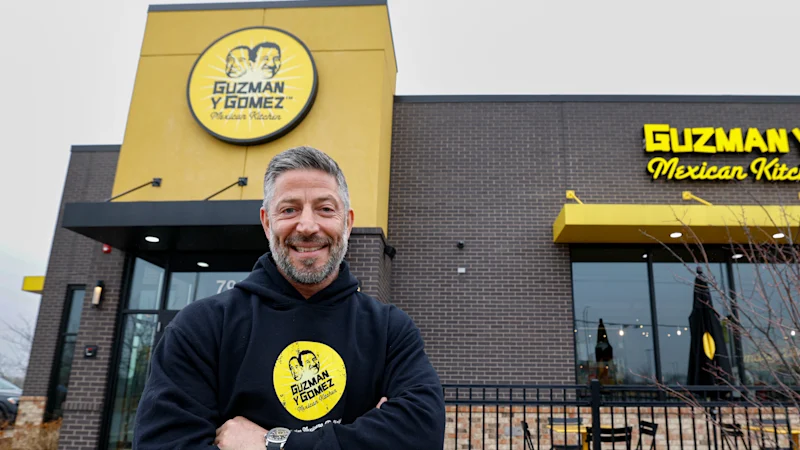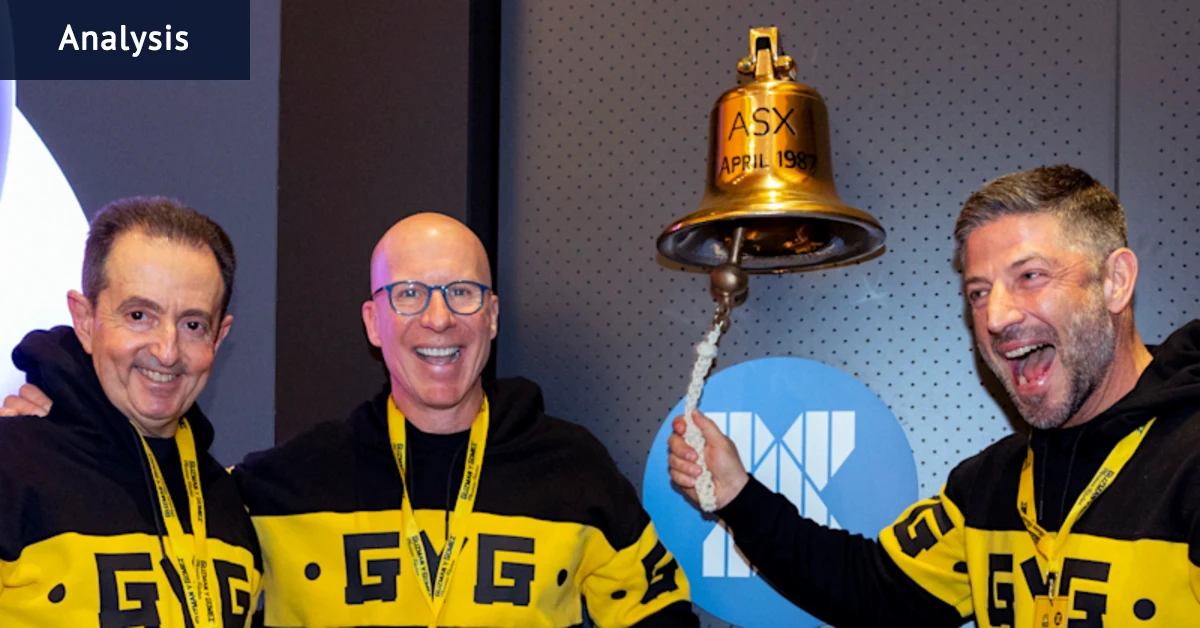
May 22, 2026 — 3:58pmIt shouldn’t be a surprise that selling burritos back to the Yanks proved to be so financially unpalatable for Guzman y Gomez and its investors. The real shock is that so many people had bought into the vision when the chain listed on the ASX two years ago.As John Athanasiou from Red Leaf Securities succinctly put it in a tweet on Friday after GyG announced the abrupt closure of its loss-making US business: “Trying to become a burrito chain in America is like trying to become a gyros chain in Athens. Saturated market.”Guzman y Gomez co-founder Robert Hazan (centre) with co-CEOs Hilton Brett (left) and Steven Marks float the company on the ASX.Dominic LorrimerBut this was precisely the big sell for investors who made GyG the hot float of 2024: the group offered controversial valuation comparisons to the incredibly successful US Mexican grill giant, Chipotle.The Mexican flavours were sold in a ferocious campaign by GyG’s main owners, private equity group TDM Growth Partners and investment bank Barrenjoey. They each made a motza from the transaction.Pity about the new investors.After its shares nearly doubled in price that year, GyG’s stock has since declined to the point where – even after Friday’s decision – the price is still short of what investors paid before its market debut.It clearly convinced Steven Marks, the exuberant New Yorker (the chicken he sells is “incredible”, the people who supply the chicken are “exceptional”, he gets a “high” off new menu items) behind the faux Mexican fast-food chain to cut his losses on the $US400 billion US market just months after enthusiastically selling investors and analysts on the massive prize on offer.At the February half-year results, Marks was telling sceptical analysts: “It’s taken a little longer than I hoped, but we are exactly in the spot we want to be in the US to grow.”On Friday – after the latest US results proved more disappointing than expected – chief financial officer Erik Du Plessis’ message was: “It’s not just because of the performance this quarter, it’s more about the projections and the capital that we would need to invest.”GyG’s quick volte-face is not just painful for the US employees, who are now out of a job.As the flame grills turn off at its underperforming outlets in Chicago, that sizzling sound you can still hear are short-sellers getting torched on the $200 million worth of shares they had bet on the share price plunging. The shares were up about 12 per cent for the day around 3pm on Friday, offering some relief for long-suffering shareholders.The decision will also hit GYG’s bottom line to the tune of up to $US40 million this year, but the market focus was on how well the business would perform without the loss-making US business dragging on its performance.“On current unit economics, we believe the US business had very low prospects of being successful,” RBC analyst Michael Toner said after forecasting GyG would not break even until 2037.So what went wrong?Marks continued to talk up GyG’s superior food quality and restaurant experience, but there was no hiding from the fact that Chipotle (worth almost $60 billion compared to GyG’s $2 billion), had the financial firepower to ensure GyG could not compete.Marks continued to dance around this fact despite spending most of this year in Chicago to ensure the success of GyG’s foray into his homeland.“I think our food and our guest experience is second to none, and I can tell you all the lessons learned on real estate, that we picked the right city, that we started with the right real estate strategy,” Marks said on Friday.The financial underperformance suggests he was not right about at least one of those factors.It will be interesting when GyG goes head to head with Chipotle on neutral territory this year when the US giant opens stores in Singapore, where GYG has 24 stores.“I’m very confident for Chipotle to come into other markets where GyG is, and for us to outperform it,” Marks said on Friday. Let’s see if this forecast holds.The Business Briefing newsletter delivers major stories, exclusive coverage and expert opinion. Sign up to get it every weekday morning.Colin Kruger is a senior business reporter for the Sydney Morning Herald and The Age.Connect via email.From our partners
‘Like trying to become a gyros chain in Athens’: What went wrong for GyG in America
Private equity and investment bankers convinced Aussies they could sell burritos to the Yanks – and they swallowed it.
715 words~3 min read