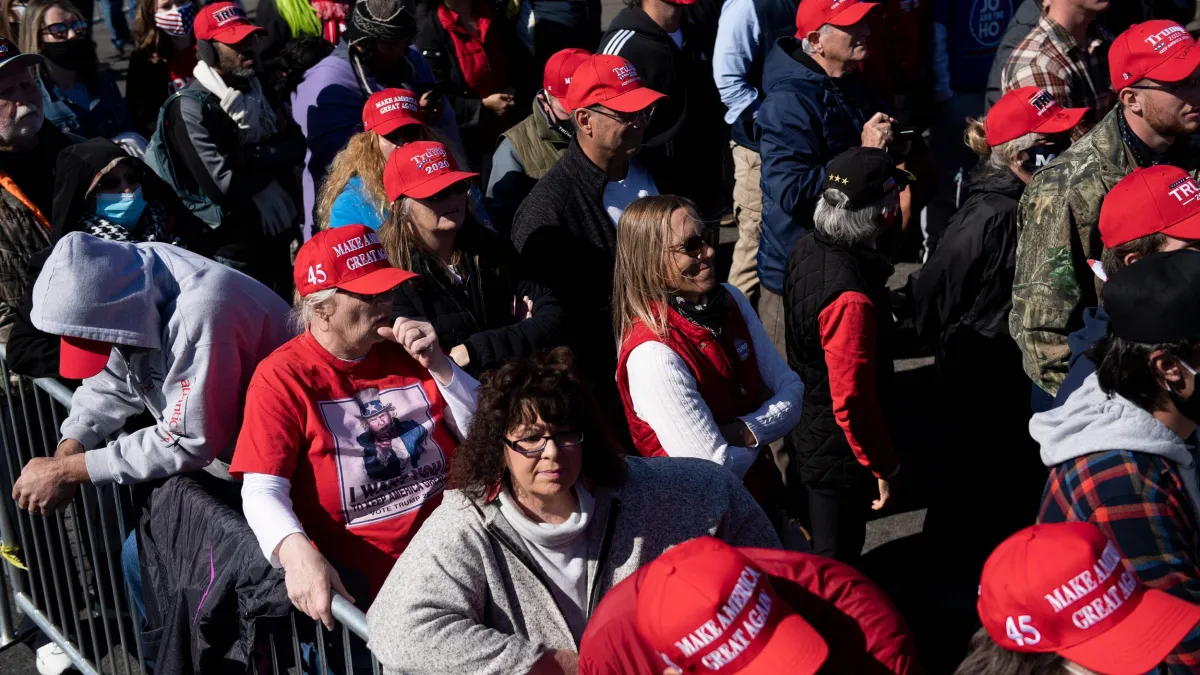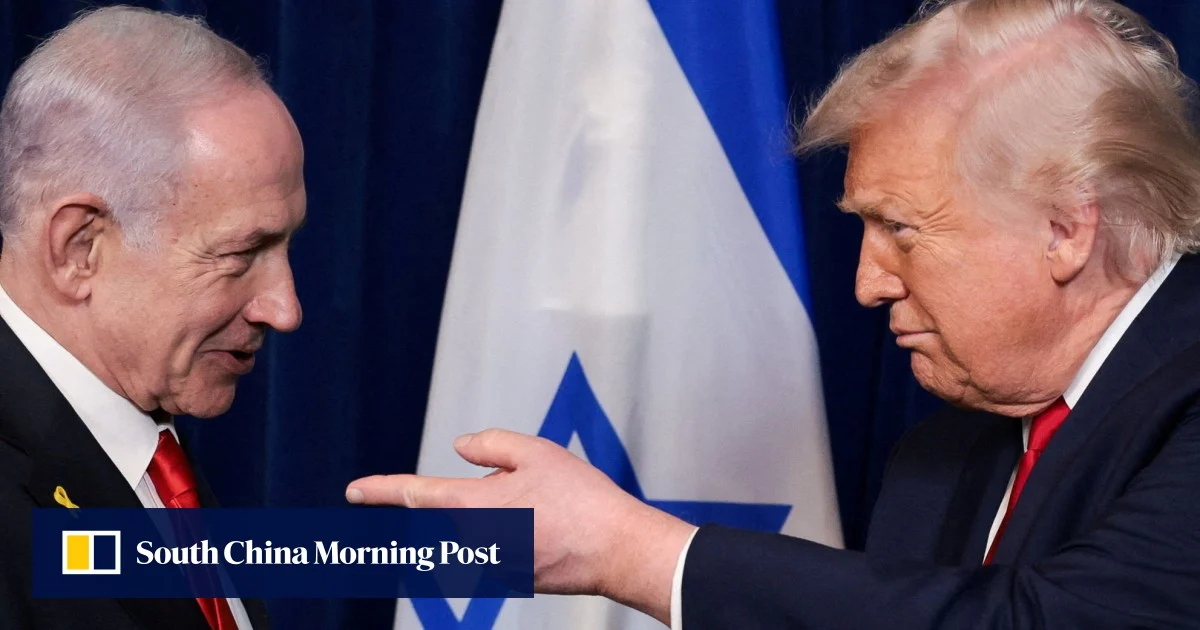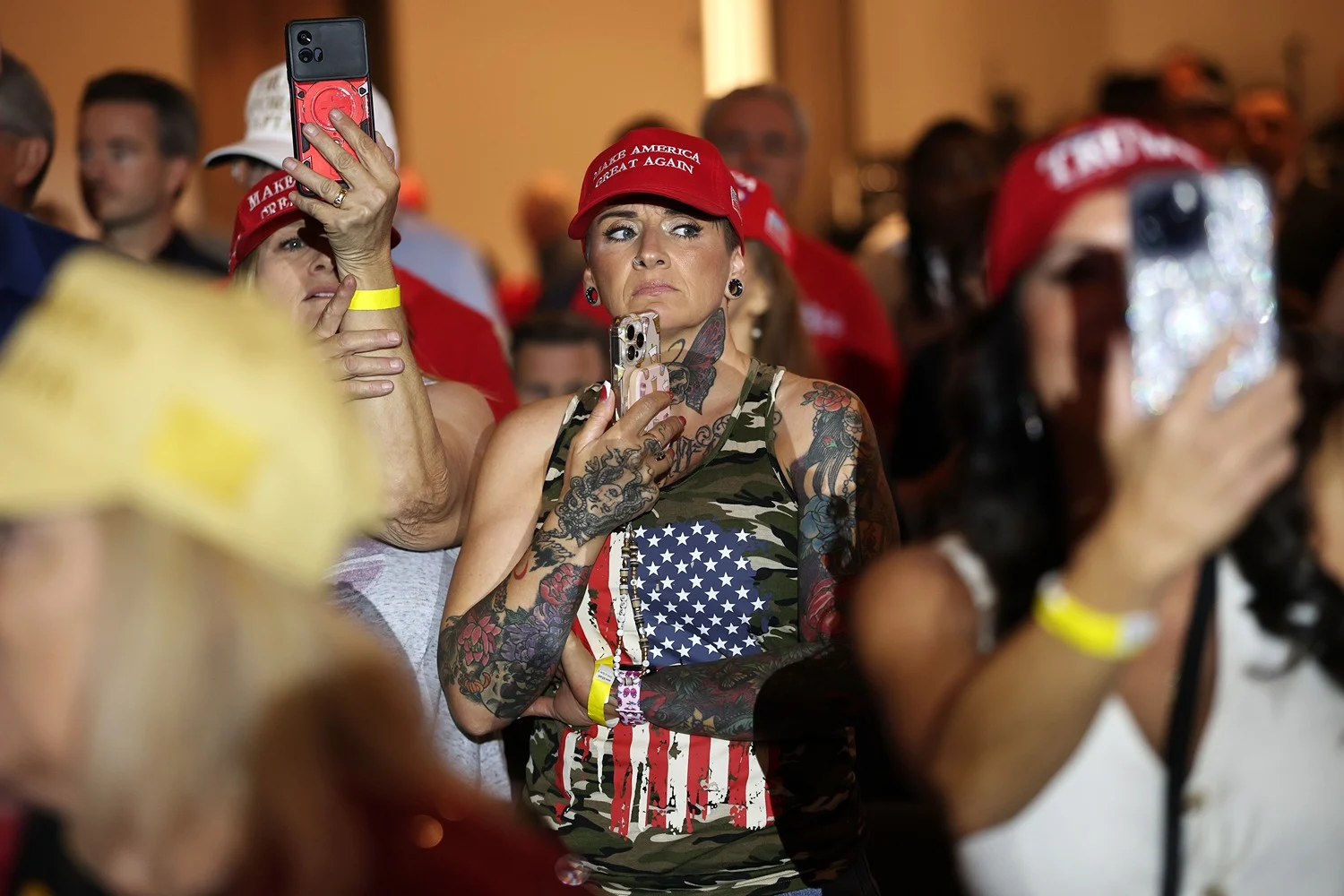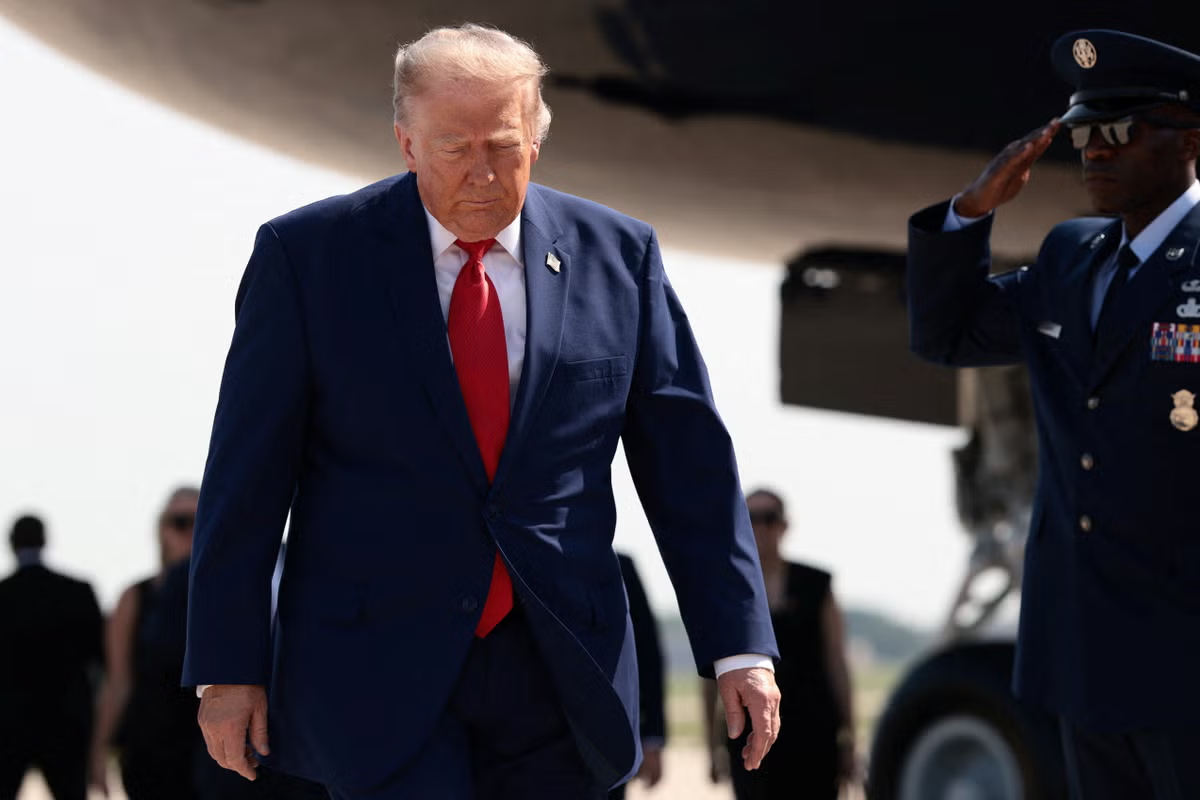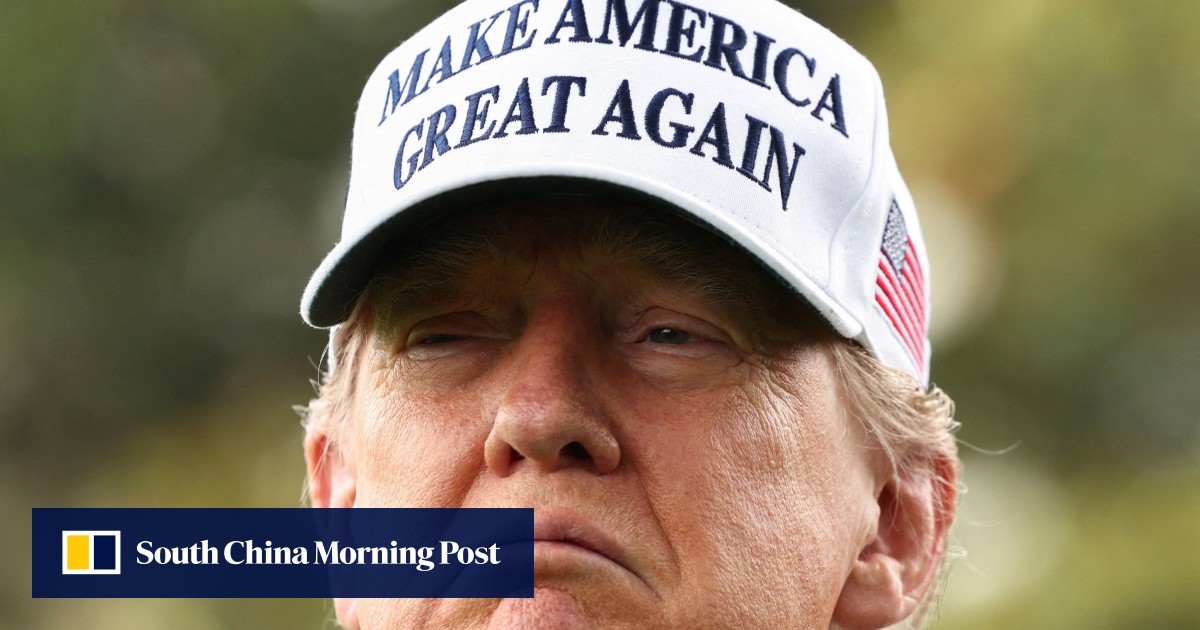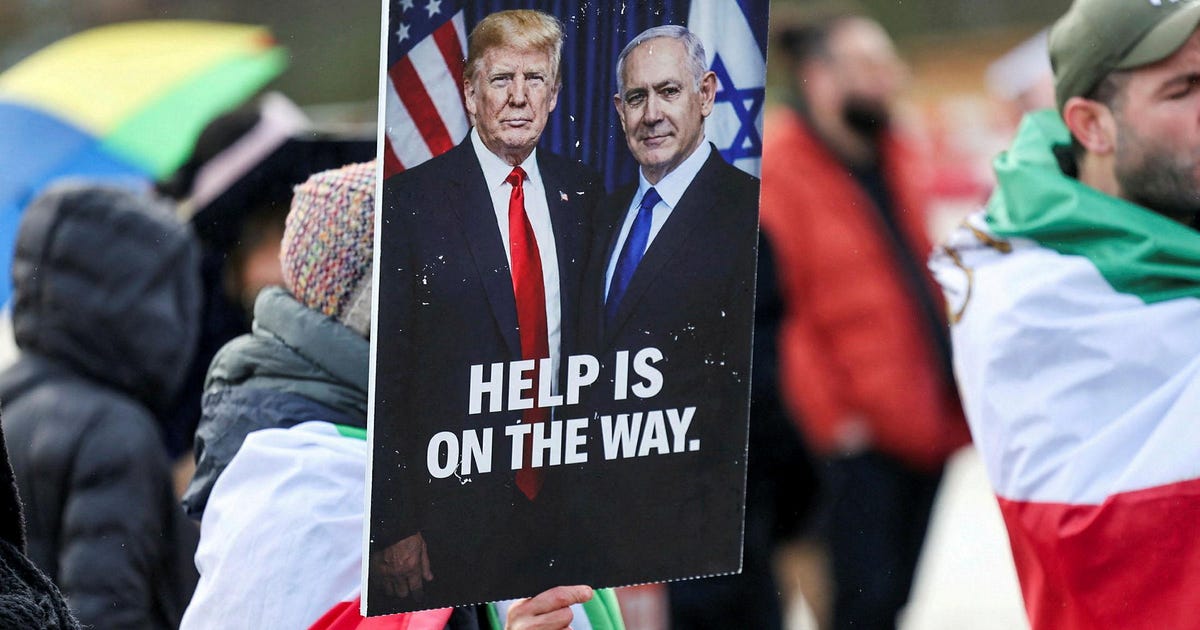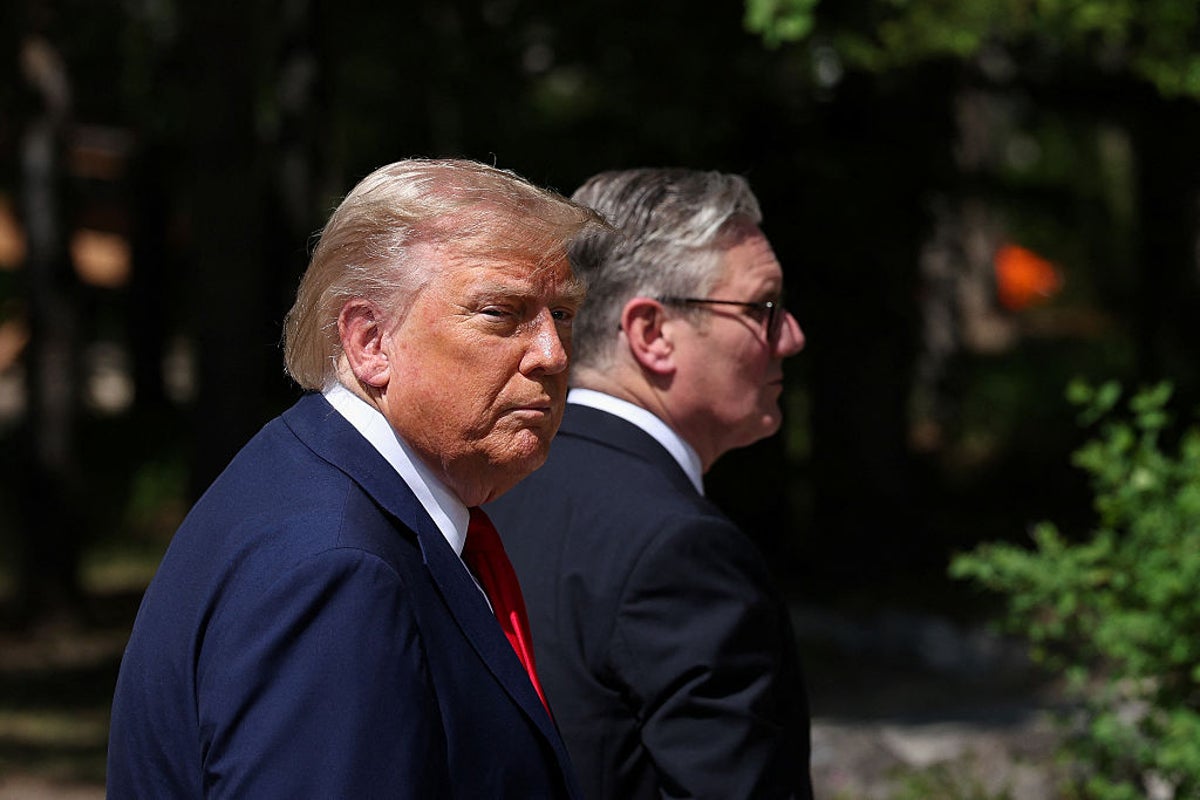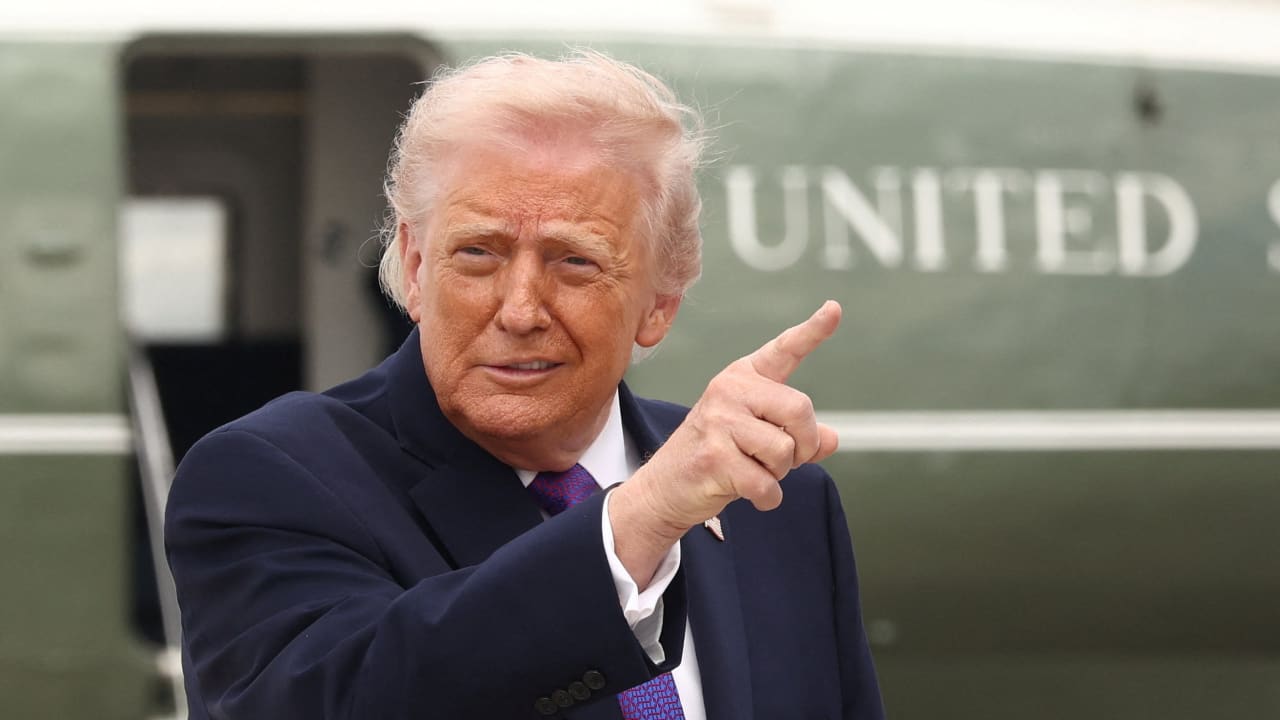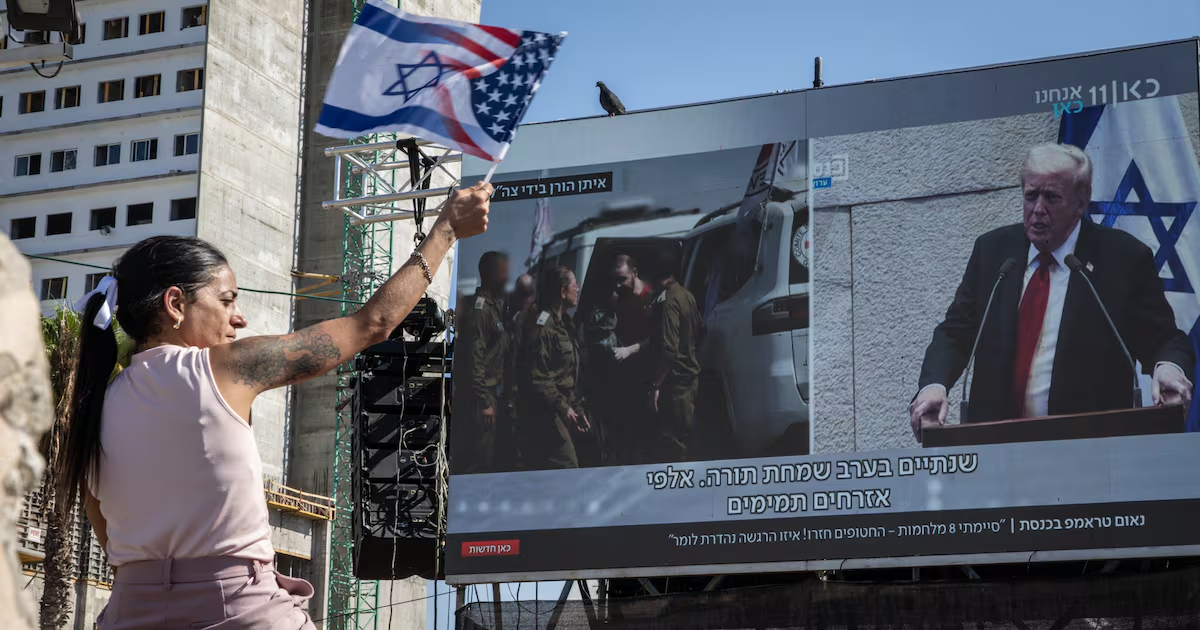
The ceasefire with Iran continues to hold, but US President Donald Trump is facing a major challenge on the home front: a fracture in his base over the war and more broadly over American support for Israel.US backing of Israel has long been a simmering issue for the far right, and this has only been exacerbated with the advent of the Iran war.Popular support for the war continues to decline, with a recent PBS/NPR/Marist poll showing that 22 per cent of Republicans disapprove, up from 15 per cent in March. As the midterm elections approach, Mr Trump's policies towards the Middle East might cause cracks in the once-unified Make America Great Again movement to rupture completely.One nation, under TrumpMr Trump and the Maga movement, from his first campaign in 2016 to his return to office last year, have acted as a catch-all for the diversity of groups on the right, from white supremacists to neoconservatives to libertarians. Donald Trump backed by Maga supporters at a campaign rally in Greensboro, North Carolina, in November 2024. AFPInfoHis promises to voters included improving the economy, cutting federal spending and, importantly, ending costly foreign wars.Popular far-right commentators and activists, including Laura Loomer, Candace Owens, Tucker Carlson and Nick Fuentes, voiced strong support for Mr Trump, calling the election an existential battle against an erosion of Christian and family values, out-of-control immigration, and communism.“For the first year of the second Trump administration, the far right was pretty unified behind him. There were still many underlying disagreements but most far-right groups were generally satisfied with his performance,” George Hawley, associate professor of political science at the University of Alabama, told The National. “This no longer appears to be the case.”Lawrence Rosenthal, chairman and lead researcher of the Berkeley Centre for Right-Wing Studies in California, said things began to change months into Mr Trump's second administration with a controversy surrounding the release of the Epstein files – documents related to the case against disgraced financier and sex trafficker Jeffrey Epstein. Many in the Maga movement felt betrayed by the administration's staggered, delayed and incomplete release of the files, which served as a “gateway drug” for the divisions seen today. “With these diverse constituencies, when they begin moving away from the unified Maga – and once it begins, it has a tendency to go on and on,” Mr Rosenthal told The National. Further catalysts of continued support for Israel and the advent of the Iran war caused the fracturing to continue.Israel and the Gaza war US support for Israel is deeply rooted in Christian Zionism, a primarily evangelical movement that views the Jewish people's return to Israel as a herald of the End Times. Evangelical Christians make up about 20 per cent of the US population – and more than 80 per cent of white evangelicals voted for Mr Trump in the 2024 presidential election.Republican supporters gather to pray for Donald Trump before the Republican National Convention, in Milwaukee, Wisconsin, in July 2024. EPAInfoAnd the powerful American Israel Public Affairs Committee aims to raise support for Israel through lobbying and educational initiatives. In 2024, Aipac donated more than $53 million to support about 360 pro-Israel Democratic and Republican candidates.During his presidential campaign last year, Mr Trump repeatedly described himself as Israel's “best friend”.Far-right figures traditionally echoed the Maga base by expressing strong support for Israel, calling it America's strongest ally in the Middle East – and claiming any criticism of it was anti-Semitism.But the Gaza war, and later the Iran war, opened the floodgates of criticism of Israel by some figures on the right, with Mr Rosenthal describing the current situation as a “break among young evangelicals, a break in the direction away from Christian Zionism”.Perhaps most prominent was former congresswoman Marjorie Taylor Greene of Georgia, a former Maga powerhouse who publicly split with Mr Trump over continued aid to and support for Israel, among other issues. She has described Israel's actions in Gaza “war crimes” and demanded an end to US support.Carlson, a former Fox News host turned independent journalist, also turned on Mr Trump over the administration's support for Israel and became one of the few figures on the far right to describe Israel's actions in Gaza as genocide. Similarly, Owens has become an outspoken of critic of Israel, although her attacks have occasionally tapped the deep well of anti-Semitic sentiment that has long plagued the far right.Mr Hawley points out that anti-Semitism has long been an important element of far-right discourse. “At present, there seems to be a greater emphasis on anti-Semitism, in large part because much of the far-right blames Israel and its influence on the Trump administration for the current war with Iran,” he said. Carlson has been criticised for platforming anti-Semitic figures including Mr Fuentes – a Holocaust denier and proponent of the Great Replacement Theory who recently said that his “war against Israel is the only thing keeping me going at this point”.Owens has made several controversial statements, saying that the US is run by “Satanic paedophiles who work for Israel” and has called Israelis “demonic”. She has also blamed activist Charlie Kirk's assassination last year on an Israeli cabal.Iran conflict Mr Trump came into office vowing to end foreign wars, a promise that rang true for many in Maga angry over US involvement in lengthy, costly conflicts abroad. But his desire to be seen as a peacemaker ran against an equally strong desire to neutralise Iran. Cracks first began to show when the US, alongside Israel, carried out strikes on Iran last June, and the current conflict has significantly worsened the situation.US President Donald Trump, Secretary of State Marco Rubio and White House chief of staff Susie Wiles monitor the February 28 attacks on Iran. AFPInfo“The attack on Iran has really soured much of the far right on Trump,” Mr Hawley said. “There was always a divide on the question of Israel, but that was largely ignored while Trump was primarily focused on domestic politics. Now it is a central issue.”The war has polarised several figures on the right who feel betrayed by Mr Trump involving the US in yet another conflict in the Middle East.Joe Kent resigned as his counter-terrorism chief this year after the war began. He said that there was no actionable intelligence suggesting Iran was planning an imminent attack on the US.After the strikes, Ms Green said Mr Trump was going against voters' wishes. “We campaigned on America First,” she said. “And this is not it.”Many consider Mr Trump's decision to attack Iran to be evidence of Israeli influence on American politics. Carlson has blamed pressure from Israel for the strikes, while Owens has claimed that “Tel Aviv is running DC”.Mr Rosenthal said the war with Iran has only further compounded anti-Semitic sentiment on the right.“The problem with the invasion of Iran is, it is explicitly a betrayal of the promises to the Maga constituency: 'We're not going to go to war in the Middle East …' And [Mr Trump] does it with and in the name of alliance with Israel, and what you get is a resurrection of ancient anti-Semitic tropes.”Mr Rosenthal said that the war with Iran has caused an “unprecedented fracture in Maga”. “So what happens when it fractures? Where do people go? Judging by what's happening, especially among youth on the far right, is a movement in the direction of neo-Nazism.”Meanwhile, prominent far-right figures such as Ms Loomer continue to back Mr Trump, although cracks are showing even there. “What exactly did we win?” Ms Loomer said after the ceasefire was announced and Mr Trump declared victory. “I'm not really understanding what we won.”
You lost me at 'Israel': How Trump's support and war with Iran leave Maga movement cold | The National
Sense of betrayal over President Donald Trump's policies towards Middle East leads to 'unprecedented fracture'
1,272 words~6 min read