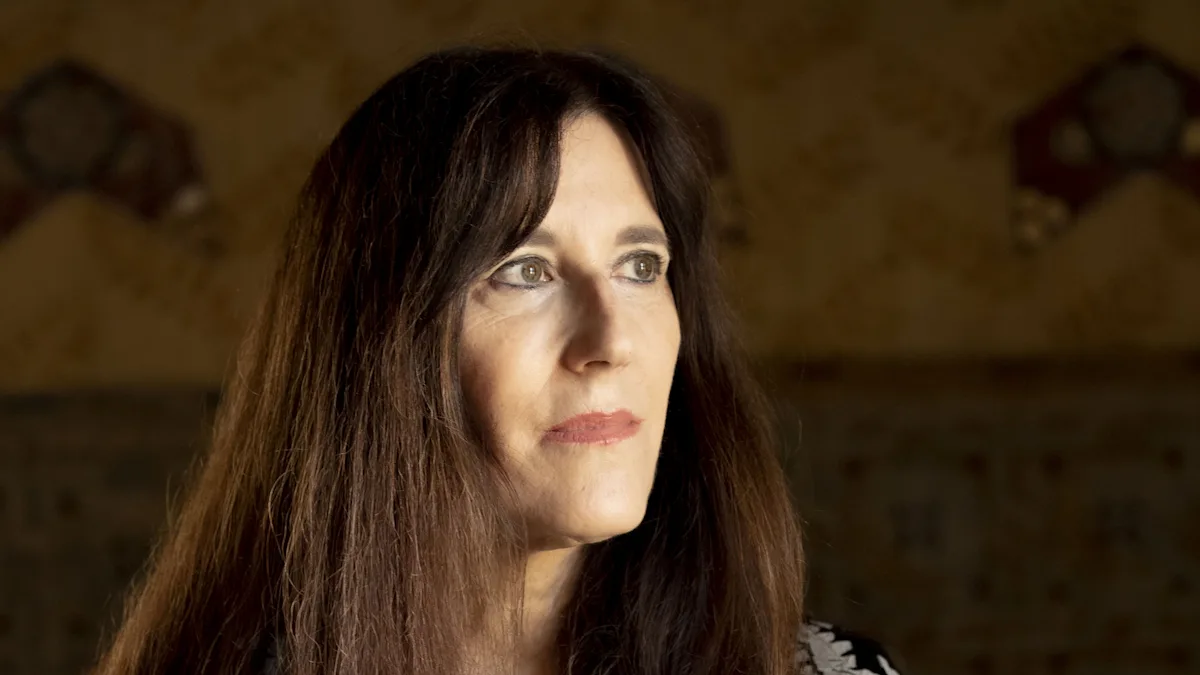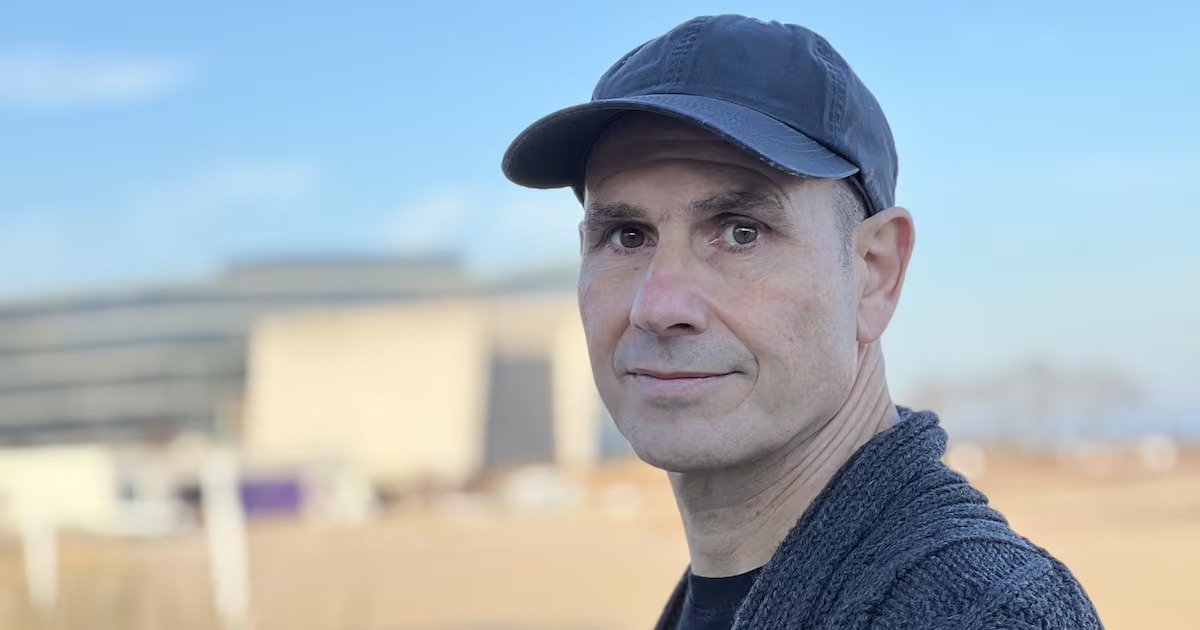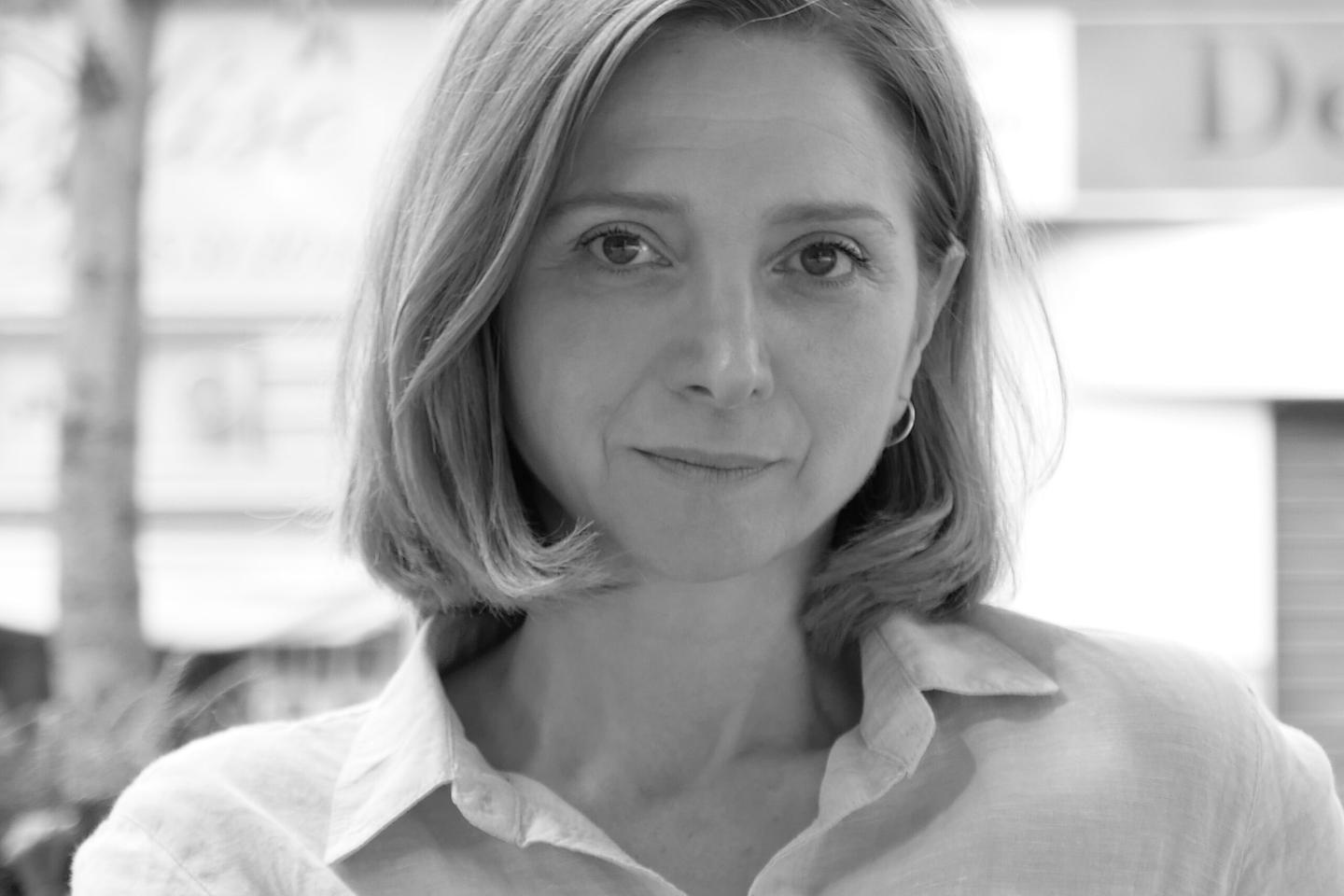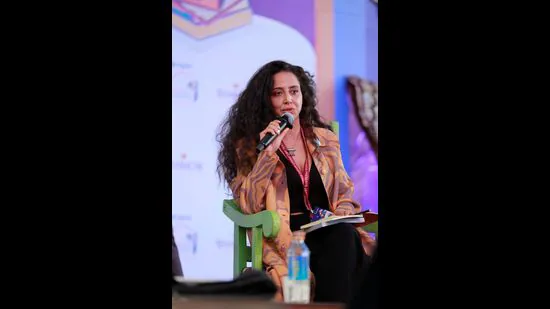
Tell us about your memoir, Homebound, and what inspired you to write it. Author Noa Avishag Schnall (Jaipur Literature Festival)My book is called Homebound: A Memoir Traversing Oman. It started out just as many countries were removing their COVID travel restrictions. I decided to plan a trip to Oman, the neighbouring country to Yemen, where my maternal ancestors come from. A cholera epidemic was compounding the humanitarian disaster in Yemen. From my apartment in Paris, I thought I’d perhaps explore what was the kingdom of Hadhramaut, which spanned the east of Yemen and the west of Oman. I had saved up from the stipend that France was giving during the COVID epidemic and thought I’d use that for a trip to Oman. It was like a gift I was giving myself. I flew to the southern city of Salalah, rented a car, and drove east to the border with Yemen so that I could pedantically drive the entire coast from the border with Yemen to the Strait of Hormuz.I slept in my car every night with the trunk open facing the sea. It was just meant to a gift to myself to be out in nature after we were confined to our homes. I think we all felt a bit choked, no matter what our situation was. So just to be out in nature was fantastic. The population density there is very low and I ended up having these existential moments, thinking about my maternal lineage, because I was brought up in a very religious Zionist household where Hebrew was my first language. Though I was born in Los Angeles, all my mom’s family lives in occupied Palestine. I grew up thinking of being taught that we weren’t Arab, even though, you know, Arab is a regional and cultural thing. So, if our family is Yemeni, we’re very clearly Arab. But the European colony known as Israel indoctrinates its citizens to think of the Arab as the enemy. That’s not necessarily what I was taught in my household, but that’s the indoctrination of the country. I had to do this sort of unlearning on my own, which I did. And in travelling to Oman, I embraced that identity, or continued to embrace that identity. I delved deeper into that maternal lineage (My father’s lineage is Polish, and also Jewish) and that was really beautiful. I met people who were very generous and welcomed me, without exception. So, the memoir ended up being a meditation on home, and ancestry, and what that means. And I don’t know if I necessarily come to an answer, but I definitely explore it. It’s a visual memoir as well, because my background is visual journalism. I write and photograph my stories, so that balance was easy for me. The book was meant to be a photo book with some captions, and I sort of vomited up this memoir.What does the word home mean for you personally, growing up as a Yemeni Jew in a Zionist household? That’s exactly the topic of the book. So, I don’t know that I could summarize it in a few sentences. But I’m still figuring that out, to be honest.How does the inherent hybrid nature of your cultural inheritance, or the diasporic identities collapsing on top of you, show up in how you approach the English language as a medium of articulating your travel experiences?I guess the English language by its nature is a colonial one, and I don’t have to tell Indian people that. There’s a section where I talk about the four languages that Yemeni Jews spoke in Yemen. I culminate that section by saying that I feel like Arabic is the language stolen from me. Because it’s the language that my grandparents spoke as a first language. They spoke Lingua Franca Arabic of Yemen. They spoke the Yemeni Jewish dialect of Arabic. Many people don’t associate Jews with Arabic, but that’s just ignorance. And they spoke Biblical Hebrew, which is in text but also spoken, and then Aramaic as well. Yemeni Jews are the only Jews that read the Torah, our Bible, in Aramaic, which is called the Targum. I was raised in Los Angeles and I think of English as the language of my education. Hebrew is the language of my connection to my mother. But Arabic is the language of my ancestry, and I’m doing my best to access that. It is the biggest compliment when I’m with my friends who speak Arabic that they innately start speaking that with me. I wait a few minutes before I just sort of interrupt them and say, I don’t quite understand what you’re saying, you know, bits and pieces. And they say, oh, yeah, I forgot. Because it just seems like I should. Oh, and French is my daily language because I live in Paris. Yeah. But that’s also a colonial one (laughs).Please talk about your experience with the Freedom Flotilla and your detention and its exposition in the international media?A lot of the international media wanted to focus on what happened to me. It’s important to focus on the Palestinians and what they endure. That’s the reason that we sail. We sail to break the siege. We sail to refocus attention on the Palestinians because that’s where it should be. And the genocide that Israel is inflicting on them.So, a lot of people wanted to focus on the sensational aspects of our treatment. Israel brutalized us. But they brutalized Palestinians every day without end and continue to inflict a genocide on them. There was an expiration date to our treatment. Clearly, because you’re speaking to me. There is no end date, unfortunately, that we know of to what’s happening to the Palestinians. So, we fight for the liberation of Palestinians. We take their lead on how they resist. We fight for the liberation of all peoples. Free Palestine!You were aboard the vessel named The Conscience. Correct.Language has become the battleground. International journalistic enterprises are hesitant to associate ‘genocide’ with what is happening in Palestine. They’re late to the game.You also mentioned how the term ‘Arab’ was demonized.Correct. Sorry, game is not the right term. I was being too light just now.Genocide is a term that international journalists should have adopted much earlier. It’s frankly embarrassing if they’re not currently using it right now. Because, as a journalist, you need to name things for what they are. You’re not doing your job if you’re not calling it that right now.How do you respond to this as an activist and a writer?It depends on the kind of writer that you are. Journalism, you have to call things what they are. Obviously, if you’re a fiction writer, there’s artistic license. Although, I think if you’re talking about a historical period, you need to also call things what they are. We call the Armenian Genocide what it is. We call the Rwandan Genocide what it is. We call the Nazi Holocaust Genocide what it is. We call the Herero Genocide what it is, to the Namibian people. I mean, there’s many. The Sudan Genocide. We have to name things what they are so that we can contend with history. If we’re not doing that, we’re not going to be able to move forward and move into a place where we can talk about liberation and justice.In your JLF session, you said your family was manipulated into shifting to occupied Palestine. What did you mean by that?I go into depth about this in an article I wrote for a magazine called Discontent, Issue 5, called “The Miseducation of an Arab-Jew.” Please feel free to read that. It’s a magazine about Palestinian and Lebanese issues, so I was really honoured to be able to write for them, as I have neither of those backgrounds. Though, I think Palestinians and Yemeni Jews, Arab Jews broadly, or Jews from Arab and majority Muslim lands, because obviously there’s minority communities of Christians and other religions in those lands as well, are bricks in the edifice that Zionism built, unfortunately. They were fodder for them, really. You asked about how my family was manipulated. Zionist emissaries were sent to many of those countries to convince them to move to the European colony of Israel, newly founded, and even before, when it was, still is, Palestine.For example, in Iraq, which is where the writer Avi Shlaim was born, the city of Baghdad was one-third Jewish, and there was a false flag attack. Terrorist Zionists at the time, which later became the IDF forces, I mean, the Israeli occupation forces, bombed the place so Jews would feel unsafe and leave Baghdad. That’s manipulation, right? It was a false flag attack, so they didn’t know it was Jews bombing Jews at the time. Later, it was found out. That didn’t happen so directly in Yemen. But emissaries would come and encourage them, saying, oh, you know, ‘the promised land’, because the Messiah is coming, so you should come. The Jews in Yemen lived fairly secluded lives from the rest of the world, not from their Yemeni community. So, they just followed along with their emissaries. What they weren’t told was that they would have to walk hundreds of kilometers. Many died along the way to where the plane was. Many had never been in a car before, my grandparents included, so they were on a plane before they were ever in a car. In the transit camp, many starved to death. The Zionists were responsible for that. Eventually, they made their way to occupied Palestine, where they were treated as lower class citizens. They were brought there because there weren’t enough European Jews to satisfy labour and demographic needs, because they were trying to out-populate the Palestinians, who they had just committed the Nakba against -- the mass depopulation and ethnic cleansing against the Palestinians. Had there been enough European Jews to fulfil those needs, they definitely would not have called on Jews from Arab and Muslim-majority lands. So, that’s the mass manipulation that I’m referring to.You said that you identify as an anti-Zionist Arab Jew. What role has literature played in your unlearning? It’s important to read the research of authors from all over the world. I had this moment where I looked at my bookshelf when I was younger, and I was like, this is like 95% white men. Why is that? It has to do a lot with my education, what I was told to read, and I made an active effort to diversify the bookshelf. Going to the library, obviously, helped me get a better understanding for different cultures, open-mindedness, speaking with different types of people, the questions I would ask, who I would search out to talk to. Yeah, so books are everything.Will you be sharing your experiences aboard the Flotilla in book form so that it gets documented in a tangible way for generations to come? First and foremost, I leave it to Palestinians to tell their stories. They are doing a heroic job documenting their stories while enduring a genocide. I am working on an article that contextualizes our detention with the experience of Palestinian prisoners. But book? No, not currently.What is the way forward for envisioning an equitable future? I believe in a free Palestine. I don’t believe in ethno-national countries. So, a free Palestine for everyone, and led by Palestinians.Sarah Ihmoud once wrote that love is the Palestinian litany for survival. Would you agree? I think we can do better than just survival. I want Palestinians to thrive on their lands. And to be able to be soft as well. Softness and rest.Simar Bhasin is a literary critic and research scholar who lives in Delhi. Her essay ‘A Qissa of Resistance: Desire and Dissent in Selma Dabbagh’s Short Fiction’ was awarded ‘Highly Commended’ by the Wasafiri Essay Prize 2024.
Noa Avishag Schnall: “It’s important to focus on the Palestinians”
At the Jaipur Literature Festival, the author, who was among the 428 activists on the Gaza aid flotilla detained and subsequently released by Israel earlier this week, spoke about being an anti-Zionist Arab Jew and about her belief in a free Palestine
1,979 words~9 min read